Maria Coady - Böcker
Visar alla böcker från författaren Maria Coady. Handla med fri frakt och snabb leverans.
3 produkter
3 produkter
331 kr
Kommande
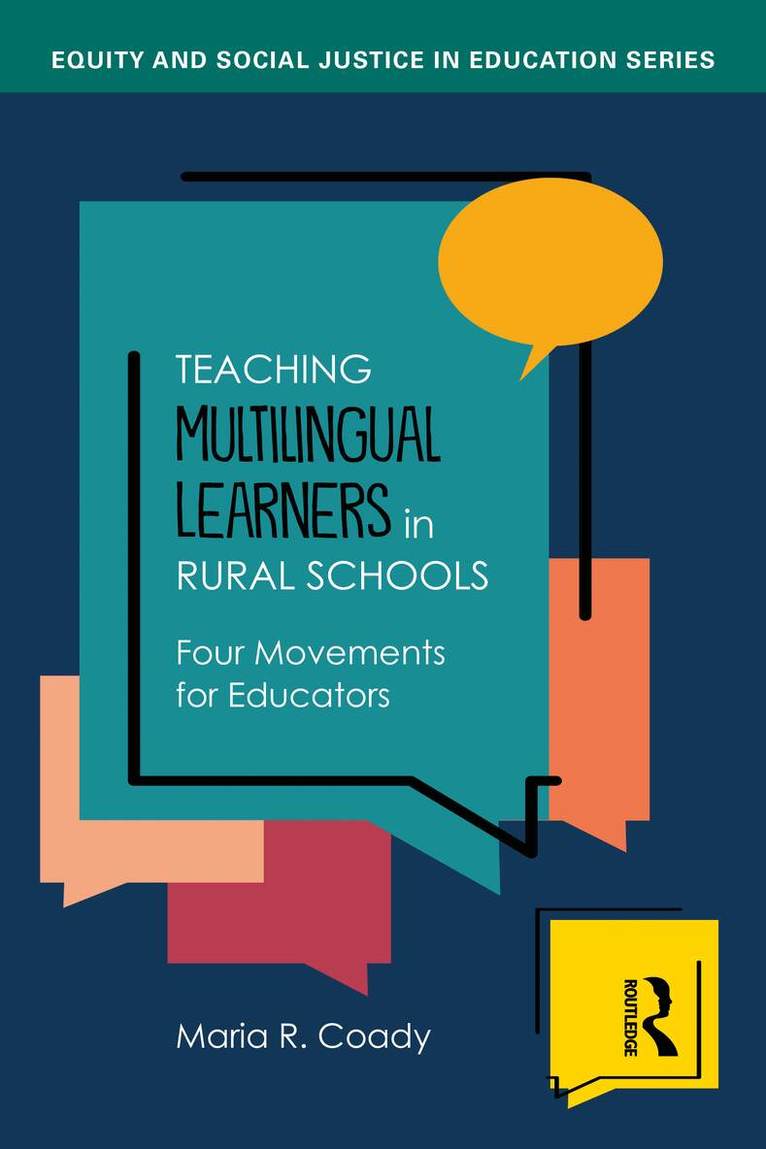
Teaching Multilingual Learners in Rural Schools is a call to action and a guide to empower educators to build strong, just, and multilingual rural communities.The book offers a research-informed framework for transforming how rural schools serve multilingual learners (MLs). Using the metaphor of a symphony, the author organizes the work around four “movements”: Representation and Belonging, Shared Vision, Centering Families, and Collaboration. Each movement harmonizes research, policy, and practice to create equity-driven learning environments where rural ML students can thrive academically and socially.Set against today’s rapidly changing educational landscape, this resource provides educators and policymakers with strategies for designing inclusive, locally grounded programs. Through case studies, field insights, and reflective questions, you will discover how rural schools can honor place, language, and identity while advancing excellence and opportunity for all learners.
Del 2 - Understanding Rural Education
Educating Multilingual Students in Rural Schools
Illuminating Diversity in Rural Communities in the United States
Häftad, Engelska, 2023
712 kr
Skickas inom 5-8 vardagar
Illuminating issues of diversity at the intersection of rural education and multilingual learners (ML) in the United States, this edited volume brings forth new research that captures the importance of place and rurality in the work of educators who serve multilingual learners and their families. The six chapters in this book demonstrate that education for teachers, leaders and staff, professional development programs, and government-funded projects aimed to improve rural education need to begin with three interrelated, multifaceted principles. The first principle is the need to center place and rurality as essential factors that affect education for all educators, students, and families who live, work, and attend schools in rural communities. Second, educators must humanize multilingual students, their families, and their cultures in ways that go beyond merely acknowledging their presence – they must deeply see and understand the lives and (hi)stories of the multilingual students and families that they serve in their rural schools. Finally, the third principle involves identifying multilingual resources for ML students and their families. Given the persistent inequities in access to resources and opportunities that rural ML students and families face, this last principle requires careful planning, networking, and advocating in ways that can truly effectuate change. Contributors are: Jioanna Carjuzaa, Maria R. Coady, Paula Golombek, Shuzhan Li, Kristin Kline Liu, Nidza V. Marichal, Charity Funfe Tatah Mentan, Kym O’Donnell, Stephanie Oudghiri, Darrell Peterson, Sonja Phillips, Jenelle Reeves and Yi-Chen Wu.
Del 2 - Understanding Rural Education
Educating Multilingual Students in Rural Schools
Illuminating Diversity in Rural Communities in the United States
Inbunden, Engelska, 2023
1 773 kr
Skickas inom 5-8 vardagar
Illuminating issues of diversity at the intersection of rural education and multilingual learners (ML) in the United States, this edited volume brings forth new research that captures the importance of place and rurality in the work of educators who serve multilingual learners and their families. The six chapters in this book demonstrate that education for teachers, leaders and staff, professional development programs, and government-funded projects aimed to improve rural education need to begin with three interrelated, multifaceted principles. The first principle is the need to center place and rurality as essential factors that affect education for all educators, students, and families who live, work, and attend schools in rural communities. Second, educators must humanize multilingual students, their families, and their cultures in ways that go beyond merely acknowledging their presence – they must deeply see and understand the lives and (hi)stories of the multilingual students and families that they serve in their rural schools. Finally, the third principle involves identifying multilingual resources for ML students and their families. Given the persistent inequities in access to resources and opportunities that rural ML students and families face, this last principle requires careful planning, networking, and advocating in ways that can truly effectuate change. Contributors are: Jioanna Carjuzaa, Maria R. Coady, Paula Golombek, Shuzhan Li, Kristin Kline Liu, Nidza V. Marichal, Charity Funfe Tatah Mentan, Kym O’Donnell, Stephanie Oudghiri, Darrell Peterson, Sonja Phillips, Jenelle Reeves and Yi-Chen Wu.