María José Martínez-Harms – författare
Visar alla böcker från författaren María José Martínez-Harms. Handla med fri frakt och snabb leverans.
4 produkter
4 produkter
Inbunden, Engelska, 2024
548 kr
Skickas inom 10-15 vardagar
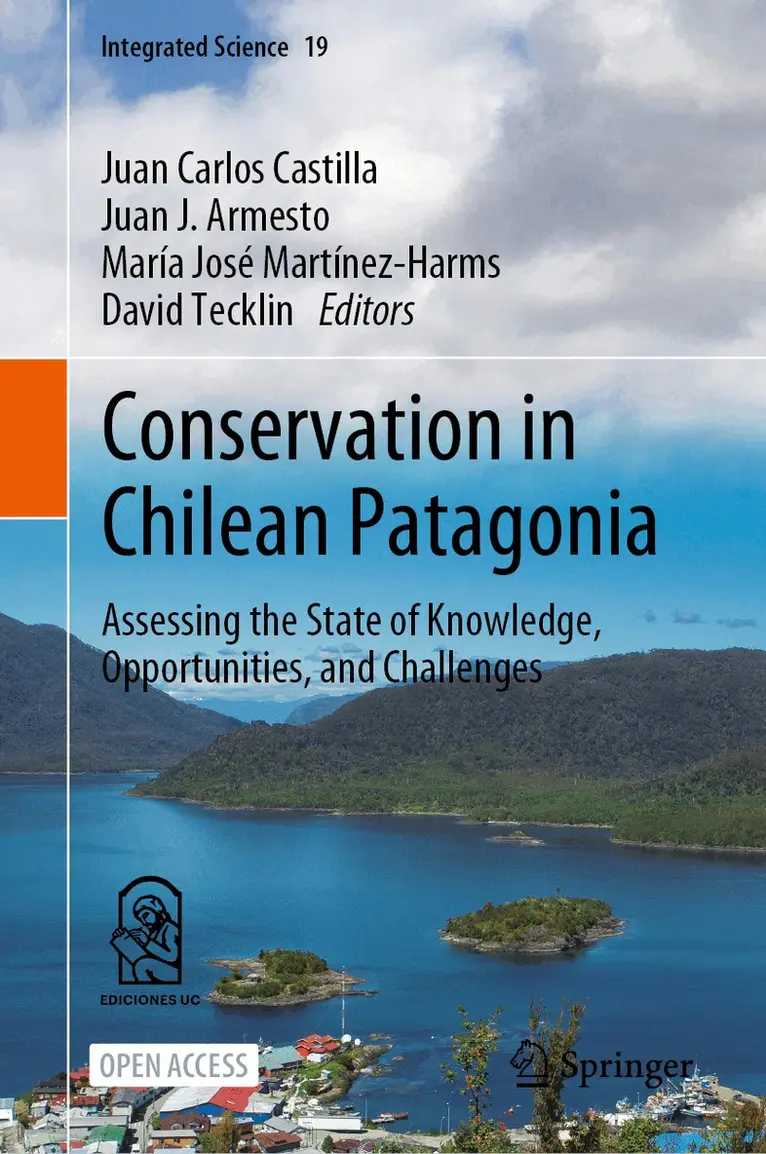
Chilean Patagonia, located at the southwestern tip of South America, is one of the last regions on earth where highly intact environments predominate. With a coastline that extends along some 100,000 km of fjords, channels, and islands, it has one of the world´s most extensive marine-terrestrial interfaces. Local place-based and Indigenous cultures and management practices are a vital presence across the region, while the long and rich history of conservation efforts have resulted in officially protected areas covering over 50% of the land and 41% of the coastal-marine area. However, Chilean Patagonia is increasingly facing anthropogenic pressures associated with increased infrastructure and access, salmon aquaculture, extractive industries, and the spread of invasive exotic species. Despite widespread recognition that Chilean Patagonia represents a unique global reservoir of socio-natural heritage, to date there has been no region-wide assessment of the scientific evidence of the conservation status of its ecosystems or the priorities for their effective conservation.Conservation in Chilean Patagonia: Assessing the state of knowledge, opportunities, and challenges is the first book to gather and synthesize the available scientific and socio-environmental information related to Patagonian conservation. It presents the collaborative work of 68 researchers and local experts, representing a range of specialties and perspectives, including: biology, ecology, socio-ecology, fisheries, aquaculture, anthropology, economics, geography, tourism, cryosphere, oceanography, climate and global change. The book’s 18 chapters focus on the status of key ecosystems and conservation tools, and provide recommendations toward the construction of a renewed, inclusive, and integrated conservation agenda for the Chilean Patagonian region. It provides an essential primer for anyone interested in the future of this ecologically vital region, as well as lessons on interdisciplinary collaboration and integrated analysis of conservation issues useful for conservation practitioners and scholars. This is an open access book.This book is a translation of an original Spanish edition. The translation was done with the help of artificial intelligence (machine translation by the service DeepL.com). A subsequent human revision was done primarily in terms of content, so that the book will read stylistically differently from a conventional translation.
Häftad, Engelska, 2024
440 kr
Skickas inom 10-15 vardagar
Chilean Patagonia, located at the southwestern tip of South America, is one of the last regions on earth where highly intact environments predominate. With a coastline that extends along some 100,000 km of fjords, channels, and islands, it has one of the world´s most extensive marine-terrestrial interfaces. Local place-based and Indigenous cultures and management practices are a vital presence across the region, while the long and rich history of conservation efforts have resulted in officially protected areas covering over 50% of the land and 41% of the coastal-marine area. However, Chilean Patagonia is increasingly facing anthropogenic pressures associated with increased infrastructure and access, salmon aquaculture, extractive industries, and the spread of invasive exotic species. Despite widespread recognition that Chilean Patagonia represents a unique global reservoir of socio-natural heritage, to date there has been no region-wide assessment of the scientific evidence of the conservation status of its ecosystems or the priorities for their effective conservation.Conservation in Chilean Patagonia: Assessing the state of knowledge, opportunities, and challenges is the first book to gather and synthesize the available scientific and socio-environmental information related to Patagonian conservation. It presents the collaborative work of 68 researchers and local experts, representing a range of specialties and perspectives, including: biology, ecology, socio-ecology, fisheries, aquaculture, anthropology, economics, geography, tourism, cryosphere, oceanography, climate and global change. The book’s 18 chapters focus on the status of key ecosystems and conservation tools, and provide recommendations toward the construction of a renewed, inclusive, and integrated conservation agenda for the Chilean Patagonian region. It provides an essential primer for anyone interested in the future of this ecologically vital region, as well as lessons on interdisciplinary collaboration and integrated analysis of conservation issues useful for conservation practitioners and scholars. This is an open access book.This book is a translation of an original Spanish edition. The translation was done with the help of artificial intelligence (machine translation by the service DeepL.com). A subsequent human revision was done primarily in terms of content, so that the book will read stylistically differently from a conventional translation.
Häftad, Spanska, 2021
389 kr
Skickas inom 5-8 vardagar
E-bok
Spanska, 2021155 kr
Läs direkt efter köp
La Patagonia chilena en el margen occidental de América del Sur, entre el golfo de Reloncaví e islas Diego Ramírez, es uno de los últimos lugares del planeta con extensos ambientes prístinos. Con una línea de costa sobre 100.000 km posee una de las mayores zonas de interfaz marino-terrestre a nivel mundial. Por su larga historia de iniciativas de conservación estatales y privadas, más del 50% de su superficie terrestre y un 41% de su maritorio están oficialmente protegidos y son reservorios mundiales de patrimonio natural, donde objetivos como la conservación de la biodiversidad, servicios ecosistémicos y mitigación del cambio climático pueden ser puestos a prueba. Sin embargo, la Patagonia chilena sigue siendo una región científicamente poco conocida, y que cada vez más convive con fuertes presiones antrópicas, como la salmonicultura, la explotación de turberas y la apertura de nuevas rutas de acceso a sitios remotos y prístinos.Conservación en la Patagonia Chilena: Evaluación del Conocimiento, Oportunidades y Desafíos, libro único en su género, presenta el trabajo colaborativo de 67 investigadores y un grupo de expertos y revisores de alto nivel, con especializaciones en diferentes áreas del saber: biología, ecología, socio-ecología, conservación, pesquerías, acuicultura, antropología, economía, geografía, turismo, criósfera, oceanografía, cambios climáticos y globales. En 18 capítulos se recopila, analiza y sintetiza la información científica y socio-ambiental relacionada con la conservación patagónica. Además, se presentan visiones respecto de los desafíos de conservación en diferentes ambientes, con recomendaciones de prioridades. Se enfatiza la necesidad de incrementar la investigación interdisciplinaria y de establecer en la Patagonia chilena una red integral, operativa y con financiamiento de áreas marino-terrestres protegidas, tomando en consideración los espacios costeros marinos de los pueblos originarios.