Maria Papadopouli – författare
Visar alla böcker från författaren Maria Papadopouli. Handla med fri frakt och snabb leverans.
5 produkter
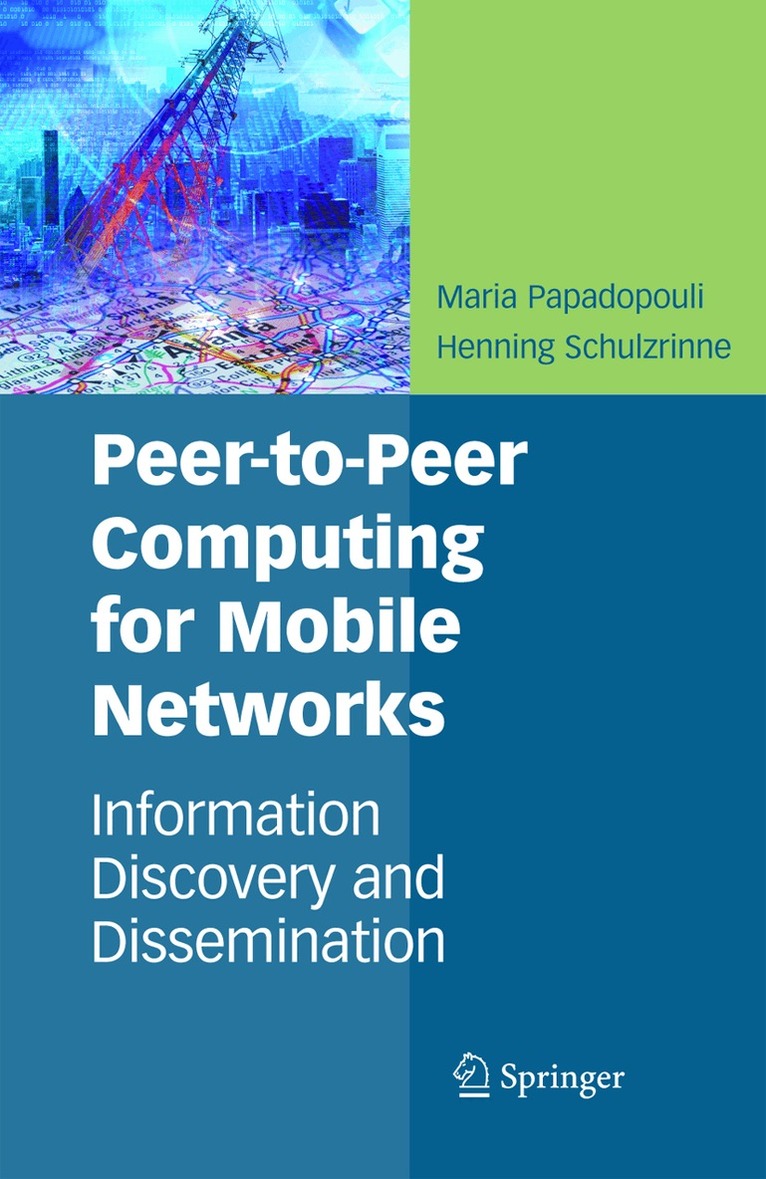
Peer-to-Peer Computing for Mobile Networks
Information Discovery and Dissemination
Av Maria Papadopouli, Henning Schulzrinne
Inbunden, 2008
1093 kr
Lägg i varukorg
“This world! This small world the great!” Odysseus Elytis 1. 1 Wireless data communications In the 19th century, the advent of the telegraph and telephone forever changed how messages were transmitted around the world. Radio, television, c- puters, and the Internet further revolutionized …
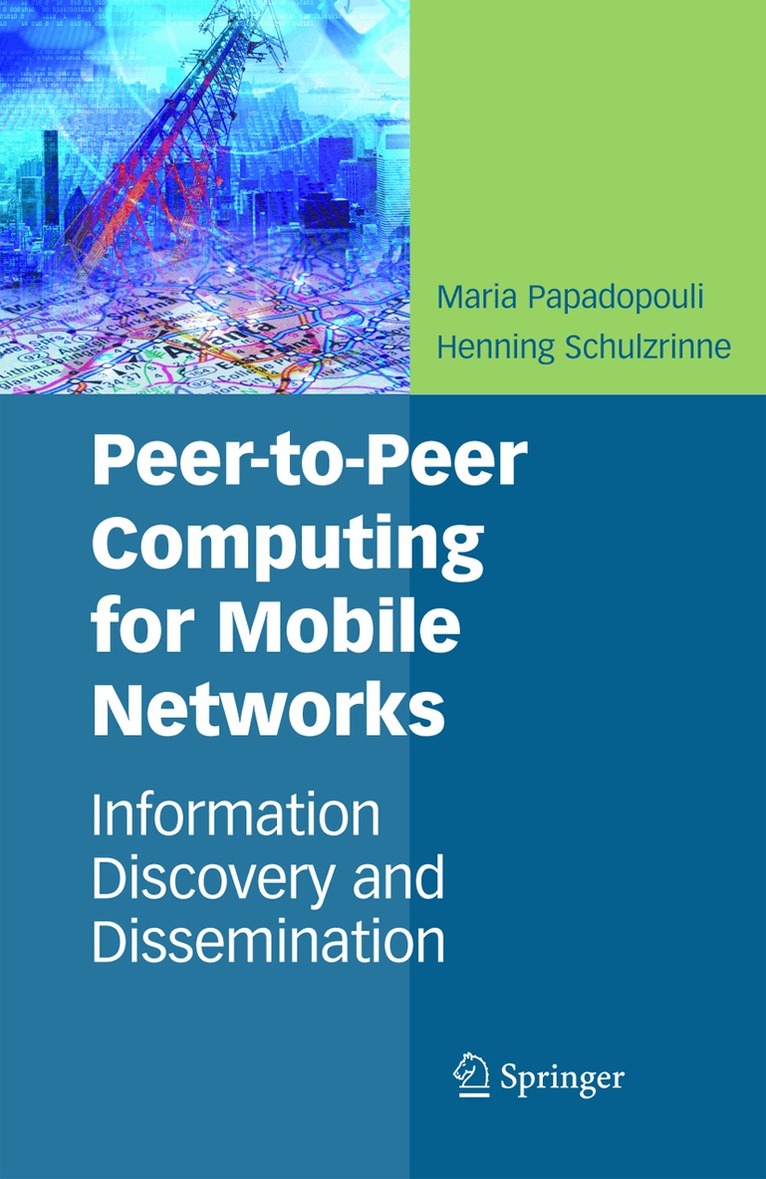
Peer-to-Peer Computing for Mobile Networks
Information Discovery and Dissemination
Av Henning Schulzrinne, Maria Papadopouli
E-bok, 2009
1459 kr
Lägg i varukorg
“This world! This small world the great!” Odysseus Elytis 1. 1 Wireless data communications In the 19th century, the advent of the telegraph and telephone forever changed how messages were transmitted around the world. Radio, television, c- puters, and the Internet further revolutionized …
Peer-to-Peer Computing for Mobile Networks
Information Discovery and Dissemination
Av Maria Papadopouli, Henning Schulzrinne
Häftad, 2010
1093 kr
Lägg i varukorg
“This world! This small world the great!” Odysseus Elytis 1. 1 Wireless data communications In the 19th century, the advent of the telegraph and telephone forever changed how messages were transmitted around the world. Radio, television, c- puters, and the Internet further revolutionized …
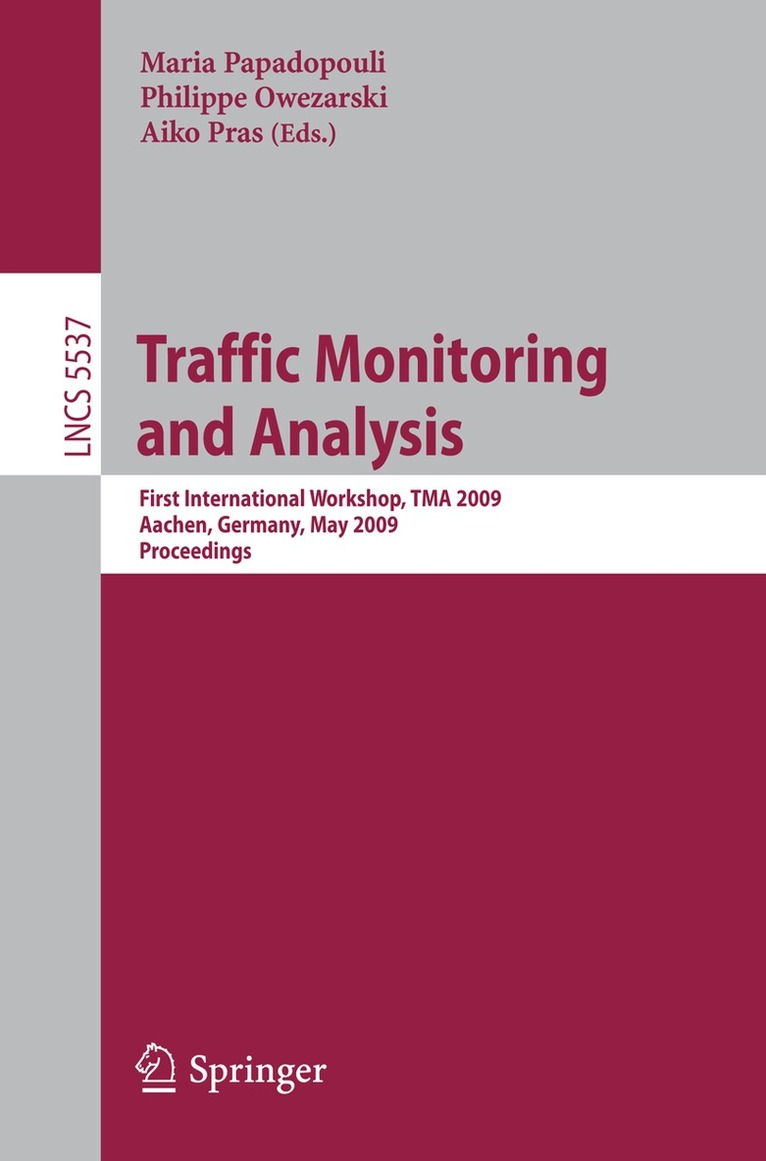
Traffic Monitoring and Analysis
First International Workshop, TMA 2009, Aachen, Germany, May 11, 2009, Proceedings
Av Maria Papadopouli, Philippe Owezarski m. fl.
Häftad, 2009
566 kr
Lägg i varukorg
The First International Workshop on Traffic Monitoring and Analysis (TMA 2009) was an initiative from the COST Action IC0703 "Data Traffic Monitoring and Analysis: Theory, Techniques, Tools and Applications for the Future Networks" (www.cost-tma.eu). The COST program is an intergovernmental …
Traffic Monitoring and Analysis
First International Workshop, TMA 2009, Aachen, Germany, May 11, 2009, Proceedings
Av Aiko Pras, Philippe Owezarski m. fl.
E-bok, 2009
739 kr
Lägg i varukorg
The First International Workshop on Traffic Monitoring and Analysis (TMA 2009) was an initiative from the COST Action IC0703 "Data Traffic Monitoring and Analysis: Theory, Techniques, Tools and Applications for the Future Networks" (www.cost-tma.eu). The COST program is an intergovernmental …