Maria Pia Di Bella – författare
2 220 kr
Skickas inom 10-15 vardagar
819 kr
Läs direkt efter köp
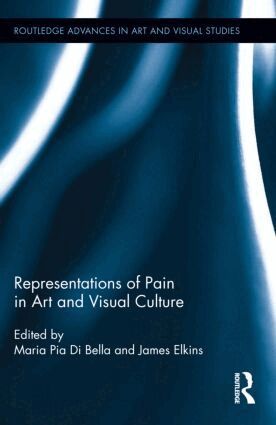
The presentation of bodies in pain has been a major concern in Western art since the time of the Greeks. The Christian tradition is closely entwined with such themes, from the central images of the Passion to the representations of bloody martyrdoms. The remnants of this tradition are evident in contemporary images from Abu Ghraib. In the last forty years, the body in pain has also emerged as a recurring theme in performance art.
Recently, authors such as Elaine Scarry, Susan Sontag, and Giorgio Agamben have written about these themes. The scholars in this volume add to the discussion, analyzing representations of pain in art and the media. Their essays are firmly anchored on consideration of the images, not on whatever actual pain the subjects suffered. At issue is representation, before and often apart from events in the world.
Part One concerns practices in which the appearance of pain is understood as expressive. Topics discussed include the strange dynamics of faked pain and real pain, contemporary performance art, international photojournalism, surrealism, and Renaissance and Baroque art. Part Two concerns representations that cannot be readily assigned to that genealogy: the Chinese form of execution known as lingchi (popularly the "death of a thousand cuts"), whippings in the Belgian Congo, American lynching photographs, Boer War concentration camp photographs, and recent American capital punishment. These examples do not comprise a single alternate genealogy, but are united by the absence of an intention to represent pain. The book concludes with a roundtable discussion, where the authors discuss the ethical implications of viewing such images.
819 kr
Läs direkt efter köp
The presentation of bodies in pain has been a major concern in Western art since the time of the Greeks. The Christian tradition is closely entwined with such themes, from the central images of the Passion to the representations of bloody martyrdoms. The remnants of this tradition are evident in contemporary images from Abu Ghraib. In the last forty years, the body in pain has also emerged as a recurring theme in performance art.
Recently, authors such as Elaine Scarry, Susan Sontag, and Giorgio Agamben have written about these themes. The scholars in this volume add to the discussion, analyzing representations of pain in art and the media. Their essays are firmly anchored on consideration of the images, not on whatever actual pain the subjects suffered. At issue is representation, before and often apart from events in the world.
Part One concerns practices in which the appearance of pain is understood as expressive. Topics discussed include the strange dynamics of faked pain and real pain, contemporary performance art, international photojournalism, surrealism, and Renaissance and Baroque art. Part Two concerns representations that cannot be readily assigned to that genealogy: the Chinese form of execution known as lingchi (popularly the "death of a thousand cuts"), whippings in the Belgian Congo, American lynching photographs, Boer War concentration camp photographs, and recent American capital punishment. These examples do not comprise a single alternate genealogy, but are united by the absence of an intention to represent pain. The book concludes with a roundtable discussion, where the authors discuss the ethical implications of viewing such images.
705 kr
Skickas inom 10-15 vardagar
1 903 kr
Skickas inom 3-6 vardagar
552 kr
Skickas inom 3-6 vardagar
305 kr
Läs direkt efter köp
Travel writing has, for centuries, composed an essential historical record and wide-ranging literary form, reflecting the rich diversity of travel as a social and cultural practice, metaphorical process, and driver of globalization. This interdisciplinary volume brings together anthropologists, literary scholars, social historians, and other scholars to illuminate travel writing in all its forms. With studies ranging from colonial adventurism to the legacies of the Holocaust, The Long Journey offers a unique dual focus on experience and genre as it applies to three key realms: memory and trauma, confrontations with the Other, and the cultivation of cultural perspective.
451 kr
Läs direkt efter köp
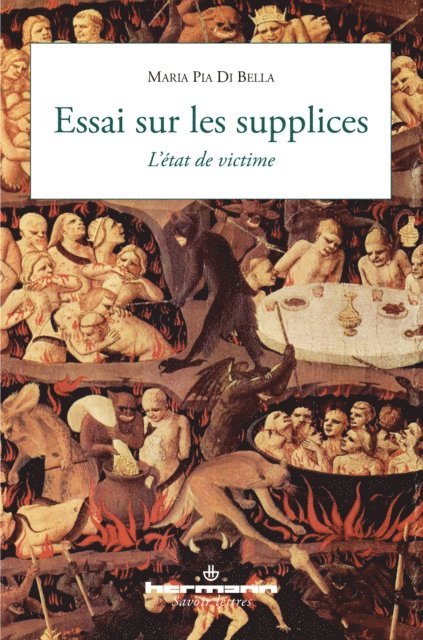
Une dévotion populaire très particulière est à l’origine de cet essai : le « culte des âmes des corps décollés » en Sicile. La Compagnie du Santissimo Crocifisso dite Compagnie des Bianchi (1541-1820) était chargée de préparer les condamnés à affronter leur mort en trouvant la voie du salut, tandis que le peuple de Palerme célébrait avec ferveur, dans le cimetière proche de l’église de la Madonna del Fiume de Palerme, les corps des condamnés. En effet, les Bianchi instruisaient les prisonniers de façon à ce que, lors de leur exécution, ils incarnassent aux yeux du public les martyrs ou le Christ – accomplissant de fait une sorte de superposition des figures saintes et criminelles, et réalisant une inversion des coupables en victimes.
À partir de l’étude de ce phénomène, l’auteur retrace et analyse l’évolution de la notion de victime en Occident depuis le XVIe siècle.
MARIA PIA DI BELLA, chercheur en anthropologie sociale, est membre de l’Institut de Recherche Interdisciplinaire sur les Enjeux Sociaux (IRIS) à l’EHESS. Elle a publié Dire ou taire en Sicile et dirigé Vols et sanctions en Méditerranée. Elle travaille actuellement aux États-Unis sur les associations de victimes de crimes, leurs narrations et leurs mémoriaux.