Maria Wunderlich – författare
Visar alla böcker från författaren Maria Wunderlich. Handla med fri frakt och snabb leverans.
3 produkter
3 produkter
Del 5 - Scales of Transformation
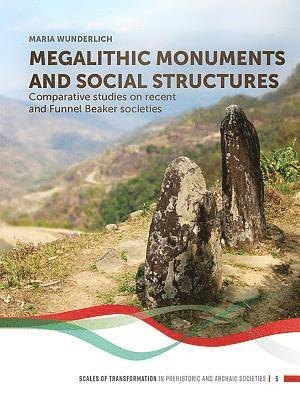
Megalithic Monuments and Social Structures
Comparative Studies on Recent and Funnel Beaker Societies
Häftad, Engelska, 2019
1 065 kr
Skickas inom 3-6 vardagar
Megalith building constitutes not only a past, but also a recent phenomenon, which is still practised today. The documentation and interpretation of recent megalith building traditions is offering potential aid in the interpretation of prehistoric monuments. Fieldwork in Sumba and Nagaland set up a frame to answer questions such as: Who is buried in the megalithic tombs and what kind of commemoration is connected to megalithic monuments? How are socioeconomic characteristics of the associated households and societies reflected in the megaliths?Megalithic monuments and social structures includes various archaeological and ethnoarchaeological case studies on social implications of megalith building activities from a comparative perspective. The case studies presented include recent megalith building traditions in Sumba, Indonesia, Nagaland, North-East India, as well as Neolithic Funnel Beaker communities in today’s Northern Germany and Southern Sweden.This book presents a rich body of new data. By taking into account recent examples of megalithic construction, knowledge on important and influential ways of acting within societal contexts was expanded, whereby above all decentralised and communally-designed mechanisms are important. The case studies presented here clearly demonstrate the importance of cooperative and competitive structures and their effect on feasting activities and megalith building. Additionally, megalithic monuments represent a way of expressing and materialising economic inequality and social prestige. These mechanism and aspects also represent interpretations regarding Funnel Baker societies, which can supplement the existing ideas of megalithic construction in Neolithic Northern Europe.
Häftad, Engelska, 2025
1 238 kr
Kommande
This volume presents the second part of the results of an international research project on the Early Neolithic site of Vráble, one of the largest LBK settlement agglomerations in Central Europe, that was started in 2012 and aims to explore the social implications of settlement concentration in the context of early farming communities, on the background of subsistence patterns and landscape use.The second volume of “Archaeology in the Žitava valley” presents the finds, features and data uncovered and synthesised from our archaeological, geophysical, archaeobotanical, zooarchaeological and stable isotope studies on the LBK and Želiezovce settlement sites of Vlkas ‘Do hulského chotára’ and Úlany nad Žitavou ‘Dolné diely’ among other sites in south-western Slovakia. It puts these data into the wider context of LBK settlement patterns and absolute dating in Central Europe and explores possible land-use scenarios. Finally, it links this research back to the LBK settlement agglomeration of Vráble and analyses the relationship between this central place and lesser sites in its vicinity.
Inbunden, Engelska, 2025
2 278 kr
Kommande
This volume presents the second part of the results of an international research project on the Early Neolithic site of Vráble, one of the largest LBK settlement agglomerations in Central Europe, that was started in 2012 and aims to explore the social implications of settlement concentration in the context of early farming communities, on the background of subsistence patterns and landscape use.The second volume of “Archaeology in the Žitava valley” presents the finds, features and data uncovered and synthesised from our archaeological, geophysical, archaeobotanical, zooarchaeological and stable isotope studies on the LBK and Želiezovce settlement sites of Vlkas ‘Do hulského chotára’ and Úlany nad Žitavou ‘Dolné diely’ among other sites in south-western Slovakia. It puts these data into the wider context of LBK settlement patterns and absolute dating in Central Europe and explores possible land-use scenarios. Finally, it links this research back to the LBK settlement agglomeration of Vráble and analyses the relationship between this central place and lesser sites in its vicinity.