Mariana Castillo Deball – författare
Visar alla böcker från författaren Mariana Castillo Deball. Handla med fri frakt och snabb leverans.
3 produkter
3 produkter
43 kr
Läs direkt efter köp
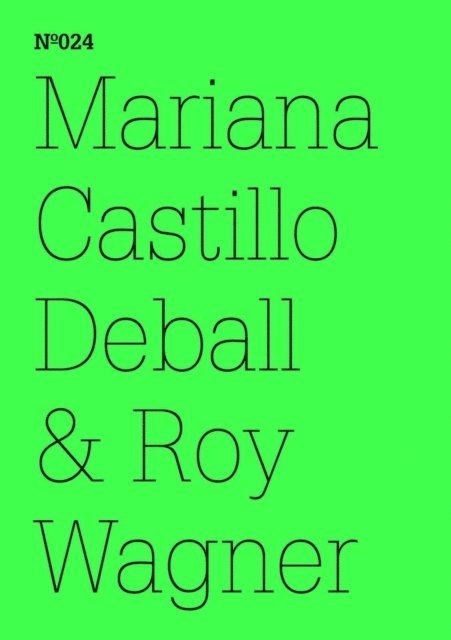
In Roy Wagners anthropologischem Ansatz ist das Unausgesprochene, Ungehörte, Unbekannte genauso wichtig wie das Vorhandene. Das Nicht-Anwesende, von Wagner als »Anti-Zwilling« bezeichnet, ist wesentlich für die Entstehung von Kultur und ihre Erforschung. In diesem Notizbuch schafft Mariana Castillo Deball eine Kommunikation auf doppelter Ebene mit einem Auszug aus Wagners Texten. Auf der einen Ebene entfaltet sich die Konversation zwischen Wagner und Kojote, seinem Anti-Zwilling, der das Abwesende ausspricht und den Äußerungen Wagners entgegenhält. Auf der anderen begleiten und kommentieren die filigranen Zeichnungen der Künstlerin – der mexikanischen Folklore nahestehende Fantasiefiguren und -gebilde, die sie eigens für dieses Notizbuch angefertigt hat – Wagners Text.Mariana Castillo Deball (*1975) ist Künstlerin und lebt in Berlin und Amsterdam.Roy Wagner (*1938) ist Professor am Department of Anthropology der University of Virginia. Sprache: Deutsch/Englisch
E-bok
PDF, Tyska, 202343 kr
Läs direkt efter köp
In Roy Wagners anthropologischem Ansatz ist das Unausgesprochene, Ungehörte, Unbekannte genauso wichtig wie das Vorhandene. Das Nicht-Anwesende, von Wagner als »Anti-Zwilling« bezeichnet, ist wesentlich für die Entstehung von Kultur und ihre Erforschung. In diesem Notizbuch schafft Mariana Castillo Deball eine Kommunikation auf doppelter Ebene mit einem Auszug aus Wagners Texten. Auf der einen Ebene entfaltet sich die Konversation zwischen Wagner und Kojote, seinem Anti-Zwilling, der das Abwesende ausspricht und den Äußerungen Wagners entgegenhält. Auf der anderen begleiten und kommentieren die filigranen Zeichnungen der Künstlerin – der mexikanischen Folklore nahestehende Fantasiefiguren und -gebilde, die sie eigens für dieses Notizbuch angefertigt hat – Wagners Text. Mariana Castillo Deball (*1975) ist Künstlerin und lebt in Berlin und Amsterdam. Roy Wagner (*1938) ist Professor am Department of Anthropology der University ofVirginia. Sprache: Deutsch/Englisch
Häftad, Engelska, 2023
325 kr
Skickas
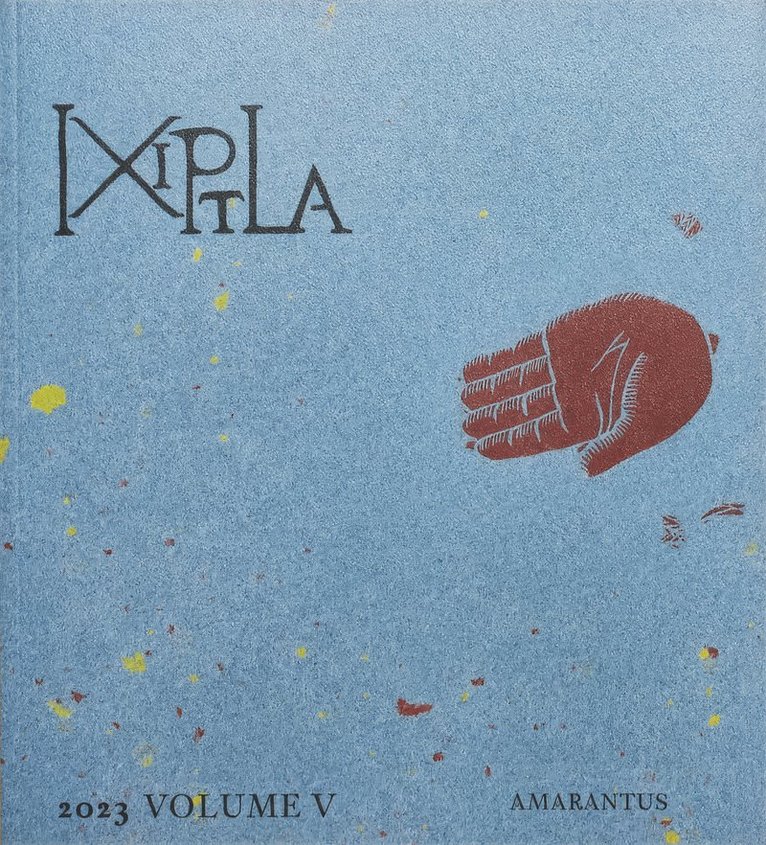
The word amarantus, which gives name to this publication, comes from the Greek aμάρανθος, and describes a flower that never wilts. This plant is still used to prepare ixiptlahuan, which are anthropomorphic and zoomorphic figures that are ritually consumed by some indigenous peoples in Mexico. The amaranth flower represents the persistence of the “uncomfortable objects” that Castillo Deball makes visible in her historical itineraries and approximations, and that keep speaking to us in the present.Ever since her early works, the artist has explored how chance — a product of the passing of time, erosion, fragmentation, and human intervention, among other factors — determines, to a large extent, the way we learn about the world and the narratives we create. This interest has led her to investigate the history of certain artifacts and their vicissitudes, reproductions, appropriations, and disappearances. Her formal strategies tend to reflect an inclination toward methodologies used by archaeologists to “trap” their findings. The resulting objects, or substitute images, conceptually approach the ancient Nahua notion of ixiptla, which can be interpreted as representation, image, and substitute, but also as skin. This concept is indispensable for approaching many of Castillo Deball’s projects from the past decade.This publication features some of the artist’s long-term collaborators and interlocutors, including: Tatiana Falcón, with whom she made The Painter’s Garden; the organization Cooperación Comunitaria for The Double Life of the Azoyú Codex; Diana Magaloni around the term ixiptla and In Tilli in Tlapalli; Hubert Matiúwàa, through poems from his book Skin People; Barbara Mundy on cartography and the artist’s floor pieces; Jennifer Reynolds-Kaye on Alfred Maudslay; and Catalina Lozano about the history of women who have practiced archaeology in Mexico. The publication also includes the essay A Dystopic Mesoamerica by Yásnaya Elena and an excerpt of Emiliano Monge’s novel Weaving Darkness.