Mariana Mota Prado – författare
Visar alla böcker från författaren Mariana Mota Prado. Handla med fri frakt och snabb leverans.
6 produkter
6 produkter
Inbunden, Engelska, 2011
2 006 kr
Skickas inom 5-8 vardagar
This important book focuses on the idea that institutions matter for development, asking what lessons we have learned from past reform efforts, and what role lawyers can play in this field. What Makes Poor Countries Poor? provides a critical overview of different conceptions and theories of development, situating institutional theories within the larger academic debate on development. The book also discusses why, whether and how institutions matter in different fields of development. In the domestic sphere, the authors answer these questions by analyzing institutional reforms in the public (rule of law, political regimes, bureaucracy) and the private sectors (contracts, property rights, and privatization). In the international sphere, they discuss the importance of institutions for trade, foreign direct investment, and foreign aid. This book will be essential reading for those interested in a concise introduction to the academic debates in this field, as well as for students, practitioners and policy makers in law and development.
Häftad, Engelska, 2018
416 kr
Skickas inom 7-10 vardagar
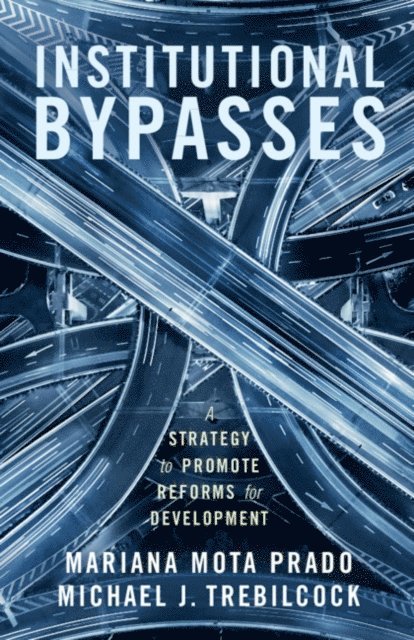
Institutional bypass is a reform strategy that creates alternative institutional regimes to give citizens a choice of service provider and create a form of competition between the dominant institution and the institutional bypass. While novel in the academic literature, the concept captures practices already being used in developing countries. In this illuminating book, Mariana Mota Prado and Michael J. Trebilcock explore the strengths and limits of this strategy with detailed case studies, showing how citizen preferences provide a benchmark against which future reform initiatives can be evaluated, and in this way change the dynamics of the reform process. While not a 'silver bullet' to the challenge of institutional reform, institutional bypasses add to the portfolio of strategies to promote development. This work should be read by development researchers, scholars, policymakers, and anyone else seeking options on how to promote change and implement reforms in developing countries around the world.
Inbunden, Engelska, 2018
1 188 kr
Skickas inom 7-10 vardagar
Institutional bypass is a reform strategy that creates alternative institutional regimes to give citizens a choice of service provider and create a form of competition between the dominant institution and the institutional bypass. While novel in the academic literature, the concept captures practices already being used in developing countries. In this illuminating book, Mariana Mota Prado and Michael J. Trebilcock explore the strengths and limits of this strategy with detailed case studies, showing how citizen preferences provide a benchmark against which future reform initiatives can be evaluated, and in this way change the dynamics of the reform process. While not a 'silver bullet' to the challenge of institutional reform, institutional bypasses add to the portfolio of strategies to promote development. This work should be read by development researchers, scholars, policymakers, and anyone else seeking options on how to promote change and implement reforms in developing countries around the world.
E-bok
Engelska, 2018504 kr
Läs direkt efter köp
Institutional bypass is a reform strategy that creates alternative institutional regimes to give citizens a choice of service provider and create a form of competition between the dominant institution and the institutional bypass. While novel in the academic literature, the concept captures practices already being used in developing countries. In this illuminating book, Mariana Mota Prado and Michael J. Trebilcock explore the strengths and limits of this strategy with detailed case studies, showing how citizen preferences provide a benchmark against which future reform initiatives can be evaluated, and in this way change the dynamics of the reform process. While not a ''silver bullet'' to the challenge of institutional reform, institutional bypasses add to the portfolio of strategies to promote development. This work should be read by development researchers, scholars, policymakers, and anyone else seeking options on how to promote change and implement reforms in developing countries around the world.
E-bok
PDF, Engelska, 2018504 kr
Läs direkt efter köp
Institutional bypass is a reform strategy that creates alternative institutional regimes to give citizens a choice of service provider and create a form of competition between the dominant institution and the institutional bypass. While novel in the academic literature, the concept captures practices already being used in developing countries. In this illuminating book, Mariana Mota Prado and Michael J. Trebilcock explore the strengths and limits of this strategy with detailed case studies, showing how citizen preferences provide a benchmark against which future reform initiatives can be evaluated, and in this way change the dynamics of the reform process. While not a ''silver bullet'' to the challenge of institutional reform, institutional bypasses add to the portfolio of strategies to promote development. This work should be read by development researchers, scholars, policymakers, and anyone else seeking options on how to promote change and implement reforms in developing countries around the world.
E-bok
Spanska, 201991 kr
Läs direkt efter köp
¿Por qué algunas sociedades logran mayor desarrollo que otras? ¿Hasta qué punto ayuda a promoverlo, en ciertos países, el correcto funcionamiento de la justicia y las instituciones? E incluso, ¿a qué llamamos desarrollo? ¿Es lo mismo que el crecimiento, o involucra también la discusión acerca de qué constituye una buena vida?En esta obra, verdadero manual del campo de estudios sobre "derecho y desarrollo", Michael J. Trebilcock y Mariana Mota Prado ofrecen una visión panorámica de las propuestas y la agenda de un enfoque novedoso y en constante expansión.En ese sentido, revisan concepciones que han sido objeto de acalorados debates políticos y académicos. Por ejemplo, las nociones de desarrollo vinculadas con el crecimiento económico, medible en términos del producto bruto per cápita, las que persiguen la reducción de la pobreza y la mejora en la calidad de vida, hasta llegar a las que buscan la promoción de capacidades para la libertad. Distinguen también las visiones institucionalistas –que defienden la centralidad de las normas, el derecho y las instituciones políticas– de aquellas que priorizan factores económicos, culturales y geográficos para explicar las diversas experiencias de desarrollo. Porque para los autores no todo depende de las instituciones consagradas en normas jurídicas formales, sino que además son decisivos los modos en que cada sociedad tramita sus conflictos y tensiones, ya sea entre Estado y mercado, entre ámbito público y privado, o bien cuestiones étnicas y de género. Así, analizando numerosos ejemplos de la región, nos guían por las más avanzadas propuestas de este campo.La colección Derecho y Política inaugura con esta obra un eje de reflexión acerca de la conexión entre el derecho, el desarrollo y la justicia, que sin duda contribuirá a instalar en el debate público y académico la necesidad de pensar el desarrollo en términos más densos y ricos, en relación con políticas de largo plazo y el respeto por los derechos humanos.