Marie Hrabanski – författare
Visar alla böcker från författaren Marie Hrabanski. Handla med fri frakt och snabb leverans.
5 produkter
Intergovernmental Platform on Biodiversity and Ecosystem Services (IPBES)
Meeting the challenge of biodiversity conservation and governance
Av Marie Hrabanski, Denis Pesche
Häftad, 2019
750 kr
Lägg i varukorg
Twenty years after the Convention on Biological Diversity (CBD) entered into force, the founding of the Intergovernmental Platform on Biodiversity and Ecosystem Services (IPBES) in 2012 was the outcome of a long process of setting biodiversity issues at the top of the global environmental agenda. …
Intergovernmental Platform on Biodiversity and Ecosystem Services (IPBES)
Meeting the challenge of biodiversity conservation and governance
Av Marie Hrabanski, Denis Pesche
Inbunden, 2016
2513 kr
Lägg i varukorg
Twenty years after the Convention on Biological Diversity (CBD) entered into force, the founding of the Intergovernmental Platform on Biodiversity and Ecosystem Services (IPBES) in 2012 was the outcome of a long process of setting biodiversity issues at the top of the global environmental agenda. …
Intergovernmental Platform on Biodiversity and Ecosystem Services (IPBES)
Meeting the challenge of biodiversity conservation and governance
Av Denis Pesche, Marie Hrabanski
E-bok, 2016
813 kr
Lägg i varukorg
Twenty years after the Convention on Biological Diversity (CBD) entered into force, the founding of the Intergovernmental Platform on Biodiversity and Ecosystem Services (IPBES) in 2012 was the outcome of a long process of setting biodiversity issues at the top of the global environmental agenda. …
Intergovernmental Platform on Biodiversity and Ecosystem Services (IPBES)
Meeting the challenge of biodiversity conservation and governance
Av Denis Pesche, Marie Hrabanski
E-bok, 2016
795 kr
Lägg i varukorg
Twenty years after the Convention on Biological Diversity (CBD) entered into force, the founding of the Intergovernmental Platform on Biodiversity and Ecosystem Services (IPBES) in 2012 was the outcome of a long process of setting biodiversity issues at the top of the global environmental agenda. …
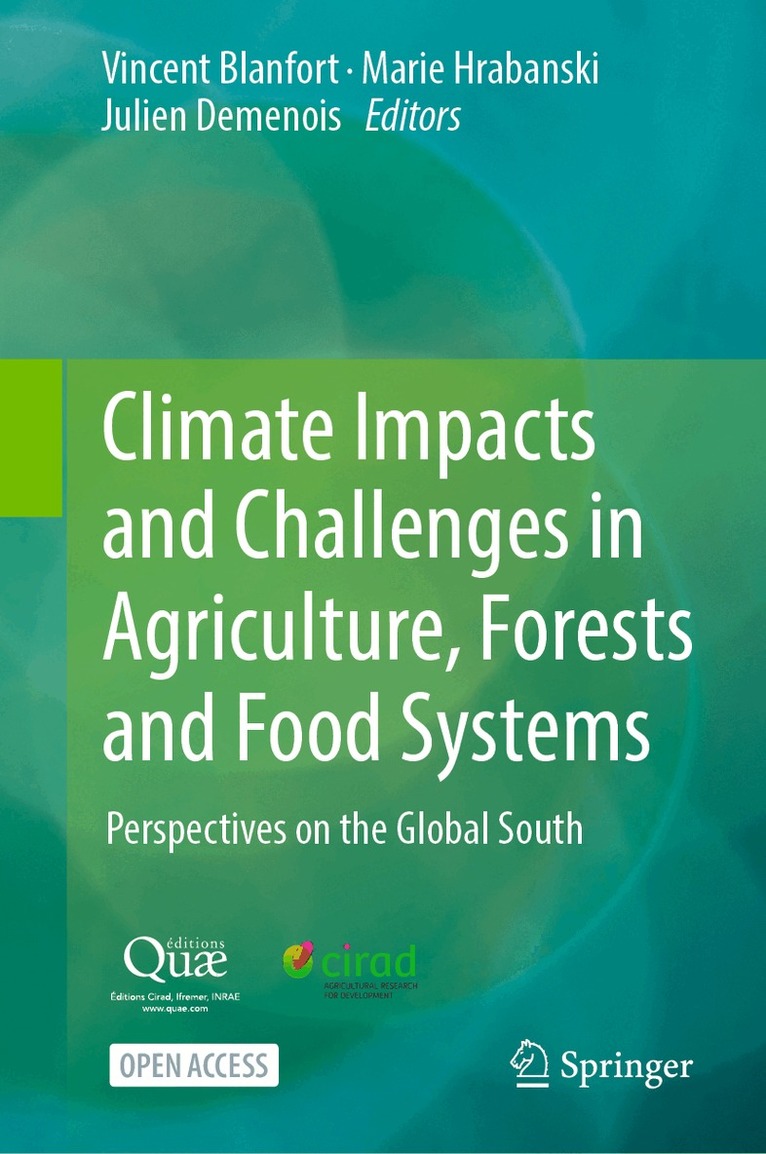
Climate Impacts and Challenges in Agriculture, Forests and Food Systems
Perspectives on the Global South
Av Vincent Blanfort, Marie Hrabanski m. fl.
Inbunden, 2026
552 kr
Lägg i varukorg
This is an open access book.Agri-food systems and forests significantly impact global climate change, they contribute to over one-third of greenhouse gas emissions, through among others deforestation and food supply chains. They are also vulnerable to climate change effects.These sectors have …