Marie Lamensch – författare
1 348 kr
Skickas inom 5-8 vardagar
2 321 kr
Läs direkt efter köp
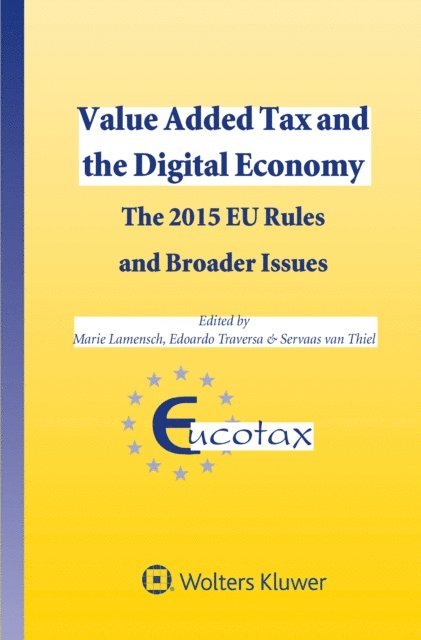
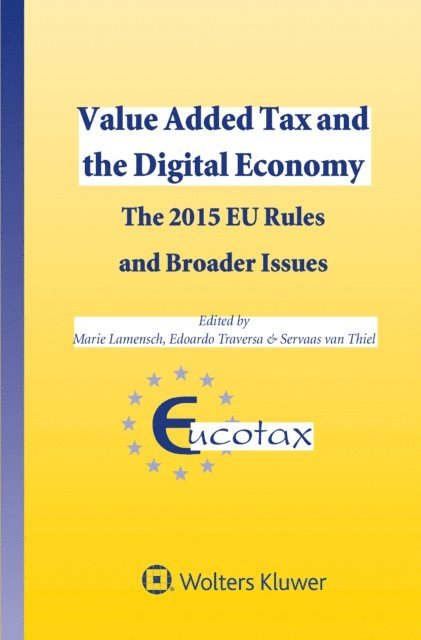
A fast-growing portion of overall taxable consumption is now realized via online supplies and this ''digital economy'' is a virtual reality in which suppliers and consumers conclude numerous transactions unrestrained by time and place. The contrast with traditional sales tax and value added tax (VAT) systems, which are based on a physical supply between parties, could not be more evident.
Among jurisdictions worldwide, the European Union (EU) took the lead in designing a legal framework for VAT on electronically supplied goods and services. This book, with contributions by internationally re-owned academics, revenue officials, and tax advisors, provides a broad and up-to-date overview of the EU 2015 rules, and an analysis of such elements as the gradual realization of the destination principle, the fight against e-commerce fraud, and simplification of compliance obligations by means of the Mini One Stop Shop (MOSS). Topics covered include the VAT dimension of:
- the digital ''fixed establishment'';- businesses as tax collectors;- auditing under MOSS;- Internet search engines;- virtual currencies (such as bitcoins);- cloud computing; and- technology-based solutions for the assessment and collection of VAT on online supplies.Relevant EU legislation is annexed.
Because of its clear and practical analysis to these issues, this book will appeal to tax authorities and counsel who need to ensure proper taxation of online supplies at destination with the least possible administrative costs and the lowest possible compliance burdens. Because of its forward looking approach it is a ''must''; for all public and private sector professionals concerned with VAT.
2 621 kr
Skickas inom 5-8 vardagar
2 641 kr
Läs direkt efter köp
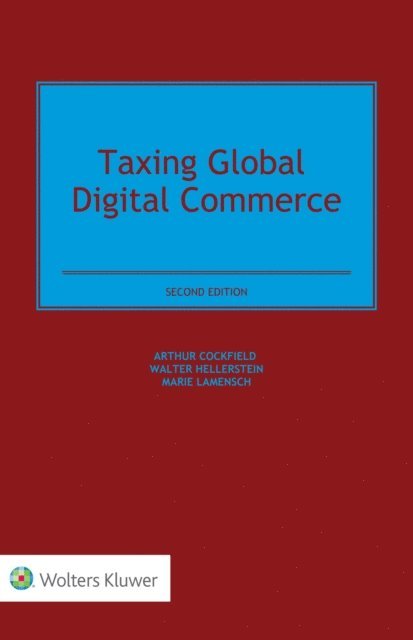
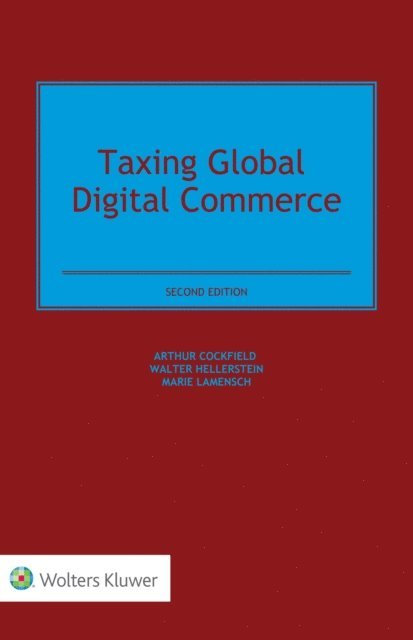
Digital commerce – the use of computer networks to facilitate transactions involving the production, distribution, sale, and delivery of goods and services – has grown from merely streamlining relations between consumer and business to a much more robust phenomenon embracing efficient business processes within a firm and between firms. Inevitably, the related taxation issues have grown as well. This latest edition of the preeminent text on the taxation of digital transactions revises, updates and expands the book’s coverage. It includes a detailed and up-to-date analysis of income tax and VAT developments regarding digital commerce under the OECD and G20 Base Erosion and Profit Shifting (BEPS) reforms. It explores the implications of digital commerce for US state sales and use tax regimes resulting from the 2018 US Supreme Court decision in Wayfair. It discusses cross-border tax in the United States while continuing to focus on tax developments throughout the world. Analysing the practical tax consequences of digital commerce from a multijurisdictional perspective, and using examples to illustrate the application of different taxes to digital commerce transactions, the book offers in-depth treatment of such topics as the following:
how tax rules governing cross-border digital commerce are increasingly applied to all cross-border activities; how tax rules and institutional processes have evolved to confront challenges posed by digital commerce; how an emerging ‘tax war’ is developing whereby different countries are unilaterally imposing new tax rules on cross-border digital commerce; how technology enhances tax and cross-border tax information exchanges; how technology reduces both compliance and enforcement costs; cross-border consumption tax issues raised by cloud computing; and different approaches to the legal design of VAT place of taxation rules.The authors offer insightful views on the likely development of new approaches to taxing cross-border digital commerce. This edition, while building on the analysis of the relationship between traditional tax laws and the Internet in the first edition and its predecessors, contains a more explicit and systematic consideration of digital commerce issues and the ongoing policy responses to them. Tax professionals and academics everywhere will welcome the important contribution it makes towards the design of cross-border tax rules that are both conceptually sound and practical in application.
‘A tour de force … much larger and richer than its predecessors … a massive contribution to the growing literature on the taxation of e-commerce.’ – Rita de la Feria, British Tax Review
‘Provides important understandings for ongoing policy discussions … I would warmly recommend.’ – P. Rendahl, World Journal of VAT/GST Law
2 321 kr
Läs direkt efter köp
A fast-growing portion of overall taxable consumption is now realized via online supplies and this ''digital economy'' is a virtual reality in which suppliers and consumers conclude numerous transactions unrestrained by time and place. The contrast with traditional sales tax and value added tax (VAT) systems, which are based on a physical supply between parties, could not be more evident.
Among jurisdictions worldwide, the European Union (EU) took the lead in designing a legal framework for VAT on electronically supplied goods and services. This book, with contributions by internationally re-owned academics, revenue officials, and tax advisors, provides a broad and up-to-date overview of the EU 2015 rules, and an analysis of such elements as the gradual realization of the destination principle, the fight against e-commerce fraud, and simplification of compliance obligations by means of the Mini One Stop Shop (MOSS). Topics covered include the VAT dimension of:
- the digital ''fixed establishment'';- businesses as tax collectors;- auditing under MOSS;- Internet search engines;- virtual currencies (such as bitcoins);- cloud computing; and- technology-based solutions for the assessment and collection of VAT on online supplies.Relevant EU legislation is annexed.
Because of its clear and practical analysis to these issues, this book will appeal to tax authorities and counsel who need to ensure proper taxation of online supplies at destination with the least possible administrative costs and the lowest possible compliance burdens. Because of its forward looking approach it is a ''must''; for all public and private sector professionals concerned with VAT.
2 641 kr
Läs direkt efter köp
Digital commerce – the use of computer networks to facilitate transactions involving the production, distribution, sale, and delivery of goods and services – has grown from merely streamlining relations between consumer and business to a much more robust phenomenon embracing efficient business processes within a firm and between firms. Inevitably, the related taxation issues have grown as well. This latest edition of the preeminent text on the taxation of digital transactions revises, updates and expands the book’s coverage. It includes a detailed and up-to-date analysis of income tax and VAT developments regarding digital commerce under the OECD and G20 Base Erosion and Profit Shifting (BEPS) reforms. It explores the implications of digital commerce for US state sales and use tax regimes resulting from the 2018 US Supreme Court decision in Wayfair. It discusses cross-border tax in the United States while continuing to focus on tax developments throughout the world. Analysing the practical tax consequences of digital commerce from a multijurisdictional perspective, and using examples to illustrate the application of different taxes to digital commerce transactions, the book offers in-depth treatment of such topics as the following:
how tax rules governing cross-border digital commerce are increasingly applied to all cross-border activities; how tax rules and institutional processes have evolved to confront challenges posed by digital commerce; how an emerging ‘tax war’ is developing whereby different countries are unilaterally imposing new tax rules on cross-border digital commerce; how technology enhances tax and cross-border tax information exchanges; how technology reduces both compliance and enforcement costs; cross-border consumption tax issues raised by cloud computing; and different approaches to the legal design of VAT place of taxation rules.The authors offer insightful views on the likely development of new approaches to taxing cross-border digital commerce. This edition, while building on the analysis of the relationship between traditional tax laws and the Internet in the first edition and its predecessors, contains a more explicit and systematic consideration of digital commerce issues and the ongoing policy responses to them. Tax professionals and academics everywhere will welcome the important contribution it makes towards the design of cross-border tax rules that are both conceptually sound and practical in application.
‘A tour de force … much larger and richer than its predecessors … a massive contribution to the growing literature on the taxation of e-commerce.’ – Rita de la Feria, British Tax Review
‘Provides important understandings for ongoing policy discussions … I would warmly recommend.’ – P. Rendahl, World Journal of VAT/GST Law
890 kr
Skickas inom 5-8 vardagar
1 136 kr
Skickas inom 5-8 vardagar
987 kr
Läs direkt efter köp
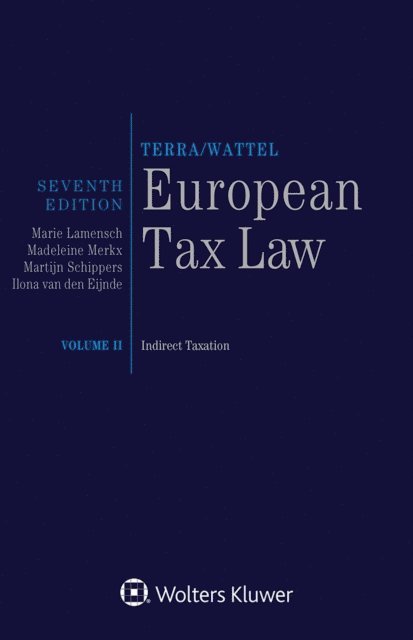
European Tax Law
Seventh Edition
Volume II
Marie Lamensch, Madeleine Merkx, Martijn Schippers, Ilona van den Eijnde
Marie Lamensch is Professor of taxation at the UCLouvain and the Free University of Brussels and a lawyer at the Brussels’ Bar. She is also a member of the VAT Expert Group of the European Commission.
Madeleine Merkx is Professor of indirect taxes at Erasmus University Rotterdam and a partner at the Tax Research Center of BDO the Netherlands.
Martijn Schippers is Assistant Professor in customs law and indirect taxation at the Erasmus School of Law, programme coordinator of EFS’ Post-Master in EU Customs Law and member of EY’s Global Trade & Customs team in the Netherlands.
Ilona van den Eijnde is Academic Teacher in customs law and indirect taxation at the Erasmus School of Law and a lawyer at EY in Rotterdam, specialized in customs, environmental & lifestyle taxation.
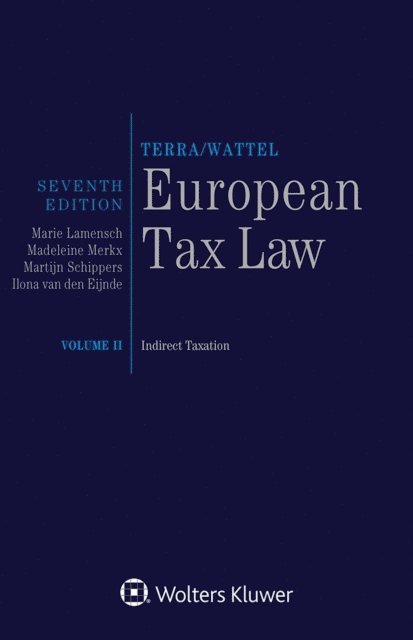
The seventh edition of this leading textbook brings its comprehensive and systematic survey of European Indirect Tax Law up to July 2021. With its critical discussion of the EU tax rules in force and of the relevant ECJ case law, it surpasses every other edition in its clarification and analysis of the EU regulatory framework applicable to indirect taxes.
The in-depth coverage of this Volume II includes:
The Union Customs legislation
The harmonised Union VAT legislation
The harmonised Union excise and environmental tax legislation
The Union administrative cooperation regulatory framework applicable to indirect taxes.
Volume I of this book covers general topics of EU law relevant for taxation and EU law on direct taxation.
Ben J.M. Terra (University of Amsterdam, the Netherlands, and Lund University, Sweden) and
Peter J. Wattel (University of Amsterdam) wrote the first six editions of this handbook
987 kr
Läs direkt efter köp
European Tax Law
Seventh Edition
Volume II
Marie Lamensch, Madeleine Merkx, Martijn Schippers, Ilona van den Eijnde
Marie Lamensch is Professor of taxation at the UCLouvain and the Free University of Brussels and a lawyer at the Brussels’ Bar. She is also a member of the VAT Expert Group of the European Commission.
Madeleine Merkx is Professor of indirect taxes at Erasmus University Rotterdam and a partner at the Tax Research Center of BDO the Netherlands.
Martijn Schippers is Assistant Professor in customs law and indirect taxation at the Erasmus School of Law, programme coordinator of EFS’ Post-Master in EU Customs Law and member of EY’s Global Trade & Customs team in the Netherlands.
Ilona van den Eijnde is Academic Teacher in customs law and indirect taxation at the Erasmus School of Law and a lawyer at EY in Rotterdam, specialized in customs, environmental & lifestyle taxation.
The seventh edition of this leading textbook brings its comprehensive and systematic survey of European Indirect Tax Law up to July 2021. With its critical discussion of the EU tax rules in force and of the relevant ECJ case law, it surpasses every other edition in its clarification and analysis of the EU regulatory framework applicable to indirect taxes.
The in-depth coverage of this Volume II includes:
The Union Customs legislation
The harmonised Union VAT legislation
The harmonised Union excise and environmental tax legislation
The Union administrative cooperation regulatory framework applicable to indirect taxes.
Volume I of this book covers general topics of EU law relevant for taxation and EU law on direct taxation.
Ben J.M. Terra (University of Amsterdam, the Netherlands, and Lund University, Sweden) and
Peter J. Wattel (University of Amsterdam) wrote the first six editions of this handbook