Marie Schwimmer – författare
Visar alla böcker från författaren Marie Schwimmer. Handla med fri frakt och snabb leverans.
2 produkter
2 produkter
Häftad, Engelska, 2024
1 012 kr
Skickas inom 10-15 vardagar
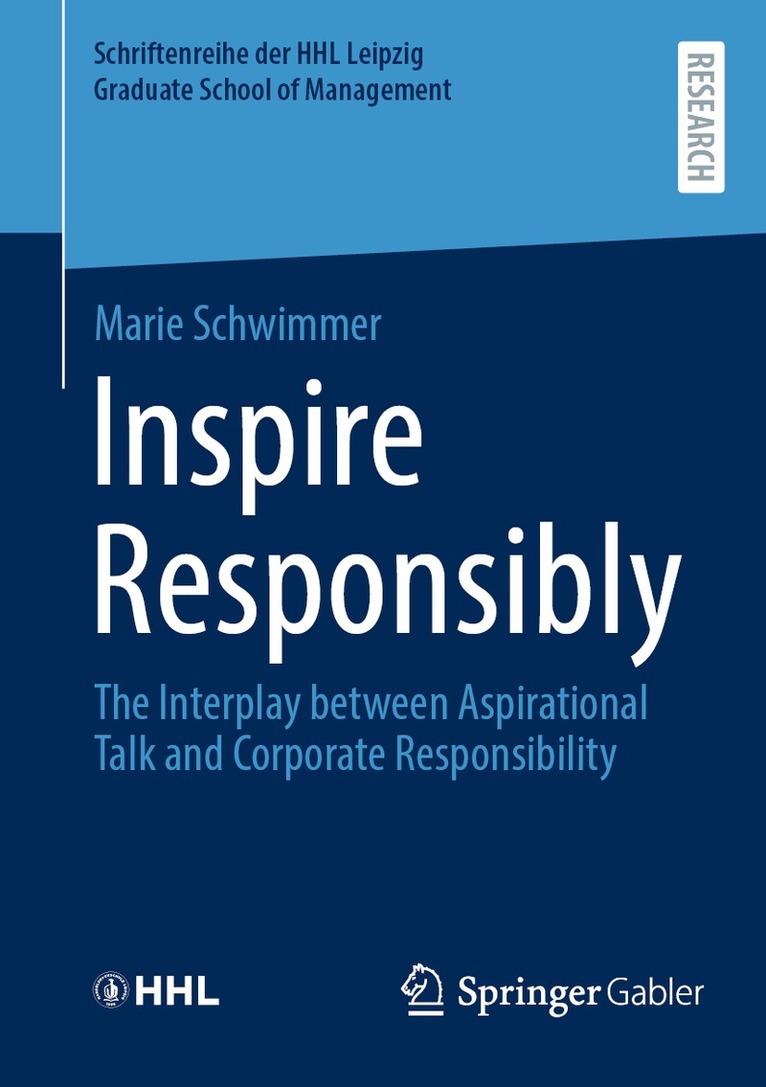
Aspirational talk has gained increasing research attention as a compelling concept theoretically explaining the potential of talk-action discrepancies in corporate responsibility communication to instigate organizational change. Under certain conditions, aspirational talk can facilitate discourse, agreement, reframing, and corporate reflexivity. However, perceived talk-action discrepancies can negatively affect organizational members, leading to disengagement, and demotivation, causing emotional exhaustion, exposing employees to vulnerabilities, and even catalyzing unethical or illicit behaviors. Thus, this book focuses on how aspirational talk becomes irresponsible in an organizational context, and how it can be avoided. The author proposes that aspirational talk becomes irresponsible if it creates expectations that lead to illegitimate harm to employees or involved stakeholders. A framework is derived, constituting the finding that it takes two types of investments into performativity and responsibility conditions, to avoid the irresponsible use of aspirational talk – and thus, to inspire responsibly.
E-bok
Engelska, 20241 269 kr
Läs direkt efter köp
Aspirational talk has gained increasing research attention as a compelling concept theoretically explaining the potential of talk-action discrepancies in corporate responsibility communication to instigate organizational change. Under certain conditions, aspirational talk can facilitate discourse, agreement, reframing, and corporate reflexivity. However, perceived talk-action discrepancies can negatively affect organizational members, leading to disengagement, and demotivation, causing emotional exhaustion, exposing employees to vulnerabilities, and even catalyzing unethical or illicit behaviors. Thus, this book focuses on how aspirational talk becomes irresponsible in an organizational context, and how it can be avoided. The author proposes that aspirational talk becomes irresponsible if it creates expectations that lead to illegitimate harm to employees or involved stakeholders. A framework is derived, constituting the finding that it takes two types of investments into performativity and responsibility conditions, to avoid the irresponsible use of aspirational talk – and thus, to inspire responsibly.