
Marilyn C. Wesley – författare
Visar alla böcker från författaren . Handla med fri frakt och snabb leverans.
4 produkter
4 produkter
Inbunden, Engelska, 1993
1 197 kr
Skickas inom 10-15 vardagar
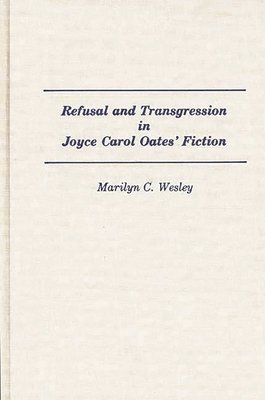
This comprehensive and sophisticated feminist analysis contradicts the negative evaluations of earlier feminist critics to define Oates' feminist accomplishments. Wesley presents Oates' fiction as a dynamic structure that grew out of her obsessive concern with the American family and shows her literary patterns of resistance to the gender ideology that shapes it. She illustrates how Oates' disturbing portrayals of troubled families can and do address complex issues of power in contemporary society--economic dislocation, gender inequity, and violence--as they are experienced in intimate relationships.The author defines and exemplifies the central concepts of family, power, and resistance in Oates' work with reference to her own literary criticism and the theoretical principles of Frederic Jameson. She begins by examining the presentation of the mother and the father in Oates' earliest works and then charts mother and daughter, brother and sister, and other family relationships. Wesley contends that the power dynamics of Oates' families relegate daughters to a position of impotence and sons to one of isolation and shows that the evolution of the children's refusal to identify themselves with their male or female models is a major focus in Oates' fiction.

Inbunden, Engelska, 2003
880 kr
Skickas inom 10-15 vardagar
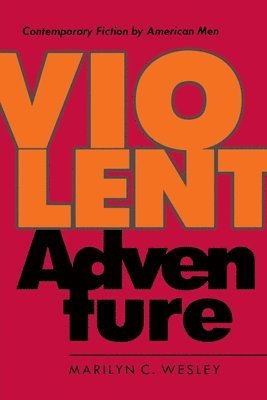
As the mother of young sons, Marilyn Wesley became increasingly concerned about the conflicting messages they received in a world where ""Han Solo replaced John Wayne as a national hero and the lost war in Vietnam was mediated by GI Joe dolls and Rambo movies"". What, she wondered, do the stories we tell our boys teach them about being men and what does a culture of male violence teach our young boys about being violent men? Questioning both the popular condemnation of violent representation and the notion that violence can be constructive by empowering the identity of an integrated adult self, Wesley identifies a revealing pattern of ""violent adventure"" in recent fiction by American men. Although the wide range of texts examined have in common the use of violence associated with traditional genres of adventure (boy's life narratives, Westerns, detective and war stories, as well as what she terms the contemporary epic), their portrayals add a twist. Tim O'Brien, Thom Jones, Tobias Wolff, Pinckney Benedict, Richard Ford, Cormac McCarthy, Ernest Gaines, Walter Mosley, Russell Banks and Don DeLillo all preserve the traditional notion of masculine development as portrayed through violent male action. Yet Wesley contends they do so to demonstrate the violence in fact neither produces power nor promotes the satisfactory entry of young men into a supportive identifying community. By studying the effects of violent representation as it is being rewritten in contemporary literature, Wesley demonstrates the current adaptations by a diverse range of male writers subvert conventional patterns of violent content and generic form to foreground issues of cultural and material power relations.
Häftad, Engelska, 2003
341 kr
Skickas inom 10-15 vardagar
As the mother of young sons, Marilyn Wesley became increasingly concerned about the conflicting messages they received in a world where ""Han Solo replaced John Wayne as a national hero and the lost war in Vietnam was mediated by GI Joe dolls and Rambo movies"". What, she wondered, do the stories we tell our boys teach them about being men and what does a culture of male violence teach our young boys about being violent men? Questioning both the popular condemnation of violent representation and the notion that violence can be constructive by empowering the identity of an integrated adult self, Wesley identifies a revealing pattern of ""violent adventure"" in recent fiction by American men. Although the wide range of texts examined have in common the use of violence associated with traditional genres of adventure (boy's life narratives, Westerns, detective and war stories, as well as what she terms the contemporary epic), their portrayals add a twist. Tim O'Brien, Thom Jones, Tobias Wolff, Pinckney Benedict, Richard Ford, Cormac McCarthy, Ernest Gaines, Walter Mosley, Russell Banks and Don DeLillo all preserve the traditional notion of masculine development as portrayed through violent male action. Yet Wesley contends they do so to demonstrate the violence in fact neither produces power nor promotes the satisfactory entry of young men into a supportive identifying community. By studying the effects of violent representation as it is being rewritten in contemporary literature, Wesley demonstrates the current adaptations by a diverse range of male writers subvert conventional patterns of violent content and generic form to foreground issues of cultural and material power relations.
Häftad, Engelska, 1998
441 kr
Tillfälligt slut
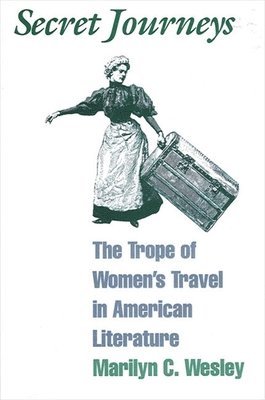
Examines the subversive and constructive narrative of female journey in American literature, from the seventeenth century to the present.Travel is the root metaphor for Western progress, a fact particularly evident in a colonizing and immigrant nation like the United States. Despite changing historical circumstances from one American epoch to another, men have generally been associated with adventurous movement and women with domestic stasis, a bias that has obscured recognition of a significant trope: the woman traveler throughout American literature.Secret Journeys examines the subversive and constructive narrative of female journey from the seventeenth century to the present in such works as John Greenleaf Whittier's Snowbound, Mary Rowlandson's A Narrative of the Captivity and Restauration of Mary Rowlandson, Harriet Jacobs's Incidents in the Life of a Slave Girl, Sarah Orne Jewett's The Country of the Pointed Firs, Edith Wharton's Summer, Willa Cather's The Professor's House, Marilynne Robinson's Housekeeping, Eudora Welty's short fiction, and Elizabeth Bishop's poetry. In recognizing the figure of the woman traveler, Wesley produces new readings of canonical texts that subvert social and political assumptions in texts by men and construct alternative arrangements in texts by women.