
Marilyn G. Miller – författare
Visar alla böcker från författaren . Handla med fri frakt och snabb leverans.
5 produkter
5 produkter
Häftad, Engelska, 2021
392 kr
Skickas
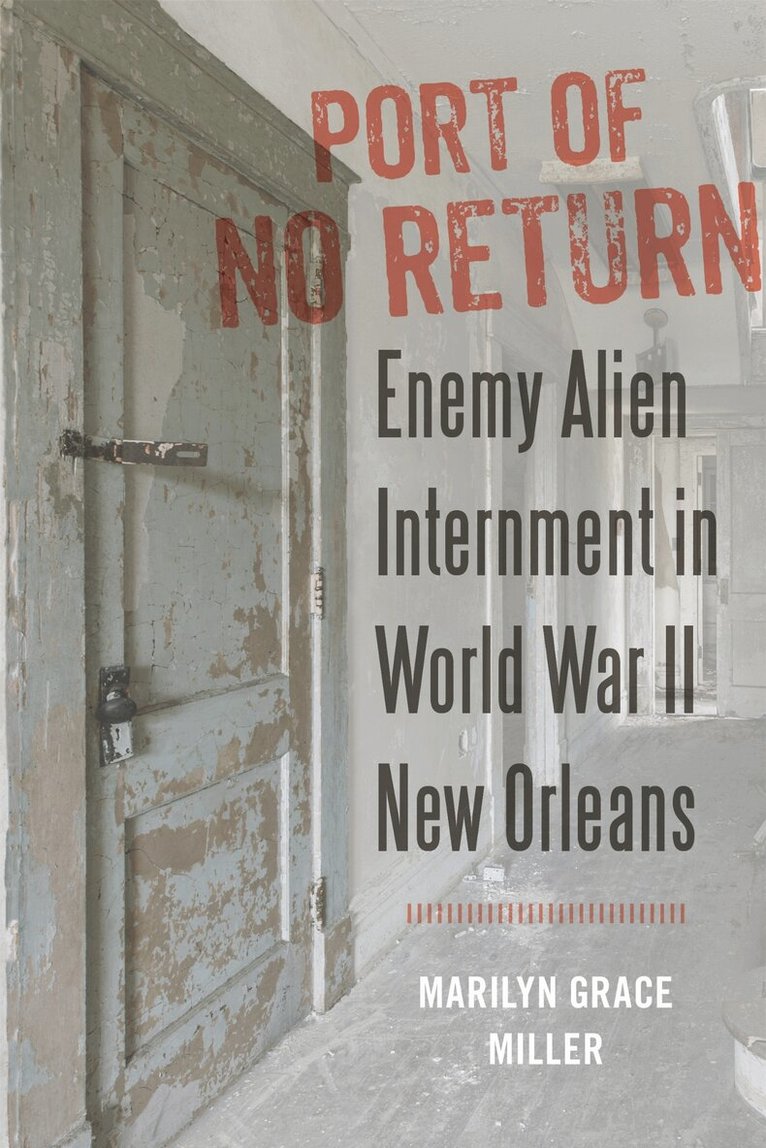
While most people are aware of the World War II internment of thousands of Japanese citizens and residents of the United States, few know that Germans, Austrians, and Italians were also apprehended and held in internment camps under the terms of the Enemy Alien Control Program. Port of No Return tells the story of New Orleans's key role in this complex secret operation through the lens of Camp Algiers, located just three miles from downtown New Orleans.Deemed to be one of two principal ports through which enemy aliens might enter the United States, New Orleans saw the arrival of thousands of Latin American detainees during the war years. Some were processed there by the Immigration and Naturalization Service before traveling on to other detention facilities, while others spent years imprisoned at Camp Algiers. In 1943, a contingent of Jewish refugees, some of them already survivors of concentration camps in Europe, were transferred to Camp Algiers in the wake of tensions at other internment sites that housed both refugees and Nazis. The presence of this group earned Camp Algiers the nickname ""Camp of the Innocents.""Despite the sinister overtones of the ""enemy alien"" classification, most of those detained were civilians who possessed no criminal record and had escaped difficult economic or political situations in their countries of origin by finding a refuge in Latin America. While the deportees had been assured that their stay in the United States would be short, such was rarely the case. Few of those deported to the U.S. during World War II were able to return to their countries of residence, either because their businesses and properties had been confiscated or because their home governments rejected their requests for reentry. Some were even repatriated to their countries of origin, a possibility that horrified Jews and others who had suffered under the Nazis. Port of No Return tells the varied, fascinating stories of these internees and their lives in Camp Algiers.
Inbunden, Engelska, 2014
1 281 kr
Skickas inom 5-8 vardagar
From its earliest manifestations on the street corners of nineteenth-century Buenos Aires to its ascendancy as a global cultural form, tango has continually exceeded the confines of the dance floor or the music hall. In Tango Lessons, scholars from Latin America and the United States explore tango's enduring vitality. The interdisciplinary group of contributors-including specialists in dance, music, anthropology, linguistics, literature, film, and fine art-take up a broad range of topics. Among these are the productive tensions between tradition and experimentation in tango nuevo, representations of tango in film and contemporary art, and the role of tango in the imagination of Jorge Luis Borges. Taken together, the essays show that tango provides a kaleidoscopic perspective on Argentina's social, cultural, and intellectual history from the late nineteenth to the early twenty-first centuries.Contributors. Esteban Buch, Oscar Conde, Antonio GÓmez, Morgan James Luker, Carolyn Merritt, Marilyn G. Miller, Fernando Rosenberg, Alejandro Susti
Häftad, Engelska, 2014
304 kr
Skickas inom 5-8 vardagar
From its earliest manifestations on the street corners of nineteenth-century Buenos Aires to its ascendancy as a global cultural form, tango has continually exceeded the confines of the dance floor or the music hall. In Tango Lessons, scholars from Latin America and the United States explore tango's enduring vitality. The interdisciplinary group of contributors-including specialists in dance, music, anthropology, linguistics, literature, film, and fine art-take up a broad range of topics. Among these are the productive tensions between tradition and experimentation in tango nuevo, representations of tango in film and contemporary art, and the role of tango in the imagination of Jorge Luis Borges. Taken together, the essays show that tango provides a kaleidoscopic perspective on Argentina's social, cultural, and intellectual history from the late nineteenth to the early twenty-first centuries.Contributors. Esteban Buch, Oscar Conde, Antonio GÓmez, Morgan James Luker, Carolyn Merritt, Marilyn G. Miller, Fernando Rosenberg, Alejandro Susti
Häftad, Engelska, 2024
590 kr
Skickas inom 5-8 vardagar
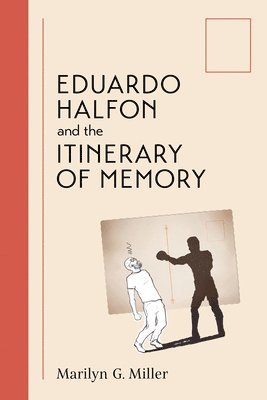
Arguably, all of Guatemalan writer Eduardo Halfon’s fictional works deal with quandaries of translation, even in their original versions. The award-winning author of fourteen books claims to have lost his mother tongue when his family fled to the United States after his tenth birthday. This displacement, echoing the displacement of his four grandparents from different corners of the Jewish diaspora to Guatemala, gives Halfon, like his ancestors before him, good reason to consider translation a natural environment for his creative work and for life itself. Indeed, Halfon’s uncanny ability to translate his family’s history into “fictions” that resonate across the globe with readers in Spanish, English, and several other languages helps explain why he has received numerous prizes in the United States, Spain, Guatemala, and even France, some as a Latin American author, others as a Latino or Jewish author.Marilyn Grace Miller has written the first study to focus exclusively on this important voice in Jewish–Latin American letters. Only after returning to Guatemala and regaining his command of Spanish through reading literature did Halfon begin to build his life as a writer and translator. Nonetheless, the author admits that “one thing is stubbornly true, and it’s this: every sentence that I write, every verb or adjective that I painstakingly insert or remove, every literary thought that I have while writing, always . . . begins and ends in English.” Halfon’s translated works are never parallel texts, however. Thus, translation and its side effects (foreign words, linguistic lacunae, multilingual modes of perception) offer us crucial keys to understanding the author’s fictional world as a vehicle for retelling and surviving Jewish trauma and finding his own particular plurilingual voice.
Inbunden, Engelska, 2024
1 654 kr
Skickas inom 5-8 vardagar
Arguably, all of Guatemalan writer Eduardo Halfon’s fictional works deal with quandaries of translation, even in their original versions. The award-winning author of fourteen books claims to have lost his mother tongue when his family fled to the United States after his tenth birthday. This displacement, echoing the displacement of his four grandparents from different corners of the Jewish diaspora to Guatemala, gives Halfon, like his ancestors before him, good reason to consider translation a natural environment for his creative work and for life itself. Indeed, Halfon’s uncanny ability to translate his family’s history into “fictions” that resonate across the globe with readers in Spanish, English, and several other languages helps explain why he has received numerous prizes in the United States, Spain, Guatemala, and even France, some as a Latin American author, others as a Latino or Jewish author.Marilyn Grace Miller has written the first study to focus exclusively on this important voice in Jewish–Latin American letters. Only after returning to Guatemala and regaining his command of Spanish through reading literature did Halfon begin to build his life as a writer and translator. Nonetheless, the author admits that “one thing is stubbornly true, and it’s this: every sentence that I write, every verb or adjective that I painstakingly insert or remove, every literary thought that I have while writing, always . . . begins and ends in English.” Halfon’s translated works are never parallel texts, however. Thus, translation and its side effects (foreign words, linguistic lacunae, multilingual modes of perception) offer us crucial keys to understanding the author’s fictional world as a vehicle for retelling and surviving Jewish trauma and finding his own particular plurilingual voice.