Mark A. Snell – författare
736 kr
Läs direkt efter köp
685 kr
Skickas inom 5-8 vardagar
805 kr
Läs direkt efter köp
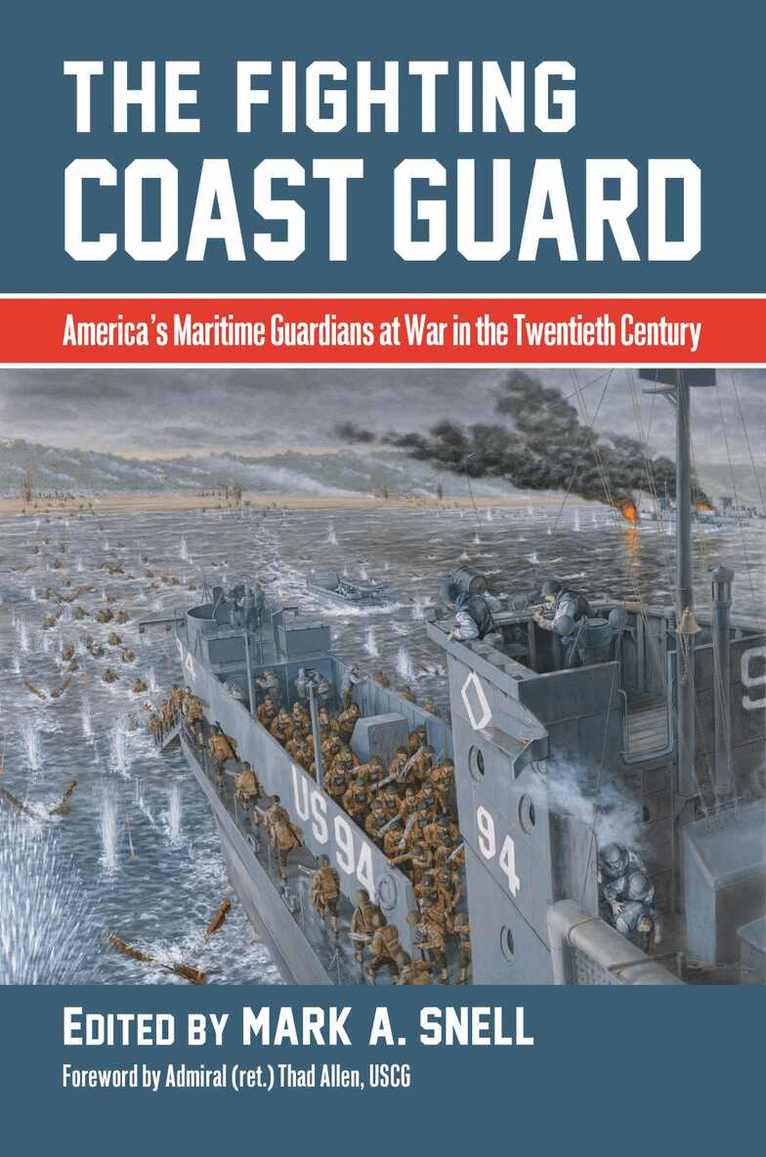
This collection of essays, written by the some of the foremost historians in the field of Coast Guard history, highlights the wartime roles played by the United States’ oldest federal maritime service, from its inception through the last decade of the twentieth century. The Fighting Coast Guard features three distinct sections: “Beginnings,” which includes a short overview of the US Revenue Cutter Service (the USCG’s primary forerunner, established in 1790) and two chapters on World War I; “Conflagration,” the role of the USCG during the World War II era; and “The Cold War and Beyond,” an assessment of the Coast Guard’s participation in the Korean Conflict, the Vietnam War, and the Persian Gulf War of 1991. The Fighting Coast Guard is a significant contribution to the limited historiography of the Coast Guard and a critical analysis of various wartime roles undertaken by the Coast Guard during America’s twentieth-century conflicts.
Because the Coast Guard operated as part of the Department of the Navy during the two world wars, its service and history is often overlooked or enveloped by the larger service, while the USCG’s limited participation in cold and hot wars since 1945 is often ignored altogether. This anthology provides readers with a solid overview while highlighting some of the service’s most important contributions as a combatant force.
This definitive study of the role of the US Coast Guard in wartime, from its modern inception in 1915 through the end of the twentieth century, is long overdue and will shed new light on America’s smallest military service.
1 248 kr
Skickas inom 10-15 vardagar
546 kr
Skickas inom 5-8 vardagar
378 kr
Skickas inom 3-6 vardagar
398 kr
Läs direkt efter köp
The Great War remembered
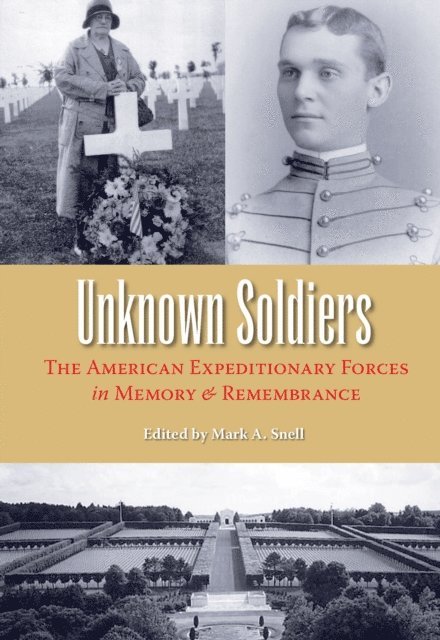
“This book is not a history of World War I, nor is it a history of the American Expeditionary Forces (AEF) on the Western Front. Rather, it is a collection of essays that examines how the wartime generation and those that followed have remembered or commemorated individuals, groups, and military organizations that comprised the AEF.” —from the Preface
When the United States declared war in April 1917, President Woodrow Wilson sent the American Expeditionary Forces (AEF) under the command of General John Pershing to the Western Front. After the war, Pershing became the head of the American Battle Monuments Commission, the new government agency that commemorated the AEF’s exploits.
The essays comprising Unknown Soldiers are divided into three sections: “Remembering the AEF,” “Soldiers and Their Units in Battle and Beyond,” and “The AEF in Popular Memory.” The first section provides an overview of how Americans and the government have remembered, commemorated, and interpreted the history of the AEF, its battles, and its soldiers. The four essays in the second section shed light on how the doughboys fought, how they interacted with Allied soldiers, how the war shaped their postwar careers and memories, and how heroic feats became the stuff of myth and legend. The last section explores how the AEF has been remembered through popular literature, film, and music.
This collection draws on primary sources from previously unheard voices, including memoirs, autobiographies, official records, and oral histories, to present the coherent story of the AEF’s experience and the memories they evoked. Unknown Soldiers will be a welcome addition to World War I literature and a solid addition to the fields of military history and the history of memory.
398 kr
Läs direkt efter köp
The Great War remembered
“This book is not a history of World War I, nor is it a history of the American Expeditionary Forces (AEF) on the Western Front. Rather, it is a collection of essays that examines how the wartime generation and those that followed have remembered or commemorated individuals, groups, and military organizations that comprised the AEF.” —from the Preface
When the United States declared war in April 1917, President Woodrow Wilson sent the American Expeditionary Forces (AEF) under the command of General John Pershing to the Western Front. After the war, Pershing became the head of the American Battle Monuments Commission, the new government agency that commemorated the AEF’s exploits.
The essays comprising Unknown Soldiers are divided into three sections: “Remembering the AEF,” “Soldiers and Their Units in Battle and Beyond,” and “The AEF in Popular Memory.” The first section provides an overview of how Americans and the government have remembered, commemorated, and interpreted the history of the AEF, its battles, and its soldiers. The four essays in the second section shed light on how the doughboys fought, how they interacted with Allied soldiers, how the war shaped their postwar careers and memories, and how heroic feats became the stuff of myth and legend. The last section explores how the AEF has been remembered through popular literature, film, and music.
This collection draws on primary sources from previously unheard voices, including memoirs, autobiographies, official records, and oral histories, to present the coherent story of the AEF’s experience and the memories they evoked. Unknown Soldiers will be a welcome addition to World War I literature and a solid addition to the fields of military history and the history of memory.
278 kr
Läs direkt efter köp
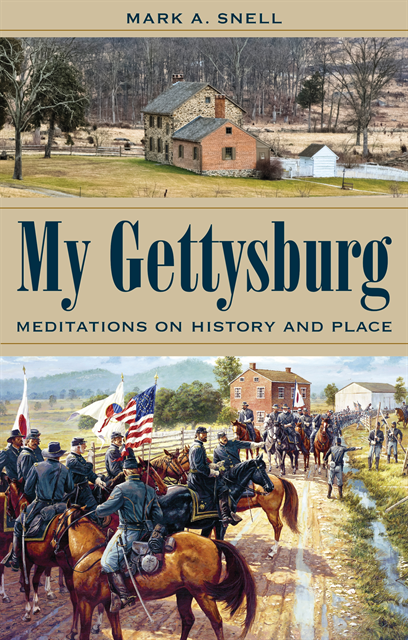
The Gettysburg Campaign and its culminating battle have generated more than their share of analysis and published works. In My Gettysburg, Civil War scholar and twenty-six-year Gettysburg resident Mark Snell goes beyond the campaign itself to explore the “culture” of the battlefield. In this fascinating collection, Snell provides an intriguing interpretation of some neglected military aspects of the battle, such as a revisionist study of Judson Kilpatrick’s decision to launch “Farnsworth’s Charge” on the southern end of the Confederate line after Pickett’s Charge and the role of Union logisticians in the Northern victory. In addition, he looks at a town east of Gettysburg—York, Pennsylvania, a community that likewise suffered invasion in the summer of 1863—as well as at the role of Union and Confederate soldiers from the new state of West Virginia who fought against each other during the campaign. Further, this collection assesses Gettysburg’s evolution as a historic place: an American shrine, an inspiration for popular music, a training ground for soldiers past and present, a mecca for reenactors, a combat zone between commercial developers and preservationists, and a home to its residents—including the author, who gives us a personal view of what the battlefield and its surrounding community have come to mean to him.
A retired Army officer and an established authority on the Civil War and military history, Snell amply demonstrates in this thought- provoking yet entertaining anthology that there remains much to learn even from such a well-studied subject as Gettysburg.
278 kr
Läs direkt efter köp
The Gettysburg Campaign and its culminating battle have generated more than their share of analysis and published works. In My Gettysburg, Civil War scholar and twenty-six-year Gettysburg resident Mark Snell goes beyond the campaign itself to explore the “culture” of the battlefield. In this fascinating collection, Snell provides an intriguing interpretation of some neglected military aspects of the battle, such as a revisionist study of Judson Kilpatrick’s decision to launch “Farnsworth’s Charge” on the southern end of the Confederate line after Pickett’s Charge and the role of Union logisticians in the Northern victory. In addition, he looks at a town east of Gettysburg—York, Pennsylvania, a community that likewise suffered invasion in the summer of 1863—as well as at the role of Union and Confederate soldiers from the new state of West Virginia who fought against each other during the campaign. Further, this collection assesses Gettysburg’s evolution as a historic place: an American shrine, an inspiration for popular music, a training ground for soldiers past and present, a mecca for reenactors, a combat zone between commercial developers and preservationists, and a home to its residents—including the author, who gives us a personal view of what the battlefield and its surrounding community have come to mean to him.
A retired Army officer and an established authority on the Civil War and military history, Snell amply demonstrates in this thought- provoking yet entertaining anthology that there remains much to learn even from such a well-studied subject as Gettysburg.
345 kr
Läs direkt efter köp
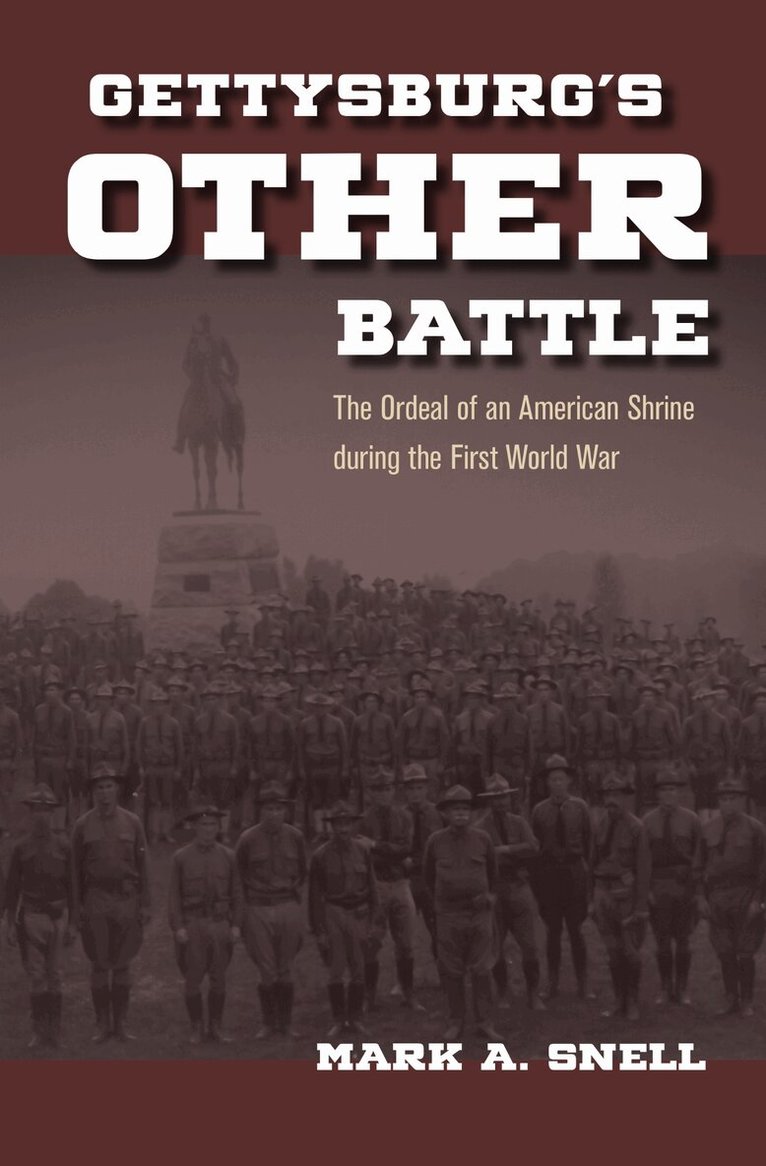
Gettysburg is known as the second bloodiest battle of the 19th century and as the site of Abraham Lincoln''s 1863 speech that gave new meaning to America''s Civil War. By the turn of the next century, the battlefield was enshrined as a national park under the jurisdiction of the War Department. In 1913, graying veterans commemorated the fiftieth anniversary of the momentous battle, dubbed the "Peace Jubilee," a unity celebration largely administered by the U.S. Army. Four years later, the Army returned to establish a Regular Army infantry-training cantonment on the battlefield. The Tank Corps took over in 1918, and the area was dubbed "Camp Colt."
Gettysburg''s Other Battle is the account of Gettysburg''s citizens and its tens of thousands of temporary guests during the Great War, a drama that took place on the most significant stage in American historical memory. It goes beyond the story of the training camps by using the Great War as a window-in-time to examine a unique community, one in the throes of modernization while at the same time trying to capitalize on, yet preserve a part of, the nation''s past.
Gettysburg''s residents, like all Americans during World War I, experienced measures such as conscription, food conservation, and censorship. As the nation applied Progressive reforms to the war effort, Gettysburg followed suit. Unlike other American towns and cities that hosted mobilization camps, Gettysburg was hallowed ground, and an earlier generation already had felt the ravages of war like few other American communities. Gettysburg was desecrated both unwittingly and intentionally-it took years for the national park to recover from this environmental catastrophe. Today, the only reminders of Gettysburg''s Great War heritage are a tiny marker, memorial tree, and wayside exhibit to commemorate Camp Colt, along with a small exhibit in the museum. Had Ike Eisenhower not commanded that camp in 1918, it doubtless would not be remembered at all.
345 kr
Läs direkt efter köp
Gettysburg is known as the second bloodiest battle of the 19th century and as the site of Abraham Lincoln''s 1863 speech that gave new meaning to America''s Civil War. By the turn of the next century, the battlefield was enshrined as a national park under the jurisdiction of the War Department. In 1913, graying veterans commemorated the fiftieth anniversary of the momentous battle, dubbed the "Peace Jubilee," a unity celebration largely administered by the U.S. Army. Four years later, the Army returned to establish a Regular Army infantry-training cantonment on the battlefield. The Tank Corps took over in 1918, and the area was dubbed "Camp Colt."
Gettysburg''s Other Battle is the account of Gettysburg''s citizens and its tens of thousands of temporary guests during the Great War, a drama that took place on the most significant stage in American historical memory. It goes beyond the story of the training camps by using the Great War as a window-in-time to examine a unique community, one in the throes of modernization while at the same time trying to capitalize on, yet preserve a part of, the nation''s past.
Gettysburg''s residents, like all Americans during World War I, experienced measures such as conscription, food conservation, and censorship. As the nation applied Progressive reforms to the war effort, Gettysburg followed suit. Unlike other American towns and cities that hosted mobilization camps, Gettysburg was hallowed ground, and an earlier generation already had felt the ravages of war like few other American communities. Gettysburg was desecrated both unwittingly and intentionally-it took years for the national park to recover from this environmental catastrophe. Today, the only reminders of Gettysburg''s Great War heritage are a tiny marker, memorial tree, and wayside exhibit to commemorate Camp Colt, along with a small exhibit in the museum. Had Ike Eisenhower not commanded that camp in 1918, it doubtless would not be remembered at all.