Mark Ackerman – författare
Visar alla böcker från författaren Mark Ackerman. Handla med fri frakt och snabb leverans.
5 produkter
Designing Healthcare That Works
A Sociotechnical Approach
Av Mark Ackerman, Michael Prilla m. fl.
Häftad, 2017
1051 kr
Lägg i varukorg
Designing Healthcare That Works: A Sociotechnical Approach takes up the pragmatic, messy problems of designing and implementing sociotechnical solutions which integrate organizational and technical systems for the benefit of human health. The book helps practitioners apply principles of …
Designing Healthcare That Works
A Sociotechnical Approach
Av Sean Goggins, Christian Stary m. fl.
E-bok, 2017
1444 kr
Lägg i varukorg
Designing Healthcare That Works: A Sociotechnical Approach takes up the pragmatic, messy problems of designing and implementing sociotechnical solutions which integrate organizational and technical systems for the benefit of human health. The book helps practitioners apply principles of …
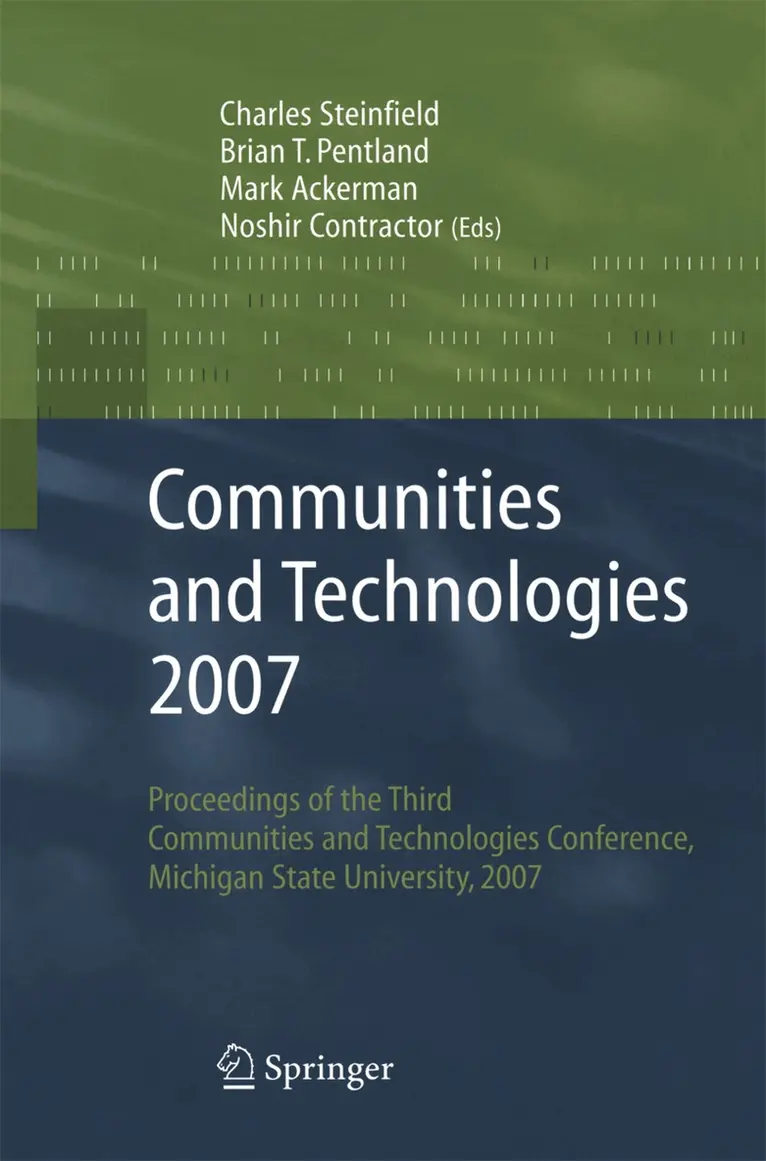
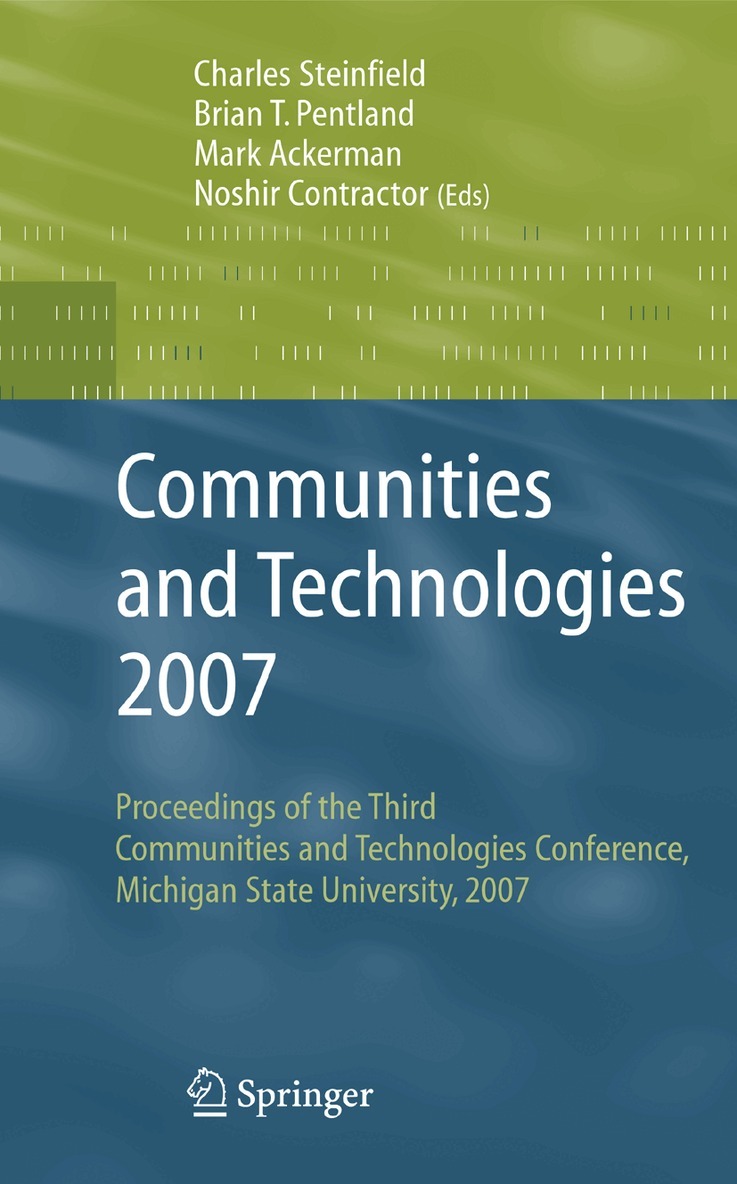
Communities and Technologies 2007
Proceedings of the Third Communities and Technologies Conference, Michigan State University 2007
Av Charles Steinfield, Brian T. Pentland m. fl.
Häftad, 2014
2185 kr
Lägg i varukorg
This book covers the relationship between information and communication technologies (ICTs) and communities – both physical and virtual. The chapters deal with such subjects as online social network communities, implicit online communities, tools for researching communities, user generated content …
Communities and Technologies 2007
Proceedings of the Third Communities and Technologies Conference, Michigan State University 2007
Av Charles Steinfield, Brian T. Pentland m. fl.
Inbunden, 2007
2250 kr
Lägg i varukorg
This book covers the relationship between information and communication technologies (ICTs) and communities – both physical and virtual. The chapters deal with such subjects as online social network communities, implicit online communities, tools for researching communities, user generated content …
Communities and Technologies 2007
Proceedings of the Third Communities and Technologies Conference, Michigan State University 2007
Av Noshir Contractor, Mark Ackerman m. fl.
E-bok, 2010
2925 kr
Lägg i varukorg
This book covers the relationship between information and communication technologies (ICTs) and communities – both physical and virtual. The chapters deal with such subjects as online social network communities, implicit online communities, tools for researching communities, user generated content …