Mark C Smith – författare
Visar alla böcker från författaren Mark C Smith. Handla med fri frakt och snabb leverans.
5 produkter
5 produkter
Häftad, Engelska, 2017
161 kr
Skickas inom 5-8 vardagar
Häftad, Engelska, 1994
428 kr
Skickas inom 5-8 vardagar
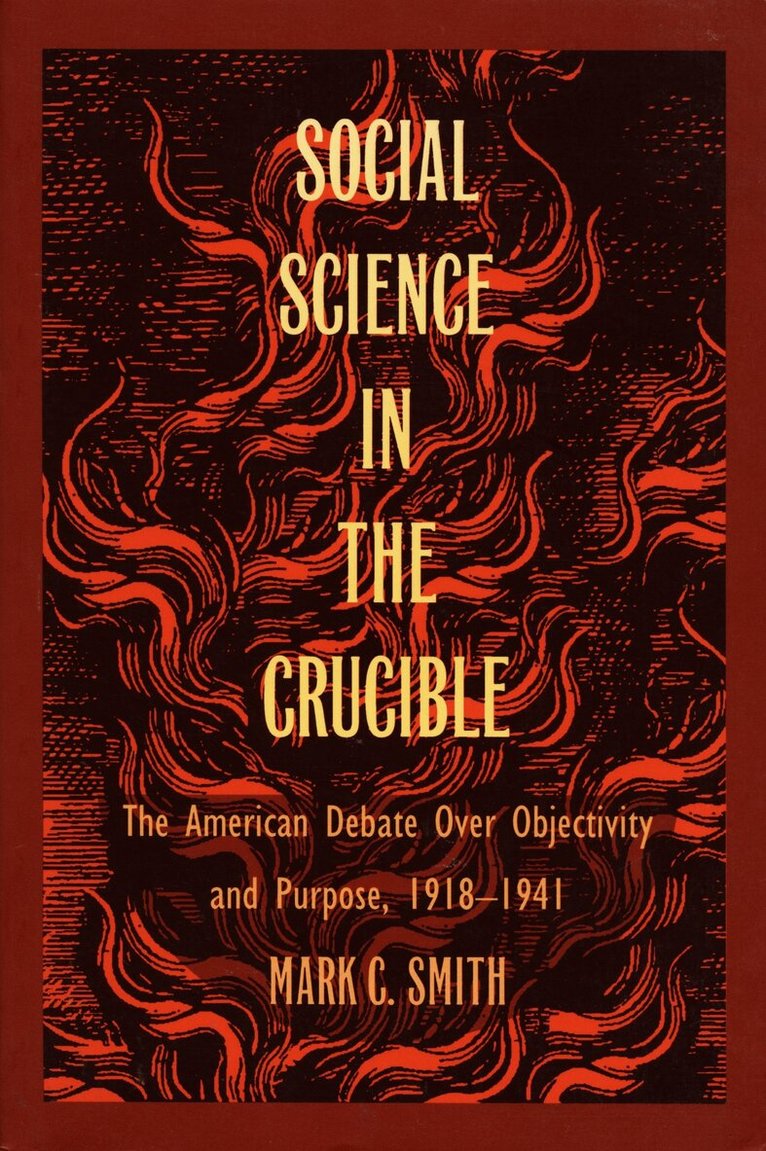
The 1920s and 30s were key decades for the history of American social science. The success of such quantitative disciplines as economics and psychology during World War I forced social scientists to reexamine their methods and practices and to consider recasting their field as a more objective science separated from its historical foundation in social reform. The debate that ensued, fiercely conducted in books, articles, correspondence, and even presidential addresses, made its way into every aspect of social science thought of the period and is the subject of this book. Mark C. Smith first provides a historical overview of the controversy over the nature and future of the social sciences in early twentieth-century America and, then through a series of intellectual biographies, offers an intensive study of the work and lives of major figures who participated in this debate. Using an extensive range of materials, from published sources to manuscript collections, Smith examines "objectivists"-economist Wesley Mitchell and political scientist Charles Merriam-and the more "purposive thinkers"-historian Charles Beard, sociologist Robert Lynd, and political scientist and neo-Freudian Harold Lasswell. He shows how the debate over objectivity and social purpose was central to their professional and personal lives as well as to an understanding of American social science between the two world wars. These biographies bring to vivid life a contentious moment in American intellectual history and reveal its significance in the shaping of social science in this country.
E-bok
PDF, Engelska, 1994629 kr
Läs direkt efter köp
The 1920s and 30s were key decades for the history of American social science. The success of such quantitative disciplines as economics and psychology during World War I forced social scientists to reexamine their methods and practices and to consider recasting their field as a more objective science separated from its historical foundation in social reform. The debate that ensued, fiercely conducted in books, articles, correspondence, and even presidential addresses, made its way into every aspect of social science thought of the period and is the subject of this book.Mark C. Smith first provides a historical overview of the controversy over the nature and future of the social sciences in early twentieth-century America and, then through a series of intellectual biographies, offers an intensive study of the work and lives of major figures who participated in this debate. Using an extensive range of materials, from published sources to manuscript collections, Smith examines "objectivists"—economist Wesley Mitchell and political scientist Charles Merriam—and the more "purposive thinkers"—historian Charles Beard, sociologist Robert Lynd, and political scientist and neo-Freudian Harold Lasswell. He shows how the debate over objectivity and social purpose was central to their professional and personal lives as well as to an understanding of American social science between the two world wars. These biographies bring to vivid life a contentious moment in American intellectual history and reveal its significance in the shaping of social science in this country.
E-bok
Engelska, 2021187 kr
Läs direkt efter köp
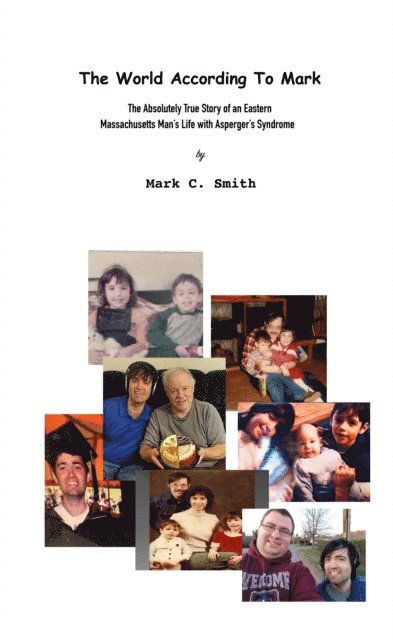
Hello Reader, I am Mark Smith from Carlisle, Massachusetts. Please take this message for real. I have Asperger's Syndrome (a high-functioning Autism) which makes me hard of reading people. Just like some people are hard of hearing, I am "e;Hard of Non-Verbal Hearing"e; which means that I have a hard time reading body-language and some of those social cues that are so important when it comes to meeting people, interacting appropriately at social events or in public, or even acting accordingly in ways where one can keep their job (not get fired for acting strange). No, I am entirely sane. I'm just different. I think in black and white too much (I mean absolutions, not prejudice). I have a difficult time understanding why people act the way they do and what motivates people to say the things they say and do things the way they do them. We Asperger's Syndrome people can overwhelm very quickly and very easily whenever reading very intense vibes from people, especially when they are extremely strong at non-verbal communication. Think of this analogy. You know how when people speak, the hard vowel sounds are the loudest and easiest for the Hard of Hearing person to hear while the soft consonant sounds are often missed? And even when the softer consonant sounds are spoken very loudly and clearly and the person is close to the speaker, they often have a difficult time differentiating between certain sounds? Well, with being "e;Hard of Non-Verbal Hearing,"e; the dead-obvious, hard-to-miss non-verbal cues I pick up on just fine are those hard vowel sounds of non-verbal communication. Meanwhile, those more subtle non-verbal cues and that less-obvious, pragmatic body-language and gesturing I tend to miss or in the very least, misinterpret and twist to form a completely different message. So, instead of making a confused face and cuffing my ear inferring I can't hear, I am instead left making that same blank stare, really focusing on the person but missing those valuable non-verbal messages. It's really hard for me to tell exactly when I'm hearing and when I'm not hearing (non-verbally, that is). And even though I now know how to concentrate and force myself to give eye-contact, I don't send enough facial expression when I talk to other people. This seems to send the message to people that something is wrong with me. But I do know what's going on when people talk behind my back. I may not be gifted but I'm not stupid. Well, if a person doesn't know me they might think I'm a bit slow.
Häftad, Engelska, 2008
348 kr
Skickas inom 5-8 vardagar