Mark Hutchinson – författare
Visar alla böcker från författaren Mark Hutchinson. Handla med fri frakt och snabb leverans.
10 produkter
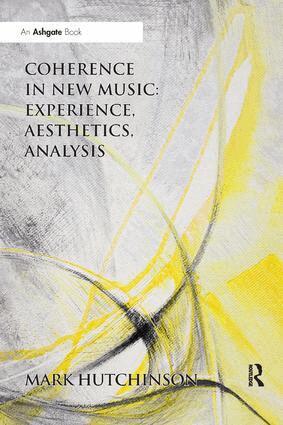
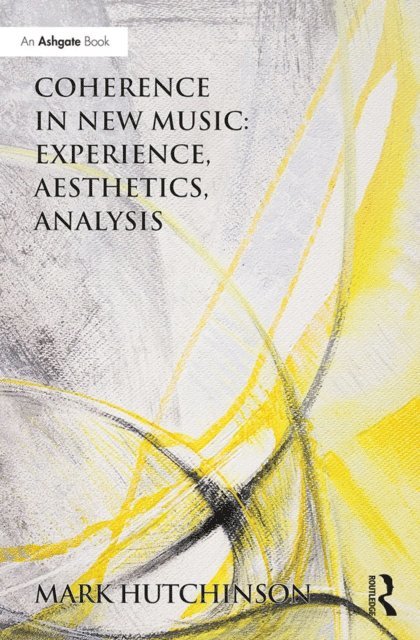
Coherence in New Music: Experience, Aesthetics, Analysis
Häftad, 2019
725 kr
Lägg i varukorg
What does it mean to talk about musical coherence at the end of a century characterised by fragmentation and discontinuity? How can the diverse influences which stand behind the works of many late twentieth-century composers be reconciled with the singular immediacy of the experiences that they can …
A Short History of Global Evangelicalism
Av Mark Hutchinson, John Wolffe
Häftad, 2012
553 kr
Lägg i varukorg
This book offers an authoritative overview of the history of evangelicalism as a global movement, from its origins in Europe and North America in the first half of the eighteenth century to its present-day dynamic growth in Africa, Asia, Latin America and Oceania. Starting with a definition of the …
A Short History of Global Evangelicalism
Av Mark Hutchinson, John Wolffe
Inbunden, 2012
1481 kr
Lägg i varukorg
This book offers an authoritative overview of the history of evangelicalism as a global movement, from its origins in Europe and North America in the first half of the eighteenth century to its present-day dynamic growth in Africa, Asia, Latin America and Oceania. Starting with a definition of the …
Glastonbury Abbey
The People and the Place, 1100 to 1539
E-bok, 2026
813 kr
Lägg i varukorg
Unlike other works on Glastonbury Abbey, this book examines the lives and relationships of its monks, using methods such as quantitative and network analysis to extract substantial data from records between 900 and 1550. The book''s recurring theme is that, in one sense, Glastonbury was not …
Glastonbury Abbey
The People and the Place, 1100 to 1539
E-bok, 2026
831 kr
Lägg i varukorg
Unlike other works on Glastonbury Abbey, this book examines the lives and relationships of its monks, using methods such as quantitative and network analysis to extract substantial data from records between 900 and 1550. The book''s recurring theme is that, in one sense, Glastonbury was not …
Glastonbury Abbey
The People and the Place, 1100 to 1539
Inbunden, 2026
2504 kr
Lägg i varukorg
Unlike other works on Glastonbury Abbey, this book examines the lives and relationships of its monks, using methods such as quantitative and network analysis to extract substantial data from records between 900 and 1550.The book's recurring theme is that, in one sense, Glastonbury was not …
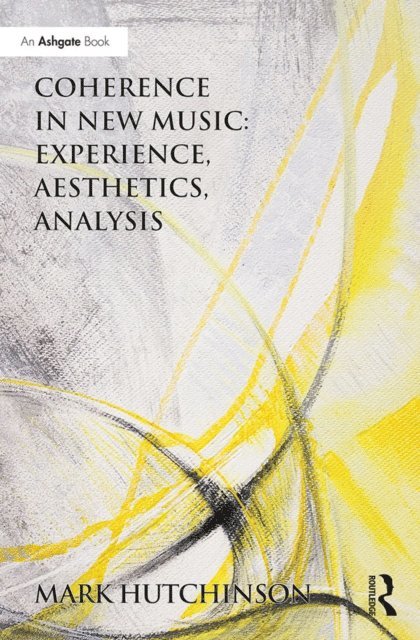
Coherence in New Music: Experience, Aesthetics, Analysis
E-bok, 2016
856 kr
Lägg i varukorg
What does it mean to talk about musical coherence at the end of a century characterised by fragmentation and discontinuity? How can the diverse influences which stand behind the works of many late twentieth-century composers be reconciled with the singular immediacy of the experiences that they can …
Coherence in New Music: Experience, Aesthetics, Analysis
E-bok, 2016
856 kr
Lägg i varukorg
What does it mean to talk about musical coherence at the end of a century characterised by fragmentation and discontinuity? How can the diverse influences which stand behind the works of many late twentieth-century composers be reconciled with the singular immediacy of the experiences that they can …
Coherence in New Music: Experience, Aesthetics, Analysis
Inbunden, 2016
2578 kr
Lägg i varukorg
What does it mean to talk about musical coherence at the end of a century characterised by fragmentation and discontinuity? How can the diverse influences which stand behind the works of many late twentieth-century composers be reconciled with the singular immediacy of the experiences that they can …