Mark J. Osiel – författare
Visar alla böcker från författaren Mark J. Osiel. Handla med fri frakt och snabb leverans.
5 produkter
5 produkter
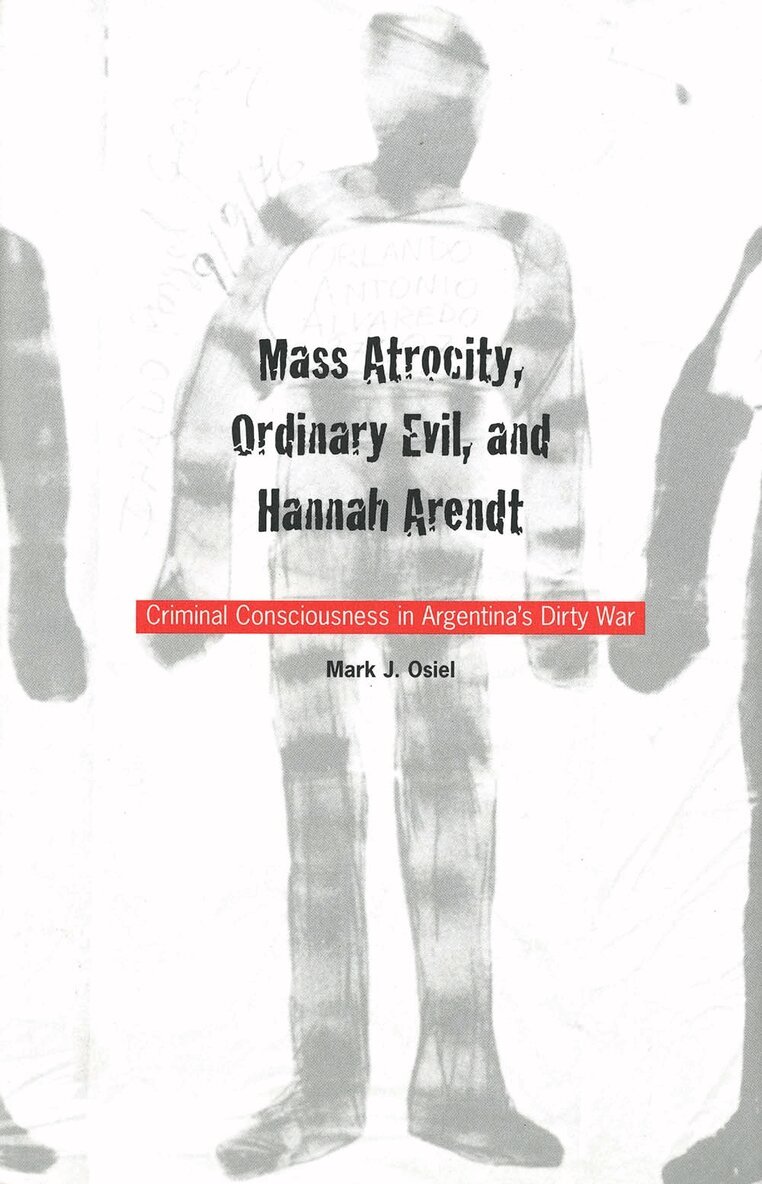
Mass Atrocity, Ordinary Evil, and Hannah Arendt
Criminal Consciousness in Argentina`s Dirty War
Inbunden, Engelska, 2002
715 kr
Skickas inom 5-8 vardagar
Is it possible that the soldiers of mass atrocities—Adolph Eichmann in Nazi Germany and Alfredo Astiz in Argentina’s Dirty War, for example—act under conditions that prevent them from recognizing their crimes? In the aftermath of catastrophic, state-sponsored mass murder, how are criminal courts to respond to those who either gave or carried out the military orders that seem unequivocally criminal?This important book addresses Hannah Arendt’s controversial argument that perpetrators of mass crimes are completely unaware of their wrongdoing, and therefore existing criminal laws do not adequately address these defendants. Mark Osiel applies Arendt’s ideas about the kind of people who implement bureaucratized large-scale atrocities to Argentina’s Dirty War of the 1970s, and he also delves into the social conditions that could elicit such reprehensible conduct. He focuses on Argentine navy captain Astiz, who led one of the most notorious abduction squads, to discover how he and other junior officers could justify the murders of more than ten thousand suspected “subversives.”Osiel concludes that legal stipulations labeling certain deeds as manifestly illegal are indefensible. He calls for a significant change in the laws of war to preserve both justice and the possibility of dialogue between factions in such sharply divided societies as Argentina. Osiel’s proposals have profound implications for future prosecutions of Pinochet’s lieutenants, Milosevic’s henchmen, the willing executioners of Rwanda and East Timor, and other perpetrators of state-endorsed murder and torture.
651 kr
Skickas inom 10-15 vardagar
Trials of those responsible for large-scale state brutality have captured public imagination in several countries. Prosecutors and judges in such cases, says Osiel, rightly aim to shape collective memory. They can do so hi ways successful as public spectacle and consistent with liberal legality. In defending this interpretation, he examines the Nuremburg and Tokyo trials, the Eicnmann prosecution, and more recent trials in Argentina and France. Such trials can never summon up a "collective conscience" of moral principles shared by all, he argues. But they can nonetheless contribute to a little-noticed kind of social solidarity.To this end, writes Osiel, we should pay closer attention to the way an experience of administrative massacre is framed within the conventions of competing theatrical genres. Defense counsel will tell the story as a tragedy, while prosecutors will present it as a morality play. The judicial task at such moments is to employ the law to recast the courtroom drama in terms of a "theater of ideas," which engages large questions of collective memory and even national identity. Osiel asserts that principles of liberal morality can be most effectively inculcated in a society traumatized by fratricide when proceedings are conducted in this fashion.The approach Osiel advocates requires courts to confront questions of historical interpretation and moral pedagogy generally regarded as beyond their professional competence. It also raises objections that defendants' rights will be sacrificed, historical understanding distorted, and that the law cannot willfully influence collective memory, at least not when lawyers acknowledge this aim. Osiel responds to all these objections, and others. Lawyers, judges, sociologists, historians, and political theorists will find this a compelling contribution to debates on the meaning and consequences of genocide.
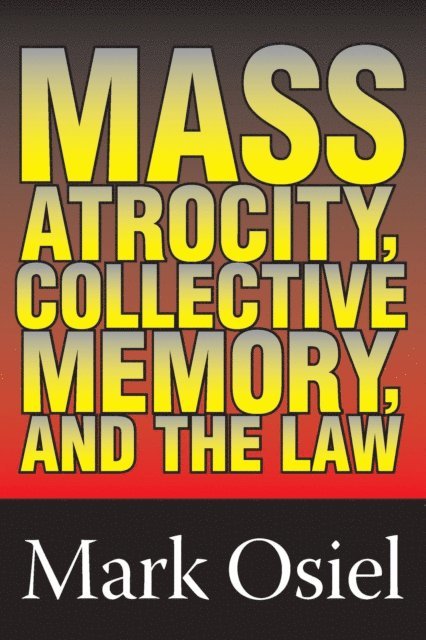
626 kr
Skickas inom 10-15 vardagar
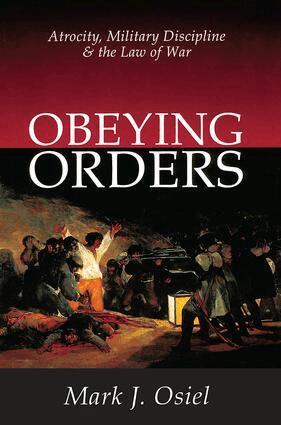
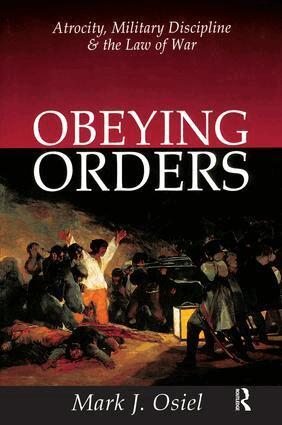
A soldier obeys illegal orders, thinking them lawful. When should we excuse his misconduct as based in reasonable error? How can courts convincingly convict the soldier's superior officer when, after Nuremberg, criminal orders are expressed through winks and nods, hints and insinuations? Can our notions of the soldier's "due obedience," designed for the Roman legionnaire, be brought into closer harmony with current understandings of military conflict in the contemporary world? Mark J. Osiel answers these questions in light of new learning about atrocity and combat cohesion, as well as changes in warfare and the nature of military conflict. Sources of atrocity are far more varied than current law assumes, and such variations display consistent patterns. The law now generally requires that soldiers resolve all doubts about the legality of a superior's order in favor of obedience. It excuses compliance with an illegal order unless the illegality - as with flagrant atrocities - would be immediately obvious to anyone. But these criteria are often in conflict and at odds with the law's underlying principles and policies. Combat and peace operations now depend more on tactical imagination, self-discipline, and loyalty to immediate comrades than on immediate, unreflective adherence to the letter of superiors' orders, backed by threat of formal punishment. The objective of military law is to encourage deliberative judgment. This can be done, Osiel suggests, in ways that enhance the accountability of our military forces, in both peace operations and more traditional conflicts, while maintaining their effectiveness. Osiel seeks to "civilianize" military law while building on soldiers' own internal ideals of professional virtuousness. He returns to the ancient ideal of martial honor, reinterpreting it in light of new conditions, arguing that it should be implemented through realistic training in which legal counsel plays an enlarged role rather than by threat of legal prosecution. Obeying Orders thus offers a compelling answer to the question that has most haunted the moral imagination of the late twentieth century: the roots - and restraint - of mass atrocity in war.
2 199 kr
Skickas inom 10-15 vardagar
Trials of those responsible for large-scale state brutality have captured public imagination in several countries. Prosecutors and judges in such cases, says Osiel, rightly aim to shape collective memory. They can do so hi ways successful as public spectacle and consistent with liberal legality. In defending this interpretation, he examines the Nuremburg and Tokyo trials, the Eicnmann prosecution, and more recent trials in Argentina and France. Such trials can never summon up a "collective conscience" of moral principles shared by all, he argues. But they can nonetheless contribute to a little-noticed kind of social solidarity.To this end, writes Osiel, we should pay closer attention to the way an experience of administrative massacre is framed within the conventions of competing theatrical genres. Defense counsel will tell the story as a tragedy, while prosecutors will present it as a morality play. The judicial task at such moments is to employ the law to recast the courtroom drama in terms of a "theater of ideas," which engages large questions of collective memory and even national identity. Osiel asserts that principles of liberal morality can be most effectively inculcated in a society traumatized by fratricide when proceedings are conducted in this fashion.The approach Osiel advocates requires courts to confront questions of historical interpretation and moral pedagogy generally regarded as beyond their professional competence. It also raises objections that defendants' rights will be sacrificed, historical understanding distorted, and that the law cannot willfully influence collective memory, at least not when lawyers acknowledge this aim. Osiel responds to all these objections, and others. Lawyers, judges, sociologists, historians, and political theorists will find this a compelling contribution to debates on the meaning and consequences of genocide.
2 136 kr
Skickas inom 10-15 vardagar
A soldier obeys illegal orders, thinking them lawful. When should we excuse his misconduct as based in reasonable error? How can courts convincingly convict the soldier's superior officer when, after Nuremberg, criminal orders are expressed through winks and nods, hints and insinuations? Can our notions of the soldier's "due obedience," designed for the Roman legionnaire, be brought into closer harmony with current understandings of military conflict in the contemporary world? Mark J. Osiel answers these questions in light of new learning about atrocity and combat cohesion, as well as changes in warfare and the nature of military conflict. Sources of atrocity are far more varied than current law assumes, and such variations display consistent patterns. The law now generally requires that soldiers resolve all doubts about the legality of a superior's order in favor of obedience. It excuses compliance with an illegal order unless the illegality - as with flagrant atrocities - would be immediately obvious to anyone. But these criteria are often in conflict and at odds with the law's underlying principles and policies. Combat and peace operations now depend more on tactical imagination, self-discipline, and loyalty to immediate comrades than on immediate, unreflective adherence to the letter of superiors' orders, backed by threat of formal punishment. The objective of military law is to encourage deliberative judgment. This can be done, Osiel suggests, in ways that enhance the accountability of our military forces, in both peace operations and more traditional conflicts, while maintaining their effectiveness. Osiel seeks to "civilianize" military law while building on soldiers' own internal ideals of professional virtuousness. He returns to the ancient ideal of martial honor, reinterpreting it in light of new conditions, arguing that it should be implemented through realistic training in which legal counsel plays an enlarged role rather than by threat of legal prosecution. Obeying Orders thus offers a compelling answer to the question that has most haunted the moral imagination of the late twentieth century: the roots - and restraint - of mass atrocity in war.