Mark S. Massa SJ – författare
Visar alla böcker från författaren . Handla med fri frakt och snabb leverans.
5 produkter
5 produkter
E-bok
PDF, Engelska, 2018301 kr
Läs direkt efter köp
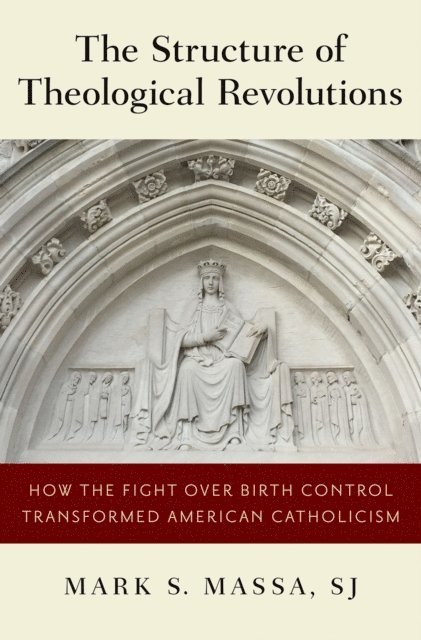
On July 29, 1968, Pope Paul VI ended years of discussion and study by Catholic theologians and bishops by issuing an encyclical on human sexuality and birth control entitled Humanae Vitae: "On Human Life." That document, which declared that "each and every marriage act must remain open to the transmission of life," lead to widespread dissent and division within the Church, particularly in the United States. The divide that Humanae Vitae opened up is still with us today.Mark Massa argues that American Catholics did not simply ignore and dissent from the encyclical''s teachings on birth control, but that they also began to question the entire system of natural law theology that had undergirded Catholic thought since the days of Aquinas. Natural law is central to Catholic theology, as some of its most important teachings on issues such as birth control, marriage, and abortion rest on natural law arguments. Drawing inspiration from Thomas Kuhn''s classic work The Structure of Scientific Revolutions, Massa argues that Humanae Vitae caused a paradigm shift in American Catholic thought, one that has had far-reaching repercussions.How can theology-the study of God, whose nature is imagined to be eternal and unchanging- change over time? This is the essential question that The Structure of Theological Revolutions sets out to answer. Massa makes the controversial claim that Roman Catholic teaching on a range of important issues is considerably more provisional and arbitrary than many Catholics think.
E-bok
Engelska, 2018301 kr
Läs direkt efter köp
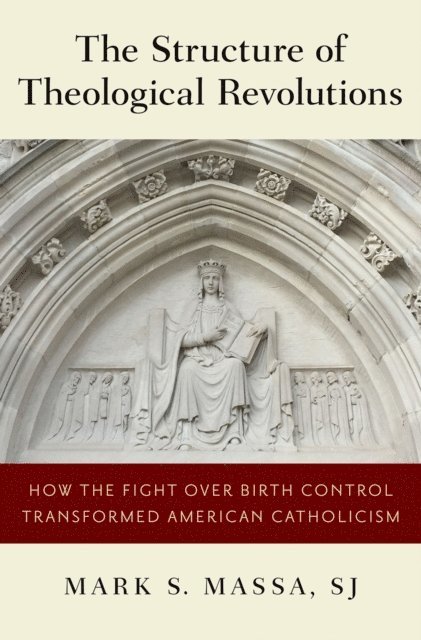
On July 29, 1968, Pope Paul VI ended years of discussion and study by Catholic theologians and bishops by issuing an encyclical on human sexuality and birth control entitled Humanae Vitae: "On Human Life." That document, which declared that "each and every marriage act must remain open to the transmission of life," lead to widespread dissent and division within the Church, particularly in the United States. The divide that Humanae Vitae opened up is still with us today.Mark Massa argues that American Catholics did not simply ignore and dissent from the encyclical''s teachings on birth control, but that they also began to question the entire system of natural law theology that had undergirded Catholic thought since the days of Aquinas. Natural law is central to Catholic theology, as some of its most important teachings on issues such as birth control, marriage, and abortion rest on natural law arguments. Drawing inspiration from Thomas Kuhn''s classic work The Structure of Scientific Revolutions, Massa argues that Humanae Vitae caused a paradigm shift in American Catholic thought, one that has had far-reaching repercussions.How can theology-the study of God, whose nature is imagined to be eternal and unchanging- change over time? This is the essential question that The Structure of Theological Revolutions sets out to answer. Massa makes the controversial claim that Roman Catholic teaching on a range of important issues is considerably more provisional and arbitrary than many Catholics think.
Inbunden, Engelska, 2025
284 kr
Skickas inom 5-8 vardagar
The term "fundamentalism" has its roots in specific forms of American Protestantism that arose around the turn of the twentieth century in reaction to liberalizing and modernizing trends within the church. In this book, Mark Massa argues that an analogously reactive, militant, and sectarian "fundamentalist" movement emerged within American Catholicism in the decades after World War II, for a similarly complex mix of theological and cultural reasons. In Catholic Fundamentalism in America Massa gives the first account of the Catholic form of the anti-modernist impulse. Massa recounts how Catholic fundamentalism has reacted both to the teachings of the Second Vatican Council and to the tensions of America's pluralist, secular culture. Like their Protestant cousins, Catholic fundamentalists combine a sectarian understanding of religion with an aggressive anti-progressive stance. Their main enemies were not Protestants or secular Americans, but other Catholics who didn't share their extreme views. Also like the Protestant fundamentalists, Catholic devotees of the fundamentalist impulse have sought (and found) political conservatives with whom to make common cause on a range of issues, such as the place of women in American culture, the value of pluralism within the Church and the larger culture, and the importance of cooperation with non-Catholics. Contemporary Catholic conservatives merge theological and political impulses into movements that "punch above their weight" within the community through their clever use of social media. Through seven portraits of individuals and movements that embody the Catholic fundamentalist impulse, Massa demonstrates how the Catholic Right, like its evangelical Protestant counterpart, has reacted to--and fought against--modern American culture.
Häftad, Engelska, 2014
326 kr
Skickas inom 5-8 vardagar
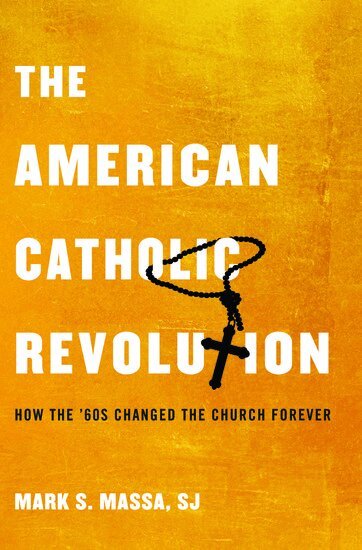
In the 1960s, the Second Vatican Council enacted the most sweeping changes the Catholic Church had seen in centuries. In readable and compelling prose, Mark S. Massa tells the story of the cultural war these changes ignited in the United States - a war that is still being waged today. Suddenly, one Sunday, the mass as the faithful had always known it was different, and so was the Church they had believed was timeless and unchanging. Once the Church opened the door to change, Massa argues, it could not be closed again. Skirmishes broke out over the proper way to worship. Soon, Catholics were bitterly divided over birth control, abortion, celibacy, female priests, and the authority of the Church itself. As he narrates these turbulent events, Massa takes us beyond stereotypes of liberals and conservatives, offering new insights into the last fifty years of American Catholicism.
Inbunden, Engelska, 2010
629 kr
Skickas inom 5-8 vardagar
The Second Vatican Council enacted the most sweeping changes the Catholic Church had seen in centuries. In readable and compelling prose, Mark S. Massa tells the story of the culture war these changes ignited in the United States--a war that is still being waged today. The first stirrings of upheaval took place in the pews, where changes to the mass were felt immediately and viscerally by the faithful. Suddenly, one Sunday, the mass as they had always known it was very different, and so was the Church they had believed was timeless and unchanging. Skirmishes quickly broke out over the proper way to worship, with "liberals" welcoming change, "conservatives" resisting it. Soon, Catholics found themselves bitterly divided over everything from birth control to the authority of the Church itself. As he narrates these turbulent events, Massa takes us beyond the "liberal/conservative" stereotypes, offering new insights into the last fifty years of American Catholicism.