Mark S. Merkow - Böcker
Visar alla böcker från författaren Mark S. Merkow. Handla med fri frakt och snabb leverans.
8 produkter
8 produkter
872 kr
Skickas inom 10-15 vardagar
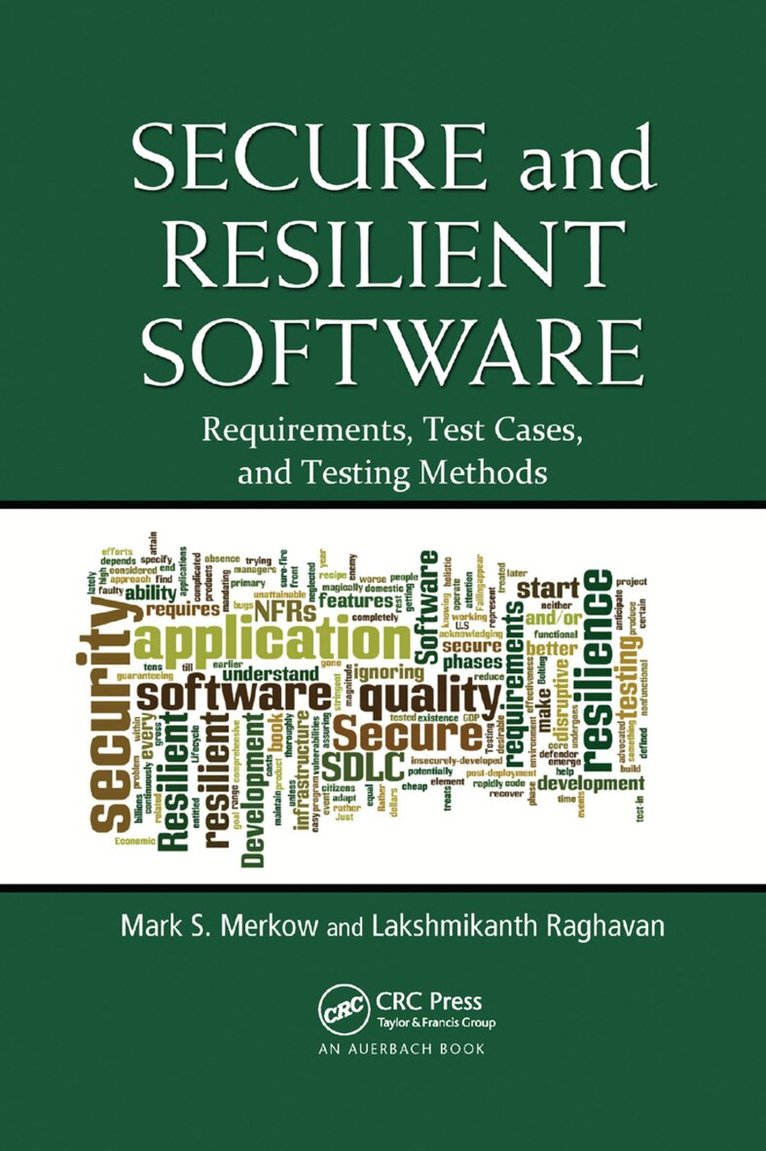
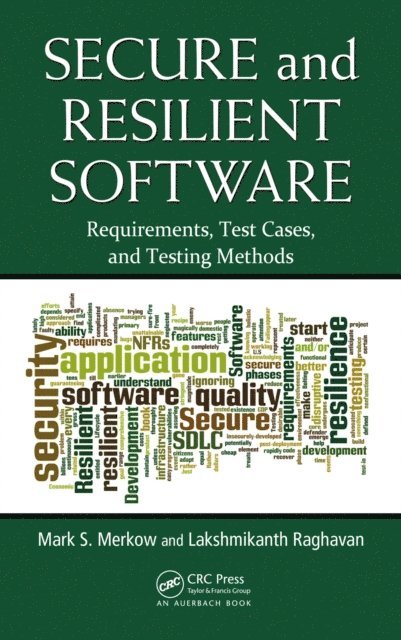
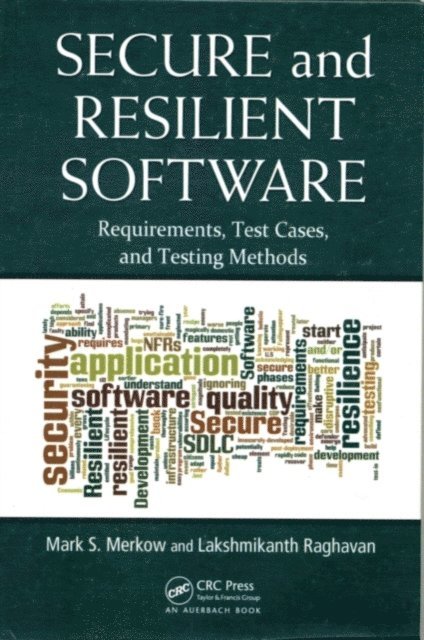
Secure and Resilient Software: Requirements, Test Cases, and Testing Methods provides a comprehensive set of requirements for secure and resilient software development and operation. It supplies documented test cases for those requirements as well as best practices for testing nonfunctional requirements for improved information assurance. This resource-rich book includes: Pre-developed nonfunctional requirements that can be reused for any software development project Documented test cases that go along with the requirements and can be used to develop a Test Plan for the softwareTesting methods that can be applied to the test cases provided Downloadable resources with all security requirements and test cases as well as MS Word versions of the checklists, requirements, and test cases covered in the book Offering ground-level, already-developed software nonfunctional requirements and corresponding test cases and methods, this book will help to ensure that your software meets its nonfunctional requirements for security and resilience. The accompanying downloadable resources filled with helpful checklists and reusable documentation provides you with the tools needed to integrate security into the requirements analysis, design, and testing phases of your software development lifecycle.Some Praise for the Book:This book pulls together the state of the art in thinking about this important issue in a holistic way with several examples. It takes you through the entire lifecycle from conception to implementation ... .—Doug Cavit, Chief Security Strategist, Microsoft Corporation...provides the reader with the tools necessary to jump-start and mature security within the software development lifecycle (SDLC). —Jeff Weekes, Sr. Security Architect at Terra Verde Services... full of useful insights and practical advice from two au
213 kr
Skickas inom 7-10 vardagar
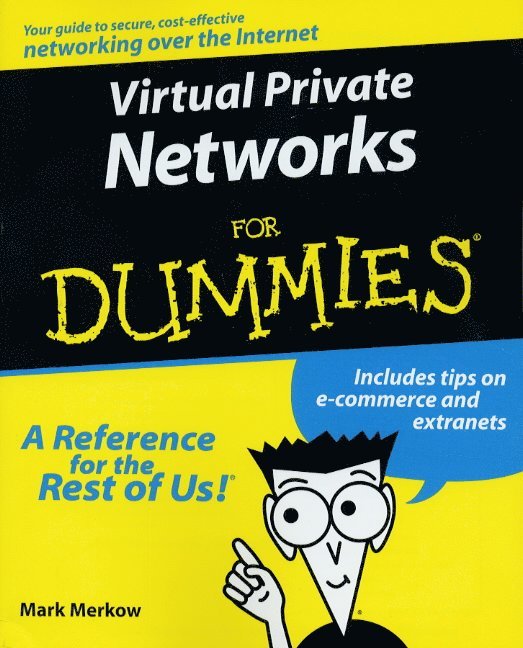
Let’s face it: the information age makes dummies of us all at some point. One thing we can say for sure, though, about things related to the Internet is that their best strengths are often also their worst weaknesses. This goes for virtual private networks (VPNs). They may reach a wide base of customers – but can also be vulnerable to viruses, hackers, spoofers, and other shady online characters and entities. VPNs may allow for super-efficient communication between customer and company – but they rely on information which, if compromised, can cause huge losses. The Internet is still a frontier – sometimes so wide open it leaves us bewildered – and, like any frontier, the risks go hand in hand with potentially huge rewards. Virtual Private Networks for Dummies offers you a no-nonsense, practical guide to evaluating your company’s need for a VPN, understanding what it takes to implement one, and undertaking the challenging quest to set it up, make it work, and keep it safe. Whether you’re the resident expert leading the project team, or you just want to learn what makes e-commerce tick, this detailed, from-the-ground-up guide will soon have you comfortably conceptualizing: Security goals and strategiesThe evolution of VPNsPrivacy in VPNsExtranetsRemote-Access VPNsFundingCustom network solutions designTesting VPNsAnd moreWith new products and technologies offering supposedly revolutionary solutions to IT departments every day, this book focuses on the real world – you know, the one full of obstacles, mishaps, threats, delays, and errors – and gives you the background knowledge to make decisions for yourself about your VPN needs. Written with a dash of humor, Virtual Private Networks for Dummies contains both technical detail (standards, protocols, etc.) and more general concepts (such as conducting cost-benefit analyses). This clear, authoritative guide will have you securely and cost-effectively networking over the Internet in no time.
956 kr
Skickas inom 10-15 vardagar
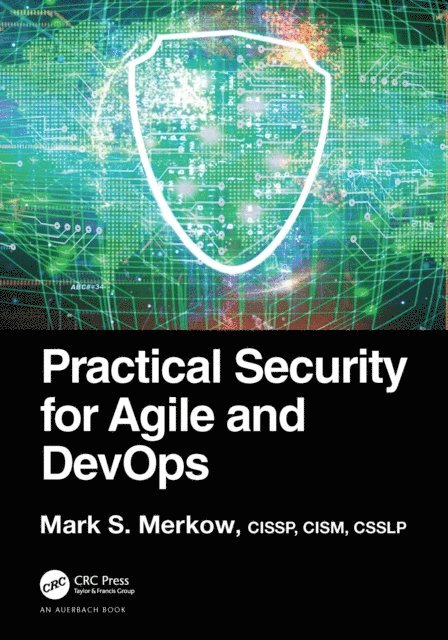
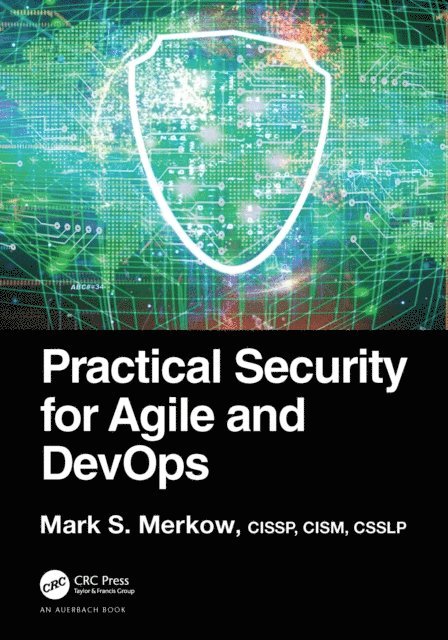
This textbook was written from the perspective of someone who began his software security career in 2005, long before the industry began focusing on it. This is an excellent perspective for students who want to learn about securing application development. After having made all the rookie mistakes, the author realized that software security is a human factors issue rather than a technical or process issue alone. Throwing technology into an environment that expects people to deal with it but failing to prepare them technically and psychologically with the knowledge and skills needed is a certain recipe for bad results.Practical Security for Agile and DevOps is a collection of best practices and effective implementation recommendations that are proven to work. The text leaves the boring details of software security theory out of the discussion as much as possible to concentrate on practical applied software security that is useful to professionals. It is as much a book for students’ own benefit as it is for the benefit of their academic careers and organizations. Professionals who are skilled in secure and resilient software development and related tasks are in tremendous demand. This demand will increase exponentially for the foreseeable future. As students integrate the text’s best practices into their daily duties, their value increases to their companies, management, community, and industry.The textbook was written for the following readers:Students in higher education programs in business or engineering disciplinesAppSec architects and program managers in information security organizationsEnterprise architecture teams with a focus on application developmentScrum Teams including:Scrum MastersEngineers/developersAnalystsArchitectsTesters DevOps teamsProduct owners and their managementProject managersApplication security auditorsAgile coaches and trainersInstructors and trainers in academia and private organizations
2 496 kr
Skickas inom 10-15 vardagar
This textbook was written from the perspective of someone who began his software security career in 2005, long before the industry began focusing on it. This is an excellent perspective for students who want to learn about securing application development. After having made all the rookie mistakes, the author realized that software security is a human factors issue rather than a technical or process issue alone. Throwing technology into an environment that expects people to deal with it but failing to prepare them technically and psychologically with the knowledge and skills needed is a certain recipe for bad results.Practical Security for Agile and DevOps is a collection of best practices and effective implementation recommendations that are proven to work. The text leaves the boring details of software security theory out of the discussion as much as possible to concentrate on practical applied software security that is useful to professionals. It is as much a book for students’ own benefit as it is for the benefit of their academic careers and organizations. Professionals who are skilled in secure and resilient software development and related tasks are in tremendous demand. This demand will increase exponentially for the foreseeable future. As students integrate the text’s best practices into their daily duties, their value increases to their companies, management, community, and industry.The textbook was written for the following readers:Students in higher education programs in business or engineering disciplinesAppSec architects and program managers in information security organizationsEnterprise architecture teams with a focus on application developmentScrum Teams including:Scrum MastersEngineers/developersAnalystsArchitectsTesters DevOps teamsProduct owners and their managementProject managersApplication security auditorsAgile coaches and trainersInstructors and trainers in academia and private organizations
1 132 kr
Skickas inom 10-15 vardagar
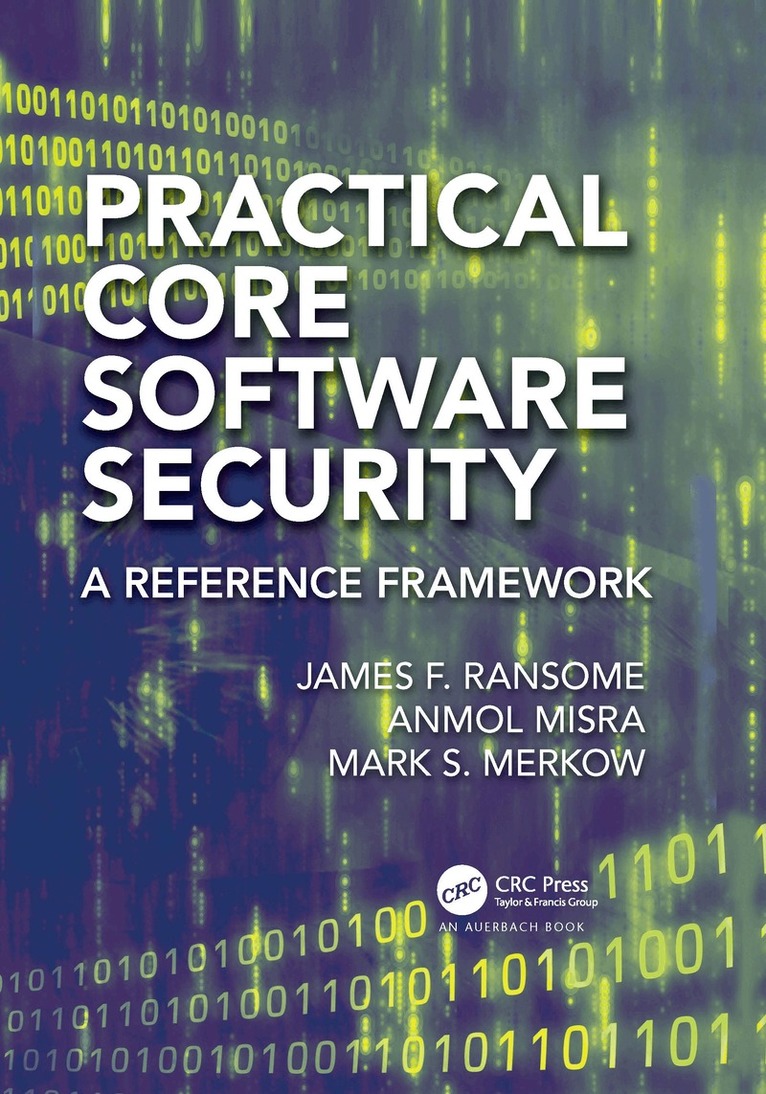
As long as humans write software, the key to successful software security is making the software development program process more efficient and effective. Although the approach of this textbook includes people, process, and technology approaches to software security, Practical Core Software Security: A Reference Framework stresses the people element of software security, which is still the most important part to manage as software is developed, controlled, and exploited by humans.The text outlines a step-by-step process for software security that is relevant to today’s technical, operational, business, and development environments. It focuses on what humans can do to control and manage a secure software development process using best practices and metrics. Although security issues will always exist, students learn how to maximize an organization’s ability to minimize vulnerabilities in software products before they are released or deployed by building security into the development process. The authors have worked with Fortune 500 companies and have often seen examples of the breakdown of security development lifecycle (SDL) practices. The text takes an experience-based approach to apply components of the best available SDL models in dealing with the problems described above. Software security best practices, an SDL model, and framework are presented in this book. Starting with an overview of the SDL, the text outlines a model for mapping SDL best practices to the software development life cycle (SDLC). It explains how to use this model to build and manage a mature SDL program. Exercises and an in-depth case study aid students in mastering the SDL model. Professionals skilled in secure software development and related tasks are in tremendous demand today. The industry continues to experience exponential demand that should continue to grow for the foreseeable future. This book can benefit professionals as much as students. As they integrate the book’s ideas into their software security practices, their value increases to their organizations, management teams, community, and industry.
2 692 kr
Skickas inom 10-15 vardagar
As long as humans write software, the key to successful software security is making the software development program process more efficient and effective. Although the approach of this textbook includes people, process, and technology approaches to software security, Practical Core Software Security: A Reference Framework stresses the people element of software security, which is still the most important part to manage as software is developed, controlled, and exploited by humans.The text outlines a step-by-step process for software security that is relevant to today’s technical, operational, business, and development environments. It focuses on what humans can do to control and manage a secure software development process using best practices and metrics. Although security issues will always exist, students learn how to maximize an organization’s ability to minimize vulnerabilities in software products before they are released or deployed by building security into the development process. The authors have worked with Fortune 500 companies and have often seen examples of the breakdown of security development lifecycle (SDL) practices. The text takes an experience-based approach to apply components of the best available SDL models in dealing with the problems described above. Software security best practices, an SDL model, and framework are presented in this book. Starting with an overview of the SDL, the text outlines a model for mapping SDL best practices to the software development life cycle (SDLC). It explains how to use this model to build and manage a mature SDL program. Exercises and an in-depth case study aid students in mastering the SDL model. Professionals skilled in secure software development and related tasks are in tremendous demand today. The industry continues to experience exponential demand that should continue to grow for the foreseeable future. This book can benefit professionals as much as students. As they integrate the book’s ideas into their software security practices, their value increases to their organizations, management teams, community, and industry.
1 597 kr
Skickas inom 10-15 vardagar
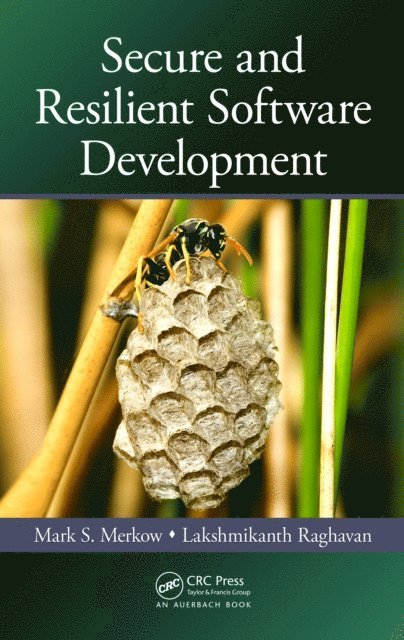
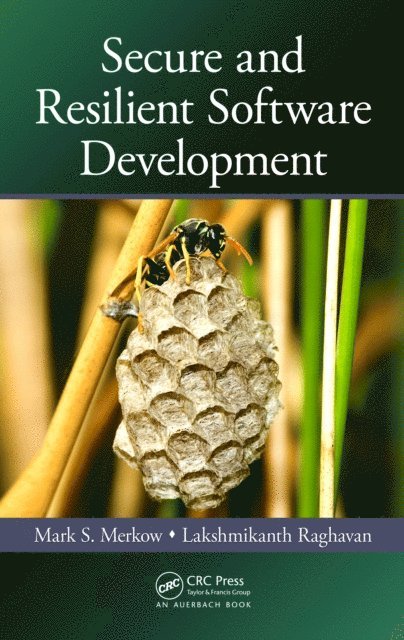
Although many software books highlight open problems in secure software development, few provide easily actionable, ground-level solutions. Breaking the mold, Secure and Resilient Software Development teaches you how to apply best practices and standards for consistent and secure software development. It details specific quality software development strategies and practices that stress resilience requirements with precise, actionable, and ground-level inputs. Providing comprehensive coverage, the book illustrates all phases of the secure software development life cycle. It shows developers how to master non-functional requirements including reliability, security, and resilience. The authors provide expert-level guidance through all phases of the process and supply many best practices, principles, testing practices, and design methodologies. For updates to this book and ongoing activities of interest to the secure and resilient software community, please visit: www.srsdlc.com"Secure and Resilient Software Development provides a strong foundation for anyone getting started in application security. Most application security books fall into two categories: business-oriented and vague or ridiculously super technical. Mark and Laksh draw on their extensive experience to bridge this gap effectively. The book consistently links important technical concepts back to the business reasons for application security with interesting stories about real companies dealing with application security issues." —Jeff Williams, Chair, The OWASP Foundation
1 166 kr
Skickas inom 10-15 vardagar
Secure and Resilient Software: Requirements, Test Cases, and Testing Methods provides a comprehensive set of requirements for secure and resilient software development and operation. It supplies documented test cases for those requirements as well as best practices for testing nonfunctional requirements for improved information assurance. This resource-rich book includes: Pre-developed nonfunctional requirements that can be reused for any software development project Documented test cases that go along with the requirements and can be used to develop a Test Plan for the softwareTesting methods that can be applied to the test cases provided Downloadable resources with all security requirements and test cases as well as MS Word versions of the checklists, requirements, and test cases covered in the book Offering ground-level, already-developed software nonfunctional requirements and corresponding test cases and methods, this book will help to ensure that your software meets its nonfunctional requirements for security and resilience. The accompanying downloadable resources filled with helpful checklists and reusable documentation provides you with the tools needed to integrate security into the requirements analysis, design, and testing phases of your software development lifecycle.Some Praise for the Book:This book pulls together the state of the art in thinking about this important issue in a holistic way with several examples. It takes you through the entire lifecycle from conception to implementation ... .—Doug Cavit, Chief Security Strategist, Microsoft Corporation...provides the reader with the tools necessary to jump-start and mature security within the software development lifecycle (SDLC). —Jeff Weekes, Sr. Security Architect at Terra Verde Services... full of useful insights and practical advice from two au