Mark Schneider – författare
552 kr
Skickas
362 kr
Skickas inom 5-8 vardagar
585 kr
Läs direkt efter köp
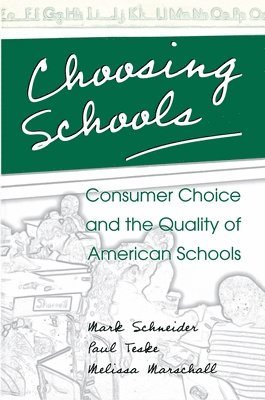
School choice seeks to create a competitive arena in which public schools will attain academic excellence, encourage individual student performance, and achieve social balance. In debating the feasibility of this market approach to improving school systems, analysts have focused primarily on schools as suppliers of education, but an important question remains: Will parents be able to function as "smart consumers" on behalf of their children? Here a highly respected team of social scientists provides extensive empirical evidence on how parents currently do make these choices. Drawn from four different types of school districts in New York City and suburban New Jersey, their findings not only stress the importance of parental decision-making and involvement to school performance but also clarify the issues of school choice in ways that bring much-needed balance to the ongoing debate. The authors analyze what parents value in education, how much they know about schools, how well they can match what they say they want in schools with what their children get, how satisfied they are with their children''s schools, and how their involvement in the schools is affected by the opportunity to choose. They discover, most notably, that low-income parents value education as much as, if not more than, high-income parents, but do not have access to the same quality of school information. This problem comes under sensitive, thorough scrutiny as do a host of other important topics, from school performance to segregation to children at risk of being left behind.
454 kr
Skickas inom 11-20 vardagar
900 kr
Skickas inom 5-8 vardagar
55 kr
Läs direkt efter köp
942 kr
Läs direkt efter köp
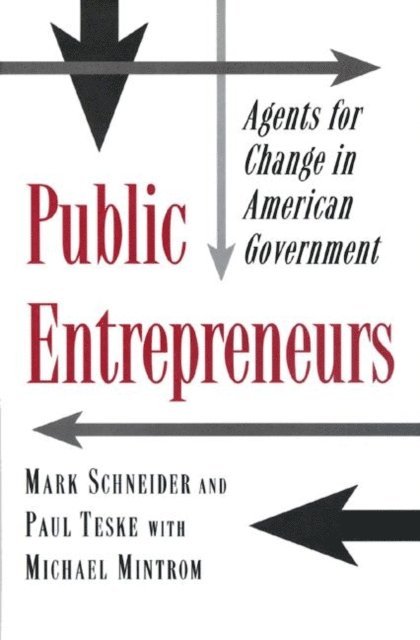
Seizing opportunities, inventing new products, transforming markets--entrepreneurs are an important and well-documented part of the private sector landscape. Do they have counterparts in the public sphere? The authors argue that they do, and test their argument by focusing on agents of dynamic political change in suburbs across the United States, where much of the entrepreneurial activity in American politics occurs. The public entrepreneurs they identify are most often mayors, city managers, or individual citizens. These entrepreneurs develop innovative ideas and implement new service and tax arrangements where existing administrative practices and budgetary allocations prove inadequate to meet a range of problems, from economic development to the racial transition of neighborhoods. How do public entrepreneurs emerge? How much does the future of urban development depend on them? This book answers these questions, using data from over 1,000 local governments.The emergence of public entrepreneurs depends on a set of familiar cost-benefit calculations. Like private sector risk-takers, public entrepreneurs exploit opportunities emerging from imperfect markets for public goods, from collective-action problems that impede private solutions, and from situations where information is costly and the supply of services is uneven. The authors augment their quantitative analysis with ten case studies and show that bottom-up change driven by politicians, public managers, and other local agents obeys regular and predictable rules.
471 kr
Läs direkt efter köp
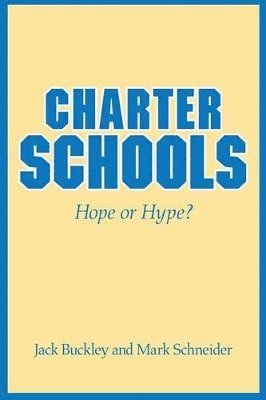
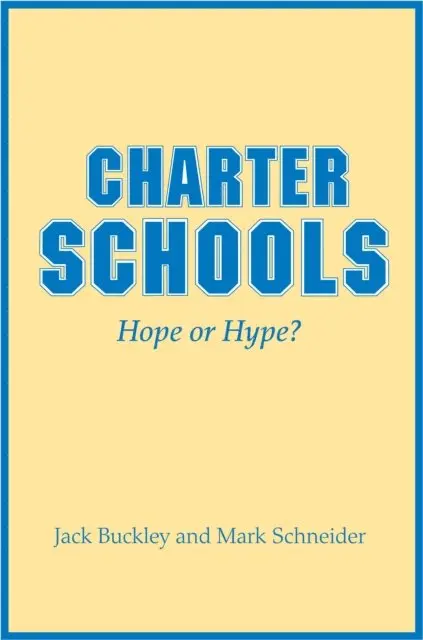
Over the past several years, privately run, publicly funded charter schools have been sold to the American public as an education alternative promising better student achievement, greater parent satisfaction, and more vibrant school communities. But are charter schools delivering on their promise? Or are they just hype as critics contend, a costly experiment that is bleeding tax dollars from public schools? In this book, Jack Buckley and Mark Schneider tackle these questions about one of the thorniest policy reforms in the nation today. Using an exceptionally rigorous research approach, the authors investigate charter schools in Washington, D.C., carefully examining school data going back more than a decade, interpreting scores of interviews with parents, students, and teachers, and meticulously measuring how charter schools perform compared to traditional public schools. Their conclusions are sobering. Buckley and Schneider show that charter-school students are not outperforming students in traditional public schools, that the quality of charter-school education varies widely from school to school, and that parent enthusiasm for charter schools starts out strong but fades over time. And they argue that while charter schools may meet the most basic test of sound public policy--they do no harm--the evidence suggests they all too often fall short of advocates'' claims. With the future of charter schools--and perhaps public education as a whole--hanging in the balance, this book supports the case for holding charter schools more accountable and brings us considerably nearer to resolving this contentious debate.
554 kr
Skickas inom 5-8 vardagar
539 kr
Skickas inom 3-6 vardagar
436 kr
Skickas inom 5-8 vardagar
190 kr
Skickas inom 5-8 vardagar
673 kr
Tillfälligt slut