Mark Sh. Levin - Böcker
Visar alla böcker från författaren Mark Sh. Levin. Handla med fri frakt och snabb leverans.
4 produkter
4 produkter
1 590 kr
Skickas inom 10-15 vardagar
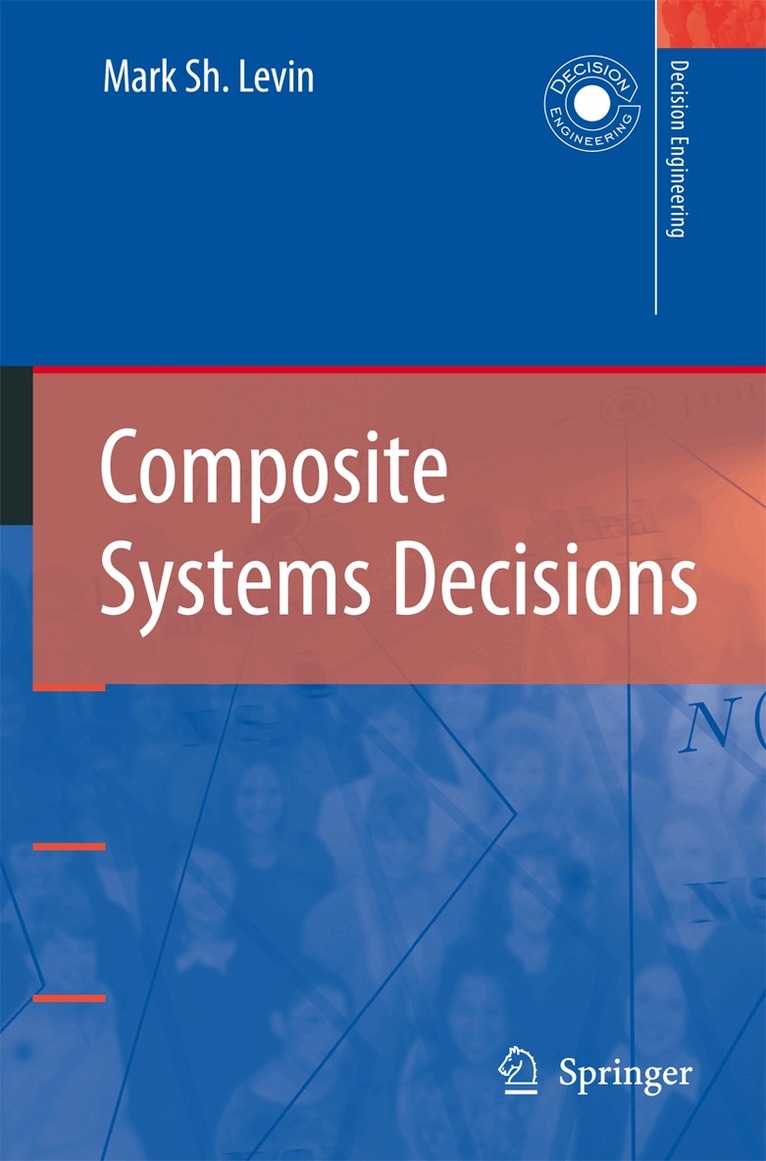
NEEDS TO BE CUT DOWNComposite decisions are decisions consisting of interconnected subdecisions which correspond to a composite system. This approach extends the traditional paradigm of decision making proposed by Herbert A. Simon (choice of the best alternatives) and realizes the two-stage solving scheme: (a) selection of alternatives as the best subdecisions and (b) composition of the selected local decisions into a global decision; while taking into account the quality of the local decisions and their compatibility. Composite Systems Decisions can be considered as the continuation of the author's monograph Combinatorial Engineering of Decomposable Systems (Kluwer, 1998). Basic 'technological' problems for composite systems are examined, including: modular hierarchical design; multistage design; multistage planning; redesign / improvement / adaptation; evaluation; combinatorial evolution /development. The book is oriented to applied researchers, students, and practitioners in many domains. Concurrently, the material will be of interest to various scientists (e. g. , mathematicians, computer scientists, economists, social engineers,etc.) who can refer to the basic systems problems, solving schemes, and applied examples. The book can be used as a text for courses (for example: systems engineering, system design, life cycle engineering, engineering design, combinatorial synthesis) at the level of undergraduate (a compressed version), graduate/PhD levels and for continuing education. Note special student team research projects can be included into an educational plans. The student teams above can involve students of different professional domains. In addition, the material will be useful for the modular curriculum design.
1 590 kr
Skickas inom 10-15 vardagar
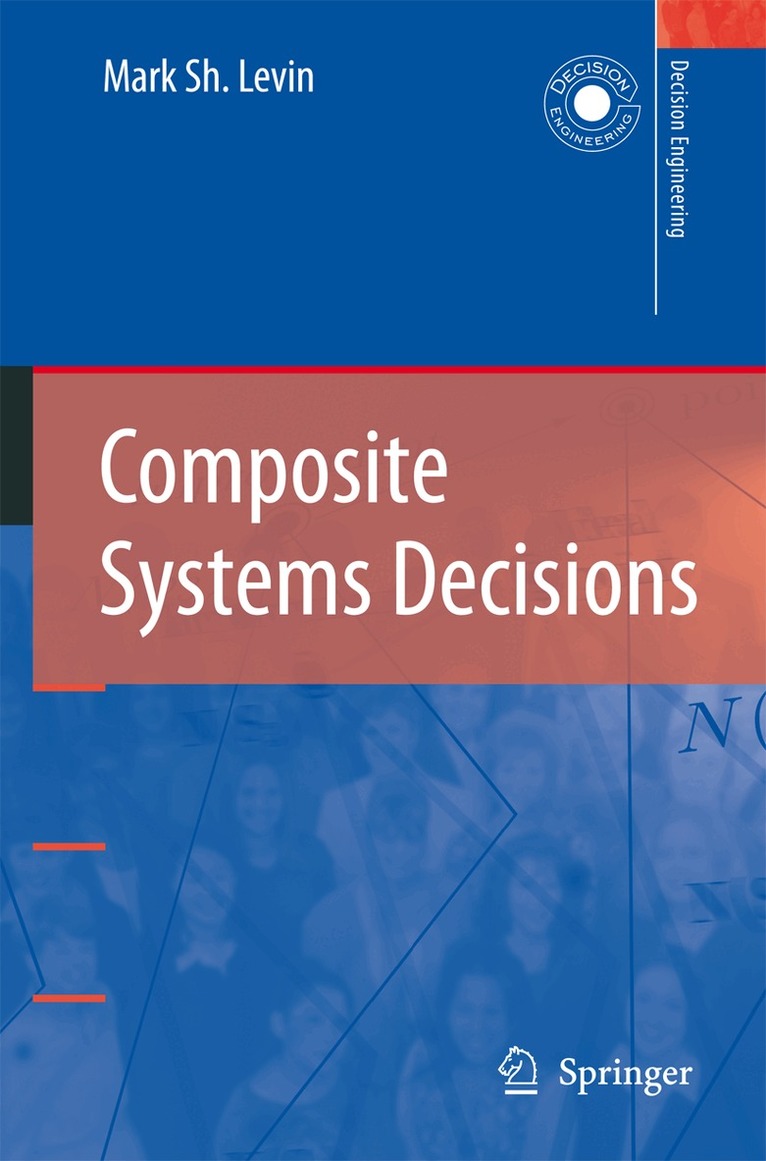
Composite decisions consist of subdecisions and correspond to a composite system. This approach extends the traditional paradigm of decision making of Herbert A. Simon, i.e. choice of the best alternative(s), and realizes a two-stage solving scheme: (a) selection of alternatives as the best subdecisions/local decisions and (b) composition of these local decisions into a composite global decision, accounting for the quality of the local decisions and their compatibility. This book describes an approach based on systems engineering and considered modular design of composite decisions. It describes basic systems approaches and examines basic ‘technological’ problems for composite systems (with applied examples), including: modular hierarchical design; multistage design and planning; redesign/improvement/adaptation; evaluation; and, combinatorial evolution/development.Applied researchers, students, and practitioners will find this book of value. It will also interest mathematicians, computer scientists, economists and social engineers.
1 067 kr
Skickas inom 10-15 vardagar
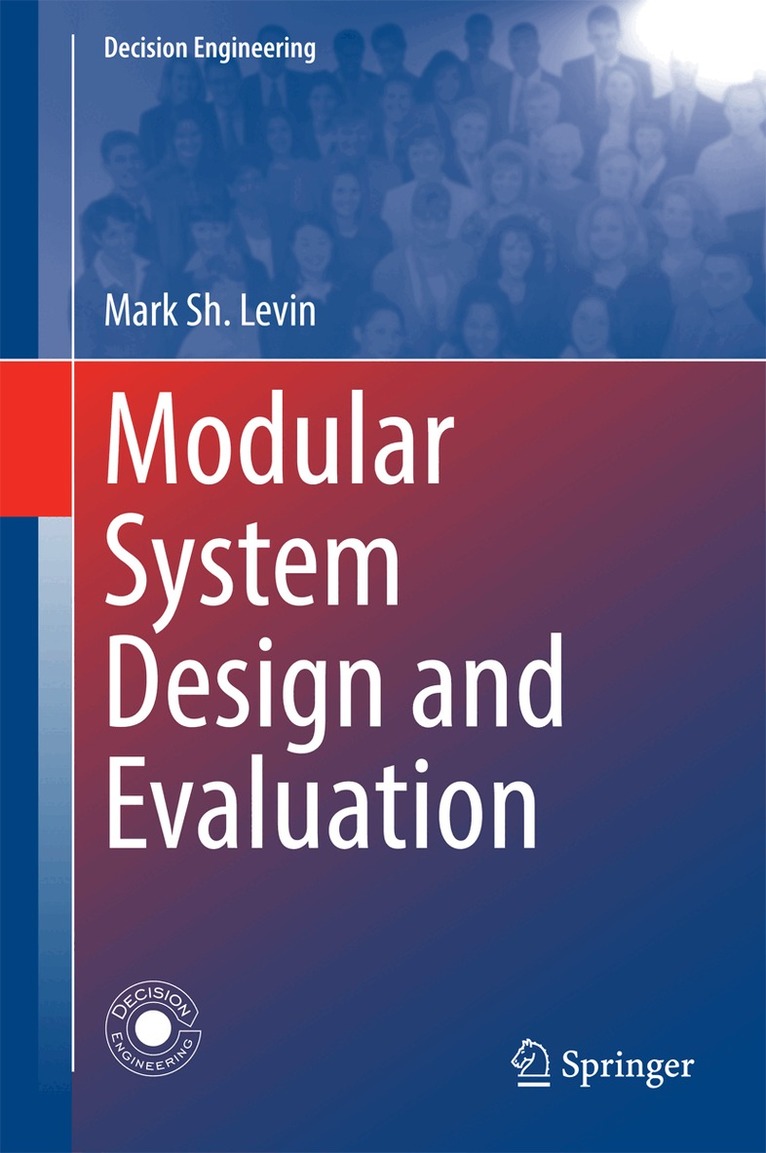
This book examines seven key combinatorial engineering frameworks (composite schemes consisting of algorithms and/or interactive procedures) for hierarchical modular (composite) systems. These frameworks are based on combinatorial optimization problems (e.g., knapsack problem, multiple choice problem, assignment problem, morphological clique problem), with the author’s version of morphological design approach – Hierarchical Morphological Multicritieria Design (HMMD) – providing a conceptual lens with which to elucidate the examples discussed. This approach is based on ordinal estimates of design alternatives for systems parts/components, however, the book also puts forward an original version of HMMD that is based on new interval multiset estimates for the design alternatives with special attention paid to the aggregation of modular solutions (system versions). The second part of ‘Modular System Design and Evaluation’ provides ten information technology case studies that enriches understanding of the design of system design, detection of system bottlenecks and system improvement, amongst others. The book is intended for researchers and scientists, students, and practitioners in many domains of information technology and engineering. The book is also designed to be used as a text for courses in system design, systems engineering and life cycle engineering at the level of undergraduate level, graduate/PhD levels, and for continuing education. The material and methods contained in this book were used over four years in Moscow Institute of Physics and Technology (State University) in the author’s faculty course “System Design”.
1 073 kr
Skickas inom 10-15 vardagar
This book examines seven key combinatorial engineering frameworks (composite schemes consisting of algorithms and/or interactive procedures) for hierarchical modular (composite) systems. These frameworks are based on combinatorial optimization problems (e.g., knapsack problem, multiple choice problem, assignment problem, morphological clique problem), with the author’s version of morphological design approach – Hierarchical Morphological Multicritieria Design (HMMD) – providing a conceptual lens with which to elucidate the examples discussed. This approach is based on ordinal estimates of design alternatives for systems parts/components, however, the book also puts forward an original version of HMMD that is based on new interval multiset estimates for the design alternatives with special attention paid to the aggregation of modular solutions (system versions). The second part of ‘Modular System Design and Evaluation’ provides ten information technology case studies that enriches understanding of the design of system design, detection of system bottlenecks and system improvement, amongst others. The book is intended for researchers and scientists, students, and practitioners in many domains of information technology and engineering. The book is also designed to be used as a text for courses in system design, systems engineering and life cycle engineering at the level of undergraduate level, graduate/PhD levels, and for continuing education. The material and methods contained in this book were used over four years in Moscow Institute of Physics and Technology (State University) in the author’s faculty course “System Design”.