Marko Skreb – författare
Visar alla böcker från författaren Marko Skreb. Handla med fri frakt och snabb leverans.
10 produkter
10 produkter
Häftad, Engelska, 2006
542 kr
Skickas inom 7-10 vardagar
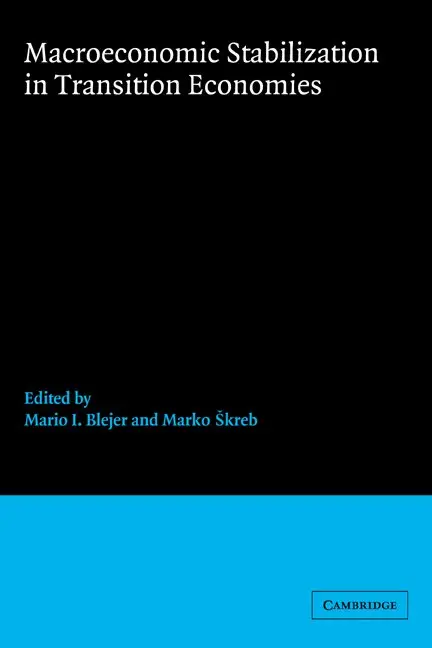
The essays in this volume explore the special type of policies that were needed in the post-socialist countries of Eastern Europe and the former Soviet Union in order to reduce inflation and to stop the fall in output that followed the collapse of Communism. The book contains a number of general studies that discuss the type of reforms needed and how they condition policies and analyse the aggregate relationship between reducing inflation, implementing structural reforms, and renewing the process of growth. It includes a number of country studies (on the Baltics, Croatia, Hungary, Poland, Slovenia and the Ukraine) about their stabilization experiences. Thus the emerging picture is one of renewal of growth in those countries that proceeded early and with the determination to implement market-oriented reforms and to stabilize their macroeconomy, and of gradual and slow stabilization of output in those countries that entered the process only very recently.
Häftad, Engelska, 2008
529 kr
Skickas inom 7-10 vardagar
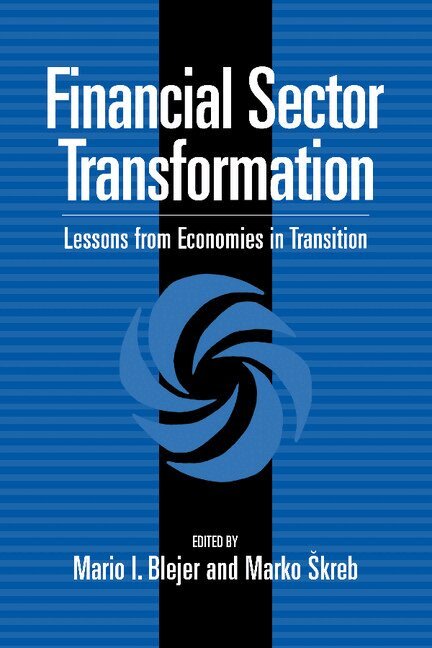
While policy makers need to be focused on achieving and sustaining basic macroeconomic stability in the transition of economies from a socialist to a market orientation, financial institutions and reforms play a particularly crucial role in this transformation. The essays in this collection offer overviews of issues in banking sector reform and capital markets as well as specific perspectives on the financial sectors in changing economies of Central and Eastern Europe, China and Israel. The editors and contributors explore the questions of how much focus needs to be given to macroeconomic stabilization vis-...-vis the dynamics of the financial sector, what may be appropriate time frames for dealing with immediate and longer-term financial problems, and how trends toward economic globalization interact with financial development in transition countries. Original versions of the essays were presented at the Second Dubrovnik Conference on Transition Economies organized by the National Bank of Croatia in June 1996.
Inbunden, Engelska, 1997
1 477 kr
Skickas inom 7-10 vardagar
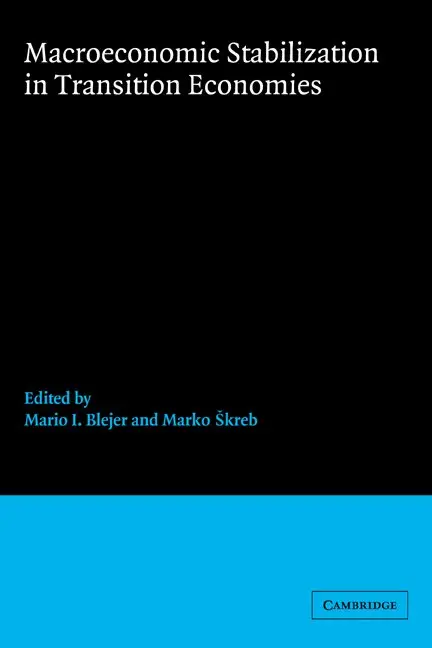
The essays in this volume explore the special type of policies that were needed in the post-socialist countries of Eastern Europe and the former Soviet Union in order to reduce inflation and to stop the fall in output that followed the collapse of Communism. The book contains a number of general studies that discuss the type of reforms needed and how they condition policies and analyse the aggregate relationship between reducing inflation, implementing structural reforms, and renewing the process of growth. It includes a number of country studies (on the Baltics, Croatia, Hungary, Poland, Slovenia and the Ukraine) about their stabilization experiences. Thus the emerging picture is one of renewal of growth in those countries that proceeded early and with the determination to implement market-oriented reforms and to stabilize their macroeconomy, and of gradual and slow stabilization of output in those countries that entered the process only very recently.
Inbunden, Engelska, 1999
996 kr
Skickas inom 7-10 vardagar
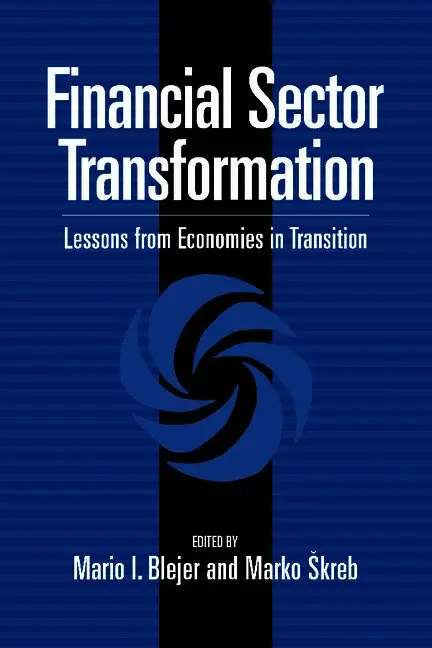
While policy makers need to be focused on achieving and sustaining basic macroeconomic stability in the transition of economies from a socialist to a market orientation, financial institutions and reforms play a particularly crucial role in this transformation. The essays in this collection offer overviews of issues in banking sector reform and capital markets as well as specific perspectives on the financial sectors in changing economies of Central and Eastern Europe, China and Israel. The editors and contributors explore the questions of how much focus needs to be given to macroeconomic stabilization vis-...-vis the dynamics of the financial sector, what may be appropriate time frames for dealing with immediate and longer-term financial problems, and how trends toward economic globalization interact with financial development in transition countries. Original versions of the essays were presented at the Second Dubrovnik Conference on Transition Economies organized by the National Bank of Croatia in June 1996.
E-bok
PDF, Engelska, 20072 036 kr
Läs direkt efter köp
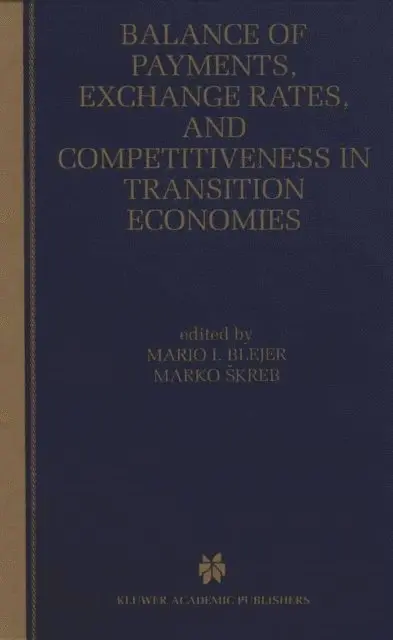
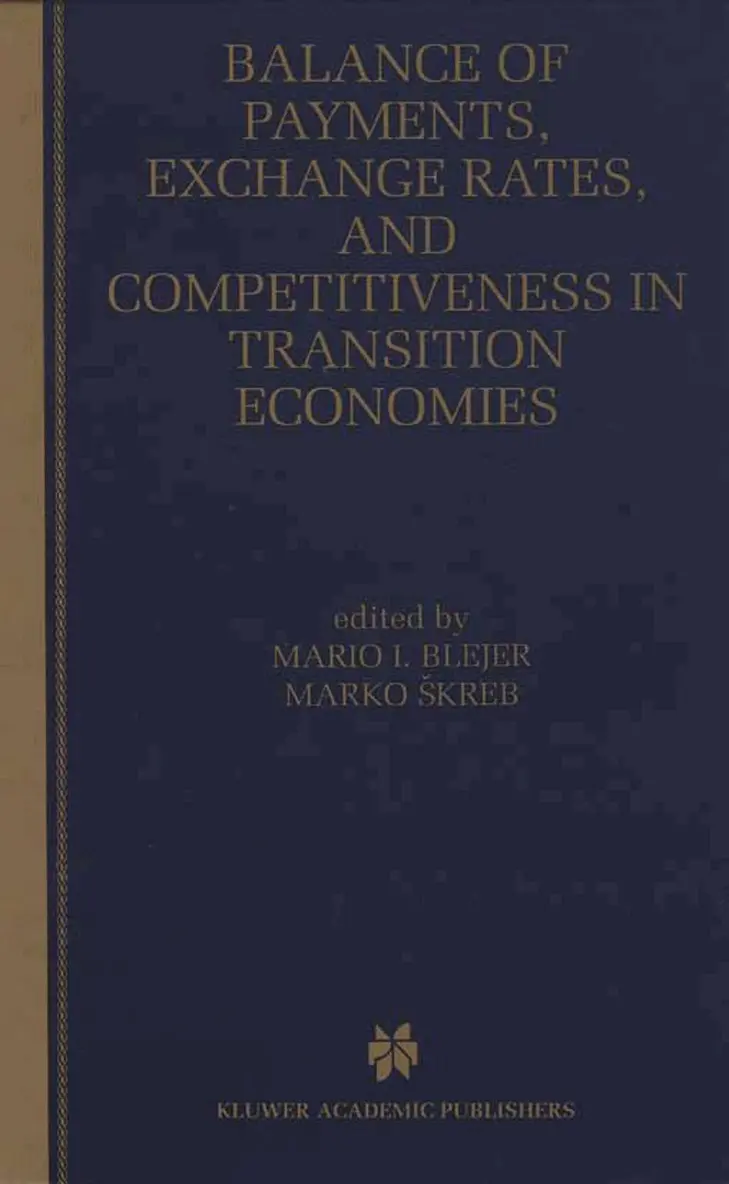
Integrating transition economies into the global commercial and trade market system is a prolonged and risky process. This book is a collection of studies dealing with the different issues related to the liberalization of external relations in economies moving from a socialist to a market-based system The focus is on external sector developments, and the topics deal with balance of payments conditions, exchange rate policies and regimes, international competitiveness, international capital flows, trade, and other matters related to the integration of transition economies into the world economy. An understanding of the principles involved and of the experiences of both transition and advanced economies during this process is crucial to ensure its ultimate success. Written by internationally recognized scholars, the chapters cover these issues in a systematic manner. The first section treats current account developments, capital flows, and exchange rate policies in transition countries, the second section deals with specific issues related to international trade, and the final section consists of six specific country experiences. In this final section, a chapter dealing with the Russian Federation discusses the collapse of the ruble in August 1998.
Inbunden, Engelska, 1999
1 680 kr
Skickas inom 10-15 vardagar
Integrating transition economies into the global commercial and trade market system is a prolonged and risky process. This book is a collection of studies dealing with the different issues related to the liberalization of external relations in economies moving from a socialist to a market-based system The focus is on external sector developments, and the topics deal with balance of payments conditions, exchange rate policies and regimes, international competitiveness, international capital flows, trade, and other matters related to the integration of transition economies into the world economy. An understanding of the principles involved and of the experiences of both transition and advanced economies during this process is crucial to ensure its ultimate success. Written by internationally recognized scholars, the chapters cover these issues in a systematic manner. The first section treats current account developments, capital flows, and exchange rate policies in transition countries, the second section deals with specific issues related to international trade, and the final section consists of six specific country experiences. In this final section, a chapter dealing with the Russian Federation discusses the collapse of the ruble in August 1998.
Inbunden, Engelska, 1999
1 680 kr
Skickas inom 10-15 vardagar
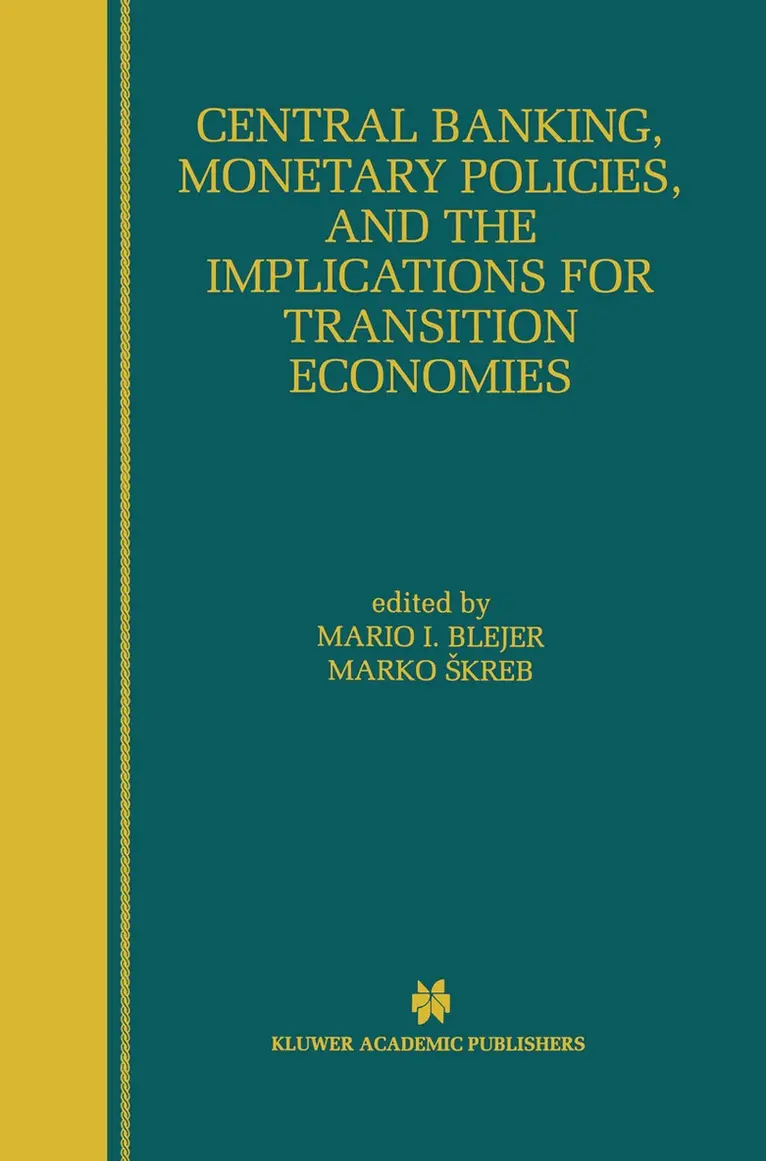
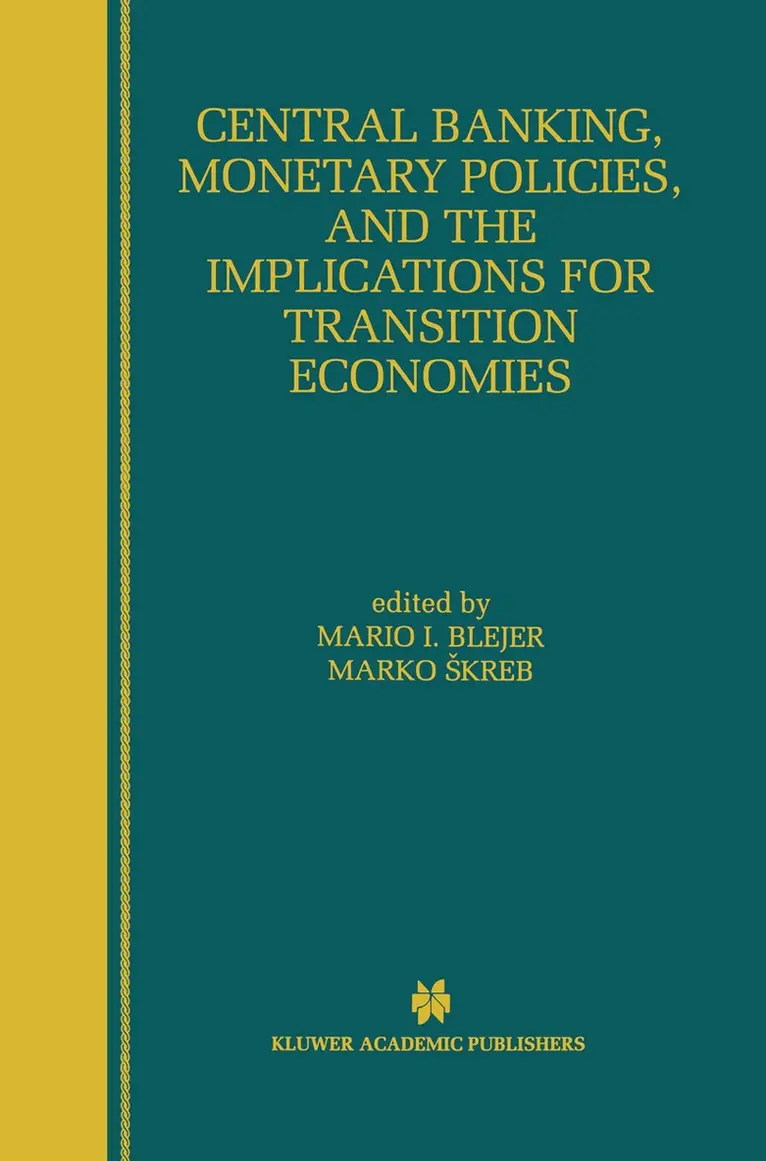
the adaptation of the institutional settings of monetary policy to deal with an emerging market economy had to be carried out in the midst of an unprecedented stabilization effort and, therefore, was particularly urgent and complicated. In many of the transition countries, the transformation effort implied not just changes in procedures but the establishment of a central bank from scratch, a process that involved an important effort, precisely at a time when the whole system was in serious turmoil. While the process of reforms is not yet completed in all the transition countries, an immense amount of progress has been achieved, and many of the transition countries face today monetary and central banking conditions that are close to those of Western economies. In this volume, we collect a number of important contributions that discuss the most burning aspects of the current debates on central banking and monetary policy and draw implications for the postsocialist transition economies. The various papers included in the volume deal with a broad set of related issues, which are highly relevant not just for transition economies but for other emerging markets and for advanced economies as well. The subjects covered in the book are divided into seven major categories (Sections II to VIII), some of which overlap.
Häftad, Engelska, 2012
1 792 kr
Skickas inom 10-15 vardagar
the adaptation of the institutional settings of monetary policy to deal with an emerging market economy had to be carried out in the midst of an unprecedented stabilization effort and, therefore, was particularly urgent and complicated. In many of the transition countries, the transformation effort implied not just changes in procedures but the establishment of a central bank from scratch, a process that involved an important effort, precisely at a time when the whole system was in serious turmoil. While the process of reforms is not yet completed in all the transition countries, an immense amount of progress has been achieved, and many of the transition countries face today monetary and central banking conditions that are close to those of Western economies. In this volume, we collect a number of important contributions that discuss the most burning aspects of the current debates on central banking and monetary policy and draw implications for the postsocialist transition economies. The various papers included in the volume deal with a broad set of related issues, which are highly relevant not just for transition economies but for other emerging markets and for advanced economies as well. The subjects covered in the book are divided into seven major categories (Sections II to VIII), some of which overlap.
E-bok
PDF, Engelska, 20122 194 kr
Läs direkt efter köp
the adaptation of the institutional settings of monetary policy to deal with an emerging market economy had to be carried out in the midst of an unprecedented stabilization effort and, therefore, was particularly urgent and complicated. In many of the transition countries, the transformation effort implied not just changes in procedures but the establishment of a central bank from scratch, a process that involved an important effort, precisely at a time when the whole system was in serious turmoil. While the process of reforms is not yet completed in all the transition countries, an immense amount of progress has been achieved, and many of the transition countries face today monetary and central banking conditions that are close to those of Western economies. In this volume, we collect a number of important contributions that discuss the most burning aspects of the current debates on central banking and monetary policy and draw implications for the postsocialist transition economies. The various papers included in the volume deal with a broad set of related issues, which are highly relevant not just for transition economies but for other emerging markets and for advanced economies as well. The subjects covered in the book are divided into seven major categories (Sections II to VIII), some of which overlap.
Häftad, Engelska, 2013
1 680 kr
Skickas inom 10-15 vardagar
Integrating transition economies into the global commercial and trade market system is a prolonged and risky process. This book is a collection of studies dealing with the different issues related to the liberalization of external relations in economies moving from a socialist to a market-based system The focus is on external sector developments, and the topics deal with balance of payments conditions, exchange rate policies and regimes, international competitiveness, international capital flows, trade, and other matters related to the integration of transition economies into the world economy. An understanding of the principles involved and of the experiences of both transition and advanced economies during this process is crucial to ensure its ultimate success. Written by internationally recognized scholars, the chapters cover these issues in a systematic manner. The first section treats current account developments, capital flows, and exchange rate policies in transition countries, the second section deals with specific issues related to international trade, and the final section consists of six specific country experiences. In this final section, a chapter dealing with the Russian Federation discusses the collapse of the ruble in August 1998.