Markus Wessendorf – författare
Visar alla böcker från författaren Markus Wessendorf. Handla med fri frakt och snabb leverans.
7 produkter
7 produkter
Del 36 - Brecht Yearbook
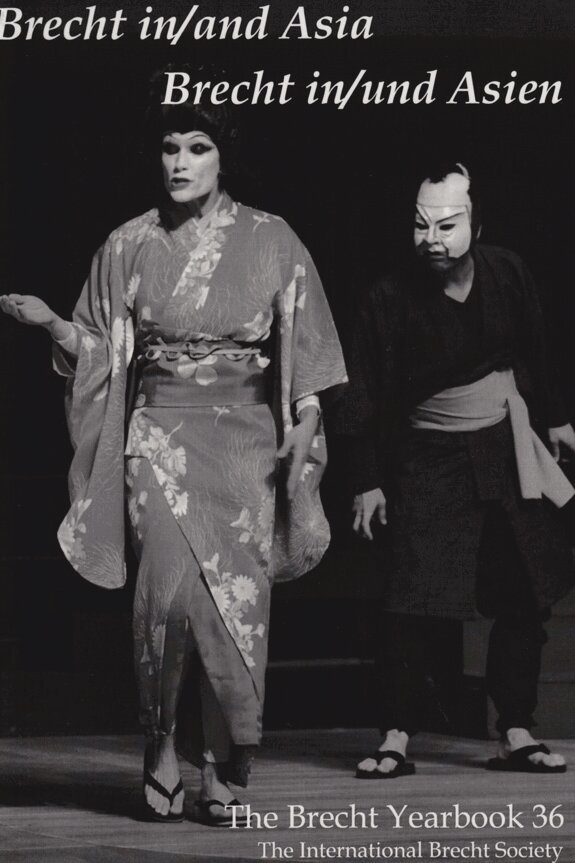
Brecht Yearbook / Das Brecht-Jahrbuch 36
Brecht in/and Asia / Brecht in/und Asien
Häftad, Engelska, 2012
386 kr
Skickas inom 7-10 vardagar
840 kr
Skickas inom 7-10 vardagar
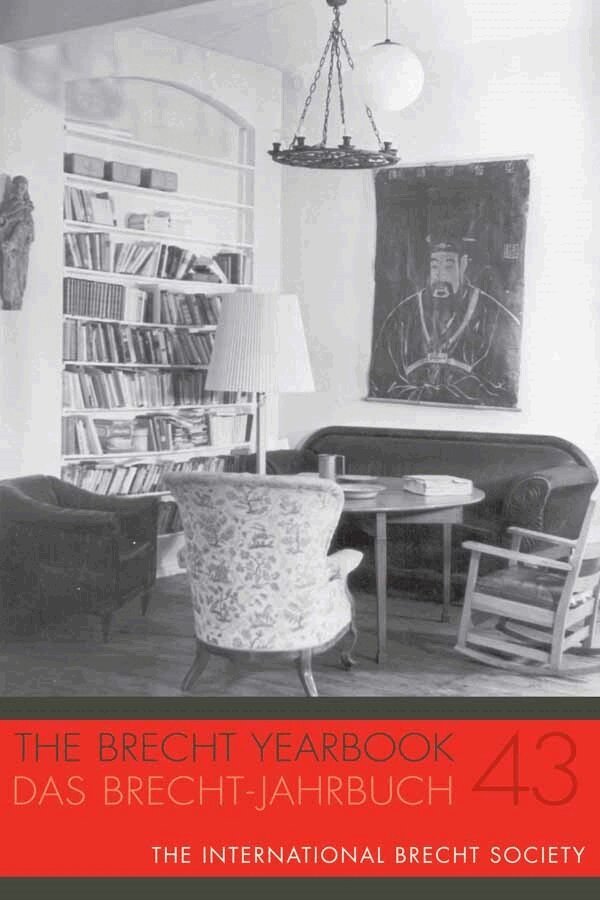
The leading scholarly publication on Brecht; volume 43 contains a wealth of articles on diverse topics and a reconstruction of the two-chorus version of The Exception and the Rule.Published for the International Brecht Society by Camden House, the Brecht Yearbook is the central scholarly forum for discussion of Brecht's life and work and of topics of interest to him, especially the politics of literature and theater in a global context. It encourages a wide variety of perspectives and approaches and, like Brecht, is committed to the use value of literature, theater, and theory.Volume 43 opens with a reconstruction of Brecht's two-chorus version of The Exception and the Rule (Reiner Steinweg) and continues with a selection of Helmut Heißenbüttel's reviews of Brecht's work. Four articles (by Christine Künzel, Carsten Mindt, Judith Niehaus,and Sebastian Schuller) address Brechtian aspects of Gisela Elsner's novels. The next two essays (by Hunter Bivens and Friedemann Weidauer) revisit Brecht's reflections on affect and empathy. Also included are papers from the 2016IBS "Recycling Brecht" Symposium: on Brecht's recycling of Lenin in his "neue Dramatik" (Joseph Dial), on Paul Celan as a reconfiguration of Brecht (Paul Peters), on Brecht's adaptation of Shakespeare's Coriolanus (MartinRevermann), and on Hilary Mantel's Brechtian reconfiguration of Thomas Cromwell (Markus Wessendorf). The volume features Richard Schröder's farewell lecture on Brecht's Life of Galileo and an essay by Ulrich Plass on BerndStegemann's allegedly Brechtian reclamation of critical realism. It concludes with Zhang Wei's interview with the Chinese dramaturg, playwright, and Brecht translator Li Jianming.Editor Markus Wessendorf is a Professorin the Department of Theatre and Dance at the University of Hawai'i at Manoa in Honolulu.
752 kr
Skickas inom 7-10 vardagar
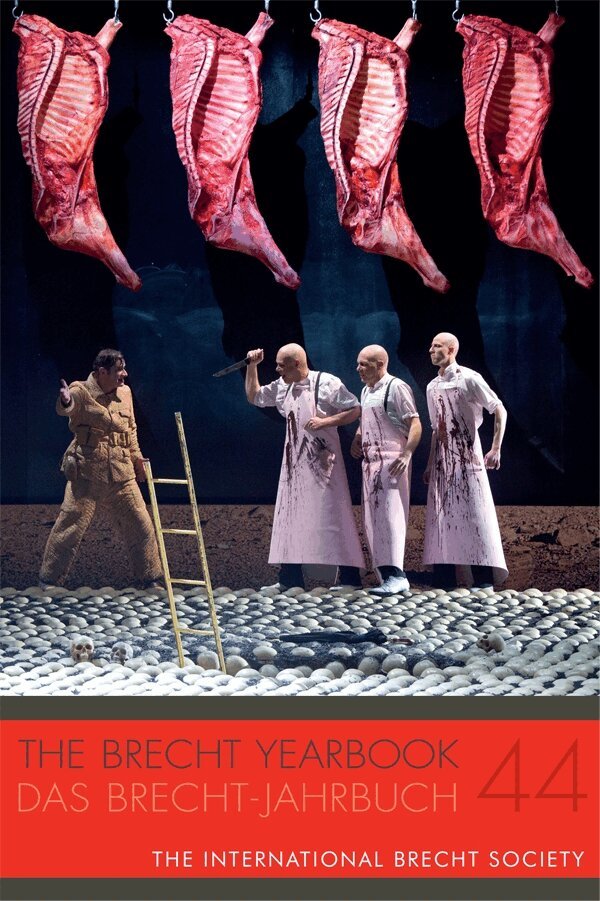
Annual volume, this time featuring special sections on Brecht's dramatic fragments and on comedy in post-Brechtian theater, along with a variety of other contributions.Published for the International Brecht Society, the Brecht Yearbook is the central scholarly forum for discussion of Brecht's life and work and of topics of particular interest to him, especially the politics of literatureand of theater in a global context. It embraces a wide variety of perspectives and approaches and, like Brecht himself, is committed to the use value of literature, theater, and theory.Volume 44 features the first publication of Günter Kunert's translation of Edgar Lee Masters's poem "The Hill" with handwritten annotations by Brecht. A special section, "Brecht's Dramatic Fragments," includes essays on the unresolved tension between individual and collectivist resistance in Fatzer, the fragmentary aesthetic of Fleischhacker, and the first English translation and performance of the David fragments. The next section, "Pure Joke: The Comedy of Theater since Brecht," features articles on the poetics of interruption in the epilogue to The Good Person of Szechwan, Heiner Müller's Hamletmachine as theater of affirmation, a reassessment of the harlequin and the chorus in post-Brechtian performance, and the performative gestures of quotation in contemporary reality-satire. The volume also includes essays on capitalist guilt and debt in The Debts of Mister Julius Caesar, Heiner Müller's "Keuneresque" interview strategies, the 1962 world premiere of The Threepenny Opera in Yiddish, and Brecht's reception of Mao Tse-tung in two of his poems. Contributors include Gerrit-Jan Berendse, André Fischer, Phoebe von Held, Nicholas E. Johnson, Christian Kirchmeier, Günter Kunert, Nikolaus Müller-Schöll, Stephan Pabst, Corina L. Petrescu, David Shepherd, Katrin Trüstedt, Uwe Wirth, Burkhardt Wolf, and Xue Song.Editor Markus Wessendorf is aProfessor in the Department of Theatre and Dance at the University of Hawai'i at Manoa in Honolulu.
752 kr
Skickas inom 7-10 vardagar
Annual volume with contributions on writers and artists whose work intersects with Brecht's from three thematic perspectives: Brecht in a global age, women and Brecht, and Brecht's learning plays.Published for the International Brecht Society by Camden House, the Brecht Yearbook is the central scholarly forum for discussion of Brecht's life and work and of topics of particular interest to him, especially the politics of literature and of theater in a global context. It, like Brecht himself, is committed to the concept of the use value of literature, theater, and theory.This is the second volume dedicated to the proceedings of the 16th Symposium of the IBS, held at Leipzig University in 2019. The contributions discuss artists whose work intersects with Brecht's from three thematic perspectives: Brecht in a global age, women and Brecht, and Brecht's learning plays. The artists include Utpal Dutt, Elisabeth Hauptmann, Elfriede Jelinek, Peter Konwitschny, Siegfried Kracauer, Tom Kühnel, Jürgen Kuttner, Heiner Müller, Rimini Protokoll, Margarete Steffin, Teatro Due Mondi, Teatro Máquina, Tom Tykwer, and Hella Wuolijoki. The articles cover a broad range of genres and topics, such as crime and detective fiction; neo-noir television series; the learning play according to and after Brecht; theater pedagogy; the migration dilemma; and post-dramatic, refugee, and transcultural theater.
386 kr
Skickas inom 7-10 vardagar
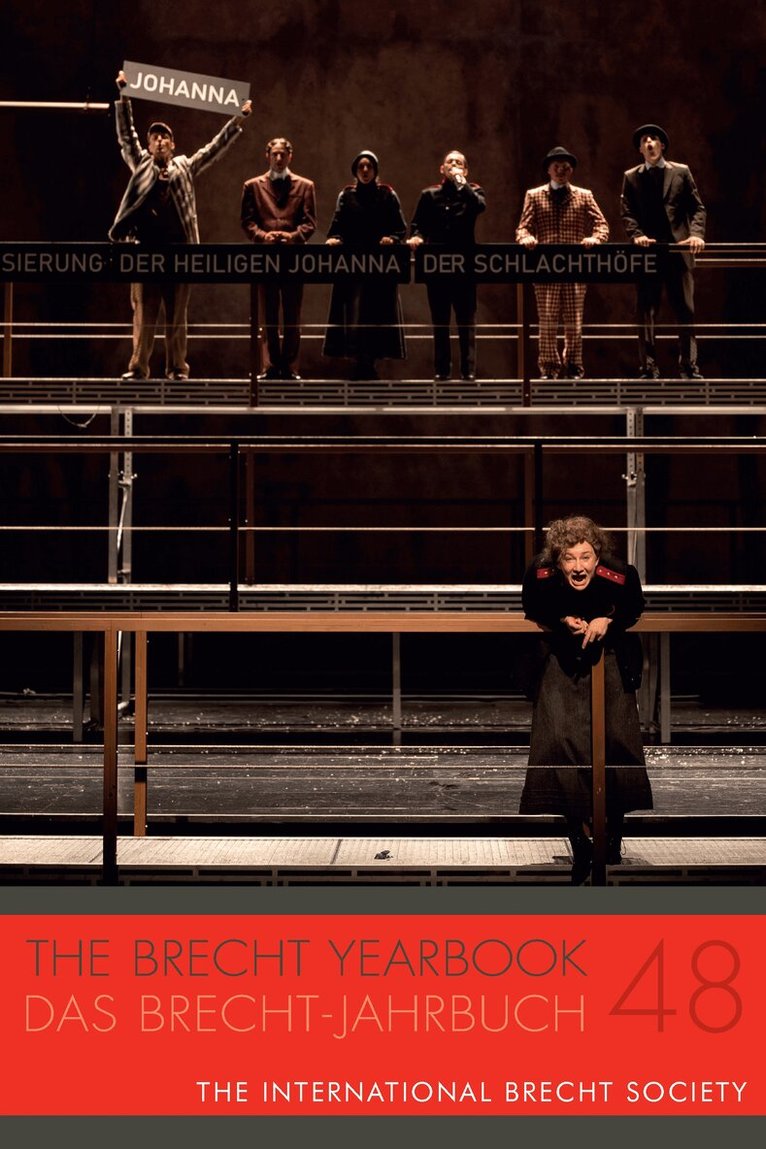
Brecht Yearbook 48 features a section on Brecht's and Heiner Müller's engagement with modern living, a group of essays on "Brecht Post-2020," and additional new Brecht research on various topics.The Brecht Yearbook, published on behalf of the International Brecht Society, is the central scholarly forum for the study of Brecht's life and work and of topics relevant to him. Volume 48 opens with an article on the research that informed the 2022 exhibition Brecht's Paper War. The next section examines Brecht's and Heiner Müller's engagement with modern living: from the housing question in the 1920s to the dramaturgical function of furniture to dialectical stage-auditorium configurations in the early GDR. The following section on "Brecht Post-2020" explores dramaturgical approaches to the learning play under pandemic conditions as well as the "spectrological" aspects of Drums in the Night. Additional new research includes essays on the critical edition of Brecht's notebooks, his reception in fascist Italy, the ambivalence of the heroic in his work, the prioritization of political parable over avant-garde aesthetics in Round Heads and Pointed Heads, boxing as inspiration for epic theater, Hegelian aspects of Refugee Conversations and The Measures Taken, and the working alliance of Brecht and Kurt Weill. Edited by Markus Wessendorf. Contributors: Fanti Baum, Luke Beller, Manuel Clancett, Daniel Cuonz, Fritz Hennenberg, Matthew Hines, Alba Knijff, Sophie König, Grischa Meyer, Marie Millutat, Zafiris Nikitas, Cornelia Ortlieb, Matthias Rothe, Kumars Salehi, Francesco Sani, Stephan Strunz, Lara Tarbuk, Raffaella Di Tizio, Julia Weber, Marten Weise, Noah Willumsen, Claus Zittel.
1 166 kr
Skickas
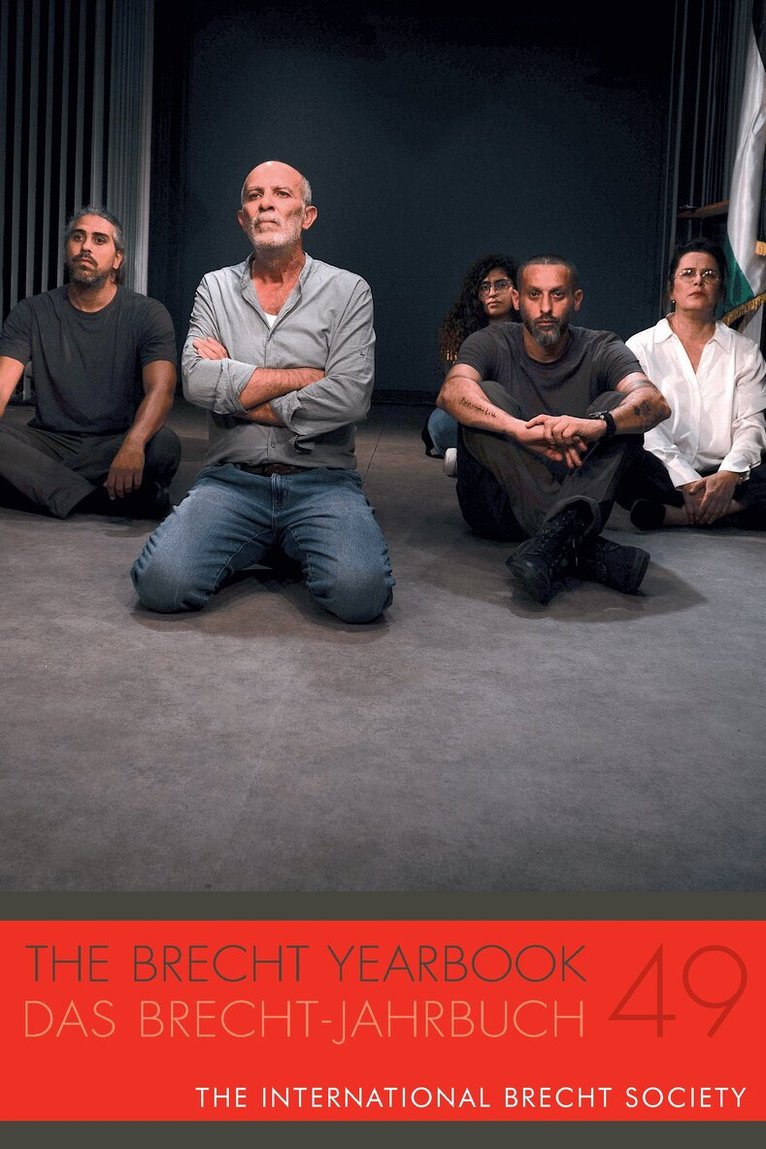
The Brecht Yearbook, published by Camden House on behalf of the International Brecht Society, is the central scholarly forum for the study of Brecht's life and work and of topics relevant to him. Volume 49 features the proceedings of the 17th IBS Symposium, which took place at the universities of Tel Aviv, Haifa, and Jerusalem in December 2022 under the motto "Bertolt Brecht in Dark Times: Racism, Political Oppression, and Dictatorship." It contains three thematic sections: "Brecht's Work in Israeli and Palestinian Contexts," "Brecht and Becoming, Futurity, and Thanatopolitics," and "(Anti-) Heroism and Resistance in Dark Times." The contributions discuss artists and theater companies who have engaged with Brecht's work or can be associated with it under these thematic aspects, including David Avidan, the Habima National Theater, Jindřich Honzl, the Jenin Freedom Theater, Ghassan Kanafani, Tetsuo Kogawa, Yosef Milo, Omri Nitzan, Manuel Chaves Nogales, the Ohel Theater, the Prague Liberated Theater, Samìh al-Qāsim, Johan Taub, Jiři Voskovec, Günther Weisenborn, Jan Werich, and Arnold Zweig. Contributors are Fanti Baum, Micha Braun, Bettina Christner, Manuel Clancett, Amir Farjoun, Leon Gabriel, Torben Ibs, Gad Kaynar-Kissinger, Ferdinand Klüsener, Jan Kühne, Joachim Lucchesi, Nikolaus Müller-Schöll, Riki Ophir, Avraham Oz, Rebecca Rovit, Julia Schade, and Florian Vaßen. Book Reviews edited by Lydia J. White. Reviewers: Stephen Brockmann, Ann M. Fox, Hasibe Kalkan, Sabine Kebir, Yu Wei Jie, and Gregor Schwering.
840 kr
Skickas inom 7-10 vardagar
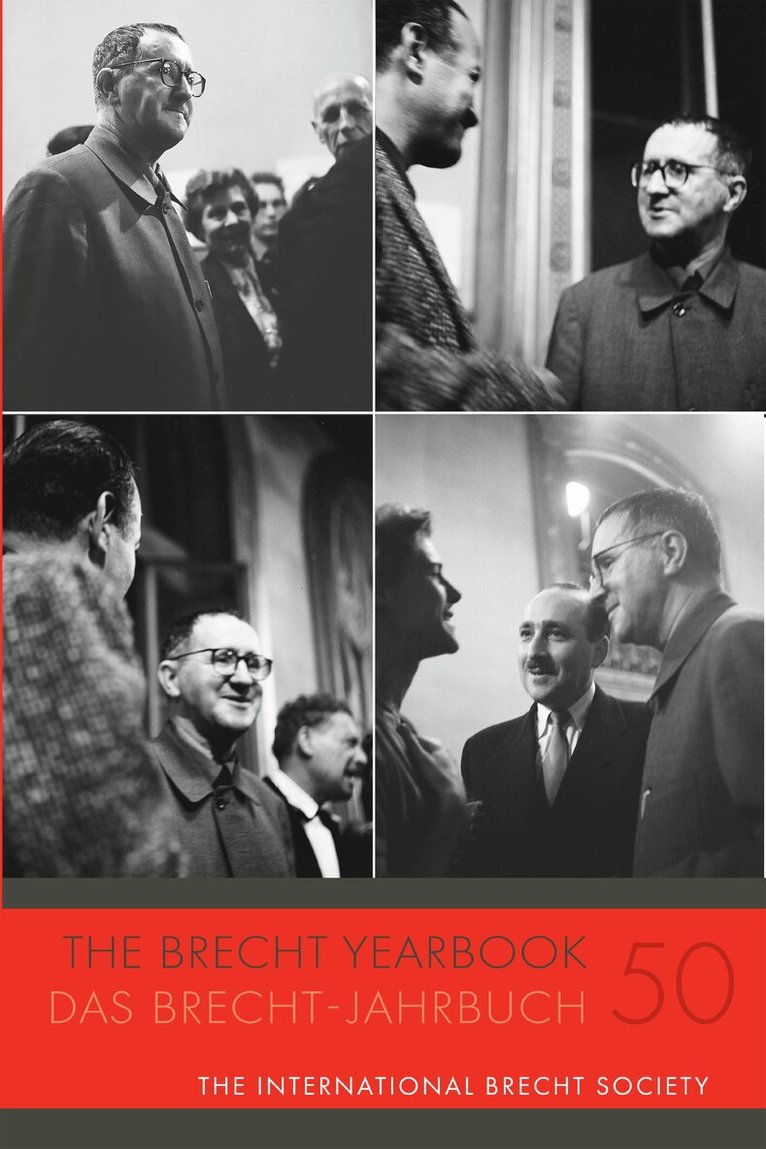
The Brecht Yearbook, published by Camden House on behalf of the International Brecht Society, is the central scholarly forum for the study of Brecht's life and work and of topics relevant to him. Embracing a variety of perspectives and approaches, the yearbook is committed to the concept of the use-value of literature, art, performance, and theory in a global context. Volume 50 begins with a conversation about the first major collection of interviews with Brecht and a chronicle of the publication history of the 30-volume edition of Brecht's works. The contributions featuring new research cover a wide range of topics related to Brecht, including his use of "pastology," racialization in his early plays, the 1932 production of The Mother as a campaign against Nazi misogyny, the first English-language productions of Señora Carrar's Rifles in 1938, and an unrealized African-American production of The Threepenny Opera in the early 1940s. This section also includes articles about the Brecht circle involved in the French chanson of the 1930s, the first French translation of the Short Organon for the Theatre in 1955, Brechtian aspects of Navid Kermani's interreligious dialogues, Mark Fisher's concept of "capitalist realism," and the connection of Brecht's ideas to a pedagogy of revolution.Edited by Elena Pnevmonidou and Markus Wessendorf. Book reviews edited by Noah Willumsen. Contributors: Martin Brady, Robert Cohen, Laura Ginters, Helen Hughes, Torben Ibs, Liam Johnston-McCondach, Sabrina Kanthak, Sabine Kebir, Jan Knopf, Sean Larson, Jakob Ribič, Hanife Schulte, Vera Stegmann, and Noah Willumsen.