Martin, Hicks – författare
Visar alla böcker från författaren Martin, Hicks. Handla med fri frakt och snabb leverans.
19 produkter
19 produkter
Häftad, Engelska, 2007
236 kr
Skickas inom 5-8 vardagar
Häftad, Engelska, 2011
263 kr
Skickas inom 5-8 vardagar
Inbunden, Engelska, 2011
421 kr
Skickas inom 5-8 vardagar
E-bok
Engelska, 201143 kr
Läs direkt efter köp
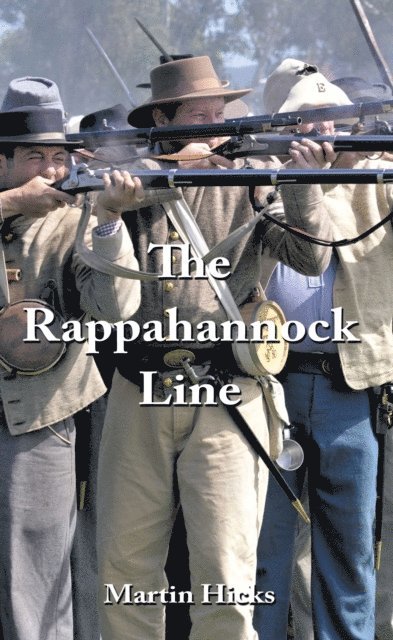
The Rappahannock Line continues the story of Irish immigrant Daniel Ryan who serves in Robert E. Lees Confederate Army of Northern Virginia. As the year 1862 draws to its close, the powerful Union army gathers its strength on the Rappahannock River in Virginia to renew its advance on the Confederate capital. Lees army confronts it there bringing on a further bloody collision.Ryan and his comrades endure the Winter that follows the brutal battle of Fredericksburg, as the Confederate army suffers critical supply shortages, while, across the river, the enemy, under a new commander, reorganises and strengthens itself again for the Spring resumption of campaigning, which will test the skills of General Lee and the courage and resolve of his outnumbered soldiers as never before.
E-bok
Engelska, 2018390 kr
Läs direkt efter köp
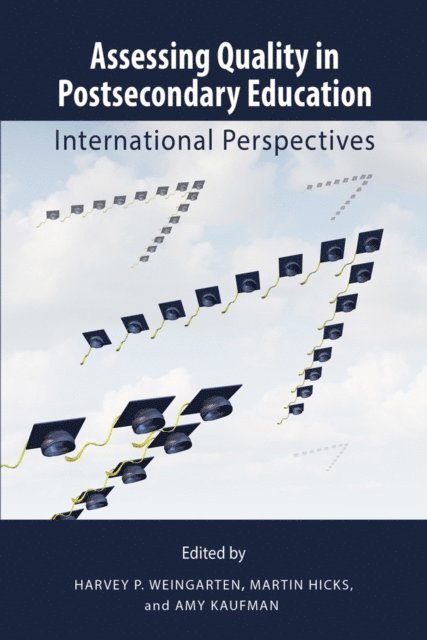
For many years the benefits conferred by a higher education went undisputed. But students, employers, governments, and taxpayers are now demanding evidence of educational quality and value. At the same time, fiscally strapped governments are raising questions about how institutions are funded and the role quality should play in setting funding levels. In the face of these mounting pressures, jurisdictions around the world are working toward designing meaningful indicators to measure the performance of postsecondary institutions that go beyond enrolment numbers, graduation rates, and ever-popular reputational rankings. Assessing Quality in Postsecondary Education: International Perspectives presents a collection of thought-provoking essays by world-renowned higher-education thinkers and policy experts that discuss ways of defining and measuring academic quality. The papers were presented at a conference convened by the Higher Education Quality Council of Ontario in May 2017 and provide valuable insight into this pressing issue and underscore the need for reform.
E-bok
PDF, Engelska, 2018390 kr
Läs direkt efter köp
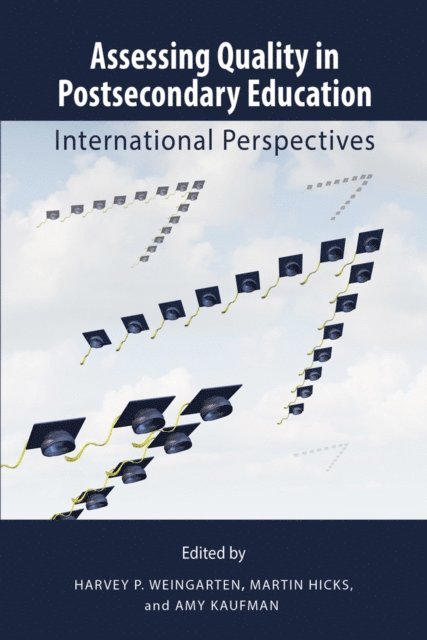
For many years the benefits conferred by a higher education went undisputed. But students, employers, governments, and taxpayers are now demanding evidence of educational quality and value. At the same time, fiscally strapped governments are raising questions about how institutions are funded and the role quality should play in setting funding levels. In the face of these mounting pressures, jurisdictions around the world are working toward designing meaningful indicators to measure the performance of postsecondary institutions that go beyond enrolment numbers, graduation rates, and ever-popular reputational rankings. Assessing Quality in Postsecondary Education: International Perspectives presents a collection of thought-provoking essays by world-renowned higher-education thinkers and policy experts that discuss ways of defining and measuring academic quality. The papers were presented at a conference convened by the Higher Education Quality Council of Ontario in May 2017 and provide valuable insight into this pressing issue and underscore the need for reform.
Häftad, Engelska, 2015
263 kr
Skickas inom 5-8 vardagar
Häftad, Engelska, 2016
263 kr
Skickas inom 5-8 vardagar
Häftad, Engelska, 2017
245 kr
Skickas inom 5-8 vardagar
Häftad, Engelska, 2018
245 kr
Skickas inom 5-8 vardagar
Häftad, Engelska, 2019
263 kr
Skickas inom 5-8 vardagar
Häftad, Engelska, 2020
245 kr
Skickas inom 5-8 vardagar
Häftad, Engelska, 2021
245 kr
Skickas inom 5-8 vardagar
Häftad, Engelska, 2024
247 kr
Skickas inom 5-8 vardagar
Häftad, Engelska, 2012
245 kr
Skickas inom 5-8 vardagar
Häftad, Engelska, 2013
265 kr
Skickas inom 5-8 vardagar
Häftad, Engelska, 2014
280 kr
Skickas inom 5-8 vardagar
E-bok
PDF, Engelska, 20121 367 kr
Läs direkt efter köp
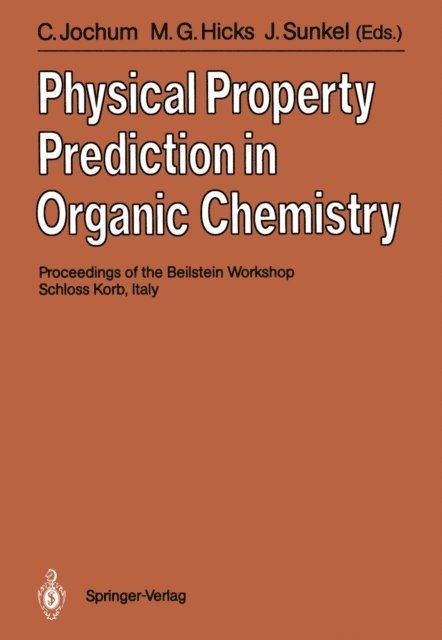
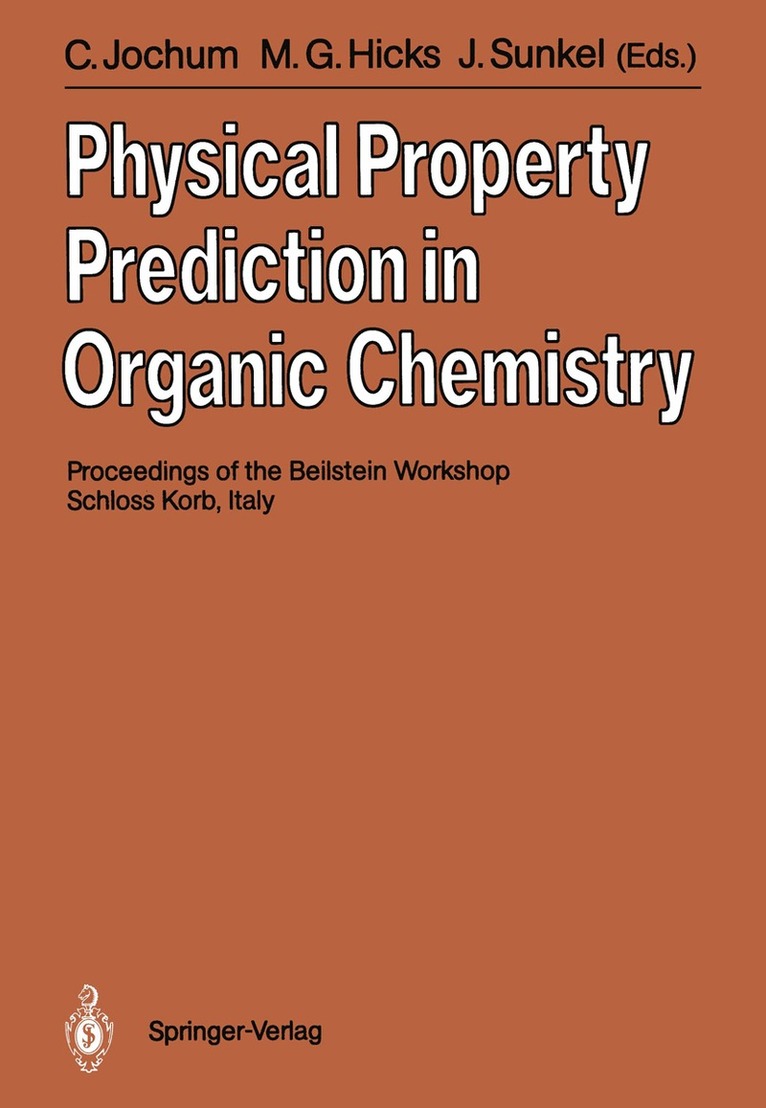
For more than 100 years the Beilstein Handbook has been publishing checked and evaluated data on organic compounds. It has become the major reference book for the chemical and physical properties of organic com pounds. The prediction of these physical properties was the subject of the Beilstein workshop. The ability to predict physical properties is for several reasons of great interest to the Beilstein Institute. It is of primary importance to be able to check the abstracted data for accuracy and to eliminate simple mistakes like typing errors. Presently all the work whether manuscript writing or evaluation of data is carried out manually. This is very time consuming, with the entry of Beilstein into electronic data gathering and publication, the opportunity for computerized consistency checking has become available. Contrary to belief, when one examines the Beilstein Handbook or Chemical Abstracts there is a dearth of chemical information. There are a great many compounds but few are well defined resulting in large gaps in the information available to the chemist. These information gaps could be filled by using algorithmic methods to estimate the properties of interest. An important question to answer is "What is the chemist''s reaction to estimated data?" Will he accept it for use, within limits defined by the method, or will it be unacceptable and therefore detrimental for the data base. However if one could partly fill gaps in the data base the increase in the power of the search techniques would be marked.
Häftad, Engelska, 2012
1 091 kr
Skickas inom 10-15 vardagar
For more than 100 years the Beilstein Handbook has been publishing checked and evaluated data on organic compounds. It has become the major reference book for the chemical and physical properties of organic com pounds. The prediction of these physical properties was the subject of the Beilstein workshop. The ability to predict physical properties is for several reasons of great interest to the Beilstein Institute. It is of primary importance to be able to check the abstracted data for accuracy and to eliminate simple mistakes like typing errors. Presently all the work whether manuscript writing or evaluation of data is carried out manually. This is very time consuming, with the entry of Beilstein into electronic data gathering and publication, the opportunity for computerized consistency checking has become available. Contrary to belief, when one examines the Beilstein Handbook or Chemical Abstracts there is a dearth of chemical information. There are a great many compounds but few are well defined resulting in large gaps in the information available to the chemist. These information gaps could be filled by using algorithmic methods to estimate the properties of interest. An important question to answer is "What is the chemist's reaction to estimated data?" Will he accept it for use, within limits defined by the method, or will it be unacceptable and therefore detrimental for the data base. However if one could partly fill gaps in the data base the increase in the power of the search techniques would be marked.