Mary Christine Banwart – författare
Visar alla böcker från författaren Mary Christine Banwart. Handla med fri frakt och snabb leverans.
4 produkter
4 produkter
Inbunden, Engelska, 2004
2 405 kr
Skickas inom 10-15 vardagar
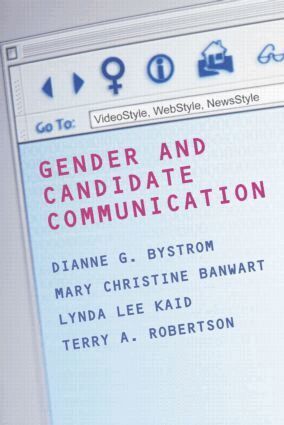
A poll as recently as 2000 revealed that a third of the population thinks there are general characteristics about women that make them less qualified to serve as president. As the public and the media rely on long-held stereotypes, female candidates must focus even harder on the way they want to define their own image through traditional mass media, such as television, and new forms, such as the internet. Gender and Candidate Communication digs deep into the campaigns of the last decade sifting through thousands of ads, websites, and newspaper articles to find out how successful candidates have been in breaking down these gender stereotypes. Among their findings are that female candidates dress more formally, smile more, act tougher when they can, and prefer scare tactics to aggressive attack ads. Gender and Candidate Communication also presents the most comprehensive, systematic method yet for identifying and understanding self-presentation strategies on the web. The internet may be the medium of the future, but Bystrom has found that coverage on the web tends to draw even more heavily on old stereotypes. No close observer of campaigns, gender, or the internet will be able to ignore their findings.
Häftad, Engelska, 2004
670 kr
Skickas inom 10-15 vardagar
A poll as recently as 2000 revealed that a third of the population thinks there are general characteristics about women that make them less qualified to serve as president. As the public and the media rely on long-held stereotypes, female candidates must focus even harder on the way they want to define their own image through traditional mass media, such as television, and new forms, such as the internet. Gender and Candidate Communication digs deep into the campaigns of the last decade sifting through thousands of ads, websites, and newspaper articles to find out how successful candidates have been in breaking down these gender stereotypes. Among their findings are that female candidates dress more formally, smile more, act tougher when they can, and prefer scare tactics to aggressive attack ads. Gender and Candidate Communication also presents the most comprehensive, systematic method yet for identifying and understanding self-presentation strategies on the web. The internet may be the medium of the future, but Bystrom has found that coverage on the web tends to draw even more heavily on old stereotypes. No close observer of campaigns, gender, or the internet will be able to ignore their findings.
E-bok
Engelska, 2005790 kr
Läs direkt efter köp
A poll as recently as 2000 revealed that a third of the population thinks there are general characteristics about women that make them less qualified to serve as president. As the public and the media rely on long-held stereotypes, female candidates must focus even harder on the way they want to define their own image through traditional mass media, such as television, and new forms, such as the internet. Gender and Candidate Communication digs deep into the campaigns of the last decade sifting through thousands of ads, websites, and newspaper articles to find out how successful candidates have been in breaking down these gender stereotypes. Among their findings are that female candidates dress more formally, smile more, act tougher when they can, and prefer scare tactics to aggressive attack ads. Gender and Candidate Communication also presents the most comprehensive, systematic method yet for identifying and understanding self-presentation strategies on the web. The internet may be the medium of the future, but Bystrom has found that coverage on the web tends to draw even more heavily on old stereotypes. No close observer of campaigns, gender, or the internet will be able to ignore their findings.
E-bok
PDF, Engelska, 2005790 kr
Läs direkt efter köp
A poll as recently as 2000 revealed that a third of the population thinks there are general characteristics about women that make them less qualified to serve as president. As the public and the media rely on long-held stereotypes, female candidates must focus even harder on the way they want to define their own image through traditional mass media, such as television, and new forms, such as the internet. Gender and Candidate Communication digs deep into the campaigns of the last decade sifting through thousands of ads, websites, and newspaper articles to find out how successful candidates have been in breaking down these gender stereotypes. Among their findings are that female candidates dress more formally, smile more, act tougher when they can, and prefer scare tactics to aggressive attack ads. Gender and Candidate Communication also presents the most comprehensive, systematic method yet for identifying and understanding self-presentation strategies on the web. The internet may be the medium of the future, but Bystrom has found that coverage on the web tends to draw even more heavily on old stereotypes. No close observer of campaigns, gender, or the internet will be able to ignore their findings.