
Mary Field Belenky – författare
Visar alla böcker från författaren Mary Field Belenky. Handla med fri frakt och snabb leverans.
2 produkter
2 produkter
Häftad, Engelska, 1998
341 kr
Skickas inom 5-8 vardagar
An impressive and innovative follow up to Women's Ways of Knowing, this book shows how the authors' ways of knowing" theory revolutionized the fields of law, education, psychology, and women's studies, to name but a few. In essence, this dynamic collection poses the ultimate question: Can we come to understand and respect diverse ways of knowing? Features: 15 essays, all written exclusively for this volume the essays are by the original authors of Women's Ways of Knowing and prominent contributors, including Sandra Harding, Aida Hurtado, Sara Ruddick, Michael Mahoney, and Patricinio Schweickart in separate chapters, the authors explore how their thinking has developed and changed since Women's Ways of Knowing argument is expanded beyond gender and knowledge to address the factors of colour, class, and culture.
Häftad, Engelska, 1999
341 kr
Skickas inom 5-8 vardagar
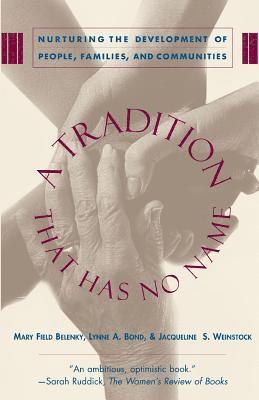
Mary Field Belenky, Lynne A. Bond, and Jacqueline S. Weinstock, hoping to carry Belenky's theoretical work in the bestselling Women's Ways of Knowing into the realm of everyday life, created the Listening Partners project, designed to help young women isolated in rural poverty give voice to their personal and communal needs and come together to create social change . A Tradition That Has No Name explores this project and the work of other women who have created organizations to give voice to and strengthen traditions of community organizing and leadership, particularly as they have developed in communities of women marginalized by race and class. Ranging across cultures and classes,from struggling inner-city neighbourhoods to affluent middle-class suburbs, from African American communities in the South to poor rural communities in Vermont,the book teaches us how to appreciate the ways women create networks of listening and community-building, and how to bring these little-recognized traditions of women's activism to the forefront of public life. It is these public homeplaces" women create together, the authors argue, that hold the key for empowering communities and creating social change.