Masahiko Minami – författare
Visar alla böcker från författaren Masahiko Minami. Handla med fri frakt och snabb leverans.
5 produkter
5 produkter
5 353 kr
Skickas inom 5-8 vardagar
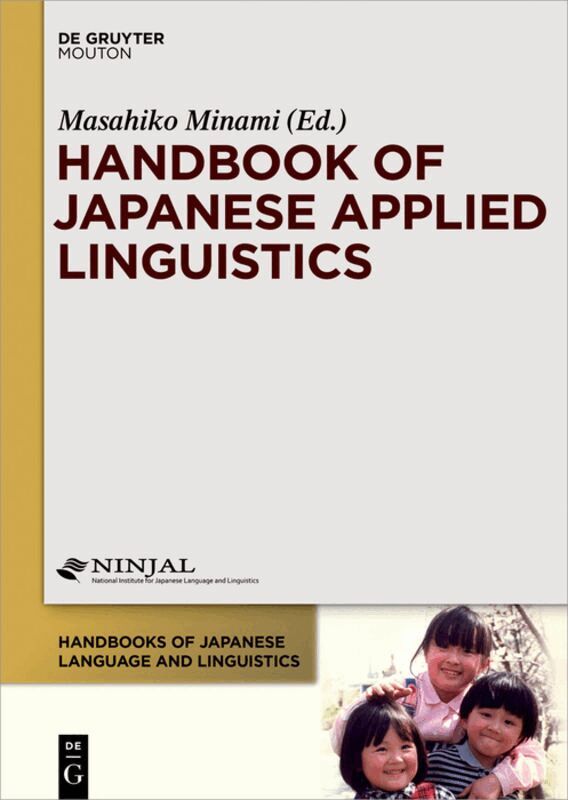
Applied linguistics is the best single label to represent a wide range of contemporary research at the intersection of linguistics, anthropology, psychology, and sociology, to name a few. The Handbook of Japanese Applied Linguistics reflects crosscurrents in applied linguistics, an ever-developing branch/discipline of linguistics. The book is divided into seven sections, where each chapter discusses in depth the importance of particular topics, presenting not only new findings in Japanese, but also practical implications for other languages. Section 1 examines first language acquisition/development, whereas Section 2 covers issues related to second language acquisition/development and bilingualism/multilingualism. Section 3 presents problems associated with the teaching and learning of foreign languages. Section 4 undertakes questions in corpus/computational linguistics. Section 5 deals with clinical linguistics, and Section 6 takes up concerns in the area of translation/interpretation. Finally, Section 7 discusses Japanese sign language. Covering a wide range of current issues in an in an in-depth, comprehensive manner, the book will be useful for researchers as well as graduate students who are interested in Japanese linguistics in general, and applied linguistics in particular.Chapter titlesChapter 1. Cognitive Bases and Caregivers' Speech in Early Language Development (Tamiko Ogura, Tezukayama University)Chapter 2. Literacy Acquisition in Japanese Children (Etsuko Haryu, University of Tokyo)Chapter 3. Age Factors in Language Acquisition (Yuko Goto Butler, University of Pennsylvania)Chapter 4. Cross-lingual Transfer from L1 to L2 Among School-age Children (Kazuko Nakajima, University of Toronto)Chapter 5. Errors and Learning Strategies by Learners of Japanese as an L2 (Kumiko Sakoda, Hiroshima University/NINJAL)Chapter 6. Adult JFL Learners' Acquisition of Speech Style Shift (Haruko Minegishi Cook, University of Hawai'i at Manoa)Chapter 7. Japanese Language Proficiency Assessment (Noriko Kobayashi, Tsukuba University)Chapter 8. The Role of Instruction in Acquiring Japanese as a Second Language (Kaoru Koyanagi, Sophia University)Chapter 9. The Influence of Topic Choice on Narrative Proficiency by Learners of Japanese as a Foreign Language (Masahiko Minami, San Francisco State University)Chapter 10. CHILDES for Japanese: Corpora, Programs, and Perspectives (Susanne Miyata, Aichi Shukutoku University)Chapter 11. KY Corpus (Jae-Ho Lee, Tsukuba University)Chapter 12. Corpus-based Second Language Acquisition Research (Hiromi Ozeki, Reitaku University)Chapter 13. Assessment of Language Development in Children with Hearing Impairment and Language Disorders (Kiyoshi Otomo, Tokyo Gakugei University)Chapter 14. Speech and Language Acquisition in Japanese Children with Down Syndrome (Toru Watamaki, Nagasaki University)Chapter 15. Revisiting Autistic Language: Is "literalness" a Truth or Myth? Manabu Oi (Osaka University/Kanazawa University)Chapter 16. Towards a Robust, Genre-based Translation Model and its Application (Judy Noguchi, Mukogawa Women's University; Atsuko Misaki, Kwansei Gakuin University; Shoji Miyanaga, Ritsumeikan University; Masako Terui, Kinki University)Chapter 17. Japanese Sign Language: An Introduction (Daisuke Hara, Toyota Technological Institute)Chapter 18. Japanese Sign Language Phonology and Morphology (Daisuke Hara, Toyota Technological Institute)Chapter 19. Japanese Sign Language Syntax (Noriko Imazato, Kobe City College of Technology)Chapter 20. Sign Language Development and Language Input (Takashi Torigoe, Hyogo University of Teacher Education)
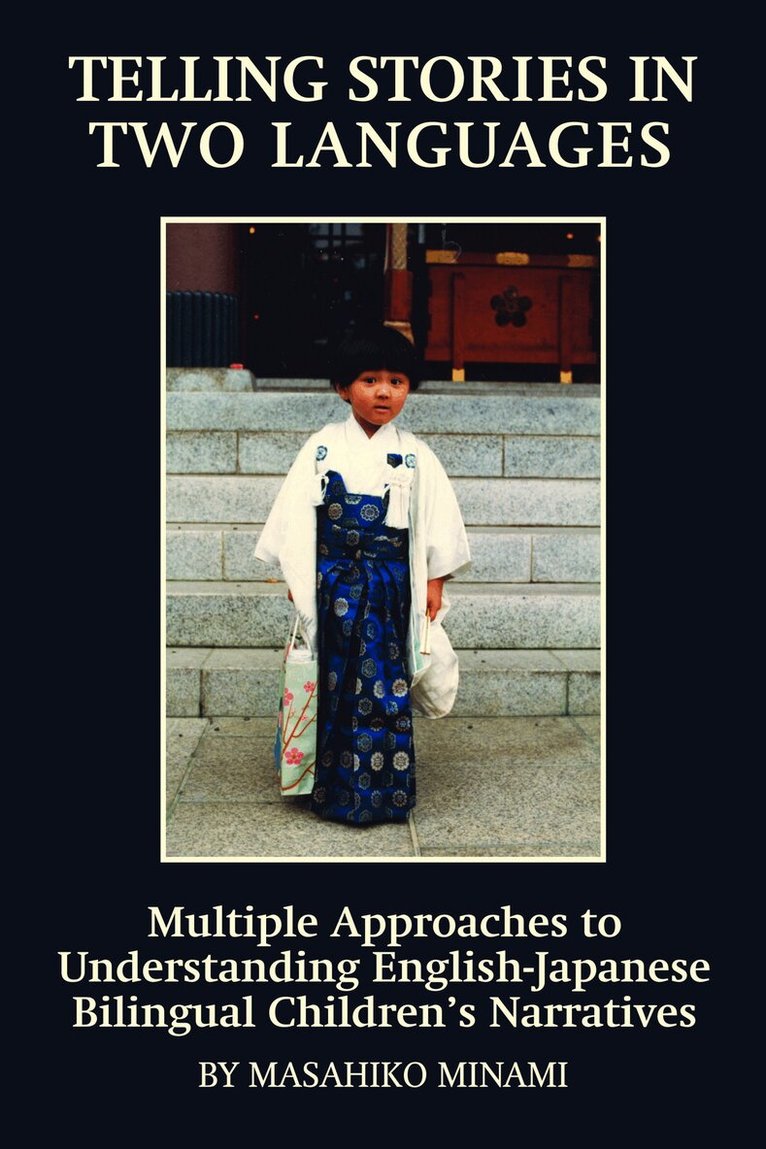
Telling Stories in Two Languages
Multiple Approaches to Understanding English-Japanese Bilingual Children's Narratives
Häftad, Engelska, 2011
524 kr
Skickas inom 5-8 vardagar
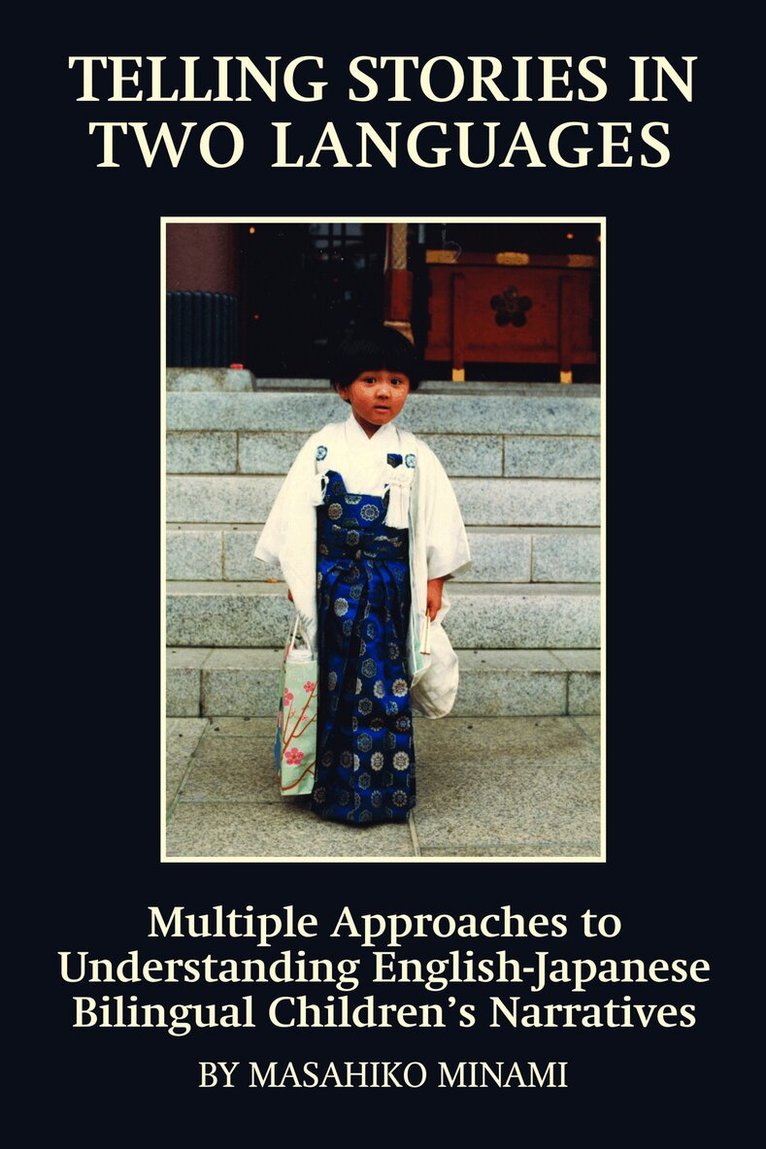
The topic of bilingualism has aroused considerable interest in research on language acquisition in recent decades. Researchers in various fields, such as developmental psychology and psycholinguistics, have investigated bilingual populations from different perspectives in order to understand better how bilingualism affects cognitive abilities like memory, perception, and metalinguistic awareness. Telling Stories in Two Languages contributes to the general upsurge in linguistically related studies of bilingual children. The book’s particular and unique focus is narrative development in a bilingual and multicultural context.The book is particularly important in an increasingly pluralistic and multicultural United States, where there are large numbers of children from increasingly diverse cultural and linguistic backgrounds. Telling stories is important in the context of language and communication development because it is often by means of this activity that children develop the skill of presenting a series of events both in speech and writing. However, varying concepts of literacy exist in different societies, and literacy has different social and personal implications in different social and cultural contexts. In our schools, teachers are expected to teach what is relevant for students in the dominant cultural framework, but it would benefit those teachers greatly to have an understanding of important differences in, for example, narrative styles of different cultures.Bilingualism or even multilingualism is all around us. Even in the United States, where a single language is clearly predominant, there are hundreds of languages spoken. Speaking more than one language may not be typical, but is so common in modern times that it would be senseless to ignore its many implications. The study of narratives told by children in both English and Japanese that are presented in this book will provide an important point of reference for research aimed at teasing apart the relative contributions of linguistic abilities and cultural conceptions to bilingual children’s narrative development.
Telling Stories in Two Languages
Multiple Approaches to Understanding English-Japanese Bilingual Children's Narratives
Inbunden, Engelska, 2011
977 kr
Skickas inom 5-8 vardagar
The topic of bilingualism has aroused considerable interest in research on language acquisition in recent decades. Researchers in various fields, such as developmental psychology and psycholinguistics, have investigated bilingual populations from different perspectives in order to understand better how bilingualism affects cognitive abilities like memory, perception, and metalinguistic awareness. Telling Stories in Two Languages contributes to the general upsurge in linguistically related studies of bilingual children. The book’s particular and unique focus is narrative development in a bilingual and multicultural context.The book is particularly important in an increasingly pluralistic and multicultural United States, where there are large numbers of children from increasingly diverse cultural and linguistic backgrounds. Telling stories is important in the context of language and communication development because it is often by means of this activity that children develop the skill of presenting a series of events both in speech and writing. However, varying concepts of literacy exist in different societies, and literacy has different social and personal implications in different social and cultural contexts. In our schools, teachers are expected to teach what is relevant for students in the dominant cultural framework, but it would benefit those teachers greatly to have an understanding of important differences in, for example, narrative styles of different cultures.Bilingualism or even multilingualism is all around us. Even in the United States, where a single language is clearly predominant, there are hundreds of languages spoken. Speaking more than one language may not be typical, but is so common in modern times that it would be senseless to ignore its many implications. The study of narratives told by children in both English and Japanese that are presented in this book will provide an important point of reference for research aimed at teasing apart the relative contributions of linguistic abilities and cultural conceptions to bilingual children’s narrative development.
Multiple Perspectives on Social Identities in Japan
Language Variation and Change
Inbunden, Engelska, 2027
1 356 kr
Kommande
Offering a comprehensive exploration of linguistic variation and social identities in Japan, this book contributes to fostering cross-cultural understanding. It explores how language variation interacts with culture, affecting cultural transformation and transmission, with a specific emphasis on the Japanese language. Despite Japan’s common perception as a homogeneous society, it is essential to recognize sources of diversity, particularly with substantial Korean and Chinese minorities. This challenges the portrayal of monolithic collectivism within the framework of homogeneity. The eight chapters are organized around the overarching theme of social identities within Japanese culture and society. The first half concentrates on language varieties (regional and social dialects) and their relationship with identity. It explores how language is instrumental in constructing group membership, either by creating and embracing it or by resisting and altering group boundaries. This section covers both regional dialects, grounded in geography, and social dialects (sociolects), specific to sociocultural groups. The second half further analyzes identity, examining how identities align with sociolect categories such as gender, occupation, and ethnicity. These identities are fluid, multiple, and socioculturally constructed. Within the social constructionist paradigm, speakers use language to position themselves vis-à-vis their interlocutors. Despite historical influences emphasizing collectivism in East Asian cultures, this section questions the proposed dichotomy with Western societies, exploring its applicability to Japanese society.
1 691 kr
Tillfälligt slut