Massimo Merola – författare
1 515 kr
Skickas inom 5-8 vardagar
1 285 kr
Läs direkt efter köp
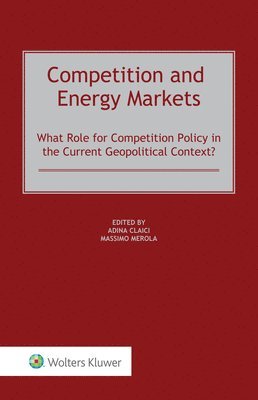
The extraordinary double crisis of the COVID-19 pandemic and the war in Ukraine has given rise to an unprecedented geopolitical dilemma for the EU institutions, especially in the energy sector – that of ensuring the security of energy supply while at the same time upholding committed emission targets. Against this backdrop, this important and timely volume provides guidance on how to address the crucial trade-offs that must be navigated, considering areas of competition policy where the most challenging objectives must be met.
The contributing authors, who include prominent practitioners and academics, members of the European Commission, and representatives of national competition authorities, address various issues around the new energy dilemma in relation to such aspects as the following:
affordability of energy prices;
EU energy infrastructures;
solidarity amongst Member States;
reform of the electricity market design and competition enforcement;
fitness and appropriateness of EU State aid tools; and
competition enforcers’ perspectives.
The book gathers and revises papers and presentations given at the 2023 Annual Conference of the Global Competition Law Center (GCLC) of the College of Europe.
Although other constraints beyond the security of supply and the path towards a green economy do, of course, exist, they do not alter the existence of the trade-offs and rather make them even more problematic and unavoidable. Consequently, all professionals and officials involved in shaping energy policy will greatly appreciate this invaluable book. For practitioners, policymakers and academics working on competition law, the book will provide valuable food for thought and guidance in the years ahead.
1 285 kr
Läs direkt efter köp
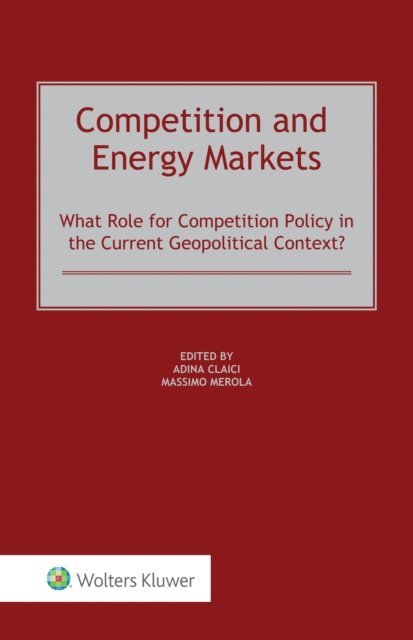
The extraordinary double crisis of the COVID-19 pandemic and the war in Ukraine has given rise to an unprecedented geopolitical dilemma for the EU institutions, especially in the energy sector – that of ensuring the security of energy supply while at the same time upholding committed emission targets. Against this backdrop, this important and timely volume provides guidance on how to address the crucial trade-offs that must be navigated, considering areas of competition policy where the most challenging objectives must be met.
The contributing authors, who include prominent practitioners and academics, members of the European Commission, and representatives of national competition authorities, address various issues around the new energy dilemma in relation to such aspects as the following:
affordability of energy prices;
EU energy infrastructures;
solidarity amongst Member States;
reform of the electricity market design and competition enforcement;
fitness and appropriateness of EU State aid tools; and
competition enforcers’ perspectives.
The book gathers and revises papers and presentations given at the 2023 Annual Conference of the Global Competition Law Center (GCLC) of the College of Europe.
Although other constraints beyond the security of supply and the path towards a green economy do, of course, exist, they do not alter the existence of the trade-offs and rather make them even more problematic and unavoidable. Consequently, all professionals and officials involved in shaping energy policy will greatly appreciate this invaluable book. For practitioners, policymakers and academics working on competition law, the book will provide valuable food for thought and guidance in the years ahead.
1 941 kr
Skickas inom 5-8 vardagar
1 650 kr
Läs direkt efter köp
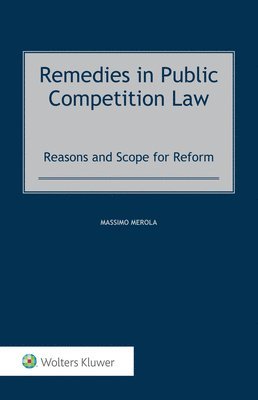
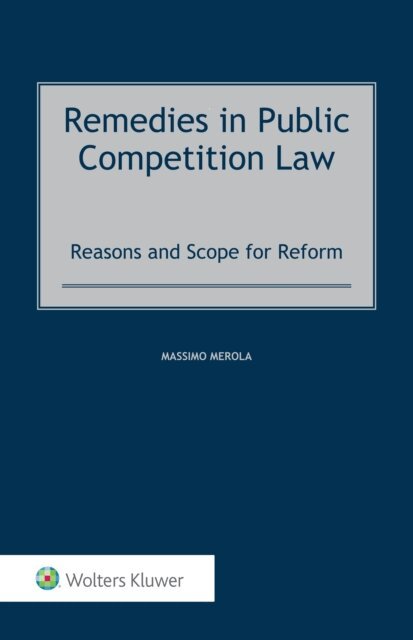
Public competition law addresses State measures that have the effect of actually or potentially distorting competition. In this thoroughly researched and compelling book, a well-known authority on EU State aid examines the system of remedies available in cases of infringement of State aid rules and proposes a specific approach to reform. The book combines a detailed analysis of the origins, stated goals, and fundamental principles of the system of recovery of unlawful aid with recommendations designed to ensure effective deterrence, rectify competitive distortions caused by unlawful aid, and mitigate conflicts between Member States and aid beneficiaries.
In the process of delineating the substantive and procedural rules, including enforcement criteria, that constitute the backbone of the current system of remedies – as well as highlighting the uncertainties and inconsistencies that a comprehensive reform should seek to address – the analysis explores such contextual factors as the following:
inclusion of aid beneficiaries in administrative procedures;
establishment of a specific procedure for determining remedies;
adaptation of the system of remedies to the modernisation of State aid law, including objectives such as budgetary discipline and effective tackling of economic crises;
clarification of the notion of the status quo ante;
enforcement of State aid law by national courts;
harmonisation of national laws governing the private enforcement of State aid rules; and
convergence of State aid law and foreign subsidies law to create a comprehensive system of remedies for public competition law as a whole.
The author’s call for urgent, comprehensive reform of the EU’s State aid system of remedies promises to enhance policy coherence and effectiveness. Both theoretical and practical, the book will nourish scholarship in the field and assist greatly in the work of interested policymakers and practitioners.
1 650 kr
Läs direkt efter köp
Public competition law addresses State measures that have the effect of actually or potentially distorting competition. In this thoroughly researched and compelling book, a well-known authority on EU State aid examines the system of remedies available in cases of infringement of State aid rules and proposes a specific approach to reform. The book combines a detailed analysis of the origins, stated goals, and fundamental principles of the system of recovery of unlawful aid with recommendations designed to ensure effective deterrence, rectify competitive distortions caused by unlawful aid, and mitigate conflicts between Member States and aid beneficiaries.
In the process of delineating the substantive and procedural rules, including enforcement criteria, that constitute the backbone of the current system of remedies – as well as highlighting the uncertainties and inconsistencies that a comprehensive reform should seek to address – the analysis explores such contextual factors as the following:
inclusion of aid beneficiaries in administrative procedures;
establishment of a specific procedure for determining remedies;
adaptation of the system of remedies to the modernisation of State aid law, including objectives such as budgetary discipline and effective tackling of economic crises;
clarification of the notion of the status quo ante;
enforcement of State aid law by national courts;
harmonisation of national laws governing the private enforcement of State aid rules; and
convergence of State aid law and foreign subsidies law to create a comprehensive system of remedies for public competition law as a whole.
The author’s call for urgent, comprehensive reform of the EU’s State aid system of remedies promises to enhance policy coherence and effectiveness. Both theoretical and practical, the book will nourish scholarship in the field and assist greatly in the work of interested policymakers and practitioners.