Matei Visniec – författare
Visar alla böcker från författaren Matei Visniec. Handla med fri frakt och snabb leverans.
14 produkter
14 produkter
Inbunden, Engelska, 2020
248 kr
Skickas inom 5-8 vardagar
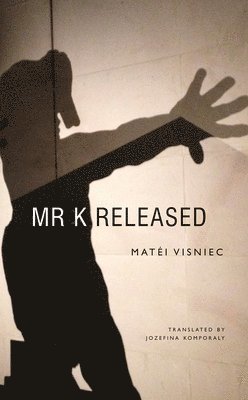
Mirroring Romania’s drastic transition from totalitarianism to Western-style freedom in the late 1980s, Mr. K Released captures the disturbingly surreal feeling that many newly liberated prisoners face when they leave captivity. Employing his trademark playful absurdity, Matéi Visniec introduces us to Mr. K, a Kafkaesque figure who has been imprisoned for years for an undisclosed crime in a penitentiary with mysterious tunnels. One day, Mr. K finds himself unexpectedly released. Unable to comprehend his sudden liberation, he becomes traumatized by the realities of freedom—more so than the familiar trauma of captivity or imprisonment. In the hope of obtaining some clarification, Mr. K keeps waiting for an appointment with the prison governor, however, their meeting is constantly being delayed. During this endless process of waiting, Mr. K gets caught up in a clinical exploration of his physical surroundings. He does not have the courage or indeed inclination to leave, but can move unrestricted within the prison compound, charting endless series of absurd circles in which readers might paradoxically recognize themselves.
Häftad, Engelska, 2000
205 kr
Skickas inom 5-8 vardagar
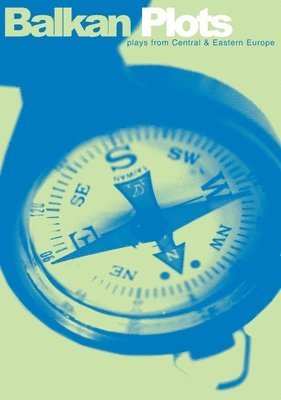
This collection features four new plays about war, tyranny and discrimination by Eastern and Central European writers. Includes the plays The Body of a Woman as a battlefield in the Bosnian war by Matei Visniec, Cordon by Nebojsa Romcevic, When I want to whistle, I whistle... by Andreea Valean, Soap Opera by Gyoergy SpiroThe title of this volume alludes to the history of political double-dealing in a troubled region within southern Europe, surrounded by the Adriatic, Aegean and Black Seas. G.B. Shaw wrote Arms and The Man about a small Balkan plot in the 19th century. It's in this tradition, rather than in a geographical sense that we use the title Balkan Plots. The plays in this volume are dramatic works which have emerged from, or which take as their subject matter, the struggle of individuals within societies affected by recent political upheaval. The writers explore aspects of freedom and rebellion, ethnicity and discrimination, loyalty and betrayal in situations where conventional attitudes and beliefs are severely tested. In some plays, the conflict is between traditional socialist attitudes and western capitalism. In others, the values and beliefs of the younger generation collide with and challenge those of the older generation. Within each of the plays, the way in which the personal and the political interacts, is very much in evidence.
420 kr
Skickas inom 10-15 vardagar
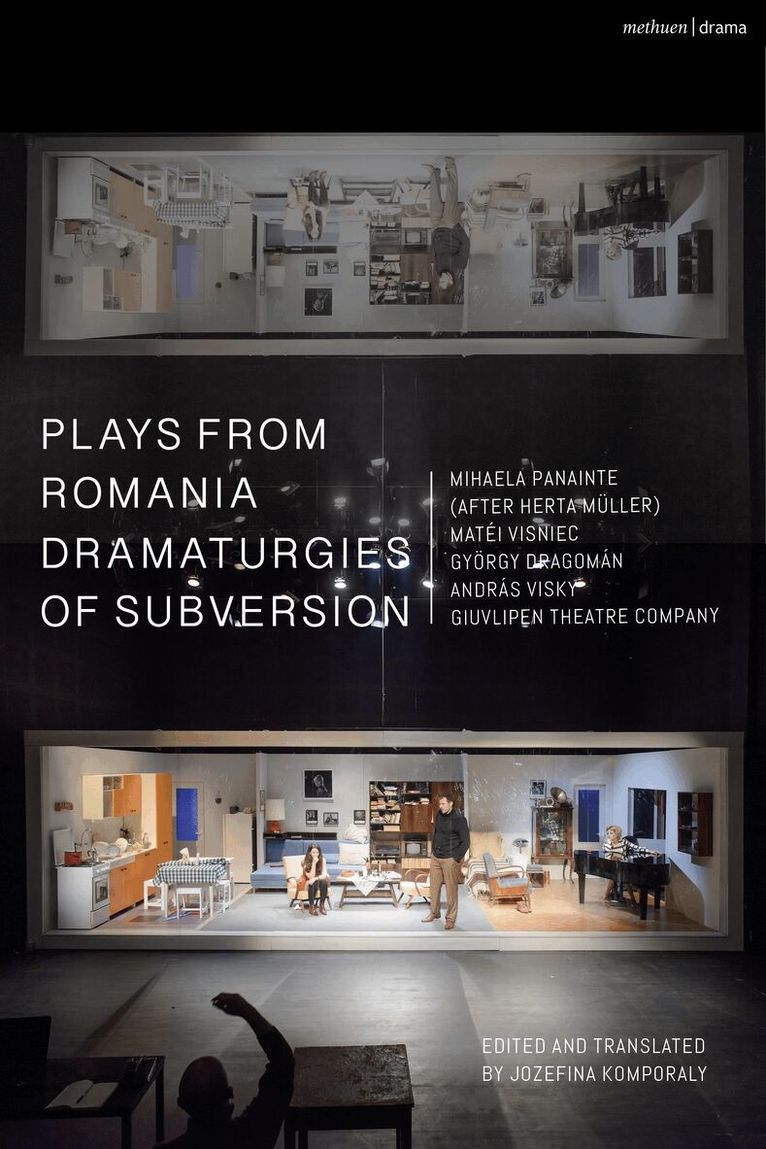
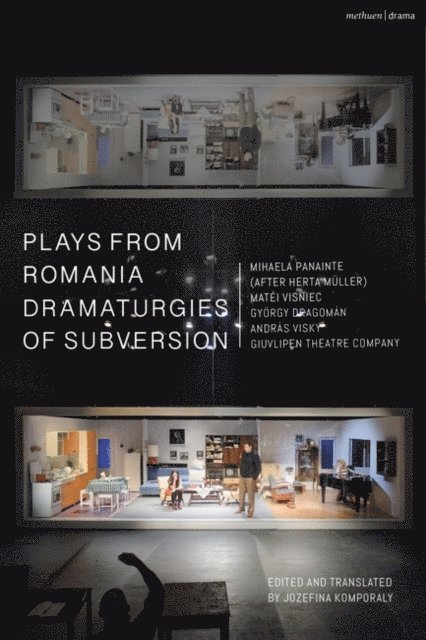
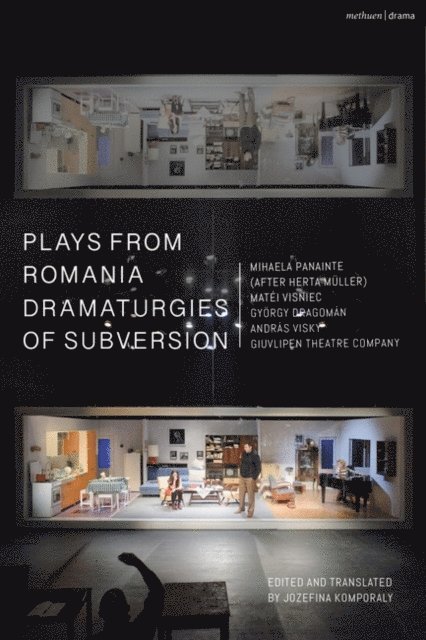
Plays from Romania: Dramaturgies of Subversion reflects the diversity of dramatic writing exploring the past and present of Romania, and takes stock thirty years after the collapse of communism. In addition to plays originally written in Romanian, the collection includes work by German, Hungarian and Roma authors born and/or working in Romania, and brings together plays written during the communist period and its aftermath. The plays included in the collection, edited and translated by Jozefina Komporaly and fully published for the first time in English, demonstrate broad variety in terms of form and content – ranging from family dramas to allegories, and absurdist experiments to modular texts rooted in open dramaturgy – and are the work of both individual playwrights and the results of collective creation. These works share a preoccupation with critically reflecting urgent concerns rooted in Romanian realities, and are notable dramaturgical experiments that push the boundaries of the genre. In addition, these plays also seek novel ways to examine universal experiences of the human condition, such as love, loss, abuse, betrayal, grief, violence, manipulation and despair.This unique anthology celebrates the renewed vitality and variety of writing for the stage after 1990, and endeavours to place Romanian theatre in a forward-looking transnational context.Lowlands ('Niederungen') by Herta Müller, adapted for the stage by Mihaela Panainte (German) This stage adaptation is based on a volume of short stories by Herta Müller written in German in 1982 and focuses on the perspective of a child narrator, by way of a series of episodes that centre on mundane aspects of daily life in a remote village against the backdrop of the oppressive atmosphere of mid-twentieth century Romania.The Spectator Sentenced to Death ('Spectatorul condamnat la moarte') by Matéi Visniec (Romanian)This play is a bitter parody of the Stalinist justice system, which totally disregards the fundamental question whether the accused is actually guilty or not.The Passport ('Kalucsni') by György Dragomán (Hungarian) This play is set pre-1989 in a typical small town in the Transylvanian province of Romania, in which the lives of the various social classes, and the fate of the persecuted and that of those who persecute are closely intertwined.The Man Who Had His Inner Evil Removed ('Omul din care a fost extras raul') by Matéi Visniec (Romanian)This topical play is a sharp reflection on the voluntary servitude in which we place ourselves, often unawares, in conditions of our contemporary consumer culture, and a fierce critique of increasingly dominant tendencies to abandon moral criteria in political life.Stories of the Body (Artemisia, Eva, Lina, Teresa) ('A test történetei') by András Visky (Hungarian) The cycle Stories of the Body comprises four plays based on real life stories as experienced by remarkable women (including Mother Teresa and Italian Renaissance painter Artemisia Gentileschi), and are connected to various cities including Budapest, Cluj/Kolozsvár, Kolkata and Rome, from the 17th to the 21st century.Sexodrom by Giuvlipen Theatre Company (Mihaela Dragan, Antonella Lerca Duda, Nicoleta Ghita, Zita Moldovan, Bety Pisica, Oana Rusu, Raj Alexandru Udrea), based on a concept by Bogdan Georgescu.(Roma) This is a work of collective creation by members of the Roma Theatre company Giuvlipen, aiming to bring to public attention taboo subjects, to enhance the visibility of Roma performers and to experiment with new forms of theatre-making in a Romanian context.
Inbunden, Engelska, 2021
1 435 kr
Skickas inom 10-15 vardagar
Plays from Romania: Dramaturgies of Subversion reflects the diversity of dramatic writing exploring the past and present of Romania, and takes stock thirty years after the collapse of communism. In addition to plays originally written in Romanian, the collection includes work by German, Hungarian and Roma authors born and/or working in Romania, and brings together plays written during the communist period and its aftermath. The plays included in the collection, edited and translated by Jozefina Komporaly and fully published for the first time in English, demonstrate broad variety in terms of form and content – ranging from family dramas to allegories, and absurdist experiments to modular texts rooted in open dramaturgy – and are the work of both individual playwrights and the results of collective creation. These works share a preoccupation with critically reflecting urgent concerns rooted in Romanian realities, and are notable dramaturgical experiments that push the boundaries of the genre. In addition, these plays also seek novel ways to examine universal experiences of the human condition, such as love, loss, abuse, betrayal, grief, violence, manipulation and despair.This unique anthology celebrates the renewed vitality and variety of writing for the stage after 1990, and endeavours to place Romanian theatre in a forward-looking transnational context.Lowlands ('Niederungen') by Herta Müller, adapted for the stage by Mihaela Panainte (German) This stage adaptation is based on a volume of short stories by Herta Müller written in German in 1982 and focuses on the perspective of a child narrator, by way of a series of episodes that centre on mundane aspects of daily life in a remote village against the backdrop of the oppressive atmosphere of mid-twentieth century Romania.The Spectator Sentenced to Death ('Spectatorul condamnat la moarte') by Matéi Visniec (Romanian)This play is a bitter parody of the Stalinist justice system, which totally disregards the fundamental question whether the accused is actually guilty or not.The Passport ('Kalucsni') by György Dragomán (Hungarian) This play is set pre-1989 in a typical small town in the Transylvanian province of Romania, in which the lives of the various social classes, and the fate of the persecuted and that of those who persecute are closely intertwined.The Man Who Had His Inner Evil Removed ('Omul din care a fost extras raul') by Matéi Visniec (Romanian)This topical play is a sharp reflection on the voluntary servitude in which we place ourselves, often unawares, in conditions of our contemporary consumer culture, and a fierce critique of increasingly dominant tendencies to abandon moral criteria in political life.Stories of the Body (Artemisia, Eva, Lina, Teresa) ('A test történetei') by András Visky (Hungarian) The cycle Stories of the Body comprises four plays based on real life stories as experienced by remarkable women (including Mother Teresa and Italian Renaissance painter Artemisia Gentileschi), and are connected to various cities including Budapest, Cluj/Kolozsvár, Kolkata and Rome, from the 17th to the 21st century.Sexodrom by Giuvlipen Theatre Company (Mihaela Dragan, Antonella Lerca Duda, Nicoleta Ghita, Zita Moldovan, Bety Pisica, Oana Rusu, Raj Alexandru Udrea), based on a concept by Bogdan Georgescu.(Roma) This is a work of collective creation by members of the Roma Theatre company Giuvlipen, aiming to bring to public attention taboo subjects, to enhance the visibility of Roma performers and to experiment with new forms of theatre-making in a Romanian context.
E-bok
PDF, Engelska, 2021437 kr
Läs direkt efter köp
Plays from Romania: Dramaturgies of Subversion reflects the diversity of dramatic writing exploring the past and present of Romania, and takes stock thirty years after the collapse of communism. In addition to plays originally written in Romanian, the collection includes work by German, Hungarian and Roma authors born and/or working in Romania, and brings together plays written during the communist period and its aftermath. The plays included in the collection, edited and translated by Jozefina Komporaly and fully published for the first time in English, demonstrate broad variety in terms of form and content – ranging from family dramas to allegories, and absurdist experiments to modular texts rooted in open dramaturgy – and are the work of both individual playwrights and the results of collective creation. These works share a preoccupation with critically reflecting urgent concerns rooted in Romanian realities, and are notable dramaturgical experiments that push the boundaries of the genre. In addition, these plays also seek novel ways to examine universal experiences of the human condition, such as love, loss, abuse, betrayal, grief, violence, manipulation and despair.This unique anthology celebrates the renewed vitality and variety of writing for the stage after 1990, and endeavours to place Romanian theatre in a forward-looking transnational context.Lowlands (''Niederungen'') by Herta Müller, adapted for the stage by Mihaela Panainte (German) This stage adaptation is based on a volume of short stories by Herta Müller written in German in 1982 and focuses on the perspective of a child narrator, by way of a series of episodes that centre on mundane aspects of daily life in a remote village against the backdrop of the oppressive atmosphere of mid-twentieth century Romania.The Spectator Sentenced to Death (''Spectatorul condamnat la moarte'') by Matéi Visniec (Romanian)This play is a bitter parody of the Stalinist justice system, which totally disregards the fundamental question whether the accused is actually guilty or not.The Passport (''Kalucsni'') by György Dragomán (Hungarian) This play is set pre-1989 in a typical small town in the Transylvanian province of Romania, in which the lives of the various social classes, and the fate of the persecuted and that of those who persecute are closely intertwined.The Man Who Had His Inner Evil Removed (''Omul din care a fost extras raul'') by Matéi Visniec (Romanian)This topical play is a sharp reflection on the voluntary servitude in which we place ourselves, often unawares, in conditions of our contemporary consumer culture, and a fierce critique of increasingly dominant tendencies to abandon moral criteria in political life.Stories of the Body (Artemisia, Eva, Lina, Teresa) (''A test történetei'') by András Visky (Hungarian) The cycle Stories of the Body comprises four plays based on real life stories as experienced by remarkable women (including Mother Teresa and Italian Renaissance painter Artemisia Gentileschi), and are connected to various cities including Budapest, Cluj/Kolozsvár, Kolkata and Rome, from the 17th to the 21st century.Sexodrom by Giuvlipen Theatre Company (Mihaela Dragan, Antonella Lerca Duda, Nicoleta Ghita, Zita Moldovan, Bety Pisica, Oana Rusu, Raj Alexandru Udrea), based on a concept by Bogdan Georgescu.(Roma) This is a work of collective creation by members of the Roma Theatre company Giuvlipen, aiming to bring to public attention taboo subjects, to enhance the visibility of Roma performers and to experiment with new forms of theatre-making in a Romanian context.
437 kr
Läs direkt efter köp
Plays from Romania: Dramaturgies of Subversion reflects the diversity of dramatic writing exploring the past and present of Romania, and takes stock thirty years after the collapse of communism. In addition to plays originally written in Romanian, the collection includes work by German, Hungarian and Roma authors born and/or working in Romania, and brings together plays written during the communist period and its aftermath. The plays included in the collection, edited and translated by Jozefina Komporaly and fully published for the first time in English, demonstrate broad variety in terms of form and content – ranging from family dramas to allegories, and absurdist experiments to modular texts rooted in open dramaturgy – and are the work of both individual playwrights and the results of collective creation. These works share a preoccupation with critically reflecting urgent concerns rooted in Romanian realities, and are notable dramaturgical experiments that push the boundaries of the genre. In addition, these plays also seek novel ways to examine universal experiences of the human condition, such as love, loss, abuse, betrayal, grief, violence, manipulation and despair.This unique anthology celebrates the renewed vitality and variety of writing for the stage after 1990, and endeavours to place Romanian theatre in a forward-looking transnational context.Lowlands (''Niederungen'') by Herta Müller, adapted for the stage by Mihaela Panainte (German) This stage adaptation is based on a volume of short stories by Herta Müller written in German in 1982 and focuses on the perspective of a child narrator, by way of a series of episodes that centre on mundane aspects of daily life in a remote village against the backdrop of the oppressive atmosphere of mid-twentieth century Romania.The Spectator Sentenced to Death (''Spectatorul condamnat la moarte'') by Matéi Visniec (Romanian)This play is a bitter parody of the Stalinist justice system, which totally disregards the fundamental question whether the accused is actually guilty or not.The Passport (''Kalucsni'') by György Dragomán (Hungarian) This play is set pre-1989 in a typical small town in the Transylvanian province of Romania, in which the lives of the various social classes, and the fate of the persecuted and that of those who persecute are closely intertwined.The Man Who Had His Inner Evil Removed (''Omul din care a fost extras raul'') by Matéi Visniec (Romanian)This topical play is a sharp reflection on the voluntary servitude in which we place ourselves, often unawares, in conditions of our contemporary consumer culture, and a fierce critique of increasingly dominant tendencies to abandon moral criteria in political life.Stories of the Body (Artemisia, Eva, Lina, Teresa) (''A test történetei'') by András Visky (Hungarian) The cycle Stories of the Body comprises four plays based on real life stories as experienced by remarkable women (including Mother Teresa and Italian Renaissance painter Artemisia Gentileschi), and are connected to various cities including Budapest, Cluj/Kolozsvár, Kolkata and Rome, from the 17th to the 21st century.Sexodrom by Giuvlipen Theatre Company (Mihaela Dragan, Antonella Lerca Duda, Nicoleta Ghita, Zita Moldovan, Bety Pisica, Oana Rusu, Raj Alexandru Udrea), based on a concept by Bogdan Georgescu.(Roma) This is a work of collective creation by members of the Roma Theatre company Giuvlipen, aiming to bring to public attention taboo subjects, to enhance the visibility of Roma performers and to experiment with new forms of theatre-making in a Romanian context.
E-bok
Spanska, 2023105 kr
Läs direkt efter köp
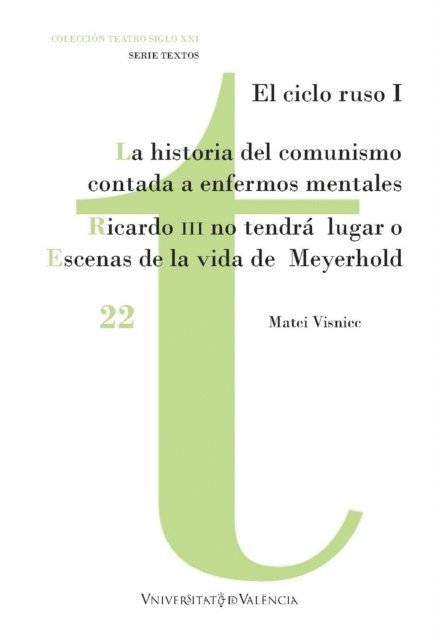
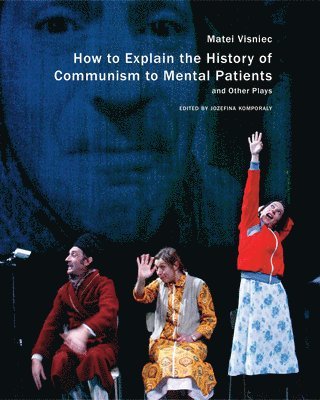
El volumen I de ''El ciclo ruso'' reúne dos obras de Matei Visniec ambientadas en la Rusia estalinista. En la primera de ellas, ''La historia del comunismo contada a enfermos mentales'', Yury Petrovsky, un escritor oficialista, acude a un sanatorio para elaborar un relato sobre las bondades del régimen que puedan comprender los enfermos mentales. La segunda, ''Ricardo III no tendrá lugar o Escenas de la vida de Meyerhold'', nos muestra al conocido director de escena Meyerhold enfrentándose a la censura para montar la obra de Shakespeare mientras se dirige a su aciago destino. Lo absurdo y lo grotesco, lo onírico y lo fantástico confluyen en la sátira de un régimen cuya versión rumana vivió en persona el autor. Las actitudes de Yury Petrovksy y Meyerhold también nos hacen reflexionar sobre las relaciones de los artistas con el poder en cualquier régimen autoritario, en particular cuando este aspira a ejercerlo desde el interior mismo de las mentes.
E-bok
Spanska, 2023105 kr
Läs direkt efter köp
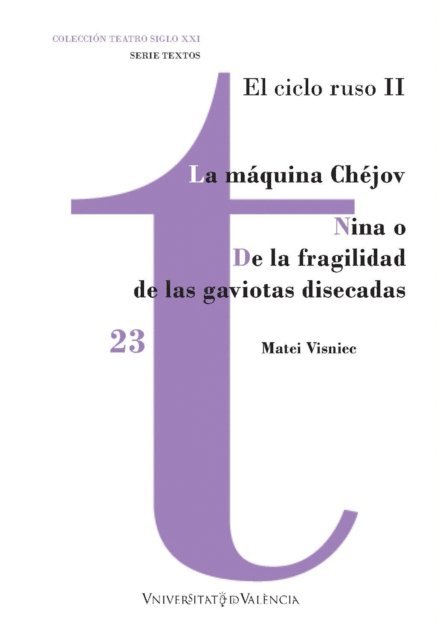
El volumen II de ''El ciclo ruso'', de Matei Visniec, reúne dos obras que constituyen sendos homenajes a Chéjov. En ''La máquina Chéjov'', el autor ruso es visitado por sus personajes mientras yace en su lecho de enfermo terminal. Se nos lleva así al corazón de los grandes dramas chejovianos, que Visniec prolonga mediante su propio universo creativo, al tiempo que indaga en la escritura del maestro a través de sus cartas. En ''Nina o De la fragilidad de las gaviotas disecadas'', se retoman los tres personajes de ''La gaviota'' –Nina, Treplev y Trigorin– unos años después, en plena Revolución de Octubre. La confluencia de una triple utopía –amorosa, literaria y política– es el marco en el que se sumerge mediante unos personajes que, por decirlo con sus propias palabras, "dan vueltas juntos, montados en los caballos de madera del mismo carrusel de los destinos rotos". Dos obras para los amantes de Chéjov ya conquistados o por conquistar, que revelan cómo el universo creativo del dramaturgo rumano se desarrolla a través del universo de otro autor.
E-bok
Spanska, 2023105 kr
Läs direkt efter köp
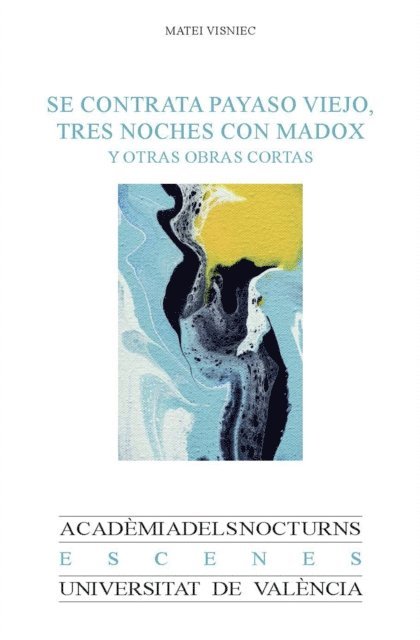
Este volumen reúne cinco obras dramáticas tempranas de Matei Visniec, escritas en rumano antes de que se exiliara a Francia en 1987. Las tres primeras tienen como eje central una espera que alude, más o menos discretamente, a la Rumanía autoritaria en que fueron escritas, pero también indagan en lo mejor y lo peor del ser humano y en las paradojas que lo envuelven. En ''Se contrata payaso viejo'', tres viejos amigos que han leído un mismo anuncio esperan ante la puerta de unos supuestos contratantes que no se abrirá. En ''Tres noches con Madox'', varios habitantes de un pueblo perdido y aburrido esperan a que despierte y baje a verlos un extraño personaje que han conocido hace poco. En ''La puerta'', personajes anónimos hablan entre ellos tras acudir voluntariamente a un extraño departamento que parece antesala de la muerte. Completan el volumen dos obras cortas: ''El hombre que habla solo'', con una dramaturgia en espejo, muestra la capacidad del ser humano para engañarse a sí mismo. ''El último Godot'' es un sorprendente homenaje a uno de sus indiscutibles maestros, Samuel Beckett.
E-bok
PDF, Spanska, 2023105 kr
Läs direkt efter köp
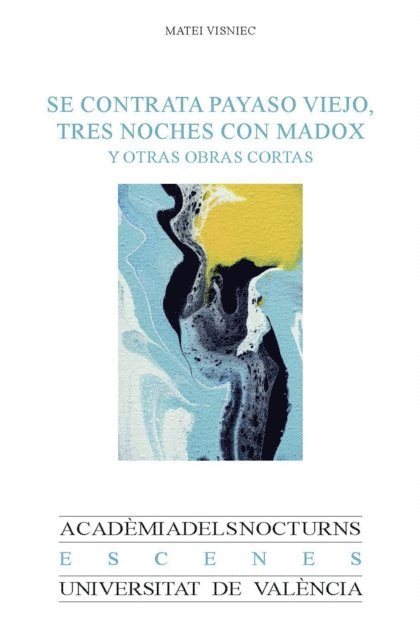
Este volumen reúne cinco obras dramáticas tempranas de Matei Visniec, escritas en rumano antes de que se exiliara a Francia en 1987. Las tres primeras tienen como eje central una espera que alude, más o menos discretamente, a la Rumanía autoritaria en que fueron escritas, pero también indagan en lo mejor y lo peor del ser humano y en las paradojas que lo envuelven. En ''Se contrata payaso viejo'', tres viejos amigos que han leído un mismo anuncio esperan ante la puerta de unos supuestos contratantes que no se abrirá. En ''Tres noches con Madox'', varios habitantes de un pueblo perdido y aburrido esperan a que despierte y baje a verlos un extraño personaje que han conocido hace poco. En ''La puerta'', personajes anónimos hablan entre ellos tras acudir voluntariamente a un extraño departamento que parece antesala de la muerte. Completan el volumen dos obras cortas: ''El hombre que habla solo'', con una dramaturgia en espejo, muestra la capacidad del ser humano para engañarse a sí mismo. ''El último Godot'' es un sorprendente homenaje a uno de sus indiscutibles maestros, Samuel Beckett.
E-bok
PDF, Spanska, 201773 kr
Läs direkt efter köp
En este volumen Visniec pretende visitar la cruda realidad de un conflicto de nuestros tiempos, ligado a las tensiones que atraviesan la vasta ciudad de los hombres, haciendo uso de la fantasía y lo absurdo para aumentar la crudeza de su retrato. La distorsión, por la irreal reunión de muertos y vivos, las dudas sobre la realidad o fantasía de lo que vemos en algún momento, inducen al lector a un trabajo de reconstrucción de la realidad, que llama a nuestra propia fantasía, creatividad y sentido crítico. Sin olvidar que la risa libera momentáneamente del horror, cuando ésta cesa o se matiza por la amargura que la acompaña, hace añorar poder reír libremente para siempre. Algo que no podemos conseguir por la realidad que vivimos, como se encarga de mostrarnos el autor. Este libro responde pues a las coordenadas generales del universo de ficción dramática de Visniec.
E-bok
Spanska, 201892 kr
Läs direkt efter köp
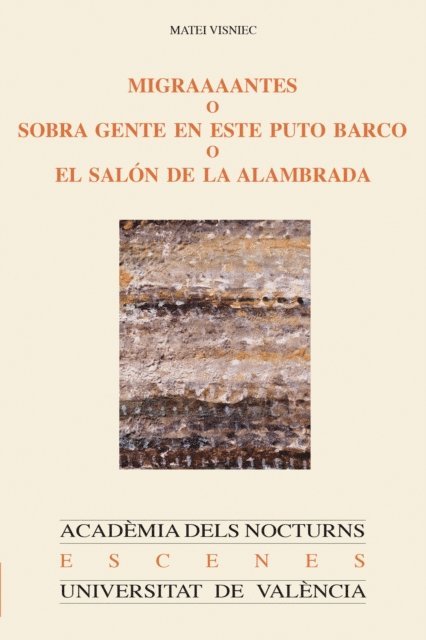
Migrantes a merced de traficantes, salones futuristas donde se anuncian seductores avances en alambradas, malvados que se aprovechan de la miseria y fragilidad de los más desvalidos: Matei Visniec en esta obra nos muestra con toda su crudeza el drama actual de la inmigración, recrudecido por el de los refugiados. Magia teatral que conmueve, disfrute para la imaginación y el pensamiento que, una vez acabada la obra, nos dejan una profunda amargura. Y tal vez, el deseo de hacer algo. Con su genio dramático, que nos lleva de lo grotesco a lo terrible, de lo irónico a lo poético, de lo real a lo fantástico, Matei Visniec, maestro del humor negro, nos hace hasta esbozar una sonrisa, una sonrisa muy amarga, ante la catástrofe humanitaria que nos presenta en esta obra hecha de cuadros dramáticos donde se alternan diferentes líneas argumentales.
E-bok
Spanska, 202173 kr
Läs direkt efter köp
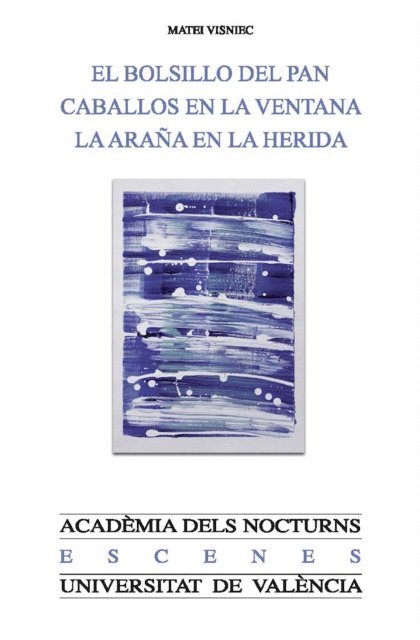
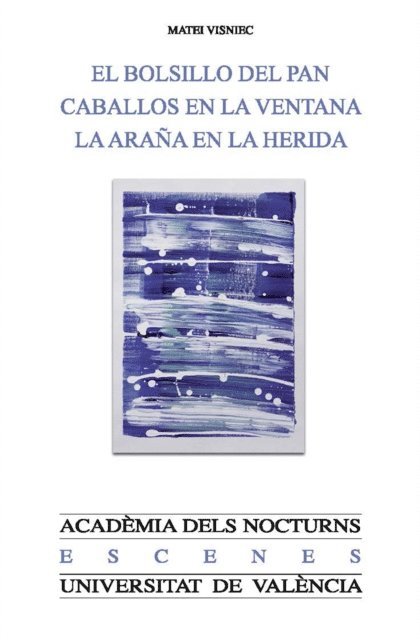
Matei Visniec se dio a conocer al gran público con su teatro escrito en francés unos años después de su exilio voluntario en 1987. No obstante, desde muy pronto, durante los años de la dictadura de Ceauşescu, había escrito en rumano otras obras que, en su inmensa mayoría, no se representaron entonces en Rumanía, lo que no es de extrañar por los dardos críticos que lanzaba al régimen, a menudo falsamente disimulados en lo irónico o lo sugerido.Las tres obras que reúne este volumen pertenecen a ese periodo y comparten, además, dos rasgos: son relativamente cortas y el animal tiene un papel importante en ellas: el perro, el caballo y la araña, respectivamente. "El bolsillo del pan" pone en escena a dos hombres que discuten inútilmente sobre cómo salvar a un perro abandonado en un pozo. "Caballos en la ventana" muestra la inquietante conducta de unos caballos mientras asistimos a tres diálogos sobre la guerra –vivida o por vivir."La araña en la herida" nos traslada a la escena de la crucifixión, lo que permite al autor indagar sobre los seres humanos en una situación extrema. En las tres obras se despliega el genio artístico de Matei Visniec para hacernos esbozar una amarga sonrisa. Y una inquietud vital, nacida de la angustia de vivir en un régimen autoritario, pero también de la propia condición humana.
E-bok
PDF, Spanska, 202172 kr
Läs direkt efter köp
Matei Visniec se dio a conocer al gran público con su teatro escrito en francés unos años después de su exilio voluntario en 1987. No obstante, desde muy pronto, durante los años de la dictadura de Ceauşescu, había escrito en rumano otras obras que, en su inmensa mayoría, no se representaron entonces en Rumanía, lo que no es de extrañar por los dardos críticos que lanzaba al régimen, a menudo falsamente disimulados en lo irónico o lo sugerido.Las tres obras que reúne este volumen pertenecen a ese periodo y comparten, además, dos rasgos: son relativamente cortas y el animal tiene un papel importante en ellas: el perro, el caballo y la araña, respectivamente. "El bolsillo del pan" pone en escena a dos hombres que discuten inútilmente sobre cómo salvar a un perro abandonado en un pozo. "Caballos en la ventana" muestra la inquietante conducta de unos caballos mientras asistimos a tres diálogos sobre la guerra –vivida o por vivir."La araña en la herida" nos traslada a la escena de la crucifixión, lo que permite al autor indagar sobre los seres humanos en una situación extrema. En las tres obras se despliega el genio artístico de Matei Visniec para hacernos esbozar una amarga sonrisa. Y una inquietud vital, nacida de la angustia de vivir en un régimen autoritario, pero también de la propia condición humana.