Mateja Jamnik – författare
Visar alla böcker från författaren Mateja Jamnik. Handla med fri frakt och snabb leverans.
6 produkter
Mathematical Reasoning with Diagrams
Inbunden, 2001
559 kr
Lägg i varukorg
Mathematicians at every level use diagrams to prove theorems. "Mathematical Reasoning with Diagrams" investigates the possibilities of mechanizing this sort of diagrammatic reasoning in a formal computer proof system, even offering a semi-automatic formal proof system - called Diamond - which …
Mathematical Reasoning with Diagrams
Häftad, 2001
237 kr
Lägg i varukorg
Mathematicians at every level use diagrams to prove theorems. Mathematical Reasoning with Diagrams investigates the possibilities of mechanizing this sort of diagrammatic reasoning in a formal computer proof system, even offering a semi-automatic formal proof system—called Diamond—which allows …
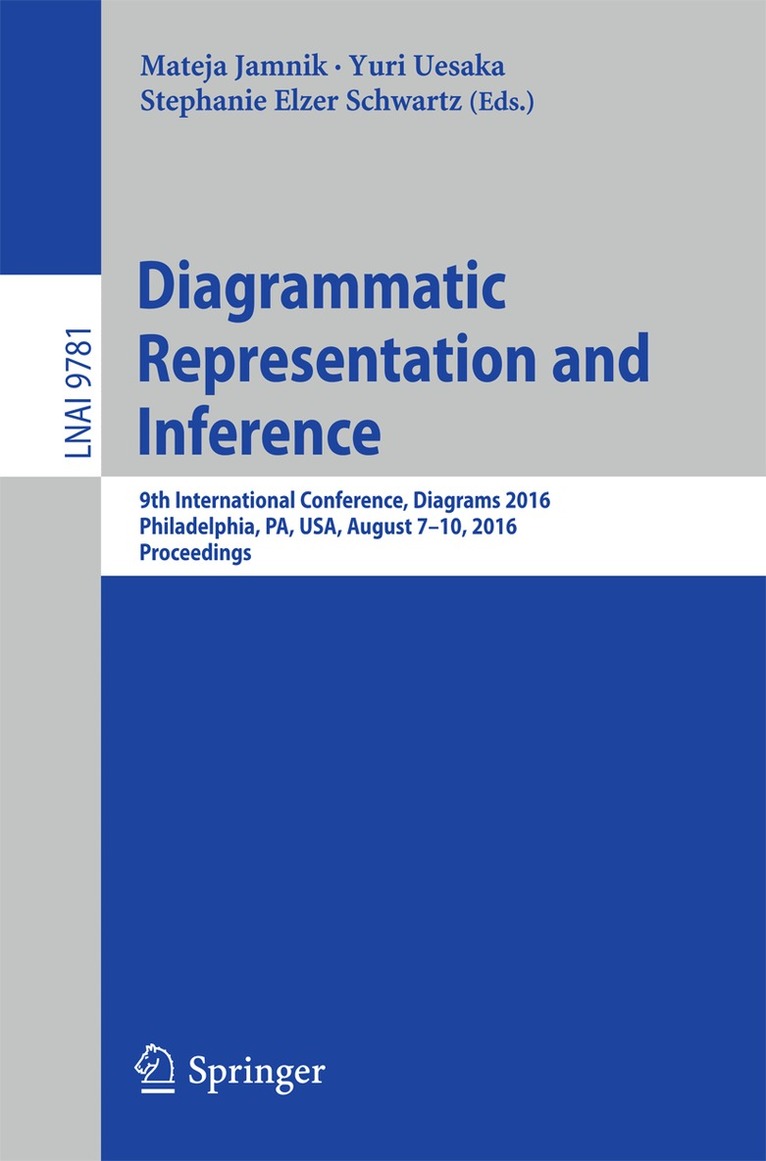
Diagrammatic Representation and Inference
9th International Conference, Diagrams 2016, Philadelphia, PA, USA, August 7-10, 2016, Proceedings
Av Mateja Jamnik, Yuri Uesaka m. fl.
Häftad, 2016
734 kr
Lägg i varukorg
This book constitutes the refereed proceedings of the 9th InternationalConference on the Theory and Application of Diagrams, Diagrams 2016,held in Philadelphia, PA, USA, in August 2016.The 12 revised full papers and 11 short papers presented together with 5 posters were carefully reviewed and …
Diagrammatic Representation and Inference
9th International Conference, Diagrams 2016, Philadelphia, PA, USA, August 7-10, 2016, Proceedings
Av Stephanie Elzer Schwartz, Yuri Uesaka m. fl.
E-bok, 2016
897 kr
Lägg i varukorg
This book constitutes the refereed proceedings of the 9th International Conference on the Theory and Application of Diagrams, Diagrams 2016, held in Philadelphia, PA, USA, in August 2016. The 12 revised full papers and 11 short papers presented together with 5 posters were carefully reviewed and …
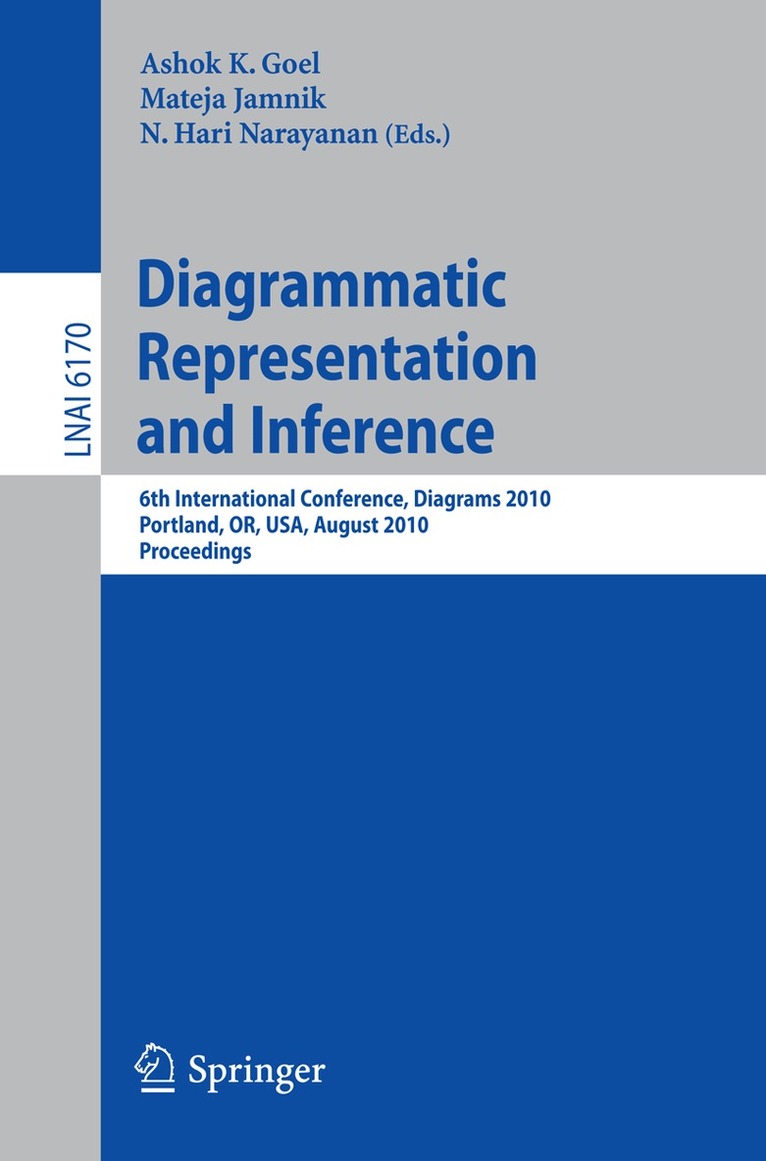
Diagrammatic Representation and Inference
6th International Conference, Diagrams 2010, Portland, OR, USA, August 9-11, 2010, Proceedings
Av Ashok K Goel, Mateja Jamnik m. fl.
Häftad, 2010
566 kr
Lägg i varukorg
The 6th International Conference on the Theory and Application of Diagrams – Diagrams 2010 – was held in Portland, USA in August 2010. Diagrams is an international and interdisciplinary conference series, which continues to present the very best work in all aspects of research on the theory and …
Diagrammatic Representation and Inference
6th International Conference, Diagrams 2010, Portland, OR, USA, August 9-11, 2010, Proceedings
Av N Hari Narayanan, Mateja Jamnik m. fl.
E-bok, 2010
710 kr
Lägg i varukorg
The 6th International Conference on the Theory and Application of Diagrams – Diagrams 2010 – was held in Portland, USA in August 2010. Diagrams is an international and interdisciplinary conference series, which continues to present the very best work in all aspects of research on the theory and …