Mateja Kurir - Böcker
Visar alla böcker från författaren Mateja Kurir. Handla med fri frakt och snabb leverans.
3 produkter
3 produkter
480 kr
Skickas
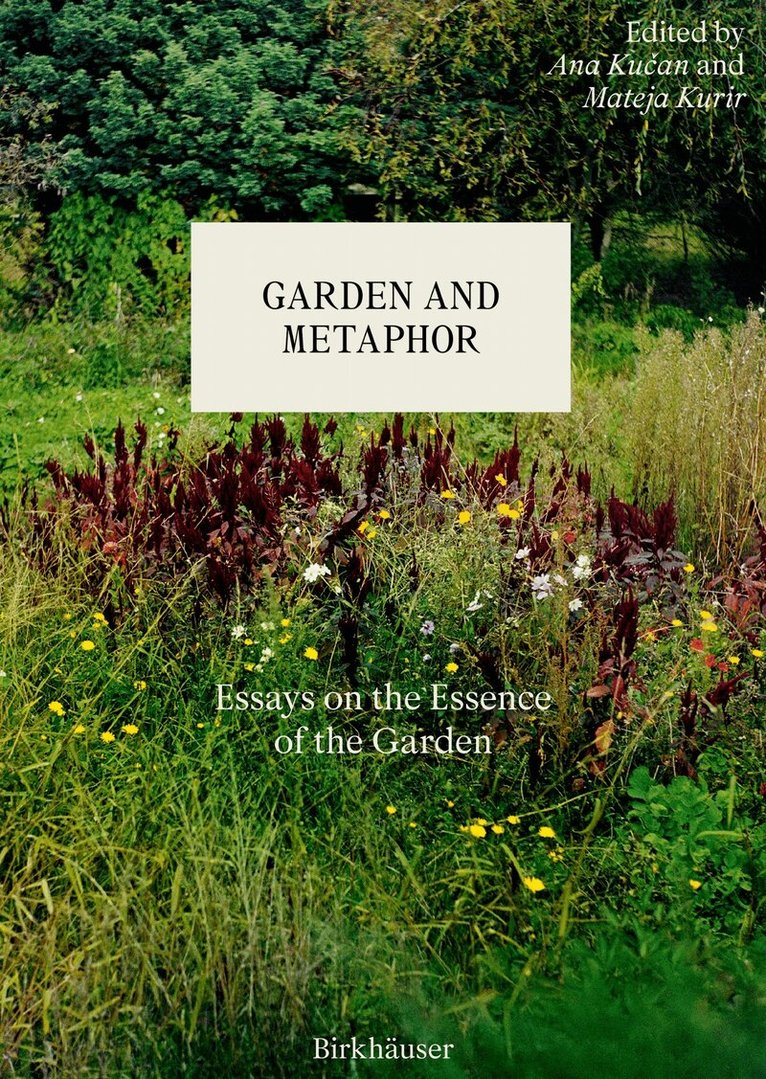
Selten hatte der Garten so viele Ansprüche zu erfüllen wie heute. Er ist Zufluchtsort vor dem digitalisierten Leben und agiert als Mittler zur Natur. Als vom Menschen angelegter Ort, in dem Pflanzen wachsen, ist er gleichzeitig kultiviert und unzähmbar. Während über Jahrhunderte hinweg der Ehrgeiz des Gärtners darin bestand, die Natur zu kontrollieren und zu unterwerfen, dient er heute eher als Surrogat für Wildnis, als Habitat für Tiere oder erfüllt den Traum vom Selbstversorgertum. In diesem Buch beleuchten Landschaftsarchitekt:innen, Architekt:innen, Künstler:innen und Philosoph:innen in sechs Kapiteln verschiedene Aspekte des Gartens im Anthropozän: der Garten als Ort der Nachbarschaft, Garten als Kunst, Garten als Ort des Bezauberns und der Entrücktheit. Die stimmungsvollen Fotografien von Anne Schwalbe fangen den Zauber von Gärten ein.
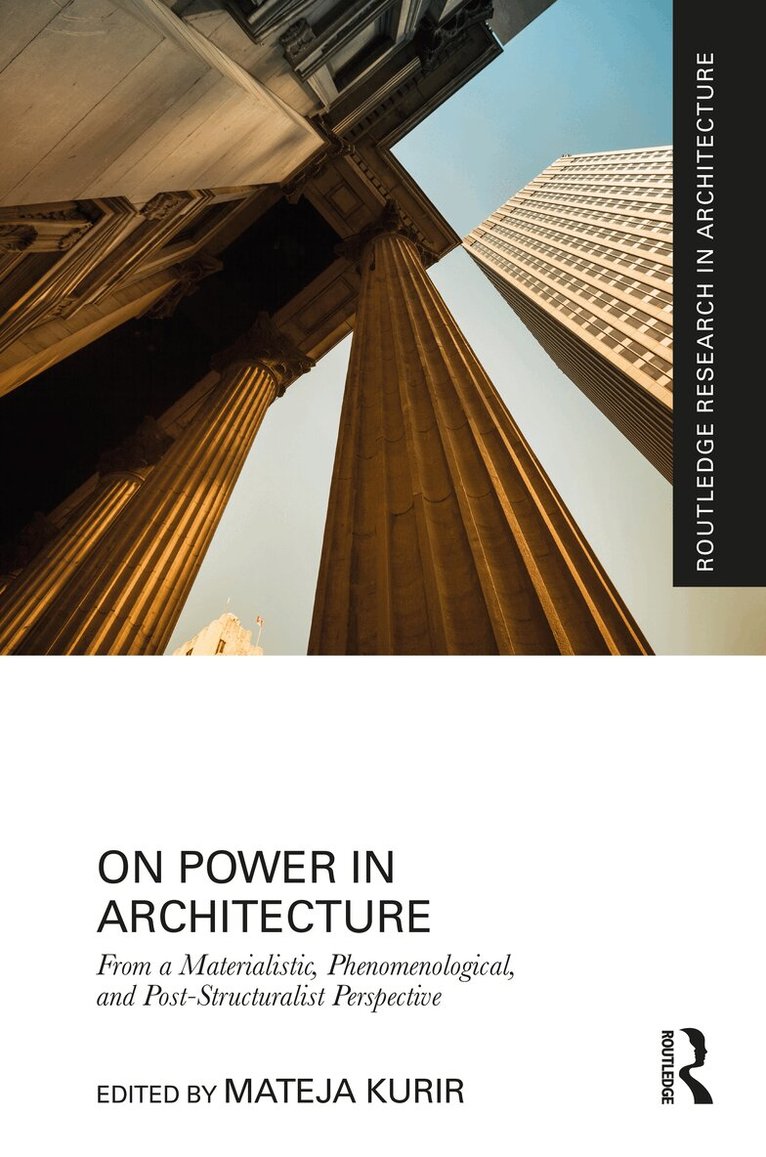
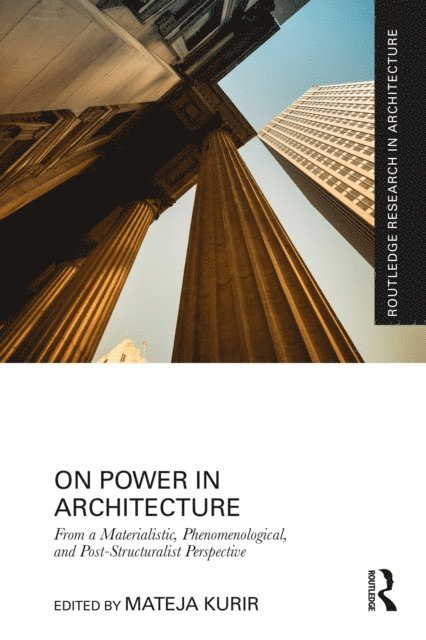
On Power in Architecture
From a Materialistic, Phenomenological, and Post-Structuralist Perspective
Inbunden, Engelska, 2024
2 113 kr
Skickas inom 10-15 vardagar
Architecture has always been a decisive manifestation of power. This volume represents an attempt to question and reflect on the relationship between power and architecture from three philosophical perspectives: materialistic, phenomenological and post-structuralist.This collection opens an interdisciplinary investigation that aims to reflect on architecture and its interconnectedness with power within philosophy and cultural theory at large while presenting these concepts using practical examples from the built environment. Internationally recognised authors – philosophers, architectural theorists and historians – Andrew Benjamin, Andrew Ballantyne, Mladen Dolar, Hilde Heynen, Nadir Lahiji, Jeff Malpas, Dean Komel, Elke Krasny, Robert Pfaller, Gerard Reinmuth, Luka Skansi, Douglas Spencer, Teresa Stoppani and Sven-Olov Wallenstein present their reflections in original unpublished essays and interviews. In the presented works, architecture is combined and transgressed by philosophy in a new discussion that focuses only on power. The contributions in this collection open a variety of architectural questions, one of the central among them being the impact of neoliberal capitalism on architecture. Architecture, with its implications on the complex contemporary political and social reality, is severely changing our space and, more globally, our environment. A reflection on the multilayered relation between architecture and power has never been as topical as it is today.This book will, therefore, be of interest to students, researchers and academics or professionals within the fields of architecture, philosophy, sociology, political sciences and cultural sciences.
On Power in Architecture
From a Materialistic, Phenomenological, and Post-Structuralist Perspective
Häftad, Engelska, 2026
695 kr
Kommande
Architecture has always been a decisive manifestation of power. This volume represents an attempt to question and reflect on the relationship between power and architecture from three philosophical perspectives: materialistic, phenomenological and post-structuralist.This collection opens an interdisciplinary investigation that aims to reflect on architecture and its interconnectedness with power within philosophy and cultural theory at large while presenting these concepts using practical examples from the built environment. Internationally recognised authors – philosophers, architectural theorists and historians – Andrew Benjamin, Andrew Ballantyne, Mladen Dolar, Hilde Heynen, Nadir Lahiji, Jeff Malpas, Dean Komel, Elke Krasny, Robert Pfaller, Gerard Reinmuth, Luka Skansi, Douglas Spencer, Teresa Stoppani and Sven-Olov Wallenstein present their reflections in original unpublished essays and interviews. In the presented works, architecture is combined and transgressed by philosophy in a new discussion that focuses only on power. The contributions in this collection open a variety of architectural questions, one of the central among them being the impact of neoliberal capitalism on architecture. Architecture, with its implications on the complex contemporary political and social reality, is severely changing our space and, more globally, our environment. A reflection on the multilayered relation between architecture and power has never been as topical as it is today.This book will, therefore, be of interest to students, researchers and academics or professionals within the fields of architecture, philosophy, sociology, political sciences and cultural sciences.