Matt Sekerke – författare
263 kr
Skickas inom 5-8 vardagar
702 kr
Skickas inom 5-8 vardagar
885 kr
Läs direkt efter köp
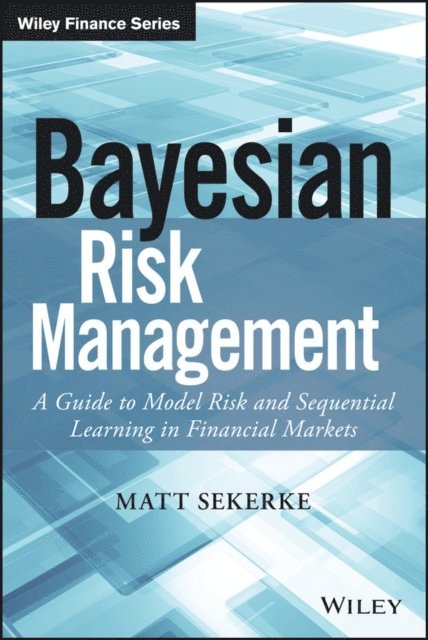
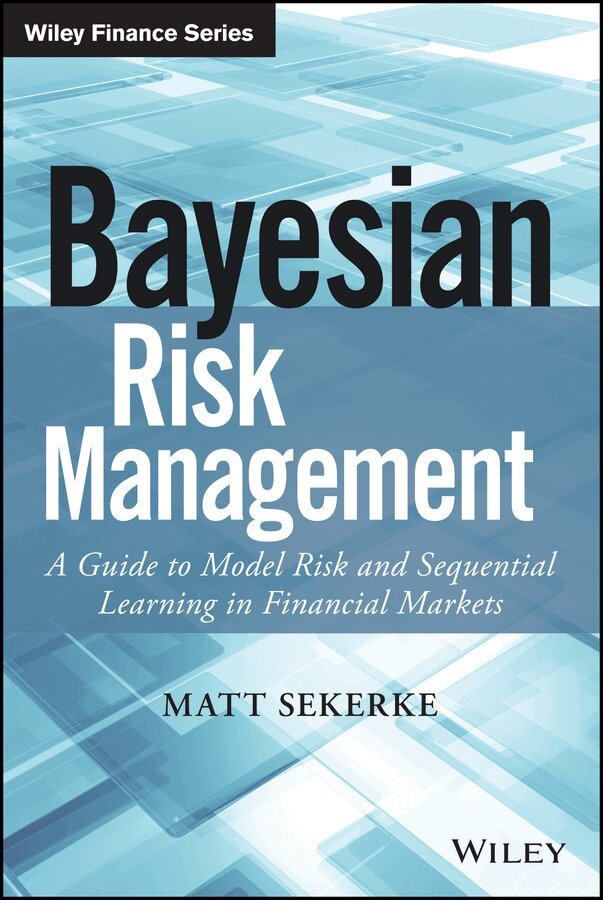
Most financial risk models assume the future will look like the past, but effective risk management depends on identifying fundamental changes in the marketplace as they occur. Bayesian Risk Management details a more flexible approach to risk management, and provides tools to measure financial risk in a dynamic market environment. This book opens discussion about uncertainty in model parameters, model specifications, and model-driven forecasts in a way that standard statistical risk measurement does not. And unlike current machine learning-based methods, the framework presented here allows you to measure risk in a fully-Bayesian setting without losing the structure afforded by parametric risk and asset-pricing models.
Recognize the assumptions embodied in classical statistics Quantify model risk along multiple dimensions without backtesting Model time series without assuming stationarity Estimate state-space time series models online with simulation methods Uncover uncertainty in workhorse risk and asset-pricing models Embed Bayesian thinking about risk within a complex organizationIgnoring uncertainty in risk modeling creates an illusion of mastery and fosters erroneous decision-making. Firms who ignore the many dimensions of model risk measure too little risk, and end up taking on too much. Bayesian Risk Management provides a roadmap to better risk management through more circumspect measurement, with comprehensive treatment of model uncertainty.
885 kr
Läs direkt efter köp
Most financial risk models assume the future will look like the past, but effective risk management depends on identifying fundamental changes in the marketplace as they occur. Bayesian Risk Management details a more flexible approach to risk management, and provides tools to measure financial risk in a dynamic market environment. This book opens discussion about uncertainty in model parameters, model specifications, and model-driven forecasts in a way that standard statistical risk measurement does not. And unlike current machine learning-based methods, the framework presented here allows you to measure risk in a fully-Bayesian setting without losing the structure afforded by parametric risk and asset-pricing models.
Recognize the assumptions embodied in classical statistics Quantify model risk along multiple dimensions without backtesting Model time series without assuming stationarity Estimate state-space time series models online with simulation methods Uncover uncertainty in workhorse risk and asset-pricing models Embed Bayesian thinking about risk within a complex organizationIgnoring uncertainty in risk modeling creates an illusion of mastery and fosters erroneous decision-making. Firms who ignore the many dimensions of model risk measure too little risk, and end up taking on too much. Bayesian Risk Management provides a roadmap to better risk management through more circumspect measurement, with comprehensive treatment of model uncertainty.
457 kr
Läs direkt efter köp
The Global Financial Crisis broke the monetary system. Here''s how to fix it.
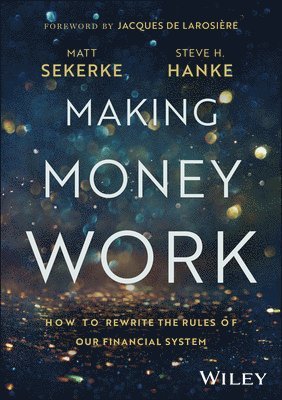
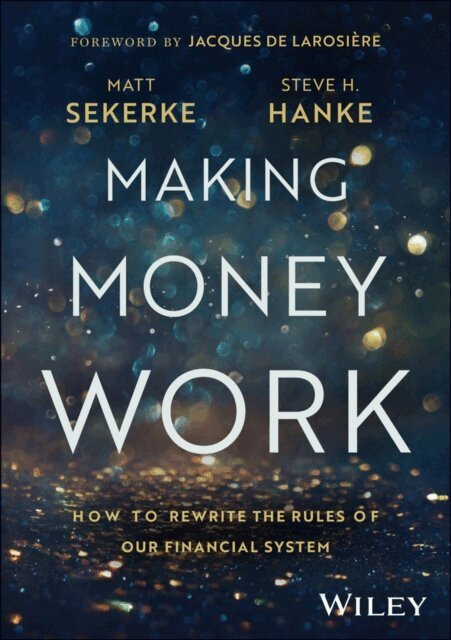
In Making Money Work: How to Rewrite the Rules of Our Financial System, Matt Sekerke and Steve H. Hanke deliver a rigorous and fascinating exploration of the monetary economy. You''ll find a detailed and clear roadmap of how and why fiat money is created and destroyed, its connections to the broader economy, and the objective mechanisms that underwrite and maintain its value.
Sekerke and Hanke trace important post-crisis policy developments and sketch the broad strokes of a new operating model that would restore the performance of the monetary system and make better use of aggregate savings:
Why economists misunderstand the structure and function of the monetary system The central role of the commercial banking system in fiat money regimes, and why commercial banks are not like other financial intermediaries The economic and regulatory constraints on bank money creation The interplay between banking and capital markets in funding investment projects How the “banks” that dominate the international financial landscape distort the lines between banking and capital markets business Why banking regulation and fiscal policy determine and constrain monetary policy to an equal or greater extent than central bank actionsSekerke and Hanke trace important post-crisis policy developments and sketch the broad strokes of a new operating model that would restore the performance of the monetary system and make better use of aggregate savings:
Making neutrality the explicit goal of monetary policy, properly understood Increasing the supply of bankable projects and keeping them on bank balance sheets Breaking the financial system''s fatal attraction to land and real estate Reducing regulatory distortions in lending markets Reforming universal banking institutions and stimulating competition Transitioning to a quantity-based monetary policy frameworkAn engaging and incisive guide to the global systems of money and banking, Making Money Work is destined to become a sought-after classic for bankers, finance professionals, policymakers, regulators, academics, and laypeople with an interest in money and banking.
441 kr
Läs direkt efter köp
The Global Financial Crisis broke the monetary system. Here''s how to fix it.
In Making Money Work: How to Rewrite the Rules of Our Financial System, Matt Sekerke and Steve H. Hanke deliver a rigorous and fascinating exploration of the monetary economy. You''ll find a detailed and clear roadmap of how and why fiat money is created and destroyed, its connections to the broader economy, and the objective mechanisms that underwrite and maintain its value.
Sekerke and Hanke trace important post-crisis policy developments and sketch the broad strokes of a new operating model that would restore the performance of the monetary system and make better use of aggregate savings:
Why economists misunderstand the structure and function of the monetary system The central role of the commercial banking system in fiat money regimes, and why commercial banks are not like other financial intermediaries The economic and regulatory constraints on bank money creation The interplay between banking and capital markets in funding investment projects How the “banks” that dominate the international financial landscape distort the lines between banking and capital markets business Why banking regulation and fiscal policy determine and constrain monetary policy to an equal or greater extent than central bank actionsSekerke and Hanke trace important post-crisis policy developments and sketch the broad strokes of a new operating model that would restore the performance of the monetary system and make better use of aggregate savings:
Making neutrality the explicit goal of monetary policy, properly understood Increasing the supply of bankable projects and keeping them on bank balance sheets Breaking the financial system''s fatal attraction to land and real estate Reducing regulatory distortions in lending markets Reforming universal banking institutions and stimulating competition Transitioning to a quantity-based monetary policy frameworkAn engaging and incisive guide to the global systems of money and banking, Making Money Work is destined to become a sought-after classic for bankers, finance professionals, policymakers, regulators, academics, and laypeople with an interest in money and banking.