Matteo Benussi – författare
Visar alla böcker från författaren Matteo Benussi. Handla med fri frakt och snabb leverans.
6 produkter
6 produkter
E-bok
PDF, Engelska, 2026753 kr
Läs direkt efter köp
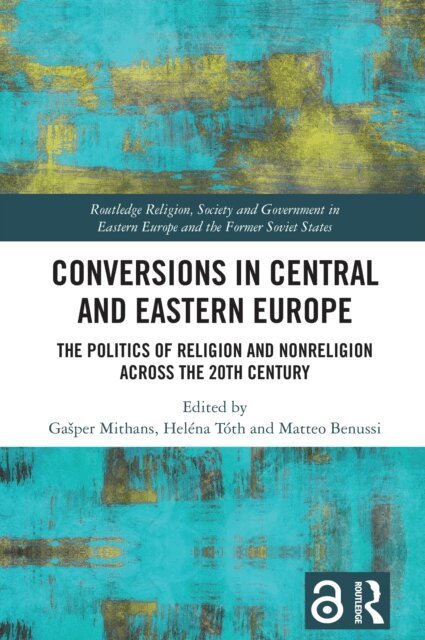
This interdisciplinary volume explores religious conversion and nonreligion in 20th-century Central and Eastern Europe, examining how emerging nations, empire inheritors, and socialist projects mobilized religious politics to manufacture consent while destabilizing the very communities they sought to control.Drawing on original archival research and fieldwork, the book analyzes the interdependence of collective and individual identities, integrating state-driven atheization into the study of conversion. It traces conviction-driven, coercive, strategic, and nonreligious shifts, situating them within broader processes of state formation, social engineering, and political power. Rich in empirical material, the volume offers conceptual tools and comparative frameworks to understand the entanglement of religion, nonreligion, and power during political upheaval.Intended for scholars and practitioners in history, religious studies, anthropology, sociology, political science, and related fields, this book provides valuable insights for those studying the dynamics of religion and nonreligion in politically complex contexts.The Introduction, Chapter 10 and Chapter 11 of this book are freely available as downloadable Open Access PDFs at http://www.taylorfrancis.com under a Creative Commons Attribution-Non-Commercial-No Derivatives (CC BY-NC-ND) 4.0 International license (Introduction and Chapter 10), and a Creative Commons Attribution (CC BY) 4.0 International license (Chapter 11).
E-bok
Engelska, 2026746 kr
Läs direkt efter köp
This interdisciplinary volume explores religious conversion and nonreligion in 20th-century Central and Eastern Europe, examining how emerging nations, empire inheritors, and socialist projects mobilized religious politics to manufacture consent while destabilizing the very communities they sought to control.Drawing on original archival research and fieldwork, the book analyzes the interdependence of collective and individual identities, integrating state-driven atheization into the study of conversion. It traces conviction-driven, coercive, strategic, and nonreligious shifts, situating them within broader processes of state formation, social engineering, and political power. Rich in empirical material, the volume offers conceptual tools and comparative frameworks to understand the entanglement of religion, nonreligion, and power during political upheaval.Intended for scholars and practitioners in history, religious studies, anthropology, sociology, political science, and related fields, this book provides valuable insights for those studying the dynamics of religion and nonreligion in politically complex contexts.The Introduction, Chapter 10 and Chapter 11 of this book are freely available as downloadable Open Access PDFs at http://www.taylorfrancis.com under a Creative Commons Attribution-Non-Commercial-No Derivatives (CC BY-NC-ND) 4.0 International license (Introduction and Chapter 10), and a Creative Commons Attribution (CC BY) 4.0 International license (Chapter 11).
Inbunden, Engelska, 2026
2 151 kr
Skickas inom 10-15 vardagar
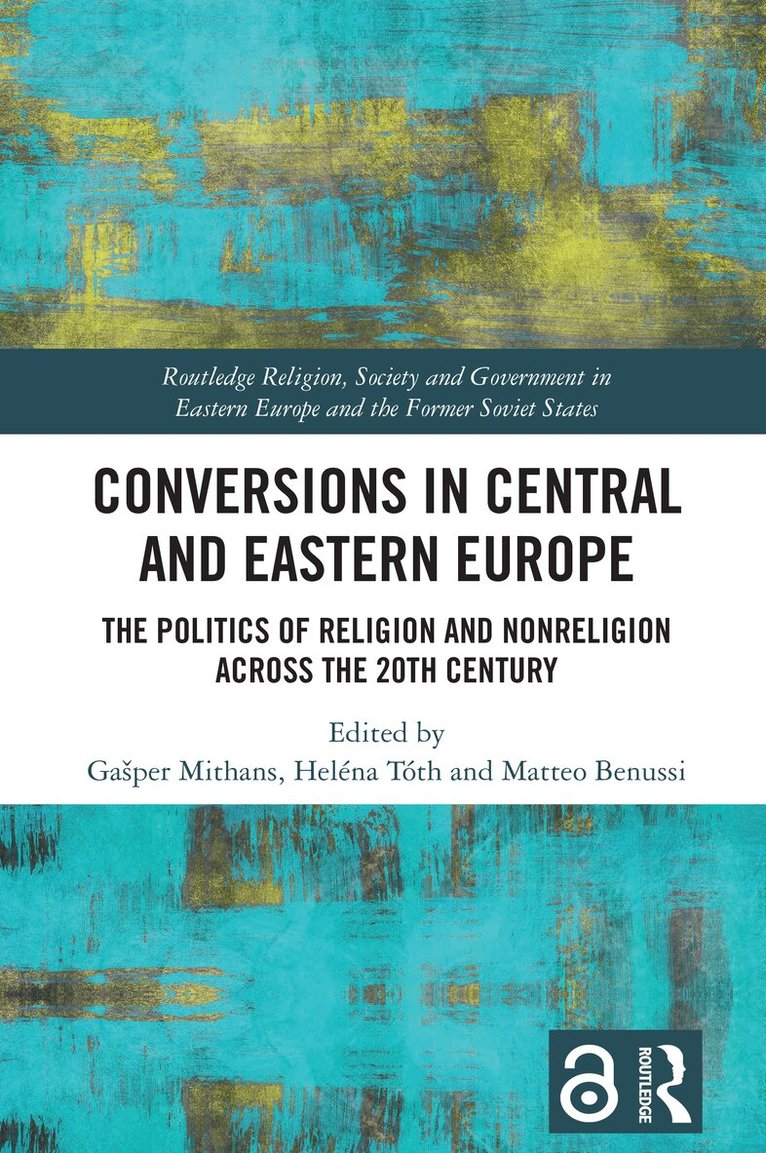
This interdisciplinary volume explores religious conversion and nonreligion in 20th-century Central and Eastern Europe, examining how emerging nations, empire inheritors, and socialist projects mobilized religious politics to manufacture consent while destabilizing the very communities they sought to control.Drawing on original archival research and fieldwork, the book analyzes the interdependence of collective and individual identities, integrating state-driven atheization into the study of conversion. It traces conviction-driven, coercive, strategic, and nonreligious shifts, situating them within broader processes of state formation, social engineering, and political power. Rich in empirical material, the volume offers conceptual tools and comparative frameworks to understand the entanglement of religion, nonreligion, and power during political upheaval.Intended for scholars and practitioners in history, religious studies, anthropology, sociology, political science, and related fields, this book provides valuable insights for those studying the dynamics of religion and nonreligion in politically complex contexts.The Introduction, Chapter 10 and Chapter 11 of this book are freely available as downloadable Open Access PDFs at http://www.taylorfrancis.com under a Creative Commons Attribution-Non-Commercial-No Derivatives (CC BY-NC-ND) 4.0 International license (Introduction and Chapter 10), and a Creative Commons Attribution (CC BY) 4.0 International license (Chapter 11).
Inbunden, Engelska, 2026
2 225 kr
Kommande
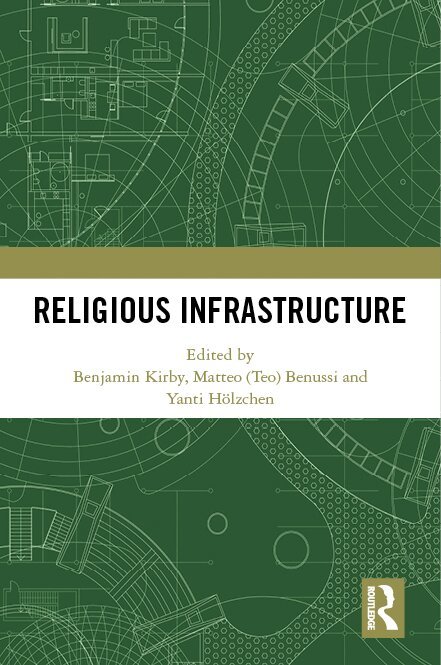
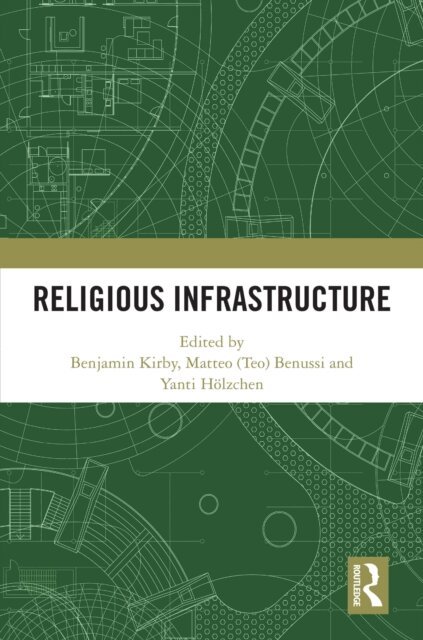
This book opens a new and timely conversation between the study of religion and infrastructure studies through the innovative concept of religious infrastructure. Bringing together eight empirically grounded chapters by a multidisciplinary group of scholars, it explores diverse settings across Ghana, India, Madagascar, Nigeria, Russia, Serbia, and Tanzania. Within these contexts, the contributors examine an array of religiously marked arrangements and operations—from radio towers and social media algorithms to residential compounds and monasteries.Across these cases, the book demonstrates how such configurations actively support, depend upon, and mutually transform wider landscapes of human action and relation. By moving fluidly across diverse traditions, it brings into focus dynamics that cut across religious boundaries, uncovers unexpected entanglements between religious and secular domains, and highlights forms of religious action that exceed the mediation of transcendent encounter.The result is a compelling and original demonstration of the empirical possibilities and analytical productivity of thinking infrastructurally about religion, and religiously about infrastructure—enriching both fields in the process.This book is ideal for scholars, researchers, and students in the fields of religious studies, anthropology, sociology, and infrastructure studies. It will also appeal to those interested in interdisciplinary approaches to understanding the intersections of religion, technology, and social organization.The chapters in this book were originally published as a special issue of Religion, State & Society.
Inbunden, Engelska, 2026
1 586 kr
Skickas inom 10-15 vardagar
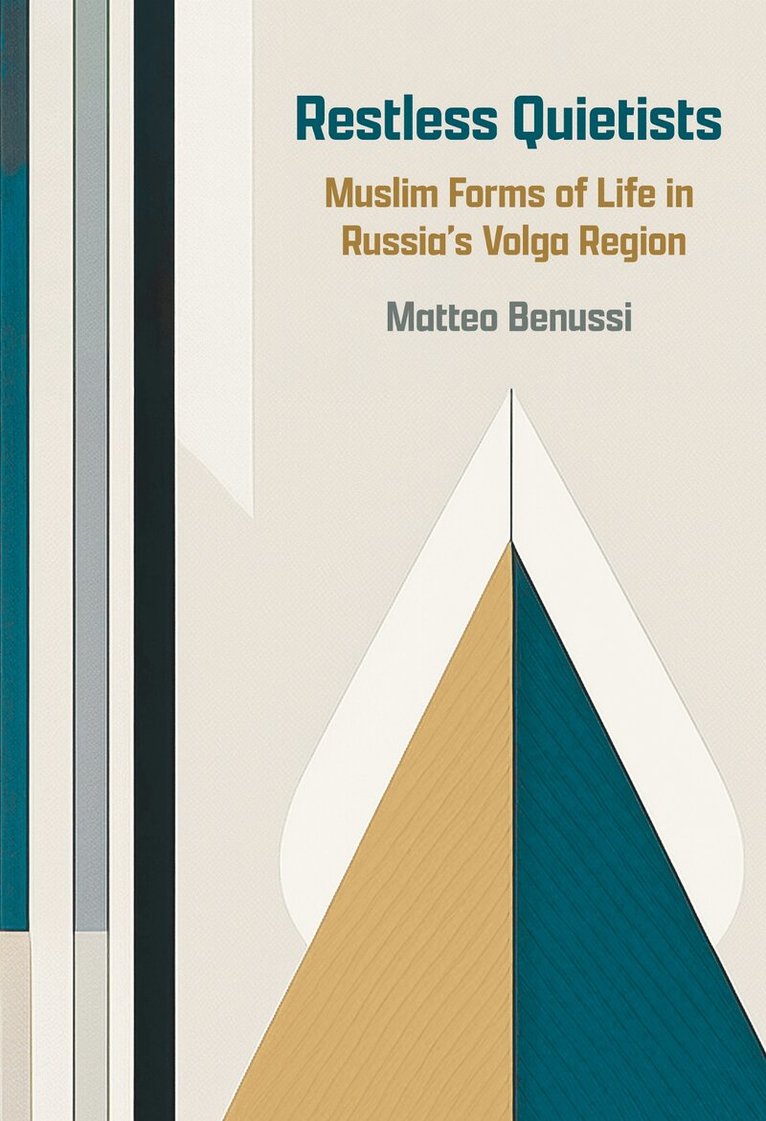
Restless Quietists addresses two questions at the core of the politics of Islamic ethics: How does Islamic virtue become attractive to young urbanites in predominantly secular societies? What makes religion perturbing in the eyes of temporal authorities? Matteo Benussi explores both questions by putting the vicissitudes of grassroots scripturalist Islamic milieus in Russia's Tatarstan Republic in resonance with anthropological reflections on ethics and insights from post-Marxist and autonomist theory. Benussi provides a fine-grained ethnographic exploration into how post-Soviet pietists maneuver between imperial legacies, resurgent authoritarianism, and newfound economic opportunities, hankering for self-realization "in both this world and the next" through the pursuit of halal ways of living. The quietist ethos that many Tatarstani Muslims embrace does not make their everyday lives any less politically fraught. Restless Quietists reveals that for Russia's Muslim pietists, halal living offers a way to carve interstices of emancipated life in Tatarstan's hyper-regimented order, dominated by the state's illiberal agenda, an alienating conservativism, and a business scene rife with spiritual and ethical dangers.
Häftad, Engelska, 2026
374 kr
Skickas inom 10-15 vardagar
Restless Quietists addresses two questions at the core of the politics of Islamic ethics: How does Islamic virtue become attractive to young urbanites in predominantly secular societies? What makes religion perturbing in the eyes of temporal authorities? Matteo Benussi explores both questions by putting the vicissitudes of grassroots scripturalist Islamic milieus in Russia's Tatarstan Republic in resonance with anthropological reflections on ethics and insights from post-Marxist and autonomist theory. Benussi provides a fine-grained ethnographic exploration into how post-Soviet pietists maneuver between imperial legacies, resurgent authoritarianism, and newfound economic opportunities, hankering for self-realization "in both this world and the next" through the pursuit of halal ways of living. The quietist ethos that many Tatarstani Muslims embrace does not make their everyday lives any less politically fraught. Restless Quietists reveals that for Russia's Muslim pietists, halal living offers a way to carve interstices of emancipated life in Tatarstan's hyper-regimented order, dominated by the state's illiberal agenda, an alienating conservativism, and a business scene rife with spiritual and ethical dangers.