Matthew Gray - Böcker
Visar alla böcker från författaren Matthew Gray. Handla med fri frakt och snabb leverans.
7 produkter
7 produkter
675 kr
Skickas inom 10-15 vardagar
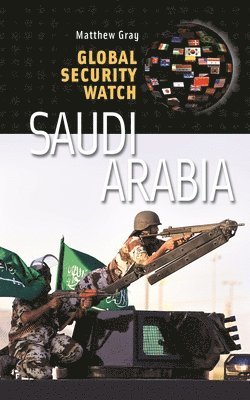
Examines the causes and consequences of Saudi Arabia's current security policy and the domestic, regional, and international challenges the country's defense program presents to the general welfare of the Middle East.As possessor of a quarter of the world's oil reserves and host to two of the holiest cities in Islam, Saudi Arabia is an integral part of the cultural, economic, and political well-being of the Middle East. From Persian Gulf security, to Middle Eastern politics, to the international energy industry, events in this desert kingdom strongly impact the stability of the region. This comprehensive resource analyzes contemporary Saudi Arabia—its modern history, the role of Islam, and the nature of Saudi foreign relations—and reveals how these and other factors dictate and shape the country's current security policies and priorities.Middle East expert and author Mathew Gray has organized the work into six sections: the first provides an historical overview of the region from the mid-1700s to the 1980s; the second explores the Saudi political and security system; the third discusses Saudi-U.S. relations; the fourth looks at Saudi relations with the Gulf region and the wider Middle East; and the fifth considers Saudi Arabia's role in Sunni extremism and terrorism. The final chapter looks at emerging security threats for Saudi Arabia. The book includes an overview of future challenges and risks including climate change, water shortages, and problems of Saudi identity and social dispersion.
2 103 kr
Skickas inom 10-15 vardagar
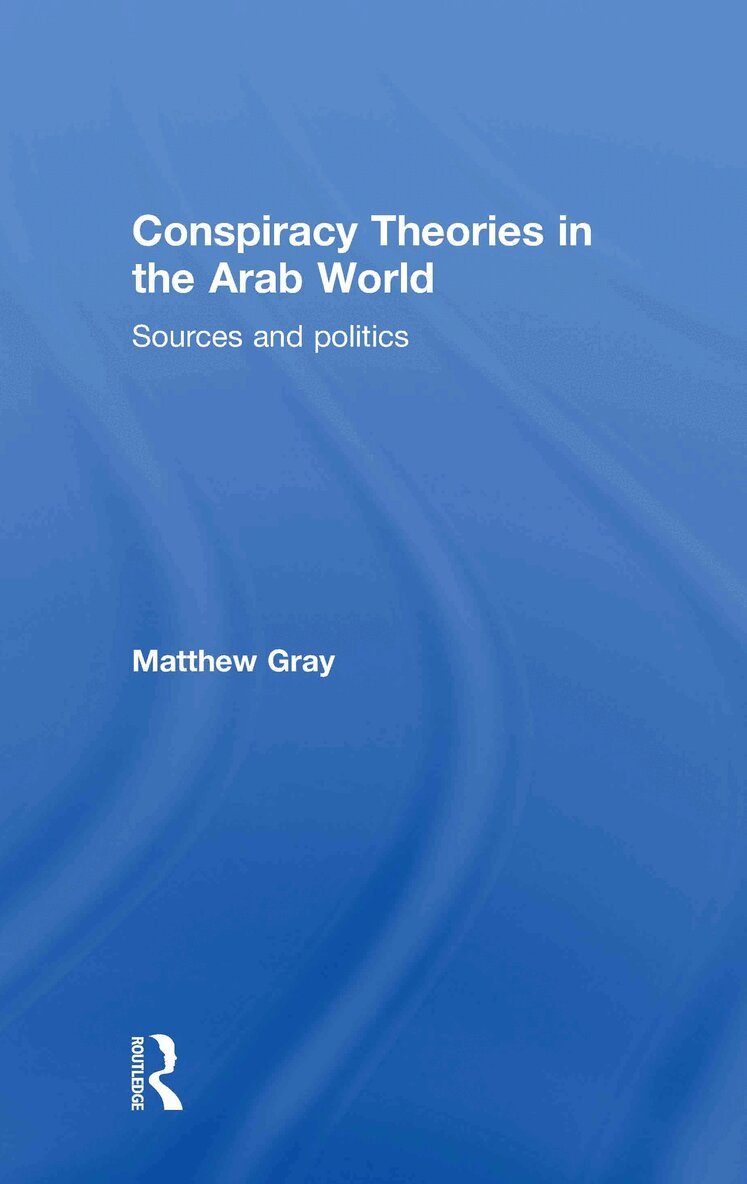
Conspiracy theories, while not unique to the Middle East, are a salient feature of the political discourses of the region. Strongly reflecting and impacting on state-society relations and indigenous impressions of the world beyond the region, they affect how political behaviour within and among the states of the region is situated, structured, and controlled.Discounting the common pathological explanation for conspiracism, the author argues that a complex mix of political factors account for most conspiracy theories in the contemporary Arab world. The author argues that the region’s modern history, genuine conspiracies, the complex and oftentimes strained relationship between state and society, the role of the state and the mass media as conspiracy theorists, and the impacts of new technologies have all helped to develop and sustain conspiracist narratives. Drawing on a range of examples and cases, including the impacts of globalization, economic reform, weak state legitimacy, the war in Iraq, the Arab-Israeli issue, the rise of political Islamism, and internet and satellite television, the book illuminates the complex sources of conspiracy theories.Providing a comprehensive overview of this controversial topic, this book will appeal not only to students and scholars interested in Middle East studies, political science, globalization and conspiracy theories, but to anyone seeking an understanding of the region’s complex economic, social, and cultural dynamics.
812 kr
Skickas inom 10-15 vardagar
Conspiracy theories, while not unique to the Middle East, are a salient feature of the political discourses of the region. Strongly reflecting and impacting on state-society relations and indigenous impressions of the world beyond the region, they affect how political behaviour within and among the states of the region is situated, structured, and controlled.Discounting the common pathological explanation for conspiracism, the author argues that a complex mix of political factors account for most conspiracy theories in the contemporary Arab world. The author argues that the region’s modern history, genuine conspiracies, the complex and oftentimes strained relationship between state and society, the role of the state and the mass media as conspiracy theorists, and the impacts of new technologies have all helped to develop and sustain conspiracist narratives. Drawing on a range of examples and cases, including the impacts of globalization, economic reform, weak state legitimacy, the war in Iraq, the Arab-Israeli issue, the rise of political Islamism, and internet and satellite television, the book illuminates the complex sources of conspiracy theories.Providing a comprehensive overview of this controversial topic, this book will appeal not only to students and scholars interested in Middle East studies, political science, globalization and conspiracy theories, but to anyone seeking an understanding of the region’s complex economic, social, and cultural dynamics.
1 524 kr
Skickas inom 5-8 vardagar
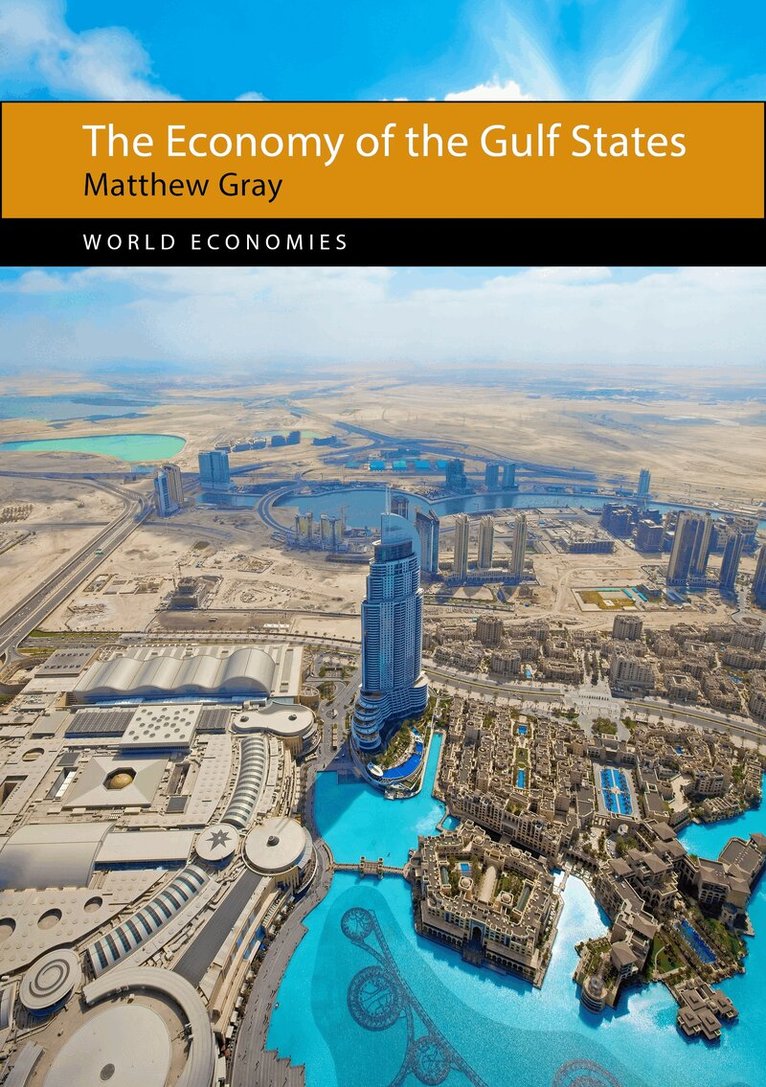
The six Arab monarchies of the Persian Gulf – Bahrain, Kuwait, Qatar, Oman, Saudi Arabia and the United Arab Emirates – have a disproportionate importance in the global economic system because of their enormous reserves of oil and gas.Matthew Gray provides a brief yet comprehensive profile of these six Gulf states and their modern political economy. Focusing on the postwar period, particularly the last 20 years, he examines the key factors that have shaped these nations’ economies and enabled them to bypass typical development pathways.The book explores how the combination of rentierism, state ownership of key firms and assets, and the use of patron–client networks to distribute favours and opportunities, has created a very effective strategy for regime maintenance and durability. However, the book also outlines how cooptive bargains with society have given the Gulf states a unique set of economic problems, including low levels of innovation and entrepreneurship, reliance on foreign workers and an inflated public sector. With the global demand for hydrocarbons set to decline, the need for the Gulf states to diversify their economies, expand the private sector, and build a more diverse taxation base has become ever more pressing. The book explains the importance of these challenges, which, along with those of geography, regional security, rapidly growing populations, and sectarianism are likely to test the Gulf’s new generation of leaders.
459 kr
Skickas inom 5-8 vardagar
The six Arab monarchies of the Persian Gulf – Bahrain, Kuwait, Qatar, Oman, Saudi Arabia and the United Arab Emirates – have a disproportionate importance in the global economic system because of their enormous reserves of oil and gas.Matthew Gray provides a brief yet comprehensive profile of these six Gulf states and their modern political economy. Focusing on the postwar period, particularly the last 20 years, he examines the key factors that have shaped these nations’ economies and enabled them to bypass typical development pathways.The book explores how the combination of rentierism, state ownership of key firms and assets, and the use of patron–client networks to distribute favours and opportunities, has created a very effective strategy for regime maintenance and durability. However, the book also outlines how cooptive bargains with society have given the Gulf states a unique set of economic problems, including low levels of innovation and entrepreneurship, reliance on foreign workers and an inflated public sector. With the global demand for hydrocarbons set to decline, the need for the Gulf states to diversify their economies, expand the private sector, and build a more diverse taxation base has become ever more pressing. The book explains the importance of these challenges, which, along with those of geography, regional security, rapidly growing populations, and sectarianism are likely to test the Gulf’s new generation of leaders.
Del 21 - Caepr Research Monograph
Health Expenditure, Income and Health Status Among Indigenous and Other Australians
Häftad, Engelska, 2004
274 kr
Skickas inom 5-8 vardagar
142 kr
Skickas inom 5-8 vardagar