Matthew J. Gibney - Böcker
Visar alla böcker från författaren Matthew J. Gibney. Handla med fri frakt och snabb leverans.
7 produkter
7 produkter
382 kr
Skickas inom 5-8 vardagar
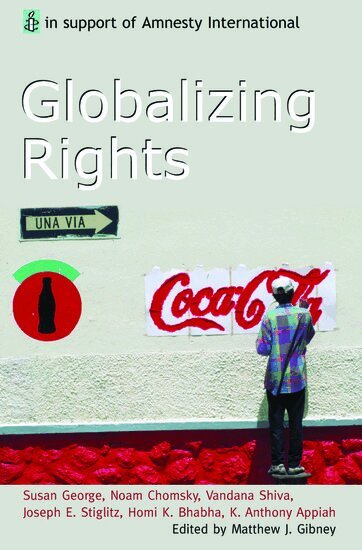
This book, based on the prestigious Oxford Amnesty Lecture series, investigates the relationship between globalization and human rights. The contributors come to the subject from a wide range of disciplines and perspectives, and include Noam Chomsky, Kwame Anthony Appiah, Homi Bhaba, Susan George, and Joseph Stiglitz, with introductions and commentaries by Richard Rorty, Alan Ryan, Charles Taylor and others. Their forthright and provocative essays challenge the view that the development of global markets and global investment, together with the widespread circulation of information on which this depends, make human rights abuses less likely.
2 088 kr
Skickas inom 10-15 vardagar
When States Take Rights Back draws on contributions by international experts in history, law, political science, and sociology, offering a rare interdisciplinary and comparative examination of citizenship revocation in five countries, revealing hidden government rationales and unintended consequences. Once considered outdated, citizenship revocation – also called deprivation or denationalization – has come back to the political center in many Western liberal states. Contributors scrutinize the positions of stakeholders (e.g. civil servants, representatives of civil society, judges, supranational institutions) and their diverse rationales for citizenship revocation (e.g. allegations of terrorism, treason, espionage, criminal behaviour, and fraud in the naturalisation process). The volume also uncovers the variety of tools that national governments have at their disposition to change existing citizenship revocation laws and policies, and the constraints that they are faced with to actually implement citizenship revocation in daily operations. Finally, contributors underscore the extraordinary severity of sanctions implied by citizenship revocation and offer a nuanced picture of the material and symbolic forms of exclusion not only for those whose citizenship is withdrawn but also for minority groups (wrongly) associated with the aforementioned allegations. Indeed, revocation policies target not merely individuals but specific collective categories, which tend to be ethno-racially constructed and attributed specific location within the international status hierarchy of nation-states. International and interdisciplinary in scope, When States Take Rights Back will be of great interest to scholars of politics, international law, sociology and political and legal history, and Human Rights. The chapters were originally published in Citizenship Studies.
The Ethics and Politics of Asylum
Liberal Democracy and the Response to Refugees
Häftad, Engelska, 2004
363 kr
Skickas inom 7-10 vardagar
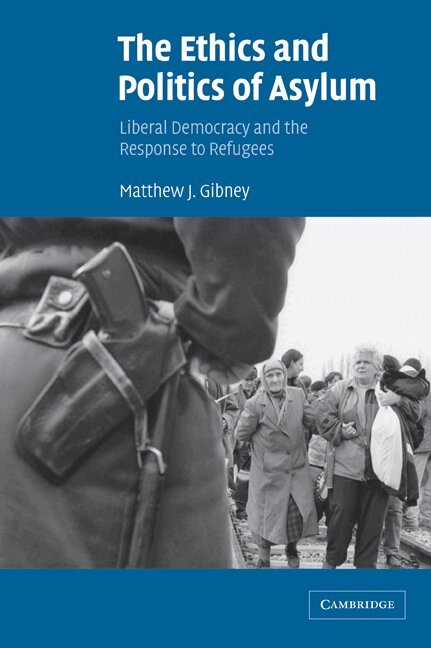
Asylum has become a highly charged political issue across developed countries, raising a host of difficult ethical and political questions. What responsibilities do the world's richest countries have to refugees arriving at their borders? Are states justified in implementing measures to prevent the arrival of economic migrants if they also block entry for refugees? Is it legitimate to curtail the rights of asylum seekers to maximize the number of refugees receiving protection overall? This book draws upon political and ethical theory and an examination of the experiences of the United States, Germany, the United Kingdom and Australia to consider how to respond to the challenges of asylum. In addition to explaining why asylum has emerged as such a key political issue in recent years, it provides a compelling account of how states could move towards implementing morally defensible responses to refugees.
The Ethics and Politics of Asylum
Liberal Democracy and the Response to Refugees
Inbunden, Engelska, 2004
1 245 kr
Skickas inom 7-10 vardagar
Asylum has become a highly charged political issue across developed countries, raising a host of difficult ethical and political questions. What responsibilities do the world's richest countries have to refugees arriving at their borders? Are states justified in implementing measures to prevent the arrival of economic migrants if they also block entry for refugees? Is it legitimate to curtail the rights of asylum seekers to maximize the number of refugees receiving protection overall? This book draws upon political and ethical theory and an examination of the experiences of the United States, Germany, the United Kingdom and Australia to consider how to respond to the challenges of asylum. In addition to explaining why asylum has emerged as such a key political issue in recent years, it provides a compelling account of how states could move towards implementing morally defensible responses to refugees.
617 kr
Skickas inom 10-15 vardagar
When States Take Rights Back draws on contributions by international experts in history, law, political science, and sociology, offering a rare interdisciplinary and comparative examination of citizenship revocation in five countries, revealing hidden government rationales and unintended consequences. Once considered outdated, citizenship revocation – also called deprivation or denationalization – has come back to the political center in many Western liberal states. Contributors scrutinize the positions of stakeholders (e.g. civil servants, representatives of civil society, judges, supranational institutions) and their diverse rationales for citizenship revocation (e.g. allegations of terrorism, treason, espionage, criminal behaviour, and fraud in the naturalisation process). The volume also uncovers the variety of tools that national governments have at their disposition to change existing citizenship revocation laws and policies, and the constraints that they are faced with to actually implement citizenship revocation in daily operations. Finally, contributors underscore the extraordinary severity of sanctions implied by citizenship revocation and offer a nuanced picture of the material and symbolic forms of exclusion not only for those whose citizenship is withdrawn but also for minority groups (wrongly) associated with the aforementioned allegations. Indeed, revocation policies target not merely individuals but specific collective categories, which tend to be ethno-racially constructed and attributed specific location within the international status hierarchy of nation-states. International and interdisciplinary in scope, When States Take Rights Back will be of great interest to scholars of politics, international law, sociology and political and legal history, and Human Rights. The chapters were originally published in Citizenship Studies.
1 064 kr
Skickas inom 10-15 vardagar
In recent years states across the world have boosted their legal and institutional capacity to deport noncitizens residing on their territory, including failed asylum seekers, “illegal” migrants, and convicted criminals. Scholars have analyzed this development primarily through the lens of immigration control. Deportation has been viewed as one amongst a range of measures designed to control entrance, distinguished primarily by the fact that it is exercised inside the territory of the state. But deportation also has broader social and political effects. It provides a powerful way through which the state reminds noncitizens that their presence in the polity is contingent upon acceptable behavior. Furthermore, in liberal democratic states immunity from deportation is one of the key privileges that citizens enjoy that distinguishes them from permanent residents. This book examines the historical, institutional and social dimensions of the relationship between deportation and citizenship in liberal democracies. Contributions also include analysis of the formal and informal functions of administrative immigration detention, and the role of the European Parliament in the area of irregular immigration and borders. The book also develops an analytical framework that identifies and critically appraises grassroots and sub national responses to migration policy in liberal democratic societies, and considers how groups form after deportation and the employment of citizenship in this particular context, making it of interest to scholars and international policy makers alike.“It is commonly surmised that the increased flows of goods, ideas, finance and people are slowly leading to the dissolution of boundaries between nation-states. However, as the varied and excellent chapters in this collection demonstrate, the enforcement of state power through detention and deportation is still a real and growing feature of contemporary political life. Expulsion hasalways been a moral sanction (think of Adam and Eve being banished from the Garden of Eden or the ostracism directed against dissidents in ancient Athens, who were forced to leave for ten years). As the editors suggest, deportation remains a means of enforcing a normative order (‘a community of values’), while the authors and editors of this book have expanded the subject-matter to include the deportees’ perspectives and the effects of deportation on families, other potential victims and on those whose social inclusion has been affirmed by the exclusion of others. These studies will enrich and enlarge the study of the more naked forms of state power.” - Robin Cohen, Professor Emeritus of Development Studies, University of Oxford“This wide-ranging, well-researched, and highly informative work is a major contribution to the growing body of scholarship examining the harsh consequences of deportation around the world. The editors have gathered an impressive group of scholars who craft an eclectic view of how deportation has evolved, what it may signify, and how it now works in various settings. With its inclusion of historical, institutional, comparative, and finely-textured, sensitive experiential studies, this book offers an important--if frequently distressing--overview of phenomena that deserve our full attention.” - Daniel Kanstroom, Professor of Law and Director, International Human Rights Program, Boston College Law School
1 064 kr
Skickas inom 10-15 vardagar
In recent years states across the world have boosted their legal and institutional capacity to deport noncitizens residing on their territory, including failed asylum seekers, “illegal” migrants, and convicted criminals. Scholars have analyzed this development primarily through the lens of immigration control. Deportation has been viewed as one amongst a range of measures designed to control entrance, distinguished primarily by the fact that it is exercised inside the territory of the state. But deportation also has broader social and political effects. It provides a powerful way through which the state reminds noncitizens that their presence in the polity is contingent upon acceptable behavior. Furthermore, in liberal democratic states immunity from deportation is one of the key privileges that citizens enjoy that distinguishes them from permanent residents. This book examines the historical, institutional and social dimensions of the relationship between deportation and citizenship in liberal democracies. Contributions also include analysis of the formal and informal functions of administrative immigration detention, and the role of the European Parliament in the area of irregular immigration and borders. The book also develops an analytical framework that identifies and critically appraises grassroots and sub national responses to migration policy in liberal democratic societies, and considers how groups form after deportation and the employment of citizenship in this particular context, making it of interest to scholars and international policy makers alike.“It is commonly surmised that the increased flows of goods, ideas, finance and people are slowly leading to the dissolution of boundaries between nation-states. However, as the varied and excellent chapters in this collection demonstrate, the enforcement of state power through detention and deportation is still a real and growing feature of contemporary political life. Expulsion hasalways been a moral sanction (think of Adam and Eve being banished from the Garden of Eden or the ostracism directed against dissidents in ancient Athens, who were forced to leave for ten years). As the editors suggest, deportation remains a means of enforcing a normative order (‘a community of values’), while the authors and editors of this book have expanded the subject-matter to include the deportees’ perspectives and the effects of deportation on families, other potential victims and on those whose social inclusion has been affirmed by the exclusion of others. These studies will enrich and enlarge the study of the more naked forms of state power.” - Robin Cohen, Professor Emeritus of Development Studies, University of Oxford“This wide-ranging, well-researched, and highly informative work is a major contribution to the growing body of scholarship examining the harsh consequences of deportation around the world. The editors have gathered an impressive group of scholars who craft an eclectic view of how deportation has evolved, what it may signify, and how it now works in various settings. With its inclusion of historical, institutional, comparative, and finely-textured, sensitive experiential studies, this book offers an important--if frequently distressing--overview of phenomena that deserve our full attention.” - Daniel Kanstroom, Professor of Law and Director, International Human Rights Program, Boston College Law School