Matthew Wharmby – författare
Visar alla böcker från författaren Matthew Wharmby. Handla med fri frakt och snabb leverans.
14 produkter
14 produkter
Inbunden, Engelska, 2023
280 kr
Skickas
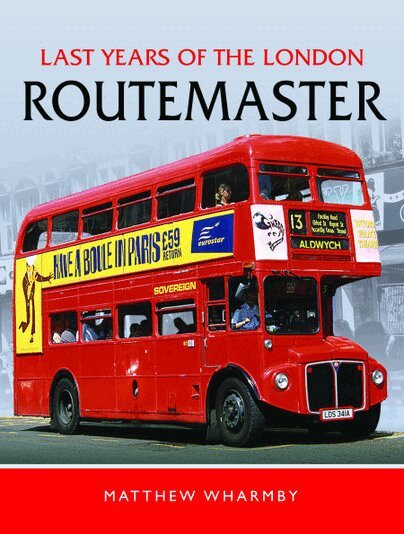
The last decade of Routemaster bus operation in London saw over seven hundred surviving RMs and RMLs divided between several new companies following the privatisation of London Buses Ltd's subsidiaries in 1994. Now operating their existing twenty routes under contract to LRT (renamed TfL in 2000), Centrewest, Metroline, MTL London Northern, Leaside Buses, Stagecoach East London, South London, London Central, London General and London United all adopted their own predominantly red liveries, but by the turn of the century these firms had clustered in pairs and generally sold out to the emerging big corporate groups. Two independents, BTS and Kentish Bus, had also won a Routemaster route each and were similarly brought under the control of larger parents.In this photographic archive, each company's last Routemaster-operating decade is outlined in detail up to when each route was converted to OPO one by one between 29 August 2003 and 9 December 2005. The two heritage routes are then explored all the way up to their own end in 2019.
E-bok
Engelska, 2021122 kr
Läs direkt efter köp
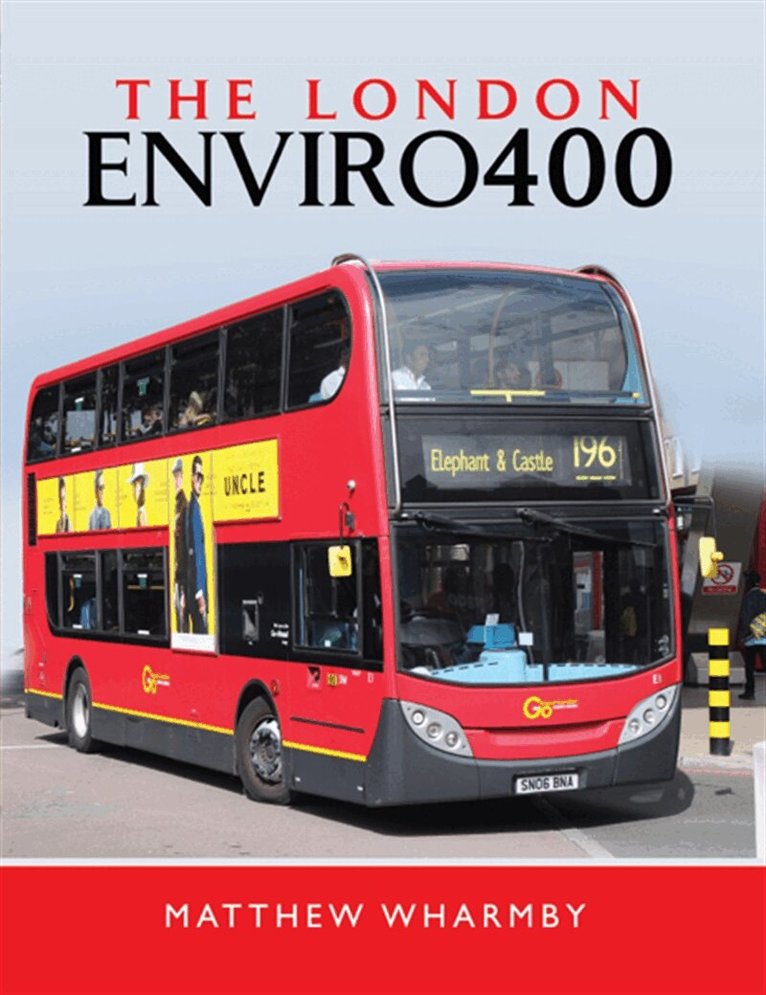
Developed by Alexander Dennis in 2005 as an all-encompassing replacement for the Dennis Trident and its two bodies, the Plaxton President and Alexander ALX400, the integral Enviro400, immediately sold in large numbers, not least to London operators, which in the next eight years bought over 1,500 of them. Late in the production run, the hybrid E40H was introduced and also made good headway in London, funded largely by environmental grants. Nearly 300 of these are in service in London.Valid to May 2015, this book finishes by introducing the MMC, the all-new development of the Enviro400 unveiled in 2014 and exemplified in London so far by two batches for Abellio and Metroline.
E-bok
Engelska, 2021122 kr
Läs direkt efter köp
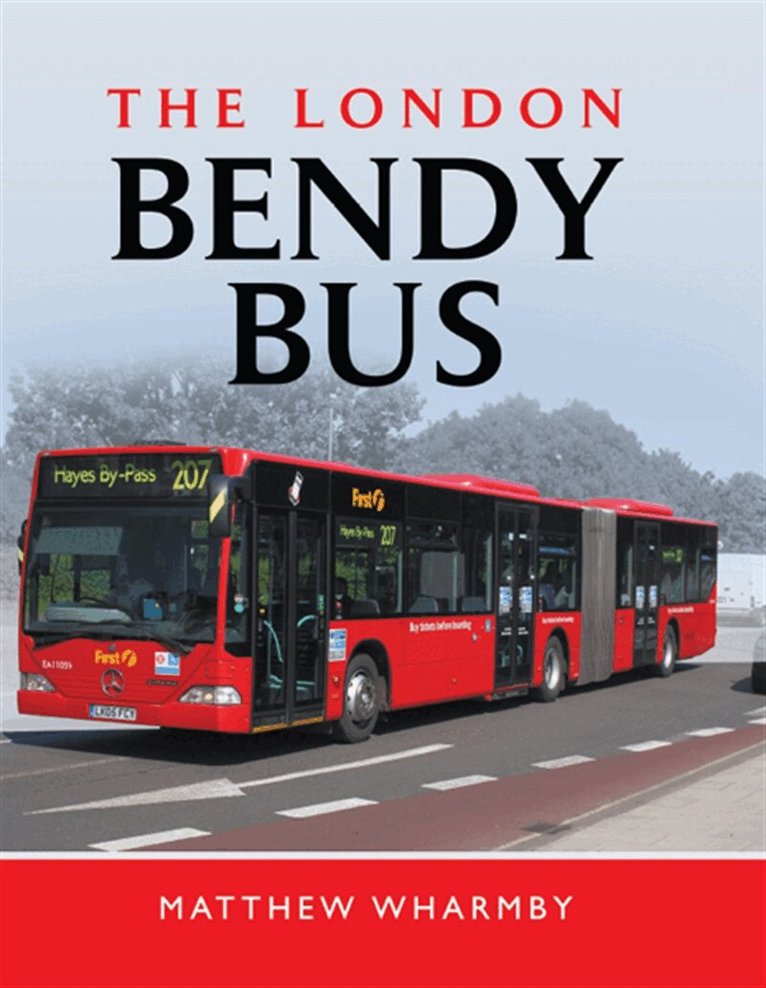
Between 2002 and 2006 six of London’s bus companies put into service 390 articulated ‘bendy’ buses on twelve routes for transport in London.rnrnDuring what turned out to be a foreshortened nine years in service, the Mercedes-Benz Citaro G buses familiar on the continent and worldwide earned an unenviable reputation in London; according to who you read and who you believed, they caught fire at the drop of a hat, they maimed cyclists, they drained revenue from the system due to their susceptibility to fare evasion, they transported already long-suffering passengers in standing crush loads like cattle and they contributed to the extinction of the Routemaster from frontline service. In short, it was often referred to as ‘the bus we hated’.rnrnThis account is an attempt by a long-time detractor of the bendy buses to set the vehicles in their proper context – not quite to rehabilitate them, but to be as fair as is possible towards a mode of transport which felt about as un-British as could be.
E-bok
Engelska, 2021126 kr
Läs direkt efter köp
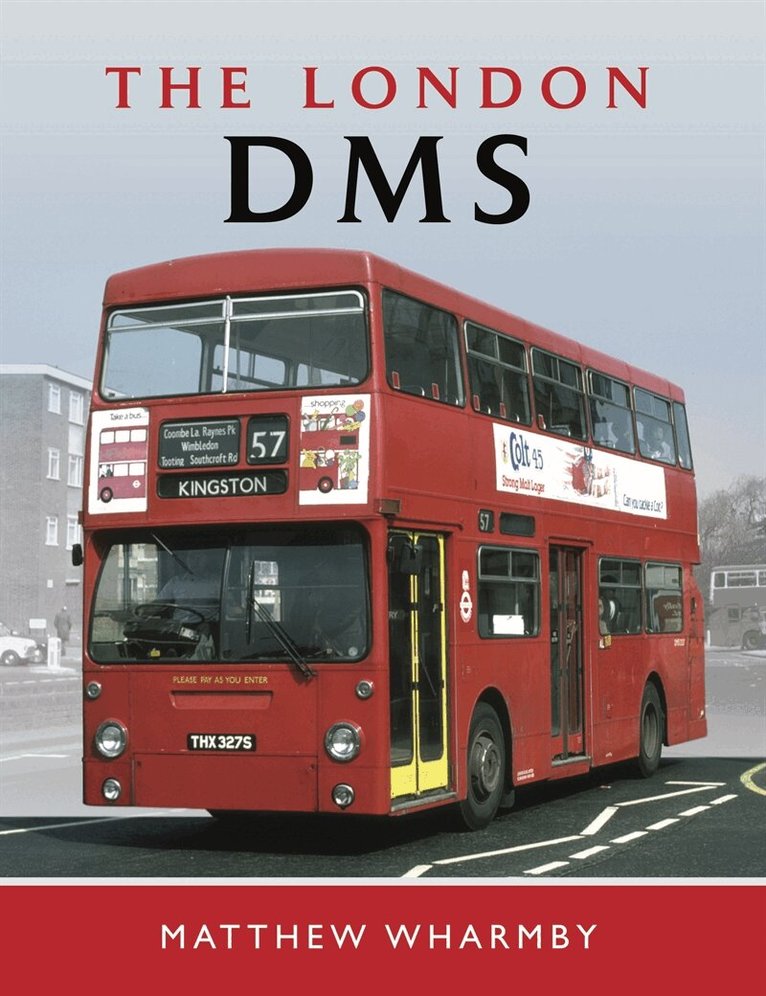
Vilified as the great failure of all London Transport bus classes, the DMS family of Daimler Fleetline was more like an unlucky victim of straitened times. Desperate to match staff shortages with falling demand for its services during the late 1960s, London Transport was just one organization to see nationwide possibilities and savings in legislation that was about to permit double-deck one-man-operation and partially fund purpose-built vehicles. However, prohibited by circumstances from developing its own rear-engined Routemaster (FRM) concept, LT instituted comparative trials between contemporary Leyland Atlanteans and Daimler Fleetlines.The latter came out on top, and massive orders followed. The first DMSs entering service on 2 January 1971.In service, however, problems quickly manifested. Sophisticated safety features served only to burn out gearboxes and gulp fuel. The passengers, meanwhile, did not appreciate being funnelled through the DMS's recalcitrant automatic fare-collection machinery only to have to stand for lack of seating. Boarding speeds thus slowed to a crawl, to the extent that the savings made by laying off conductors had to be negated by adding more DMSs to converted routes!Second thoughts caused the ongoing order to be amended to include crew-operated Fleetlines (DMs), noise concerns prompted the development of the B20 ‘quiet bus’ variety, and brave attempts were made to fit the buses into the time-honored system of overhauling at Aldenham Works, but finally the problems proved too much. After enormous expenditure, the first DMSs began to be withdrawn before the final RTs came out of service, and between 1979 and 1983 all but the B20s were sold – as is widely known, the DMSs proved perfectly adequate with provincial operators once their London features had been removed.OPO was to become fashionable again in the 1980s as the politicians turned on London Transport itself, breaking it into pieces in order to sell it off. Not only did the B20 DMSs survive to something approaching a normal lifespan, but the new cheap operators awakening with the onset of tendering made use of the type to undercut LT, and it was not until 1993 that the last DMS operated.EPUB3: Reflowable
E-bok
Engelska, 2021122 kr
Läs direkt efter köp
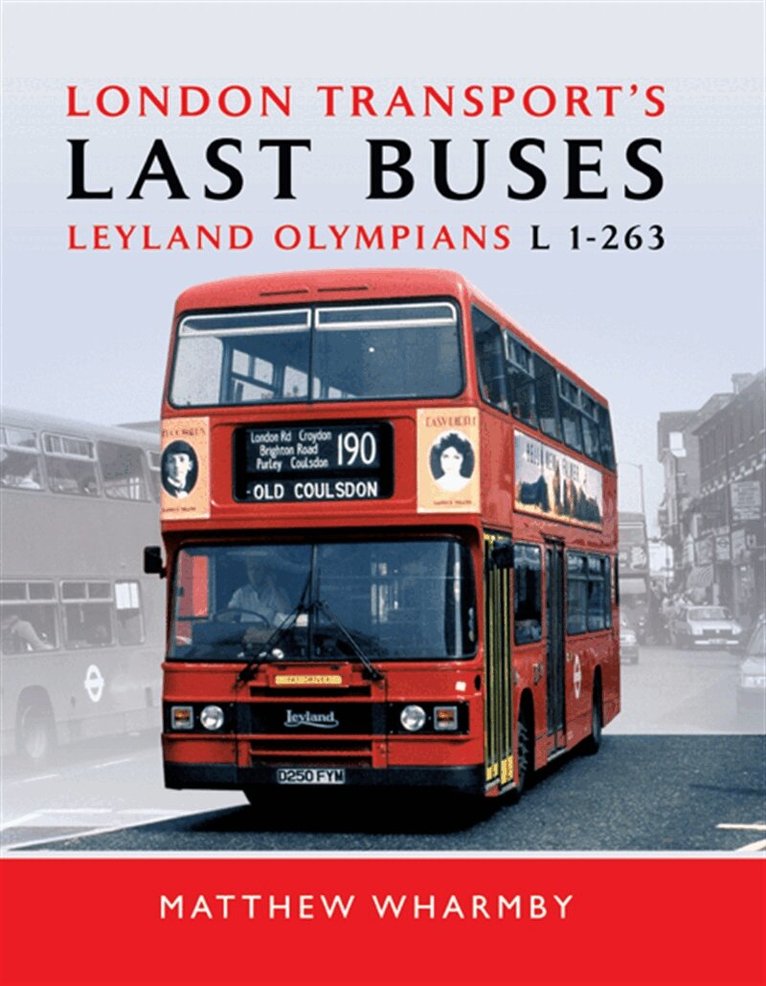
The Olympian was Leyland's answer to the competition that was threatening to take custom away from its second-generation OMO double-deck products. Simpler than the London Transportcentric Titan but, unlike that integral model, able to respond to the market by being offered as a chassis for bodying by the bodybuilder of the customer's choice, the Olympian was an immediate success and soon replaced both the Atlantean and Bristol VRT as the standard double-decker of the NBC. It wasn't until 1984 that London Transport itself dabbled with the model, taking three for evaluation alongside trios of contemporary double-deckers.The resulting L class spawned an order for 260 more in 1986, featuring accessibility advancements developed by LT in concert with the Ogle design consultancy, but the rapid changes engulfing the organisation meant that no more were ordered. During the 1990s company ownerships shifted repeatedly as the ethos of competition gave way to the cold reality of big business, an unstable situation which even saw London's bus operations broken up.The L class was split between three new companies, but the backlog of older vehicles to replace once corporate interests released funding ensured the buses up to a further decade in service. Finally, as low-floor buses swept into the capital at the turn of the century, Olympian operation at last declined, and the final examples operated early in 2006.This profusely illustrated book describes the diversity of liveries, ownerships and deployments that characterised the London Leyland Olympians' two decades of service.
E-bok
Engelska, 2021147 kr
Läs direkt efter köp
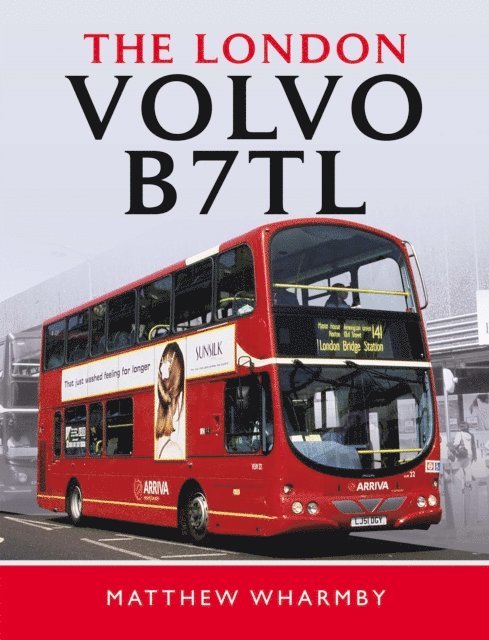
At the turn of the century Volvo found itself in a three-way tussle with Dennis and DAF to design and produce Britain’s first low-floor double-deck buses. The resulting B7TL was later into service in London than its competitors, but quickly caught up to achieve parity with the Dennis Trident. Two lengths were available and three bodies, by Alexander, Plaxton and East Lancs. Between them, London’s TfL-contracted London bus operators took over two thousand Volvo B7TLs between 2000 and 2006, after which noise problems obliged Volvo to develop the B9TL and its later B5LH hybrid. The Volvo B7TLs saw sterling service in the capital for two decades, with the last leaving service in the first week of 2021.
Häftad, Engelska, 2022
170 kr
Skickas
Häftad, Engelska, 2022
182 kr
Skickas
Häftad, Engelska, 2022
182 kr
Skickas
Häftad, Engelska, 2023
193 kr
Skickas
Häftad, Engelska, 2025
193 kr
Skickas
Häftad, Engelska, 2024
193 kr
Skickas
Häftad, Engelska, 2022
171 kr
Skickas
Häftad, Engelska, 2022
176 kr
Skickas