Maureen Alden – författare
Visar alla böcker från författaren Maureen Alden. Handla med fri frakt och snabb leverans.
6 produkter
6 produkter
E-bok
PDF, Engelska, 2017455 kr
Läs direkt efter köp
Readers coming to the Odyssey for the first time are often dazzled and bewildered by the wealth of material it contains which is seemingly unrelated to the central story: the main plot of Odysseus'' return to Ithaca is complicated by myriad secondary narratives related by the poet and his characters, including Odysseus'' own fantastic tales of Lotus Eaters, Sirens, and cannibal giants.Although these ''para-narratives'' are a source of pleasure and entertainment in their own right, each also has a special relevance to its immediate context, elucidating Odysseus'' predicament and also subtly influencing and guiding the audience''s reception of the main story. By exploring variations on the basic story-shape, drawing on familiar tales, anecdotes, and mythology, or inserting analogous situations, they create illuminating parallels to the main narrative and prompt specific responsesin readers or listeners. This is the case even when details are suppressed or altered, as the audience may still experience the reverberations of the better-known version of the tradition, and it also applies to the characters themselves, who are often provided with a model of action for imitation oravoidance in their immediate contexts.
E-bok
Engelska, 2017455 kr
Läs direkt efter köp
Readers coming to the Odyssey for the first time are often dazzled and bewildered by the wealth of material it contains which is seemingly unrelated to the central story: the main plot of Odysseus'' return to Ithaca is complicated by myriad secondary narratives related by the poet and his characters, including Odysseus'' own fantastic tales of Lotus Eaters, Sirens, and cannibal giants.Although these ''para-narratives'' are a source of pleasure and entertainment in their own right, each also has a special relevance to its immediate context, elucidating Odysseus'' predicament and also subtly influencing and guiding the audience''s reception of the main story. By exploring variations on the basic story-shape, drawing on familiar tales, anecdotes, and mythology, or inserting analogous situations, they create illuminating parallels to the main narrative and prompt specific responsesin readers or listeners. This is the case even when details are suppressed or altered, as the audience may still experience the reverberations of the better-known version of the tradition, and it also applies to the characters themselves, who are often provided with a model of action for imitation oravoidance in their immediate contexts.
Inbunden, Engelska, 2001
3 355 kr
Skickas inom 5-8 vardagar
Students reading the Iliad for the first time are often bewildered by the sheer volume of information on apparently unrelated subjects contained in it. The central narrative seems to unfold very slowly, and to be complicated by long speeches containing stories which might be interesting in themselves, but which seem to have no relevance to anything else. In this book Dr Alden offers advice on how to read the Iliad through the relationship of major paradigms to the events of the main narrative. The first section offers the first full-length study in English of the paradigmatic functions of secondary narratives and minor-key episodes in the Iliad. None of these are irrelevant or merely ornamental: rather each is carefully selected and altered if necessary, to reflect on significant episodes of the main narrative and act as guides to its interpretation. The second section offers a general reading of the Iliad arising out of Phoenix's advice to Achilles in Book 9. The allegory of the Prayers illustrates the dire consequences of rejecting prayers, and the paradigm of Meleager presents us with an instance of an angry hero to whom prayers and entreaties are addressed, whilst the primary narrative confines this motif of prayers and entreaties in ascending scale of affection to Achilles and Hector and contrasts their responses. Both heroes suffer terribly for their rejection of entreaties.
Häftad, Engelska, 2020
561 kr
Skickas inom 7-10 vardagar
Readers coming to the Odyssey for the first time are often dazzled and bewildered by the wealth of material it contains which is seemingly unrelated to the central story: the main plot of Odysseus' return to Ithaca is complicated by myriad secondary narratives related by the poet and his characters, including Odysseus' own fantastic tales of Lotus Eaters, Sirens, and cannibal giants. Although these 'para-narratives' are a source of pleasure and entertainment in their own right, each also has a special relevance to its immediate context, elucidating Odysseus' predicament and also subtly influencing and guiding the audience's reception of the main story. By exploring variations on the basic story-shape, drawing on familiar tales, anecdotes, and mythology, or inserting analogous situations, they create illuminating parallels to the main narrative and prompt specific responses in readers or listeners. This is the case even when details are suppressed or altered, as the audience may still experience the reverberations of the better-known version of the tradition, and it also applies to the characters themselves, who are often provided with a model of action for imitation or avoidance in their immediate contexts.
Inbunden, Engelska, 2026
1 928 kr
Kommande
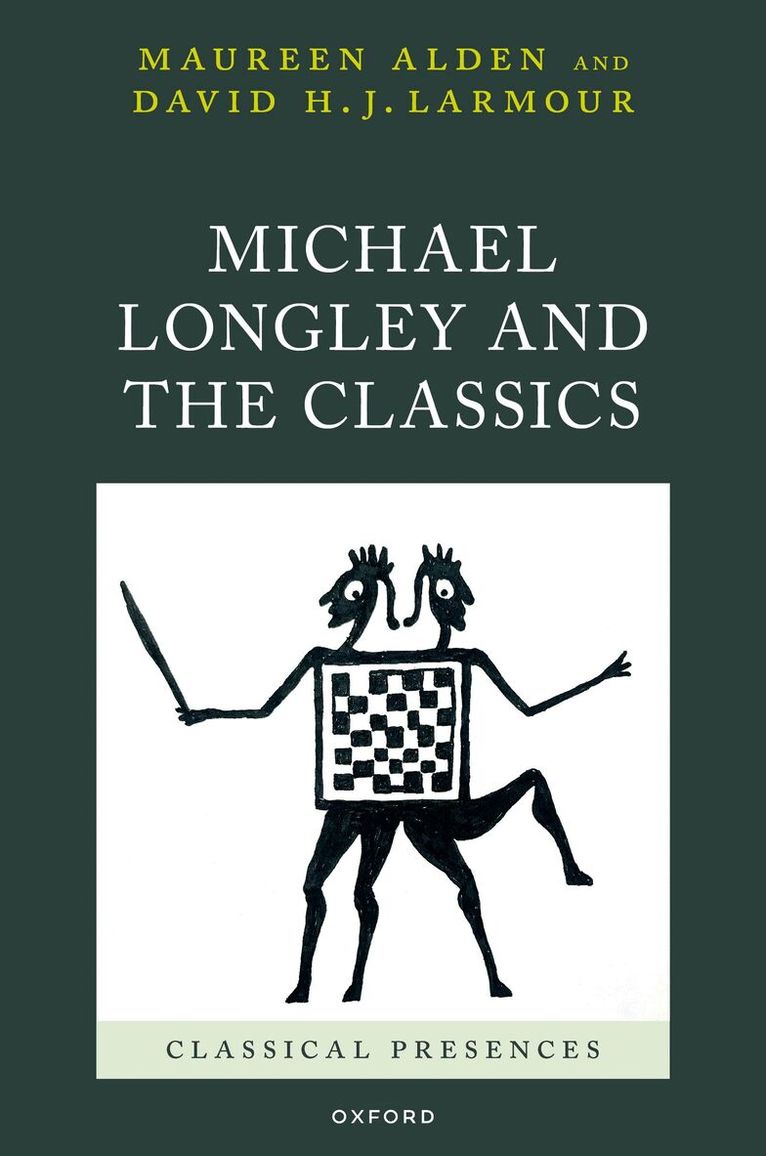
A substantial portion of Michael Longley's work is inspired by the literatures of ancient Greece and Rome which he studied at university. He said that these classically-inspired poems were 'at the core of my efforts'. In this volume Longley explains in an interview what his classical education meant to him and what it did for him—inter alia, it instilled a command of syntax which 'enabled virtuosic display', and revealed a 'mythology which explains us to ourselves and helps us to make sense of our predicaments'.The volume is written by classicists, trained in the discipline in which Longley was trained. In ten survey chapters Maureen Alden (who, in the course of a forty-year friendship with the poet often suggested passages which might interest and inspire him) provides comprehensive and classically-focused coverage of the classical references and allusions in Longley's oeuvre, his use of the ancient texts—'spiritual echo chambers'—for his own poetic purposes, and the role of the classically-inspired poems in the structure of each collection. In specialist chapters David Larmour explores the Ovidian versions of The Ghost Orchid; Paul Allen Miller discusses Longley's early poem 'Cornelia', a version of 'Propertius's great death ode' 4.11, and his later versions of the same poem; and Seth Schein examines how Longley achieves his freeze-framing technique and how his elegies can achieve an emotional power even greater than that of the original in the Iliad. The survey chapters are illustrated by a table detailing all the 'classical' poems with exact references, dates, and summary notes. A timeline indicates key events of the poet's life together with an outline of the political events on which ancient texts, especially Homer, allowed him to comment obliquely. Michael Longley read and approved the entire text except that which concerns his last collection which is to appear in 2027.
Inbunden, Engelska, 2017
2 965 kr
Skickas inom 3-6 vardagar
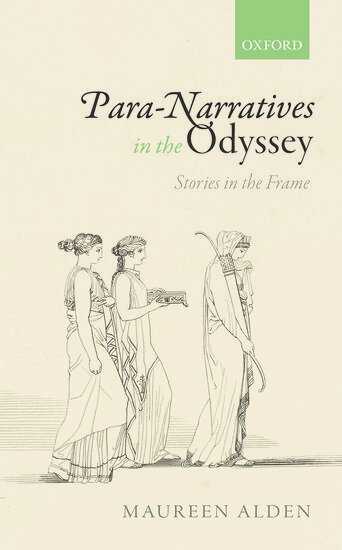
Readers coming to the Odyssey for the first time are often dazzled and bewildered by the wealth of material it contains which is seemingly unrelated to the central story: the main plot of Odysseus' return to Ithaca is complicated by myriad secondary narratives related by the poet and his characters, including Odysseus' own fantastic tales of Lotus Eaters, Sirens, and cannibal giants. Although these 'para-narratives' are a source of pleasure and entertainment in their own right, each also has a special relevance to its immediate context, elucidating Odysseus' predicament and also subtly influencing and guiding the audience's reception of the main story. By exploring variations on the basic story-shape, drawing on familiar tales, anecdotes, and mythology, or inserting analogous situations, they create illuminating parallels to the main narrative and prompt specific responses in readers or listeners. This is the case even when details are suppressed or altered, as the audience may still experience the reverberations of the better-known version of the tradition, and it also applies to the characters themselves, who are often provided with a model of action for imitation or avoidance in their immediate contexts.