Maurizio Viroli – författare
Visar alla böcker från författaren Maurizio Viroli. Handla med fri frakt och snabb leverans.
38 produkter
Nation, stat och imperium : tillhörighet i en globaliserad värld
Av Philip Bobbitt, Gillian Clark m. fl.
Inbunden, 2021
255 kr
Lägg i varukorg
Med det kalla krigets slut och globaliseringens segertåg trodde många att nationalism hörde till historien. Men det visade sig vara tvärtom. Idag ser vi hur nationalismen sprids över hela världen. Samtidigt växer sig populistiska och anti-demokratiska rörelser starka. Att höra hemma någonstans …
Idea of the Republic
Av Norberto Bobbio, Maurizio Viroli
Häftad, 2003
217 kr
Lägg i varukorg
In this lively and engaging book, Norberto Bobbio, the distinguished contemporary Italian philosopher, and the political theorist Maurizio Viroli, explore a range of themes relating to the idea of the Republic and some of the major political and ethical issues of the day. A lively discussion of …
Nation, state and empire
Av Robin Lane Fox, Gillian Clark m. fl.
E-bok, 2021
139 kr
Lägg i varukorg
With the end of the Cold War and the triumph of globalisation, many believed that nationalism now was a thing of the past: instead the opposite is true. Today, we can see nationalism spreading across the world, as populistic and anti-democratic movements grow stronger.Belonging somewhere seems to …
Nation, stat och imperium
Av Robin Lane Fox, Gillian Clark m. fl.
E-bok, 2021
139 kr
Lägg i varukorg
Med det kalla krigets slut och globaliseringens segertåg trodde många att nationalism hörde till historien. Men det visade sig vara tvärtom. Idag ser vi hur nationalismen sprids över hela världen. Samtidigt växer sig populistiska och anti-demokratiska rörelser starka. Att höra hemma någonstans …
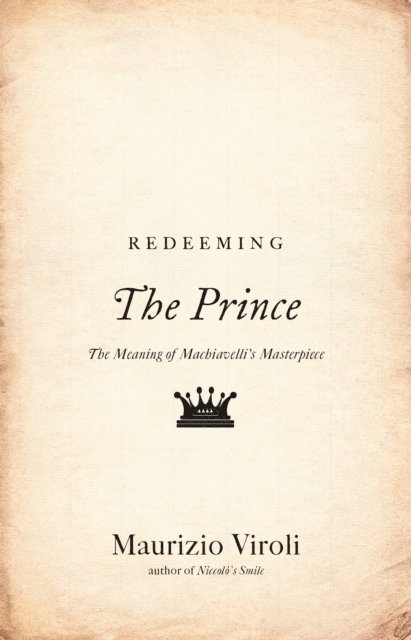
Redeeming The Prince
The Meaning of Machiavelli's Masterpiece
Häftad, 2015
212 kr
Lägg i varukorg
In Redeeming "The Prince," one of the world's leading Machiavelli scholars puts forth a startling new interpretation of arguably the most influential but widely misunderstood book in the Western political tradition. Overturning popular misconceptions and challenging scholarly consensus, Maurizio …
How to Choose a Leader
Machiavelli's Advice to Citizens
Inbunden, 2016
152 kr
Lägg i varukorg
One of the greatest political advisers of all time, Niccolo Machiavelli thought long and hard about how citizens could identify great leaders--ones capable of defending and enhancing the liberty, honor, and prosperity of their countries. Drawing on the full range of the Florentine's writings, …
Om historien
Av Janne Haaland Matláry, Maurizio Viroli m. fl.
E-bok, 2021
139 kr
Lägg i varukorg
Historien, mänsklighetens samlade erfarenheter, lär oss om nuet och framtiden. Hur är det möjligt att titta på händelser i det förflutna och med hjälp av dem lösa samtidens politiska eller ekonomiska förhållanden och konflikter?Essäerna i denna antologi härrör från Engelsbergsseminariet 2019 där …
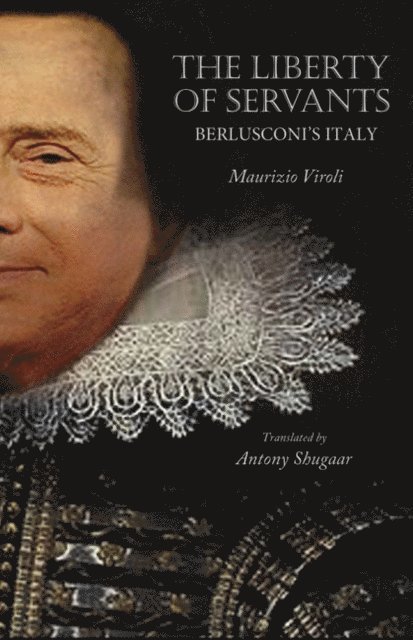
Liberty of Servants
Berlusconi's Italy
Inbunden, 2011
383 kr
Lägg i varukorg
Italy is a country of free political institutions, yet it has become a nation of servile courtesans, with Silvio Berlusconi as their prince. This is the controversial argument that Italian political philosopher and noted Machiavelli biographer Maurizio Viroli puts forward in The Liberty of …
For Love of Country
An Essay On Patriotism and Nationalism
Inbunden, 1995
2169 kr
Lägg i varukorg
Nationalism and patriotism are two of the most powerful forces shaping world history. Though seen by many as two sides of the same coin, they have come to have widely different connotations. Nationalism is increasingly seen as destructive, and at the root of the world's bloodiest conflicts; …
For Love of Country
An Essay On Patriotism and Nationalism
Häftad, 1997
1133 kr
Lägg i varukorg
Nationalism and patriotism are two of the most powerful forces shaping world history. Though seen by many as two sides of the same coin, they have developed widely different connotations. Nationalism is increasingly seen as destructive, and at the root of the world's bloodiest conflicts; patriotism …
Machiavelli
Av Maurizio Viroli, Maurizio Viroli
Inbunden, 1998
3040 kr
Lägg i varukorg
Founders of Modern Political and Social Thought Series Editor: Dr Mark Philp, Oriel College, University of Oxford Founders of Modern Political and Social Thought present critical examinations of the work of major political philosophers and social theorists, assessing both their initial contribution …
Machiavelli
Av Maurizio Viroli, Maurizio Viroli
Häftad, 1998
858 kr
Lägg i varukorg
Founders of Modern Political and Social Thought Series Editor: Dr Mark Philp, Oriel College, University of Oxford Founders of Modern Political and Social Thought present critical examinations of the work of major political philosophers and social theorists, assessing both their initial contribution …
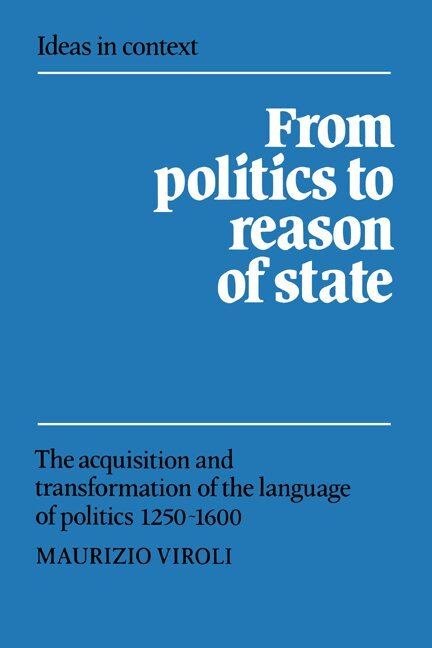
From Politics to Reason of State
The Acquisition and Transformation of the Language of Politics 1250-1600
Av Maurizio Viroli, Quentin Skinner m. fl.
Inbunden, 1992
1856 kr
Lägg i varukorg
Between the end of the sixteenth and the beginning of the seventeenth centuries, the language of politics underwent a radical transformation. The author argues that this transformation amounted to a 'revolution of politics', global in scope, and wide-ranging in its intellectual and moral …
Machiavelli and Republicanism
Av Gisela Bock, Quentin Skinner m. fl.
Häftad, 1993
487 kr
Lägg i varukorg
Now in paperback, this highly acclaimed volume brings together some of the world's foremost historians of ideas to consider Machiavelli's political thought in the larger context of the European republican tradition, and the image of Machiavelli held by other republicans. An international team of …
Jean-Jacques Rousseau and the 'Well-Ordered Society'
Häftad, 2003
892 kr
Lägg i varukorg
This book studies a central but hitherto neglected aspect of Rousseau's political thought: the concept of social order and its implications for the ideal society which he envisages. The antithesis between order and disorder is a fundamental theme in Rousseau's work, and the author takes it as the …
From Politics to Reason of State
The Acquisition and Transformation of the Language of Politics 1250-1600
Av Maurizio Viroli, Quentin Skinner
Häftad, 2005
569 kr
Lägg i varukorg
Between the end of the sixteenth and the beginning of the seventeenth centuries, the language of politics underwent a radical transformation. The author argues that this transformation amounted to a 'revolution of politics', global in scope, and wide-ranging in its intellectual and moral …
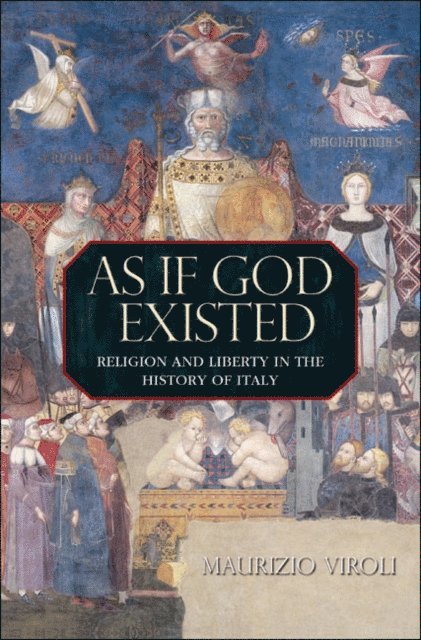
As If God Existed
Religion and Liberty in the History of Italy
Inbunden, 2012
529 kr
Lägg i varukorg
Religion and liberty are often thought to be mutual enemies: if religion has a natural ally, it is authoritarianism--not republicanism or democracy. But in this book, Maurizio Viroli, a leading historian of republican political thought, challenges this conventional wisdom. He argues that political …
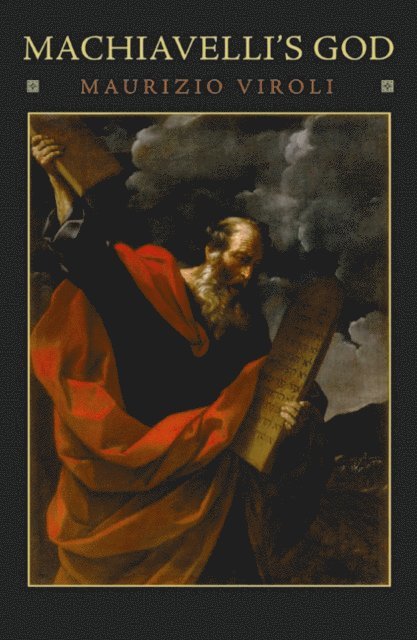
Machiavelli's God
Häftad, 2012
664 kr
Lägg i varukorg
To many readers of The Prince, Machiavelli appears to be deeply un-Christian or even anti-Christian, a cynic who thinks rulers should use religion only to keep their subjects in check. But in Machiavelli's God, Maurizio Viroli, one of the world's leading authorities on Machiavelli, argues that …
Redeeming The Prince
The Meaning of Machiavelli's Masterpiece
Inbunden, 2013
392 kr
Lägg i varukorg
In Redeeming "The Prince," one of the world's leading Machiavelli scholars puts forth a startling new interpretation of arguably the most influential but widely misunderstood book in the Western political tradition. Overturning popular misconceptions and challenging scholarly consensus, Maurizio …
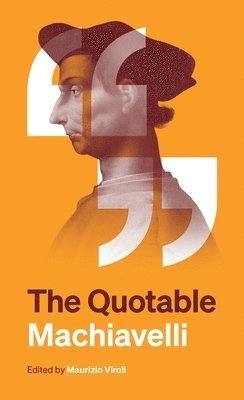
Quotable Machiavelli
Av Niccolò Machiavelli, Maurizio Viroli
Inbunden, 2016
220 kr
Lägg i varukorg
Niccolo Machiavelli (1469-1527) is the father of modern political thought, but he is also one of the greatest writers of the Renaissance and his wisdom and style extend far beyond politics to encompass a compelling philosophy of life as well. In The Quotable Machiavelli, Maurizio Viroli, one of the …
Quotable Machiavelli
Av Niccolò Machiavelli, Maurizio Viroli
Häftad, 2025
177 kr
Lägg i varukorg
A collection of insightful and revealing quotations on a wide range of subjects from the father of modern politicsNiccolò Machiavelli (1469–1527) is the father of modern political thought, but he is also one of the greatest writers of the Renaissance and his wisdom and style extend far beyond …
Idea of the Republic
Av Norberto Bobbio, Maurizio Viroli
Inbunden, 2003
720 kr
Lägg i varukorg
In this lively and engaging book, Norberto Bobbio, the distinguished contemporary Italian philosopher, and the political theorist Maurizio Viroli, explore a range of themes relating to the idea of the Republic and some of the major political and ethical issues of the day. A lively discussion of …
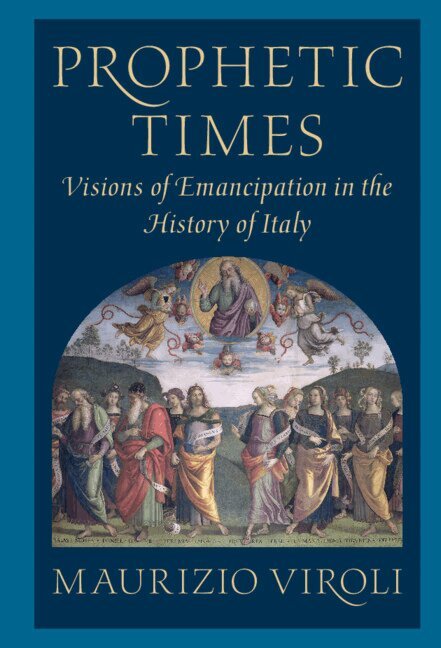
Prophetic Times
Visions of Emancipation in the History of Italy
Inbunden, 2023
444 kr
Lägg i varukorg
Throughout Italy's history, prophetic voices-poets, painters, philosophers-have bolstered the struggle for social and political emancipation. These voices denounced the vices of compatriots and urged them toward redemption. They gave meaning to suffering, helping to prevent moral surrender; they …
Prophetic Times
Visions of Emancipation in the History of Italy
E-bok, 2023
538 kr
Lägg i varukorg
Throughout Italy''s history, prophetic voices-poets, painters, philosophers-have bolstered the struggle for social and political emancipation. These voices denounced the vices of compatriots and urged them toward redemption. They gave meaning to suffering, helping to prevent moral surrender; they …
Prophetic Times
Visions of Emancipation in the History of Italy
E-bok, 2023
538 kr
Lägg i varukorg
Throughout Italy''s history, prophetic voices-poets, painters, philosophers-have bolstered the struggle for social and political emancipation. These voices denounced the vices of compatriots and urged them toward redemption. They gave meaning to suffering, helping to prevent moral surrender; they …
Machiavelli's God
E-bok, 2010
457 kr
Lägg i varukorg
How Machiavelli''s Christianity shaped his political thought To many readers of The Prince , Machiavelli appears to be deeply un-Christian or even anti-Christian, a cynic who thinks rulers should use religion only to keep their subjects in check. But in Machiavelli''s God , Maurizio Viroli, one of …
Liberty of Servants
Berlusconi''s Italy
E-bok, 2011
500 kr
Lägg i varukorg
A compelling look at how a people can be unfree even though they are not oppressed Italy is a country of free political institutions, yet it has become a nation of servile courtesans, with Silvio Berlusconi as their prince. This is the controversial argument that Italian political philosopher and …
As If God Existed
Religion and Liberty in the History of Italy
E-bok, 2012
735 kr
Lägg i varukorg
Religion and liberty are often thought to be mutual enemies: if religion has a natural ally, it is authoritarianism--not republicanism or democracy. But in this book, Maurizio Viroli, a leading historian of republican political thought, challenges this conventional wisdom. He argues that political …
Redeeming The Prince
The Meaning of Machiavelli''s Masterpiece
E-bok, 2013
294 kr
Lägg i varukorg
A fresh introduction to—and bold new interpretation of—Machiavelli''s Prince In Redeeming "The Prince , " one of the world''s leading Machiavelli scholars puts forth a startling new interpretation of arguably the most influential but widely misunderstood book in the Western political tradition. …