Max Cresswell – författare
Visar alla böcker från författaren Max Cresswell. Handla med fri frakt och snabb leverans.
8 produkter
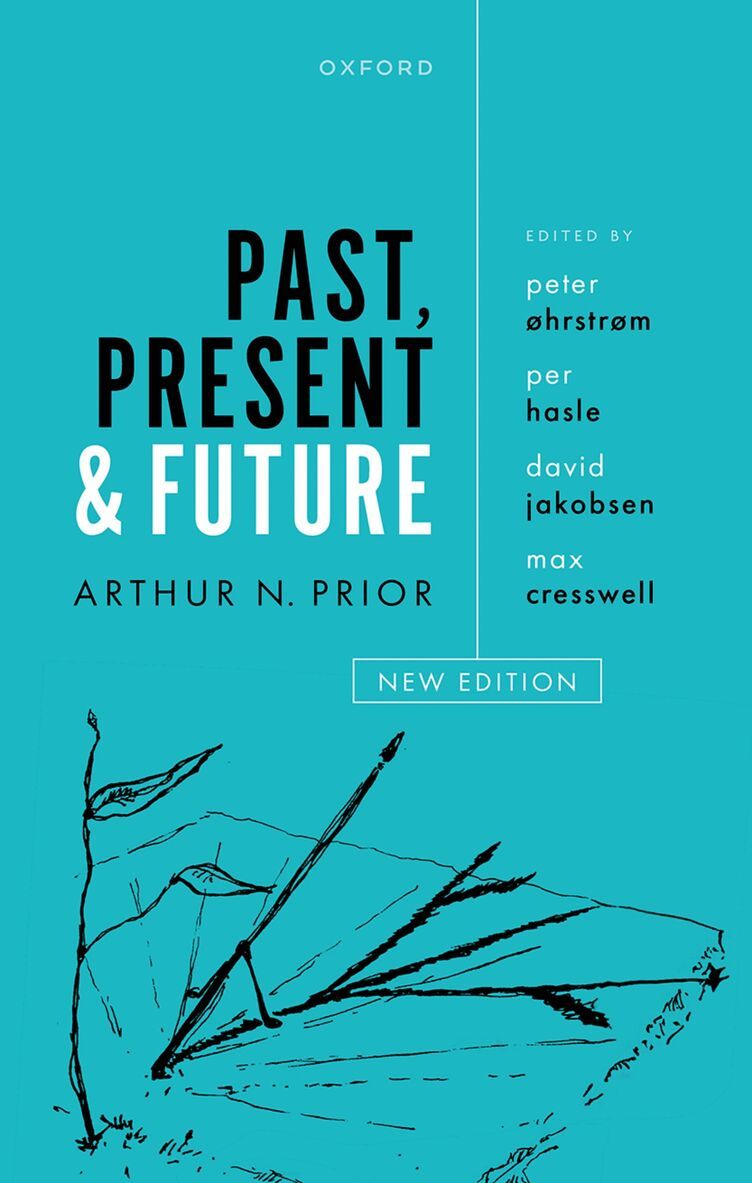
Past, Present and Future
Av Arthur N. Prior, Peter Øhrstrom m. fl.
Inbunden, 2025
659 kr
Lägg i varukorg
Past, Present and Future, first published in 1967, is the magnum opus of Arthur Norman Prior (1914-1969). Prior was the founding father of tense-logic: Past, Present, and Future presents his tense-logic as a powerful and precise formalism for the systematic study of the temporal aspects of reality. …
Past, Present and Future
Av Arthur N. Prior, Max Cresswell m. fl.
E-bok, 2026
592 kr
Lägg i varukorg
Past, Present and Future , first published in 1967, is the magnum opus of Arthur Norman Prior (1914-1969). Prior was the founding father of tense-logic: Past, Present, and Future presents his tense-logic as a powerful and precise formalism for the systematic study of the temporal aspects of …
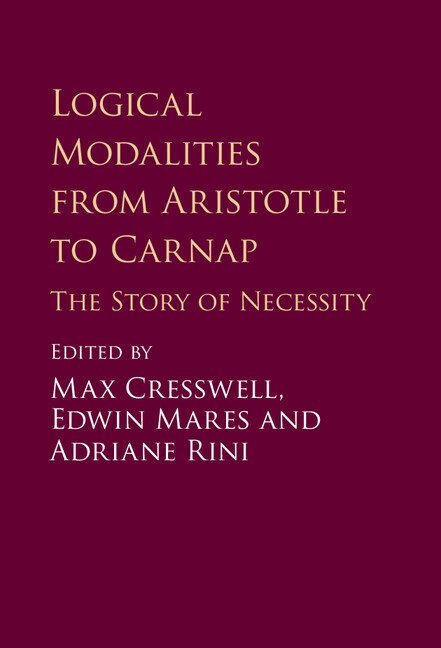
Logical Modalities from Aristotle to Carnap
The Story of Necessity
Av Max Cresswell, Edwin Mares m. fl.
Inbunden, 2016
1872 kr
Lägg i varukorg
Interest in the metaphysics and logic of possible worlds goes back at least as far as Aristotle, but few books address the history of these important concepts. This volume offers new essays on the theories about the logical modalities (necessity and possibility) held by leading philosophers from …
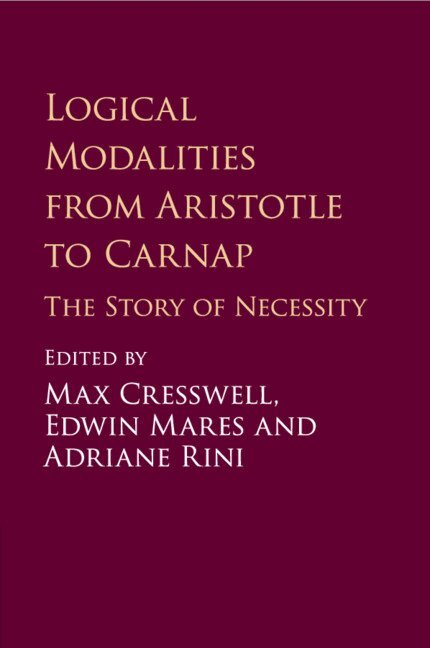
Logical Modalities from Aristotle to Carnap
The Story of Necessity
Av Max Cresswell, Edwin Mares m. fl.
Häftad, 2019
667 kr
Lägg i varukorg
Interest in the metaphysics and logic of possible worlds goes back at least as far as Aristotle, but few books address the history of these important concepts. This volume offers new essays on the theories about the logical modalities (necessity and possibility) held by leading philosophers from …
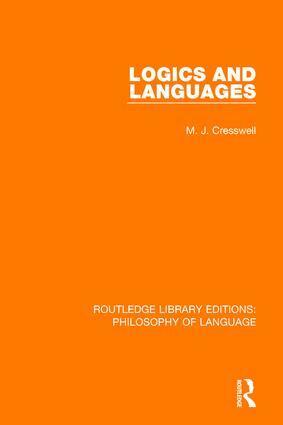
Logics and Languages
Inbunden, 2016
2515 kr
Lägg i varukorg
Originally published in 1973, this book shows that methods developed for the semantics of systems of formal logic can be successfully applied to problems about the semantics of natural languages; and, moreover, that such methods can take account of features of natural language which have often been …
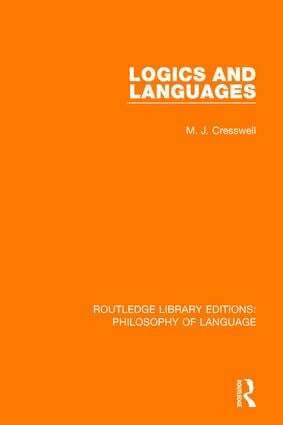
Logics and Languages
Häftad, 2018
561 kr
Lägg i varukorg
Originally published in 1973, this book shows that methods developed for the semantics of systems of formal logic can be successfully applied to problems about the semantics of natural languages; and, moreover, that such methods can take account of features of natural language which have often been …
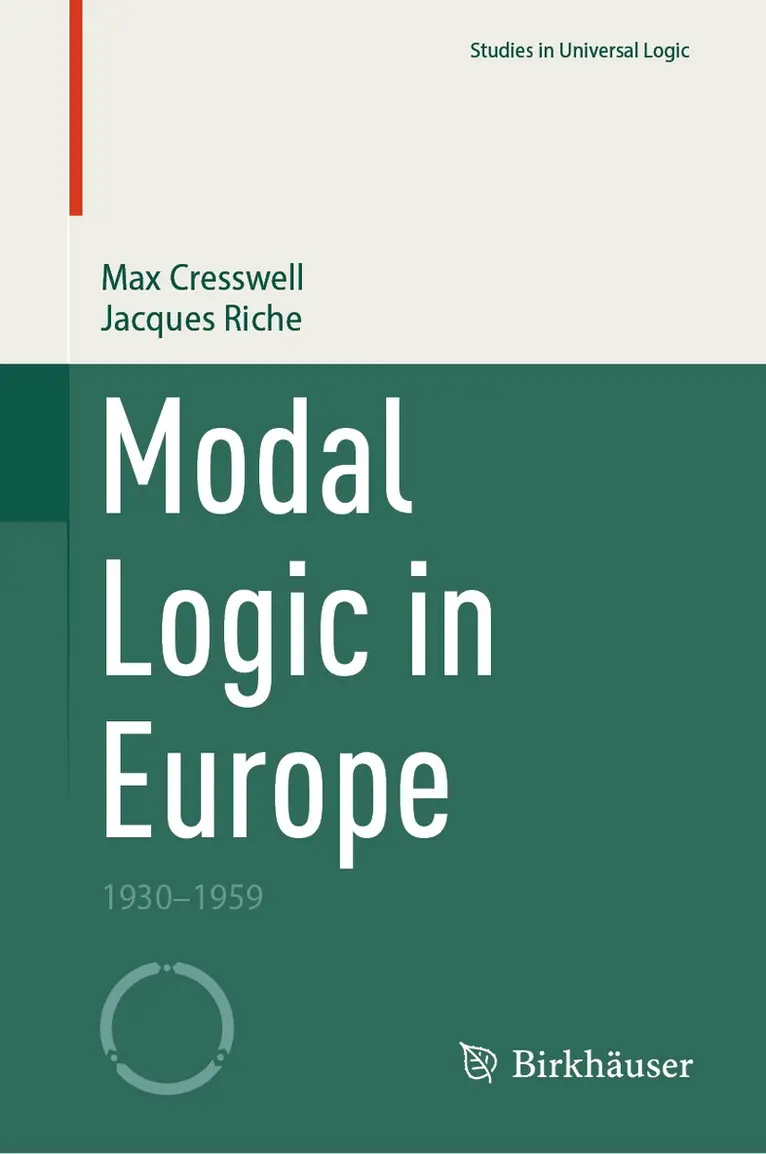
Modal Logic in Europe
1930-1959
Av Max Cresswell, Jacques Riche
Inbunden, 2026
1305 kr
Lägg i varukorg
This book explores the birth of modern modal logic, which offers a precise formalism for encoding the concepts of possibility and necessity within the fundamental logical formalism and for using them in conjunction with the preexisting set of logical operators.The editors of this volume have …
Modal Logic in Europe
1930-1959
Av Jacques Riche, Max Cresswell
E-bok, 2026
1785 kr
Lägg i varukorg
This book explores the birth of modern modal logic, which offers a precise formalism for encoding the concepts of possibility and necessity within the fundamental logical formalism and for using them in conjunction with the preexisting set of logical operators.The editors of this volume have …