Max Leventhal – författare
Visar alla böcker från författaren Max Leventhal. Handla med fri frakt och snabb leverans.
6 produkter
6 produkter
Inbunden, Engelska, 2022
1 113 kr
Skickas inom 7-10 vardagar
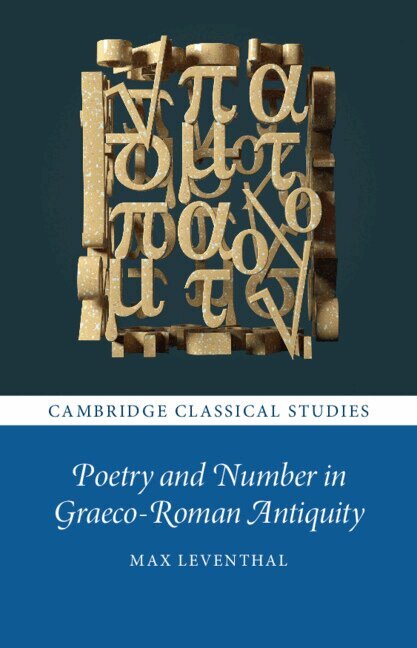
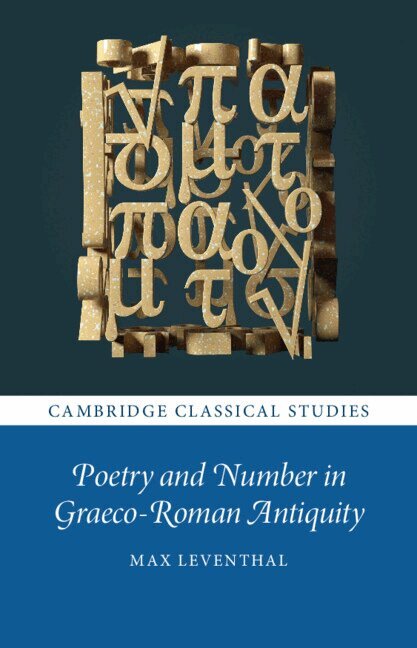
Poetry and mathematics might seem to be worlds apart. Nevertheless, a number of Greek and Roman poets incorporated counting and calculation within their verses. Setting the work of authors such as Callimachus, Catullus and Archimedes in dialogue with the less well-known isopsephic epigrams of Leonides of Alexandria and the anonymous arithmetical poems preserved in the Palatine Anthology, the book reveals the various roles that number played in ancient poetry. Focussing especially on counting and arithmetic, Max Leventhal demonstrates how the discussion, rejection or enacting of these two operations was bound up with wider conceptions of the nature of poetry. Practices of composing, reading, interpreting and critiquing poetry emerge in these texts as having a numerical component. The result is an illuminating new way of approaching Greek and Latin poetry - and one that reaches across modern disciplinary divisions.
Häftad, Engelska, 2022
373 kr
Skickas
Poetry and mathematics might seem to be worlds apart. Nevertheless, a number of Greek and Roman poets incorporated counting and calculation within their verses. Setting the work of authors such as Callimachus, Catullus and Archimedes in dialogue with the less well-known isopsephic epigrams of Leonides of Alexandria and the anonymous arithmetical poems preserved in the Palatine Anthology, the book reveals the various roles that number played in ancient poetry. Focussing especially on counting and arithmetic, Max Leventhal demonstrates how the discussion, rejection or enacting of these two operations was bound up with wider conceptions of the nature of poetry. Practices of composing, reading, interpreting and critiquing poetry emerge in these texts as having a numerical component. The result is an illuminating new way of approaching Greek and Latin poetry - and one that reaches across modern disciplinary divisions.
E-bok
PDF, Engelska, 2022519 kr
Läs direkt efter köp
Poetry and mathematics might seem to be worlds apart. Nevertheless, a number of Greek and Roman poets incorporated counting and calculation within their verses. Setting the work of authors such as Callimachus, Catullus and Archimedes in dialogue with the less well-known isopsephic epigrams of Leonides of Alexandria and the anonymous arithmetical poems preserved in the Palatine Anthology, the book reveals the various roles that number played in ancient poetry. Focussing especially on counting and arithmetic, Max Leventhal demonstrates how the discussion, rejection or enacting of these two operations was bound up with wider conceptions of the nature of poetry. Practices of composing, reading, interpreting and critiquing poetry emerge in these texts as having a numerical component. The result is an illuminating new way of approaching Greek and Latin poetry – and one that reaches across modern disciplinary divisions.
E-bok
Engelska, 2022524 kr
Läs direkt efter köp
Poetry and mathematics might seem to be worlds apart. Nevertheless, a number of Greek and Roman poets incorporated counting and calculation within their verses. Setting the work of authors such as Callimachus, Catullus and Archimedes in dialogue with the less well-known isopsephic epigrams of Leonides of Alexandria and the anonymous arithmetical poems preserved in the Palatine Anthology, the book reveals the various roles that number played in ancient poetry. Focussing especially on counting and arithmetic, Max Leventhal demonstrates how the discussion, rejection or enacting of these two operations was bound up with wider conceptions of the nature of poetry. Practices of composing, reading, interpreting and critiquing poetry emerge in these texts as having a numerical component. The result is an illuminating new way of approaching Greek and Latin poetry – and one that reaches across modern disciplinary divisions.
Inbunden, Engelska, 2026
1 521 kr
Kommande
Spotlighting the significance of collaboration to Greek and Latin literature, this volume asks how our conceptions of ancient literary culture change if we privilege all the various collaborations which lead up to the production of a text. In so doing, it challenges the essentialisation of the author as the sole producer and creator of a literary work. The book builds on recent applications of network theory and distributed authorship to classical literature and is interested not just in the multiple agents of literary production, but also in the imbalances of power that they often entail. Simultaneously, it explores depictions of collaboration within Greek and Latin literature itself: what happens when we read not for competition and zero-sum games, but for moments of teamwork and working together? These two complementary approaches frequently intersect and speak to each other in productive ways.
Häftad, Engelska, 2026
558 kr
Kommande
Spotlighting the significance of collaboration to Greek and Latin literature, this volume asks how our conceptions of ancient literary culture change if we privilege all the various collaborations which lead up to the production of a text. In so doing, it challenges the essentialisation of the author as the sole producer and creator of a literary work. The book builds on recent applications of network theory and distributed authorship to classical literature and is interested not just in the multiple agents of literary production, but also in the imbalances of power that they often entail. Simultaneously, it explores depictions of collaboration within Greek and Latin literature itself: what happens when we read not for competition and zero-sum games, but for moments of teamwork and working together? These two complementary approaches frequently intersect and speak to each other in productive ways.