
Max RyynA¤nen – författare
353 kr
Läs direkt efter köp
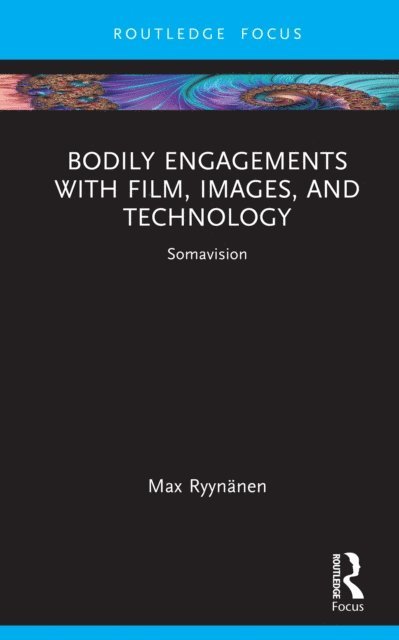
This book builds a new understanding of the body and its relationship to images and technology, using a framework where novel writings of pragmatist somaesthetics and phenomenology meet new research on bodily reactions.
Max Ryynänen gives an overview of the topic by collecting the existing information of our bodies gazing at visual culture and the philosophies supporting these phenomena, and examines the way the gaze and the body come together in our relationship to culture. Themes covered include somatic film; the body in artistic documentation of activist art; body parts (and their mutilation or surgeries) in contemporary art and film; robot cars and our visual relationship to them; the usefulness of Indian rasa philosophy in explaining digital culture; and an examination of Mario Perniola’s work about the idea that we, human beings, are increasingly experiencing ourselves to be simply "things."
The book will be of interest to scholars working in art history, aesthetics, cultural philosophy, film studies, technology studies, media studies, cultural studies, and visual studies.
353 kr
Läs direkt efter köp
This book builds a new understanding of the body and its relationship to images and technology, using a framework where novel writings of pragmatist somaesthetics and phenomenology meet new research on bodily reactions.
Max Ryynänen gives an overview of the topic by collecting the existing information of our bodies gazing at visual culture and the philosophies supporting these phenomena, and examines the way the gaze and the body come together in our relationship to culture. Themes covered include somatic film; the body in artistic documentation of activist art; body parts (and their mutilation or surgeries) in contemporary art and film; robot cars and our visual relationship to them; the usefulness of Indian rasa philosophy in explaining digital culture; and an examination of Mario Perniola’s work about the idea that we, human beings, are increasingly experiencing ourselves to be simply "things."
The book will be of interest to scholars working in art history, aesthetics, cultural philosophy, film studies, technology studies, media studies, cultural studies, and visual studies.
416 kr
Läs direkt efter köp
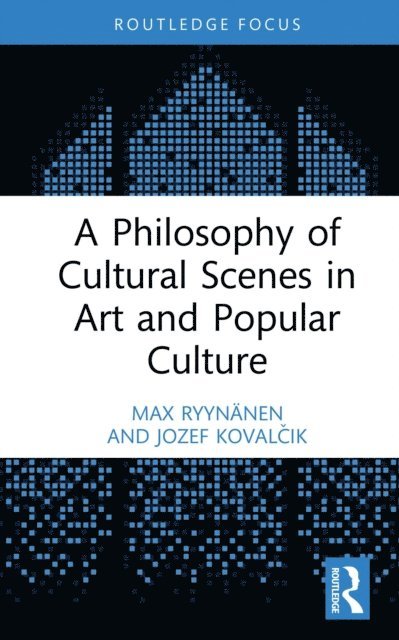
This book seeks to understand culture through the lens of scenes, analyzing them aesthetically and culturally as well as understanding them through the frameworks of gender, social networks, and artworlds.
It is common to talk about the cultural and intellectual scenes of early twentieth-century Vienna, the visual art scene of postwar New York, and the music and fashion scene of the swinging London. We often think about artists and works of art as essentially belonging to a certain scene. Scenes might offer a new approach to study what is possible, what is a tradition, and/or to discuss what are the relevant units of contemporary culture for research. The book posits that scenes explain a lot about how the artworld and the cultural field function. Vivienne Westwood, Rene Magritte, Roman Jakobson, Arthur C. Danto, Susan Sontag, James Baldwin, and Didier Eribon are among the figures included in the book, which examines scenes in cities such as Moscow, Bombay, New York, London, Paris, Brussels, Helsinki, and Bratislava.
The book will be of interest to scholars working in art history, cultural studies, philosophy, film, literature, and urban studies.
416 kr
Läs direkt efter köp
This book seeks to understand culture through the lens of scenes, analyzing them aesthetically and culturally as well as understanding them through the frameworks of gender, social networks, and artworlds.
It is common to talk about the cultural and intellectual scenes of early twentieth-century Vienna, the visual art scene of postwar New York, and the music and fashion scene of the swinging London. We often think about artists and works of art as essentially belonging to a certain scene. Scenes might offer a new approach to study what is possible, what is a tradition, and/or to discuss what are the relevant units of contemporary culture for research. The book posits that scenes explain a lot about how the artworld and the cultural field function. Vivienne Westwood, Rene Magritte, Roman Jakobson, Arthur C. Danto, Susan Sontag, James Baldwin, and Didier Eribon are among the figures included in the book, which examines scenes in cities such as Moscow, Bombay, New York, London, Paris, Brussels, Helsinki, and Bratislava.
The book will be of interest to scholars working in art history, cultural studies, philosophy, film, literature, and urban studies.