Melanie Baak – författare
Visar alla böcker från författaren Melanie Baak. Handla med fri frakt och snabb leverans.
2 produkter
2 produkter
Inbunden, Engelska, 2024
1 148 kr
Skickas inom 10-15 vardagar
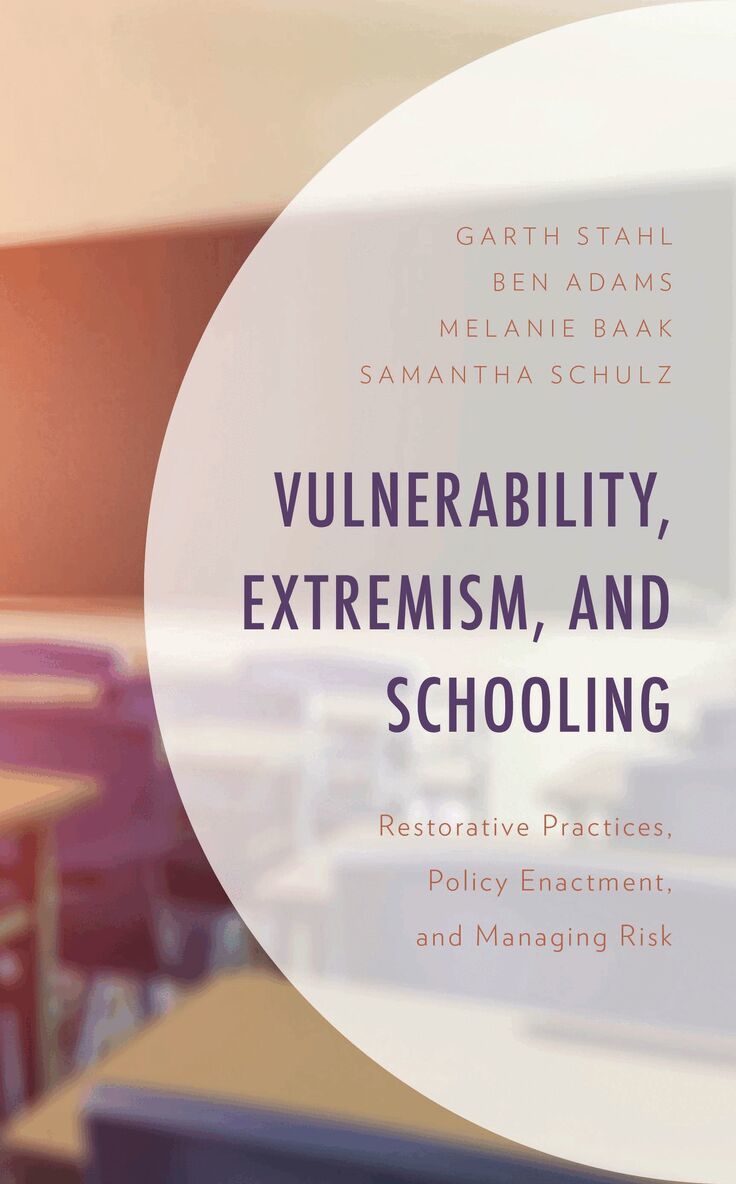
Vulnerability, Extremism, and Schooling: Restorative Practices, Policy Enactment, and Managing Risk documents and analyzes efforts by educational policymakers to combat susceptibility to extremism within disadvantaged communities. Schools worldwide are increasingly enlisted in the efforts of nation-states to prevent or counter violent extremism. However, since extremism is a notoriously complex and difficult concept to define, attempts to counter violent extremism are inevitably entangled in issues of political and social power. Through the lens of affective governance—which refers to a style of governing emphasizing the emotional and psychological needs of citizens, as well as their sense of connection and belonging to their community—this book draws attention to how policy enactment can be closely aligned with government agendas revolving around the management of risk. The authors argue that extremism is closely tied to systemic marginalization and, while efforts to combat a susceptibility to extremism are important, so is a continual critique of such efforts. This is especially true when approaches are aimed at populations who are already marginalized.
E-bok
PDF, Engelska, 2016460 kr
Läs direkt efter köp
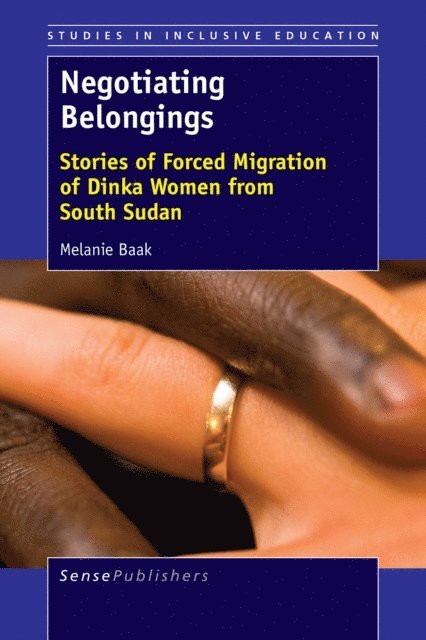
Belonging is an issue that affects us all, but for those who have been displaced, unsettled or made ‘homeless’ by the increased movements associated with the contemporary globalising era, belonging is under constant challenge. Migration throws into question not only the belongings of those who physically migrate, but also, particularly in a postcolonial context, the belongings of those who are indigenous to and ‘settlers’ in countries of migration, subsequent generations born to migrants, and those who are left behind in countries of origin. Negotiating Belongings utilises narrative, ethnographic and autoethnographic approaches to explore the negotiations for belonging for six women from Dinka communities originating in southern Sudan. It explores belonging, particularly in relation to migration, through a consideration of belonging to nation-states, ethnic groups, community, family and kin. In exploring how the journeys towards desired belongings are haunted by various social processes such as colonisation, power, ‘race’ and gender, the author argues that negotiating belonging is a continual movement between being and becoming. The research utilises and demands different ways of listening to and really hearing the narratives of the women as embedded within non-Western epistemologies and ontologies. Through this it develops an understanding of the relational ontology, cieng, that governs the ways in which the women exist in the world. The women’s narratives alongside the author’s experience within the Dinka community provide particular ways to interrogate the intersections of being and becoming on the haunted journey to belonging. The relational ontology of cieng provides an additional way of understanding belonging, becoming and being as always relational.