Melissa S Williams – författare
Visar alla böcker från författaren Melissa S Williams. Handla med fri frakt och snabb leverans.
15 produkter
Identity, Rights and Constitutional Transformation
Av Melissa S Williams, Patrick J. Hanafin
E-bok, 2018
644 kr
Lägg i varukorg
First published in 1999 , this book provides an analysis of the role of constitutional governance from an international and interdisciplinary perspective. The range of disciplines represented in the collection of papers aims to open new perspectives on topics that are frequently left to the expert …
Identity, Rights and Constitutional Transformation
Av Melissa S Williams, Patrick J. Hanafin
E-bok, 2018
644 kr
Lägg i varukorg
First published in 1999 , this book provides an analysis of the role of constitutional governance from an international and interdisciplinary perspective. The range of disciplines represented in the collection of papers aims to open new perspectives on topics that are frequently left to the expert …
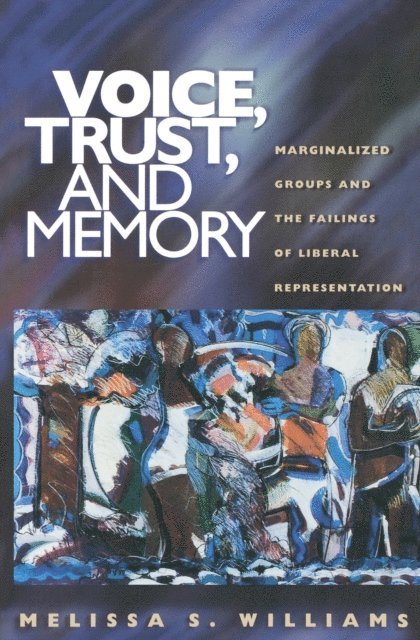
Voice, Trust, and Memory
Marginalized Groups and the Failings of Liberal Representation
Häftad, 2000
435 kr
Lägg i varukorg
Does fair political representation for historically disadvantaged groups require their presence in legislative bodies? The intuition that women are best represented by women, and African-Americans by other African-Americans, has deep historical roots. Yet the conception of fair representation that …
Transitional Justice
NOMOS LI
Av Rosemary Nagy, Melissa S. Williams m. fl.
Inbunden, 2012
894 kr
Lägg i varukorg
Criminaltribunals, truth commissions, reparations, apologies and memorializations arethe characteristic instruments in the transitional justice toolkit that can helpsocieties transition from authoritarianism to democracy, from civil war topeace, and from state-sponsored extra-legal violence to a …
Justice without Frontiers
The Political Thought of Joseph Carens
Av Kiran Banerjee, Abraham Singer m. fl.
Inbunden, 2026
2271 kr
Kommande
This book offers a wide-ranging engagement with the work of Joseph Carens, one of the world's leading political theorists of the last four decades. Carens is widely credited with launching the philosophical study of immigration and the ethics of border control through his path-breaking scholarship, …
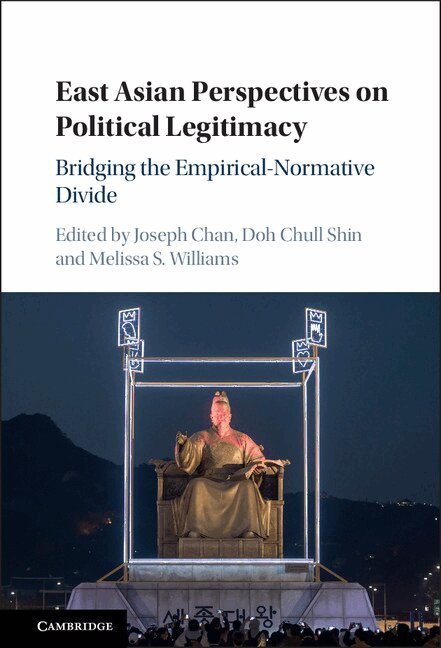
East Asian Perspectives on Political Legitimacy
Bridging the Empirical-Normative Divide
Av Joseph Chan, Doh Chull Shin m. fl.
Inbunden, 2016
1573 kr
Lägg i varukorg
What makes a government legitimate? Why do people voluntarily comply with laws, even when no one is watching? The idea of political legitimacy captures the fact that people obey when they think governments' actions accord with valid principles. For some, what matters most is the government's …
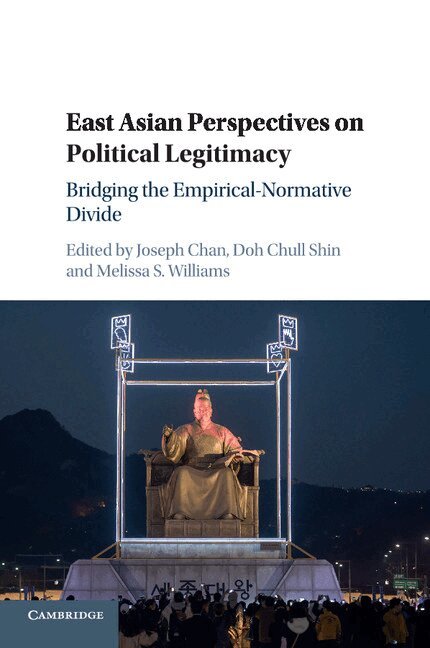
East Asian Perspectives on Political Legitimacy
Bridging the Empirical-Normative Divide
Av Joseph Chan, Doh Chull Shin m. fl.
Häftad, 2017
569 kr
Lägg i varukorg
What makes a government legitimate? Why do people voluntarily comply with laws, even when no one is watching? The idea of political legitimacy captures the fact that people obey when they think governments' actions accord with valid principles. For some, what matters most is the government's …
Deparochializing Political Theory
Inbunden, 2020
1628 kr
Lägg i varukorg
In a world no longer centered on the West, what should political theory become? Although Western intellectual traditions continue to dominate academic journals and course syllabi in political theory, up-and-coming contributions of 'comparative political theory' are rapidly transforming the field. …
Deparochializing Political Theory
E-bok, 2020
1614 kr
Lägg i varukorg
In a world no longer centered on the West, what should political theory become? Although Western intellectual traditions continue to dominate academic journals and course syllabi in political theory, up-and-coming contributions of ''comparative political theory'' are rapidly transforming the field. …
Deparochializing Political Theory
E-bok, 2020
1579 kr
Lägg i varukorg
In a world no longer centered on the West, what should political theory become? Although Western intellectual traditions continue to dominate academic journals and course syllabi in political theory, up-and-coming contributions of ''comparative political theory'' are rapidly transforming the field. …
Identity, Rights and Constitutional Transformation
Av Patrick J. Hanafin, Melissa S Williams
Inbunden, 2018
2126 kr
Lägg i varukorg
First published in 1999 , this book provides an analysis of the role of constitutional governance from an international and interdisciplinary perspective. The range of disciplines represented in the collection of papers aims to open new perspectives on topics that are frequently left to the expert …
Identity, Rights and Constitutional Transformation
Av Patrick J. Hanafin, Melissa S Williams
Häftad, 2020
559 kr
Lägg i varukorg
First published in 1999 , this book provides an analysis of the role of constitutional governance from an international and interdisciplinary perspective. The range of disciplines represented in the collection of papers aims to open new perspectives on topics that are frequently left to the expert …
Voice, Trust, and Memory
Marginalized Groups and the Failings of Liberal Representation
E-bok, 2021
586 kr
Lägg i varukorg
Does fair political representation for historically disadvantaged groups require their presence in legislative bodies? The intuition that women are best represented by women, and African-Americans by other African-Americans, has deep historical roots. Yet the conception of fair representation that …
American Conservatism
NOMOS LVI
Av Sanford V. Levinson, Melissa S. Williams m. fl.
Inbunden, 2016
758 kr
Lägg i varukorg
A collection of essays that unpacks the history, nature, development, and beliefs of American ConservatismThe topic of American conservatism is especially timely—and perhaps volatile. Is there what might be termed an "exceptional" form of conservatism that is characteristically American, in …