Meredith Rolfe – författare
Visar alla böcker från författaren Meredith Rolfe. Handla med fri frakt och snabb leverans.
5 produkter
5 produkter
E-bok
PDF, Engelska, 2025275 kr
Läs direkt efter köp
Inbunden, Engelska, 2025
742 kr
Skickas inom 7-10 vardagar
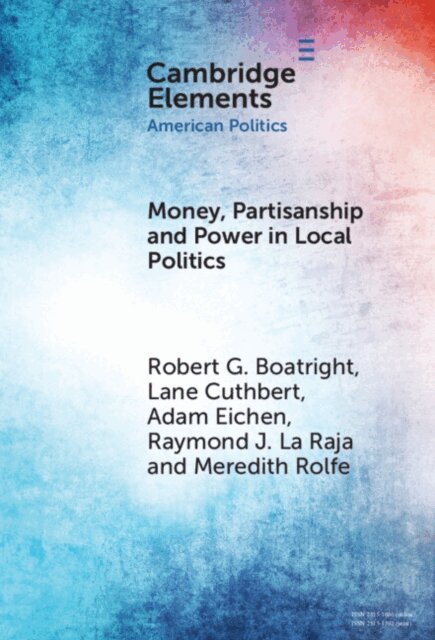
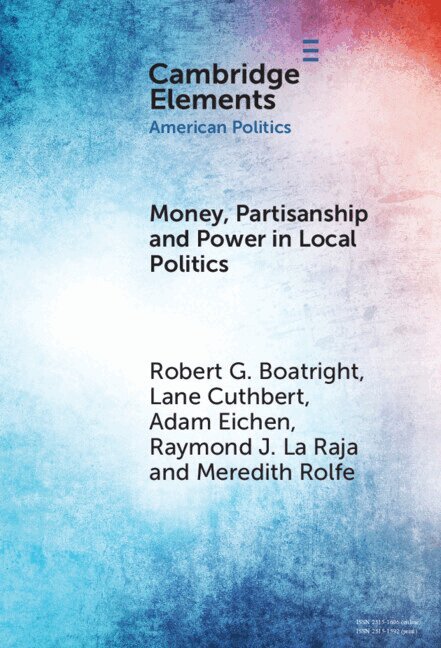
This Element presents an analysis of campaign finance in city council elections in four midsize Massachusetts cities. It shows that while money does not determine local election outcomes it plays a gatekeeping role - especially for nonincumbents. Moreover, this money comes from a very unrepresentative segment of the electorate. Although elections in these cities are nonpartisan, individual donors and interest groups are sorted into networks that function like political parties. The Element also shows that donors tend to be substantially more liberal than city residents. This can lead cities to adopt policies that are at odds with the views and needs of cities' less-wealthy inhabitants, including racial minorities. Despite low financial stakes relative to national races, campaign finance in midsize city elections reflects and reinforces broader patterns of political inequality. The result is a campaign finance system that disadvantages city residents who lack the cues that exist in other elections.
Häftad, Engelska, 2025
230 kr
Skickas inom 7-10 vardagar
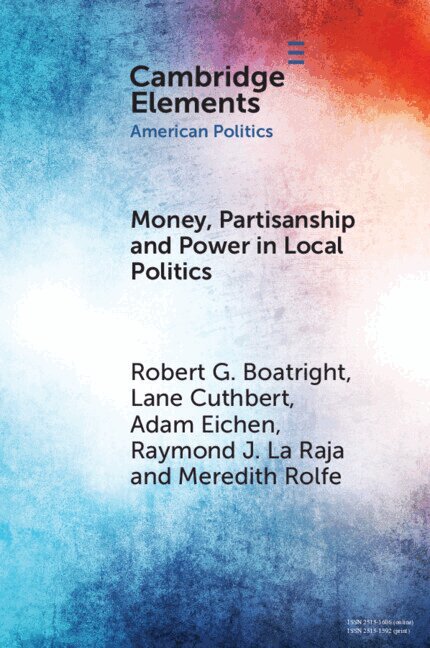
This Element presents an analysis of campaign finance in city council elections in four midsize Massachusetts cities. It shows that while money does not determine local election outcomes it plays a gatekeeping role - especially for nonincumbents. Moreover, this money comes from a very unrepresentative segment of the electorate. Although elections in these cities are nonpartisan, individual donors and interest groups are sorted into networks that function like political parties. The Element also shows that donors tend to be substantially more liberal than city residents. This can lead cities to adopt policies that are at odds with the views and needs of cities' less-wealthy inhabitants, including racial minorities. Despite low financial stakes relative to national races, campaign finance in midsize city elections reflects and reinforces broader patterns of political inequality. The result is a campaign finance system that disadvantages city residents who lack the cues that exist in other elections.
Inbunden, Engelska, 2012
1 330 kr
Skickas inom 7-10 vardagar
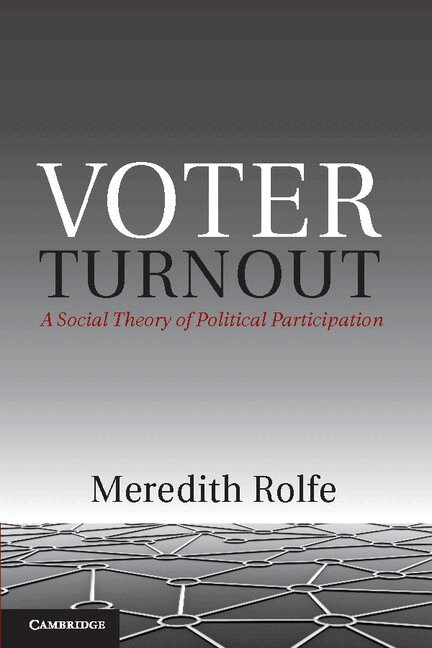
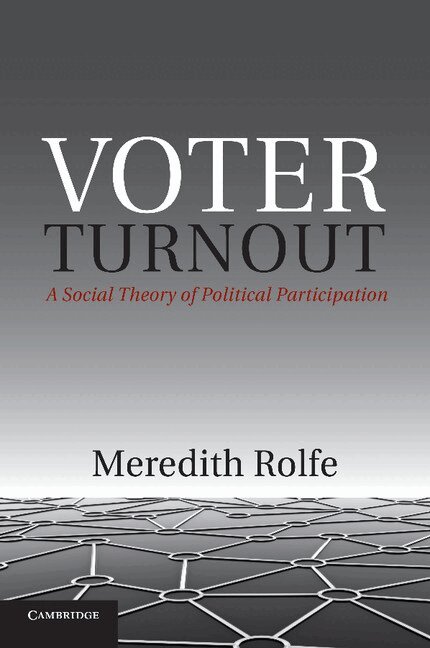
This book develops and empirically tests a social theory of political participation. It overturns prior understandings of why some people (such as college-degree holders, churchgoers and citizens in national rather than local elections) vote more often than others. The book shows that the standard demographic variables are not proxies for variation in the individual costs and benefits of participation, but for systematic variation in the patterns of social ties between potential voters. Potential voters who move in larger social circles, particularly those including politicians and other mobilizing actors, have more access to the flurry of electoral activity prodding citizens to vote and increasing political discussion. Treating voting as a socially defined practice instead of as an individual choice over personal payoffs, a social theory of participation is derived from a mathematical model with behavioral foundations that is empirically calibrated and tested using multiple methods and data sources.
Häftad, Engelska, 2013
327 kr
Skickas inom 7-10 vardagar
This book develops and empirically tests a social theory of political participation. It overturns prior understandings of why some people (such as college-degree holders, churchgoers and citizens in national rather than local elections) vote more often than others. The book shows that the standard demographic variables are not proxies for variation in the individual costs and benefits of participation, but for systematic variation in the patterns of social ties between potential voters. Potential voters who move in larger social circles, particularly those including politicians and other mobilizing actors, have more access to the flurry of electoral activity prodding citizens to vote and increasing political discussion. Treating voting as a socially defined practice instead of as an individual choice over personal payoffs, a social theory of participation is derived from a mathematical model with behavioral foundations that is empirically calibrated and tested using multiple methods and data sources.