M.G. Forrester – författare
Visar alla böcker från författaren M.G. Forrester. Handla med fri frakt och snabb leverans.
6 produkter
6 produkter
Inbunden, Engelska, 1996
1 633 kr
Skickas inom 10-15 vardagar
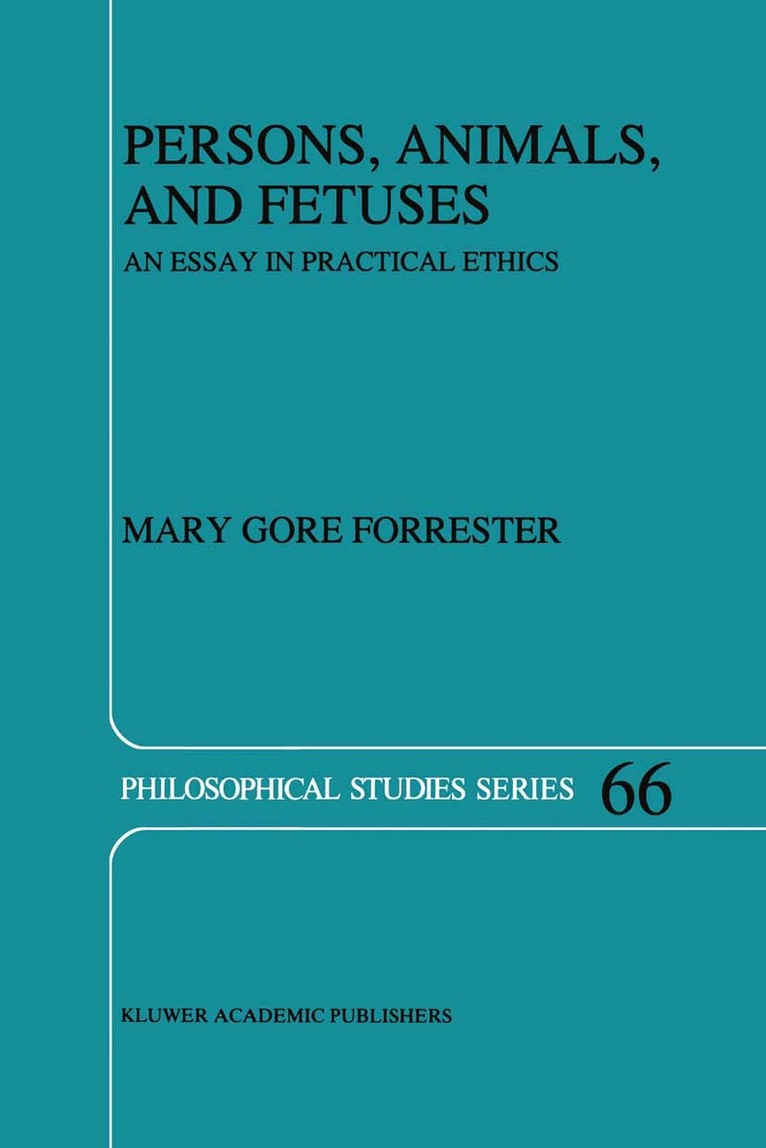
This work discusses animal rights, obligations concerning future generations, abortion, limiting medical treatment, and euthanasia. Persons are defined as individuals who ought to be treated in accordance with all sound moral principles. The author develops an account of what moral principles are sound, how we can apply them to complex situations, and what makes it reasonable to treat individuals in accordance with particular moral principles. Summaries of the theoretical conclusions are included to enable non-professionals to follow the discussion of practical issues. The book should interest not only professional philosophers, but also non-philosophers concerned with problems in medical and environmental ethics, abortion, and animal rights.
Inbunden, Engelska, 2002
1 633 kr
Skickas inom 10-15 vardagar
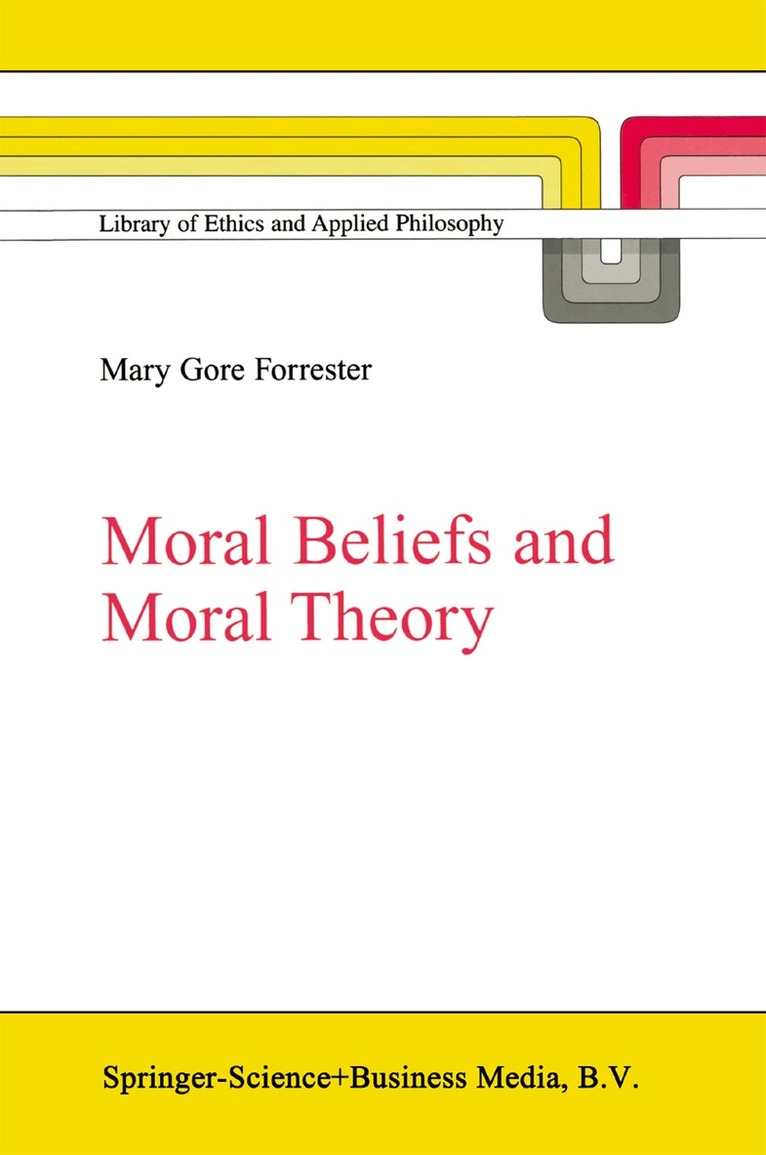
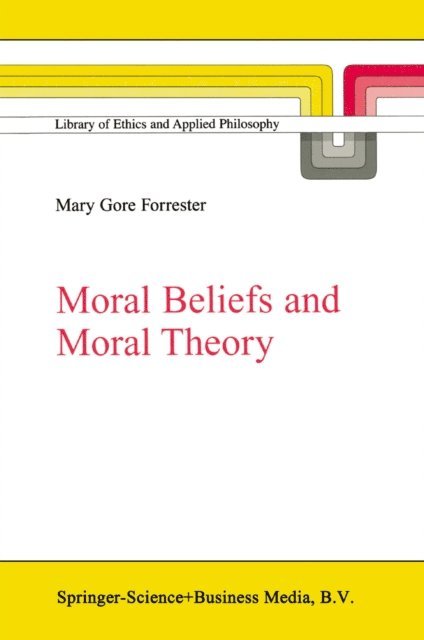
This text defends moral cognitivism with a new approach. The author maintains that the truth of moral judgments is determined in fundamentally the same way as is the truth of non-moral judgments, in other words by appeal to truth conditions which are incorporated in beliefs held in common by a wide variety of societies. She argues that if a moral theory can be developed which can account for widely held, well-established moral beliefs, this would provide a set of truth conditions for moral judgments. A theory designed to do this - and through which major moral disagreements can be resolved - is presented here, together with discussions of many actual and possible objections. The book is intended for professional philosophers and advanced students of philosophy.
Häftad, Engelska, 2010
1 633 kr
Skickas inom 10-15 vardagar
This book defends moral cognitivism with a new approach. The author maintains that the truth of moral judgments is determined in fundamentally the same way as is the truth of non-moral judgments, i.e. by appeal to truth conditions which are incorporated in beliefs held in common by a wide variety of societies. She argues that if a moral theory can be developed which can account for widely held, well-established moral beliefs, this would provide a set of truth conditions for moral judgments. A theory designed to do this - and through which major moral disagreements can be resolved - is presented here, together with discussions of many actual and possible objections. The book is intended for professional philosophers and advanced students of philosophy.
E-bok
PDF, Engelska, 20121 977 kr
Läs direkt efter köp
Forrester discusses animal rights, obligations concerning future generations, abortion, limiting medical treatment, and euthanasia. Persons are defined as individuals who ought to be treated in accordance with all sound moral principles. The author develops an account of what moral principles are sound, how we can apply them to complex situations, and what makes it reasonable to treat individuals in accordance with particular moral principles. This discussion puts the book''s practical conclusions on a sounder basis than much other work on practical ethics. Most such authors state some general principles, but say little about why these principles should be accepted. Moreover, they rarely show how general principles can generate answers to specific dilemmas. Some even maintain that general principles are irrelevant. Since Forrester is both a nurse practitioner and a philosopher, she has had direct acquaintance with many agonizing situations in medicine. Summaries of the theoretical conclusions are included to enable nonprofessionals to follow the discussion of practical issues. The book will thus interest not only professional philosophers, but also non-philosophers concerned with problems in medical and environmental ethics, abortion, and animal rights.
Del 66 - Philosophical Studies Series
Persons, Animals, and Fetuses
An Essay in Practical Ethics
Häftad, Engelska, 2011
1 633 kr
Skickas inom 10-15 vardagar
Forrester discusses animal rights, obligations concerning future generations, abortion, limiting medical treatment, and euthanasia. Persons are defined as individuals who ought to be treated in accordance with all sound moral principles. The author develops an account of what moral principles are sound, how we can apply them to complex situations, and what makes it reasonable to treat individuals in accordance with particular moral principles. This discussion puts the book's practical conclusions on a sounder basis than much other work on practical ethics. Most such authors state some general principles, but say little about why these principles should be accepted. Moreover, they rarely show how general principles can generate answers to specific dilemmas. Some even maintain that general principles are irrelevant. Since Forrester is both a nurse practitioner and a philosopher, she has had direct acquaintance with many agonizing situations in medicine. Summaries of the theoretical conclusions are included to enable nonprofessionals to follow the discussion of practical issues. The book will thus interest not only professional philosophers, but also non-philosophers concerned with problems in medical and environmental ethics, abortion, and animal rights.
E-bok
PDF, Engelska, 20131 977 kr
Läs direkt efter köp
Some time ago I wrote a book (Moral Language, 1982) in which I argued that moral judgments are capable of being true (''truth-apt,'' to use a current phrase, or descriptive and having truth-value, to use a more traditional term), that the methods of discovering moral facts are fundamentally similar to those of discovering non-moral facts, and that moral judgments may be true. What I did not do at that time was to develop a moral theory which would demonstrate how the method of discovering moral truths would work and what the criteria of truth actually are. In a later work (Persons, Animals, and Fetuses, 1996) I did propose a moral theory as to what the criteria for moral truth are; however, I presented it primarily as an introduction to the discussion of several practical ethical issues and did not argue fully for that theory. It is high time that I did so, because without showing that such a theory can be developed my defense of moral realism is incomplete. It is all very well to say that we can discover what moral beliefs are true, but unless we can demonstrate just which beliefs are true, the thesis that we can discover this truth cannot be fully defended. For this reason the biggest (although not the only) challenge to showing that ethical objectivity is possible is the presence of moral disagreement - and the contention of many that such disagreement cannot be definitively resolved.