Michael C. Desch - Böcker
Visar alla böcker från författaren Michael C. Desch. Handla med fri frakt och snabb leverans.
8 produkter
8 produkter
593 kr
Skickas inom 10-15 vardagar
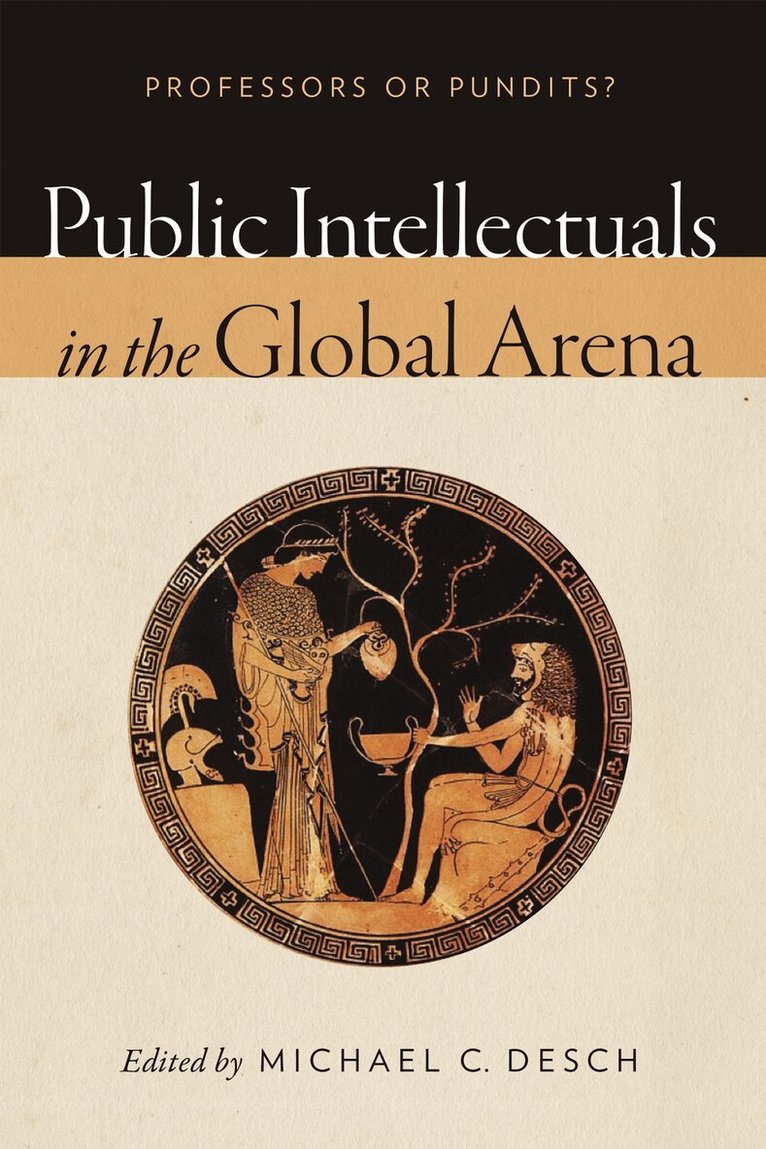
What is a public intellectual? Where are they to be found? What accounts for the lament today that public intellectuals are either few in number or, worse, irrelevant? While there is a small literature on the role of public intellectuals, it is organized around various thinkers rather than focusing on different countries or the unique opportunities and challenges inherent in varied disciplines or professions. In Public Intellectuals in the Global Arena, Michael C. Desch has gathered a group of contributors to offer a timely and far-reaching reassessment of the role of public intellectuals in a variety of Western and non-Western settings. The contributors delineate the centrality of historical consciousness, philosophical self-understanding, and ethical imperatives for any intelligentsia who presume to speak the truth to power. The first section provides in-depth studies of the role of public intellectuals in a variety of countries or regions, including the United States, Latin America, China, and the Islamic world. The essays in the second section take up the question of why public intellectuals vary so widely across different disciplines. These chapters chronicle changes in the disciplines of philosophy and economics, changes that "have combined to dethrone the former and elevate the latter as the preeminent homes of public intellectuals in the academy." Also included are chapters that consider the evolving roles of the natural scientist, the former diplomat, and the blogger as public intellectuals. The final section provides concluding perspectives about the duties of public intellectuals in the twenty-first century.
Cult of the Irrelevant
The Waning Influence of Social Science on National Security
Inbunden, Engelska, 2019
337 kr
Skickas inom 7-10 vardagar
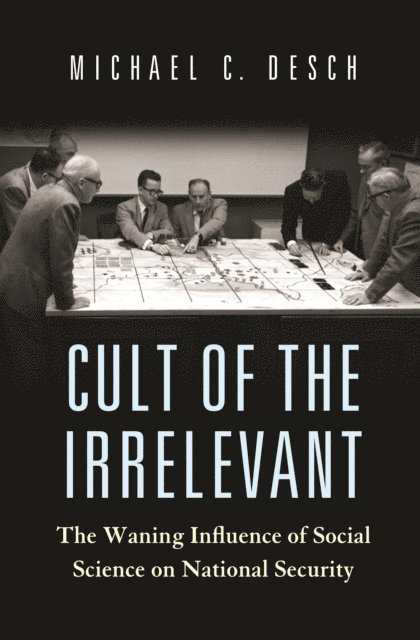
How professionalization and scholarly “rigor” made social scientists increasingly irrelevant to US national security policyTo mobilize America’s intellectual resources to meet the security challenges of the post–9/11 world, US Secretary of Defense Robert M. Gates observed that “we must again embrace eggheads and ideas.” But the gap between national security policymakers and international relations scholars has become a chasm.In Cult of the Irrelevant, Michael Desch traces the history of the relationship between the Beltway and the Ivory Tower from World War I to the present day. Recounting key Golden Age academic strategists such as Thomas Schelling and Walt Rostow, Desch’s narrative shows that social science research became most oriented toward practical problem-solving during times of war and that scholars returned to less relevant work during peacetime. Social science disciplines like political science rewarded work that was methodologically sophisticated over scholarship that engaged with the messy realities of national security policy, and academic culture increasingly turned away from the job of solving real-world problems.In the name of scientific objectivity, academics today frequently engage only in basic research that they hope will somehow trickle down to policymakers. Drawing on the lessons of this history as well as a unique survey of current and former national security policymakers, Desch offers concrete recommendations for scholars who want to shape government work. The result is a rich intellectual history and an essential wake-up call to a field that has lost its way.
Cult of the Irrelevant
The Waning Influence of Social Science on National Security
Häftad, Engelska, 2021
227 kr
Skickas inom 7-10 vardagar
How professionalization and scholarly “rigor” made social scientists increasingly irrelevant to US national security policyTo mobilize America’s intellectual resources to meet the security challenges of the post–9/11 world, US Secretary of Defense Robert M. Gates observed that “we must again embrace eggheads and ideas.” But the gap between national security policymakers and international relations scholars has become a chasm.In Cult of the Irrelevant, Michael Desch traces the history of the relationship between the Beltway and the Ivory Tower from World War I to the present day. Recounting key Golden Age academic strategists such as Thomas Schelling and Walt Rostow, Desch’s narrative shows that social science research became most oriented toward practical problem-solving during times of war and that scholars returned to less relevant work during peacetime. Social science disciplines like political science rewarded work that was methodologically sophisticated over scholarship that engaged with the messy realities of national security policy, and academic culture increasingly turned away from the job of solving real-world problems.In the name of scientific objectivity, academics today frequently engage only in basic research that they hope will somehow trickle down to policymakers. Drawing on the lessons of this history as well as a unique survey of current and former national security policymakers, Desch offers concrete recommendations for scholars who want to shape government work. The result is a rich intellectual history and an essential wake-up call to a field that has lost its way.
480 kr
Tillfälligt slut
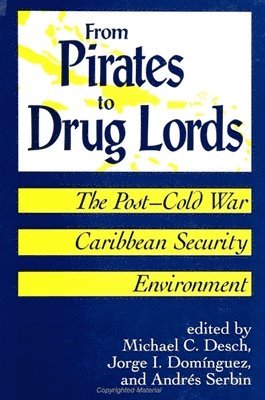
Examines Caribbean countries' impact on the U. S. and the world and how they have consolidated their democracies, advanced prosperity, and maintained peace through collective security and international cooperation.U.S. Marines in Haiti. Pirates or drug traffickers penetrating the southern border of the United States. Special economic arrangements that foster growth for some and hardship for others. These headlines about the Caribbean's international relations and its impact on the United States could date from both the beginning and the end of the twentieth century. Troubled as it is, the Caribbean nonetheless features important accomplishments that will benefit the United States in the long term. This book examines the crucial and timeless impact Caribbean countries have on the United States and the world, and the methods they have been employing to consolidate their democracies, advance prosperity, and maintain the peace through international cooperation among themselves. Its primary aim is to discuss the dominant threat perceptions and security priorities of regional governments, the varied mechanisms in place to promote regional collective action, and the future agenda of U.S. foreign policy toward the Caribbean. Rooted in an historical analysis of continuity and change in the Caribbean's international subsystem, the book analyzes the Caribbean within a broader international pattern, marking a tension in world affairs between the global and the local. In addition, it explores the challenges to governments and peoples in the region posed by changes in its political economy.
274 kr
Tillfälligt slut
The end of the Cold War brought widespread optimism about the future of civil-military relations. But as Michael Desch argues in this thought-provoking challenge to Harold Lasswell's famous "garrison state" thesis, the truth is that civilian authorities have not been able to exert greater control over military policies and decision making. In wartime, civil authorities cannot help but pay close attention to military matters. In times of peace, however, civilian leaders are less interested in military affairs-and therefore often surrender them to the military. Focusing on a wide range of times and places, Desch begins with a look at changes in U.S. civil-military relations since the end of the Cold War. He then turns to the former Soviet Union, explaining why it was easier for civilians to control the Soviet military than its present-day Russian successor. He examines the Hindenburg-Ludendorff dictatorship in World War I Germany, Japan during the interwar era, and France's role in the Algerian crisis. Finally, he explores the changing domestic security environment and civil-military relations in South America.
541 kr
Skickas inom 7-10 vardagar
Since 1815 democratic states have emerged victorious from most wars, leading many scholars to conclude that democracies are better equipped to triumph in armed conflict with autocratic and other non-representative governments. Political scientist Michael C. Desch argues that the evidence and logic of that supposition, which he terms "democratic triumphalism," are as flawed as the arguments for the long-held and opposite belief that democracies are inherently disadvantaged in international relations. Through comprehensive statistical analysis, a thorough review of two millennia of international relations thought, and in-depth case studies of modern-era military conflicts, Desch finds that the problems that persist in prosecuting wars-from building up and maintaining public support to holding the military and foreign policy elites in check-remain constant regardless of any given state's form of government. In assessing the record, he finds that military effectiveness is almost wholly reliant on the material assets that a state possesses and is able to mobilize.Power and Military Effectiveness is an instructive reassessment of the increasingly popular belief that military success is one of democracy's many virtues. International relations scholars, policy makers, and military minds will be well served by its lessons.
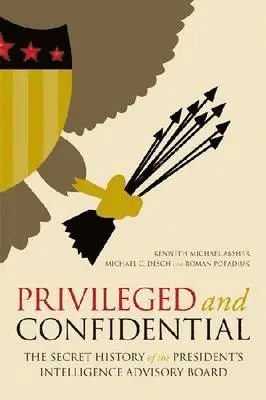
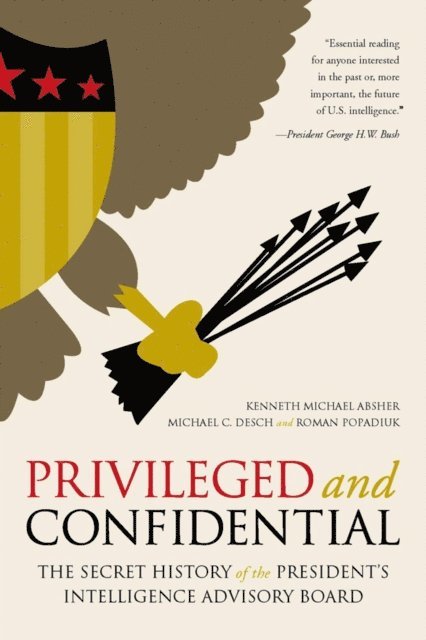
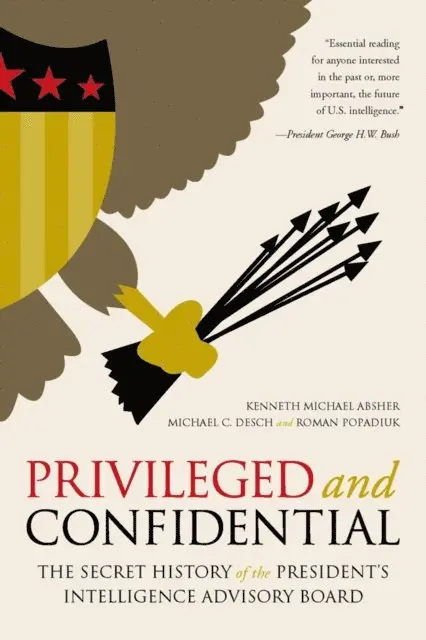
Privileged and Confidential
The Secret History of the President's Intelligence Advisory Board
Inbunden, Engelska, 2012
675 kr
Skickas inom 3-6 vardagar
Above the politics and ideological battles of Washington, D.C., is a committee that meets behind locked doors and leaves its paper trail in classified files. The President's Intelligence Advisory Board (PIAB) is one of the most secretive and potentially influential segments of the U.S. intelligence community. Established in 1956, the PIAB advises the president about intelligence collection, analysis, and estimates, and about the legality of foreign intelligence activities. Privileged and Confidential: The Secret History of the President's Intelligence Advisory Board is the first and only study of the PIAB. Foreign policy veterans Kenneth Michael Absher, Michael C. Desch, and Roman Popadiuk trace the board's history from Eisenhower through Obama and evaluate its effectiveness under each president. Created to be an independent panel of nonpartisan experts, the PIAB has become increasingly susceptible to politics in recent years and has lost some of its influence. Absher, Desch, and Popadiuk, however, clearly demonstrate the board's potential to offer a unique and valuable perspective on intelligence issues. Privileged and Confidential not only illuminates a little-known element of U.S. intelligence operations but also offers suggestions for enhancing a critical executive function.
194 kr
Skickas inom 5-8 vardagar