Michael D. Green – författare
Visar alla böcker från författaren Michael D. Green. Handla med fri frakt och snabb leverans.
15 produkter
North American Indians
A Very Short Introduction
Av Theda Perdue, Michael D. Green
Häftad, 2010
116 kr
Lägg i varukorg
When Europeans first arrived in North America, between five and eight million indigenous people were already living there. But how did they come to be here? What were their agricultural, spiritual, and hunting practices? How did their societies evolve and what challenges do they face today? Eminent …
North American Indians
A Very Short Introduction
Av Michael D. Green, Theda Perdue
E-bok, 2010
95 kr
Lägg i varukorg
When Europeans first arrived in North America, between five and eight million indigenous people were already living there. But how did they come to be here? What were their agricultural, spiritual, and hunting practices? How did their societies evolve and what challenges do they face today? Eminent …
North American Indians
A Very Short Introduction
Av Michael D. Green, Theda Perdue
E-bok, 2010
95 kr
Lägg i varukorg
When Europeans first arrived in North America, between five and eight million indigenous people were already living there. But how did they come to be here? What were their agricultural, spiritual, and hunting practices? How did their societies evolve and what challenges do they face today? Eminent …
Columbia Guide to American Indians of the Southeast
Av Theda Perdue, Michael D Green
E-bok, 2005
464 kr
Lägg i varukorg
Though they speak several different languages and organize themselves into many distinct tribes, the Native American peoples of the Southeast share a complex ancient culture and a tumultuous history. This volume examines and synthesizes their history through each of its integral phases: the complex …
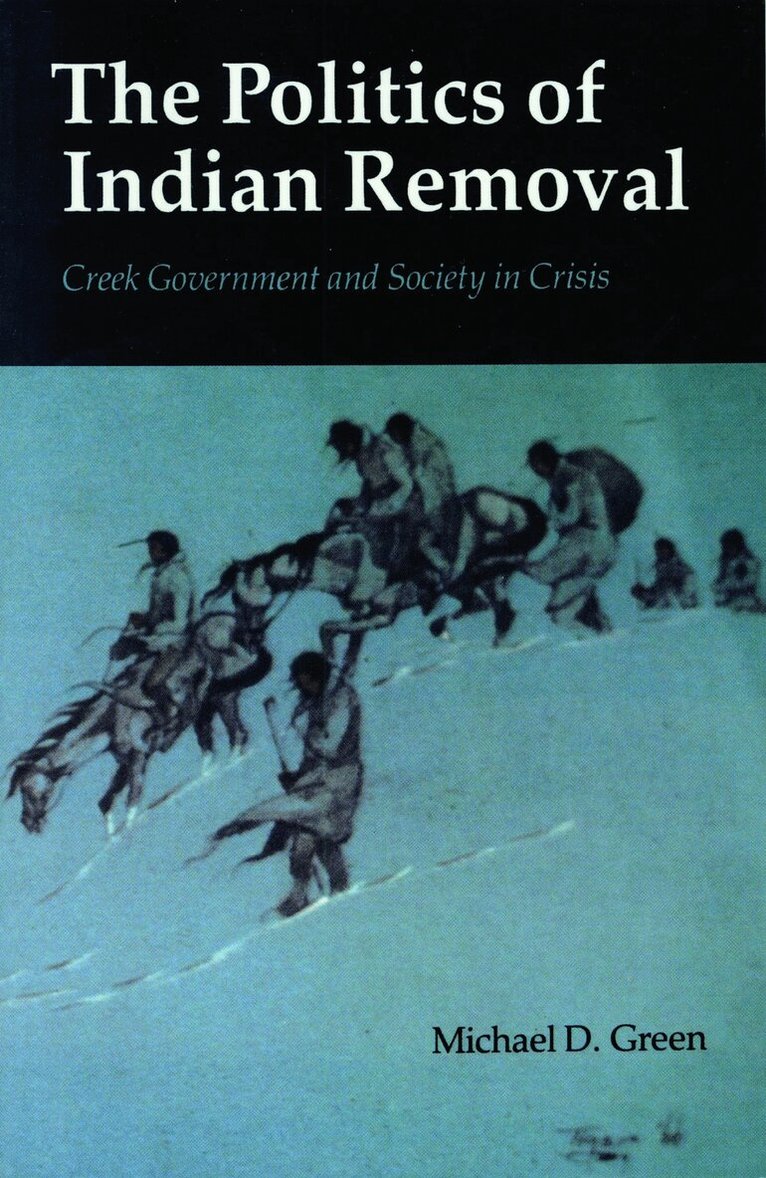
Politics of Indian Removal
Creek Government and Society in Crisis
Häftad, 1985
276 kr
Lägg i varukorg
In the two decades after their defeat by the United States in the Creek War in 1814, the Creek Indians of Georgia and Alabama came under increasing—ultimately irresistible—pressure from state and federal governments to abandon their homeland and retreat westward. That historic move came in 1836. …
Bendectin and Birth Defects
The Challenges of Mass Toxic Substances Litigation
Häftad, 1998
411 kr
Lägg i varukorg
Benedictin was prescribed to more than thirty-five million American women from its introduction in 1956 until 1983, when it was withdrawn from the market. The drug's manufacturer, Merrill Dow Pharmaceuticals, a major U.S. pharmaceutical firm, joined a list of other companies whose product …
Cherokee Nation and the Trail of Tears
Av Michael D. Green, Theda Perdue m. fl.
E-bok, 2007
131 kr
Lägg i varukorg
Today, a fraction of the Cherokee people remains in their traditional homeland in the southern Appalachians. Most Cherokees were forcibly relocated to eastern Oklahoma in the early nineteenth century. In 1830 the U.S. government shifted its policy from one of trying to assimilate American Indians …
Bendectin and Birth Defects
The Challenges of Mass Toxic Substances Litigation
E-bok, 2016
510 kr
Lägg i varukorg
Benedictin was prescribed to more than thirty-five million American women from its introduction in 1956 until 1983, when it was withdrawn from the market. The drug''s manufacturer, Merrill Dow Pharmaceuticals, a major U.S. pharmaceutical firm, joined a list of other companies whose product …
Proportional Liability: Analytical and Comparative Perspectives
Av Israel Gilead, Michael D. Green m. fl.
Inbunden, 2013
1630 kr
Lägg i varukorg
Causal uncertainty is a wide-spread phenomenon. Courts are often unable to determine whether a defendant’s tortious conduct was a factual cause of a plaintiff’s harm. Yet, sometimes courts can determine the probability that the defendant caused the plaintiff’s harm, although often there is …
Proportional Liability: Analytical and Comparative Perspectives
Av Bernhard A. Koch, Michael D. Green m. fl.
E-bok, 2013
1430 kr
Lägg i varukorg
Causal uncertainty is a wide-spread phenomenon. Courts are often unable to determine whether a defendant’s tortious conduct was a factual cause of a plaintiff’s harm. Yet, sometimes courts can determine the probability that the defendant caused the plaintiff’s harm, although often there is …
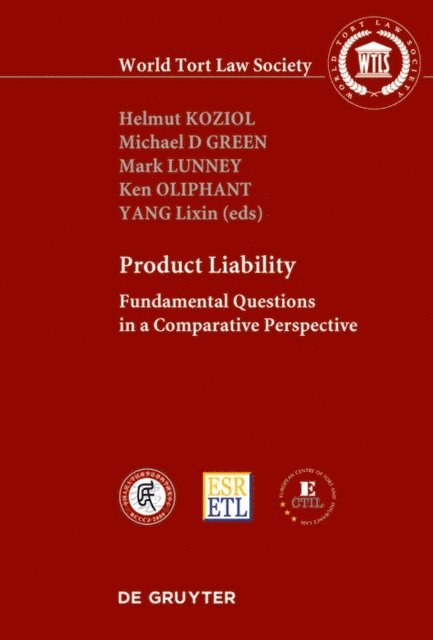
PRODUCT LIABILITY
Fundamental Questions in a Comparative Perspective
Av Lixin Yang, Ken Oliphant m. fl.
E-bok, 2017
1791 kr
Lägg i varukorg
Where products develop ever more rapidly, the law may face difficulties in responding accordingly to new security threats which may arise. In the field of product liability, an extraordinary need for legal development has thus been perceived, with legislators and judges feeling compelled to find …
PRODUCT LIABILITY
Fundamental Questions in a Comparative Perspective
Av Helmut Koziol, Michael D. Green m. fl.
Inbunden, 2017
2040 kr
Lägg i varukorg
Where products develop ever more rapidly, the law may face difficulties in responding accordingly to new security threats which may arise. In the field of product liability, an extraordinary need for legal development has thus been perceived, with legislators and judges feeling compelled to find …
PRODUCT LIABILITY
Fundamental Questions in a Comparative Perspective
Av Lixin Yang, Ken Oliphant m. fl.
E-bok, 2017
1791 kr
Lägg i varukorg
Where products develop ever more rapidly, the law may face difficulties in responding accordingly to new security threats which may arise. In the field of product liability, an extraordinary need for legal development has thus been perceived, with legislators and judges feeling compelled to find …
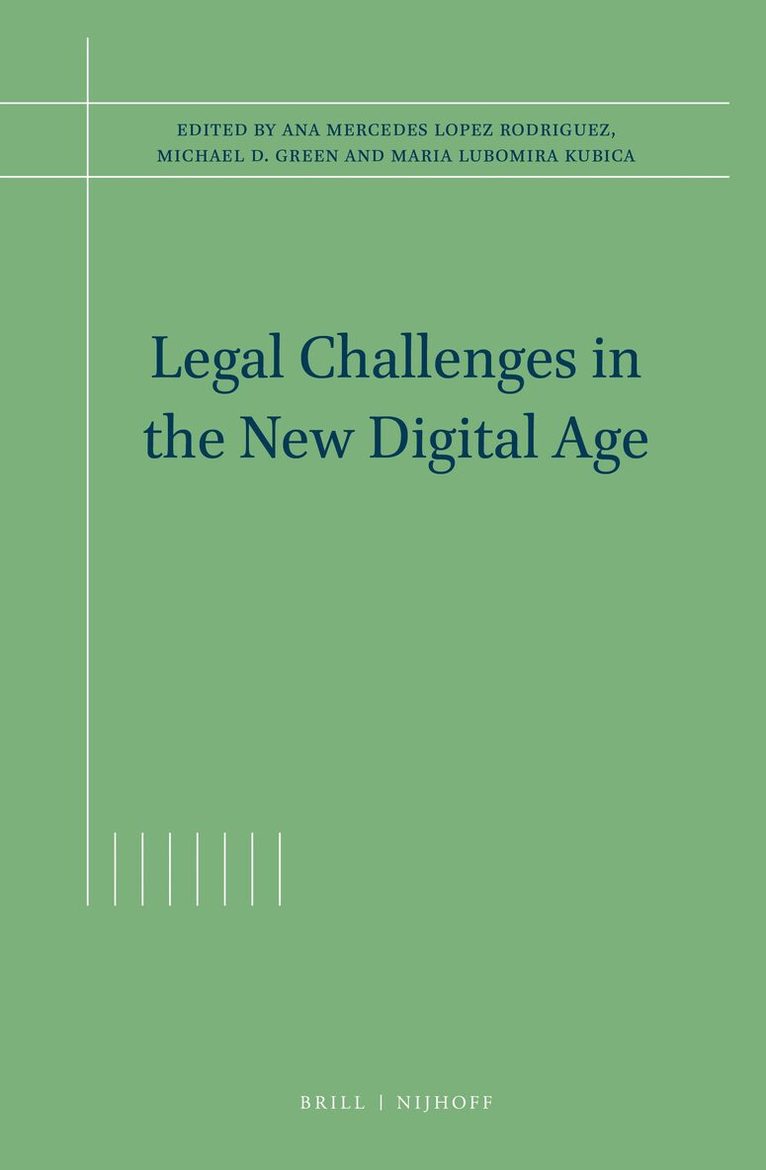
Legal Challenges in the New Digital Age
Av Ana Mercedes Lopez Rodriguez, Michael D. Green m. fl.
Inbunden, 2021
2712 kr
Lägg i varukorg
Legal Challenges in the New Digital Age addresses a wide range of legal issues related to emerging technologies. These technologies pose prominent legal challenges, in particular, how to wedge new phenomena into old frameworks; whether we can and should delegate responsibilities to technologies and …
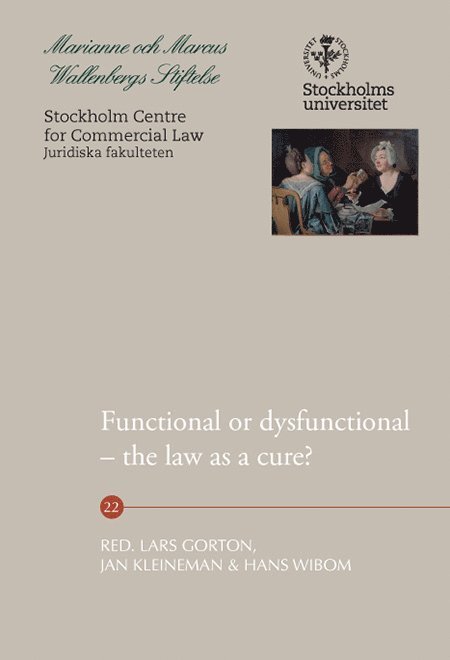
Functional or dysfunctional : the law as a cure?
Av Jr. Coffee, Rowan Russell m. fl.
Häftad, 2014
426 kr
Lägg i varukorg
On August 29–30 2014 the Marianne and Marcus Wallenberg Foundation in co-operation with the Stockholm Centre for Commercial Law arranged an International legal symposium under the heading “Functional or dysfunctional – the law as a cure? Risks and liability in the financial markets”. The symposium …