
Michael E. Coltrin – författare
2 473 kr
Läs direkt efter köp
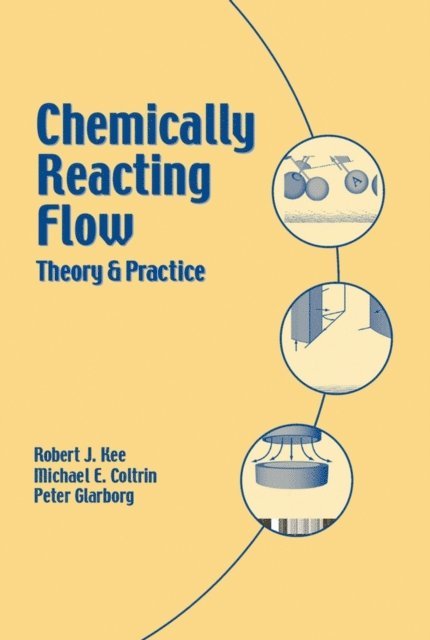
The first several chapters introduce transport processes, primarily from a fluid-mechanics point of view, incorporating computational simulation from the outset. The middle section targets physical chemistry topics that are required to develop chemically reacting flow simulations, such as chemical thermodynamics, molecular transport, chemical rate theories, and reaction mechanisms. The final chapters deal with complex chemically reacting flow simulations, emphasizing combustion and materials processing. Among other features, Chemically Reacting Flow: Theory and Practice:
-Advances a comprehensive approach to interweaving the fundamentals of chemical kinetics and fluid mechanics -Embraces computational simulation, equipping the reader with effective, practical tools for solving real-world problems -Emphasizes physical fundamentals, enabling the analyst to understand how reacting flow simulations achieve their results -Provides a valuable resource for scientists and engineers who use Chemkin or similar software
Computer simulation of reactive systems is highly effective in the development, enhancement, and optimization of chemical processes. Chemically Reacting Flow helps prepare both students and professionals to take practical advantage of this powerful capability.
2 337 kr
Skickas inom 5-8 vardagar
2 641 kr
Läs direkt efter köp
A guide to the theoretical underpinnings and practical applications of chemically reacting flow
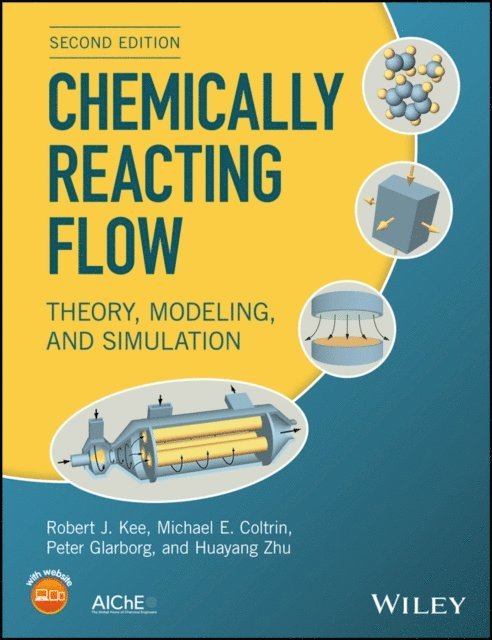
Chemically Reacting Flow: Theory, Modeling, and Simulation, Second Edition combines fundamental concepts in fluid mechanics and physical chemistry while helping students and professionals to develop the analytical and simulation skills needed to solve real-world engineering problems. The authors clearly explain the theoretical and computational building blocks enabling readers to extend the approaches described to related or entirely new applications. New to this Second Edition are substantially revised and reorganized coverage of topics treated in the first edition. New material in the book includes two important areas of active research: reactive porous-media flows and electrochemical kinetics. These topics create bridges between traditional fluid-flow simulation approaches and transport within porous-media electrochemical systems.
The first half of the book is devoted to multicomponent fluid-mechanical fundamentals. In the second half the authors provide the necessary fundamental background needed to couple reaction chemistry into complex reacting-flow models. Coverage of such topics is presented in self-contained chapters, allowing a great deal of flexibility in course curriculum design.
• Features new chapters on reactive porous-media flow, electrochemistry, chemical thermodynamics, transport properties, and solving differential equations in MATLAB
• Provides the theoretical underpinnings and practical applications of chemically reacting flow
• Emphasizes fundamentals, allowing the analyst to understand fundamental theory underlying reacting-flow simulations
• Helps readers to acquire greater facility in the derivation and solution of conservation equations in new or unusual circumstances
• Reorganized to facilitate use as a class text and now including a solutions manual for academic adopters
Computer simulation of reactive systems is highly efficient and cost-effective in the development, enhancement, and optimization of chemical processes. Chemically Reacting Flow: Theory, Modeling, and Simulation, Second Edition helps prepare graduate students in mechanical or chemical engineering, as well as research professionals in those fields take utmost advantage of that powerful capability.
2 641 kr
Läs direkt efter köp
A guide to the theoretical underpinnings and practical applications of chemically reacting flow
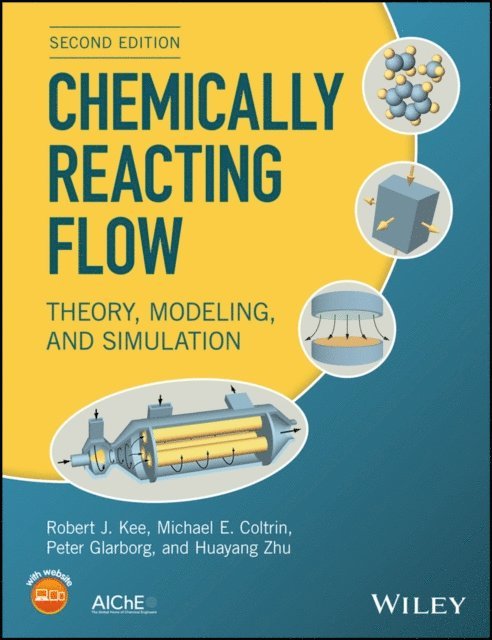
Chemically Reacting Flow: Theory, Modeling, and Simulation, Second Edition combines fundamental concepts in fluid mechanics and physical chemistry while helping students and professionals to develop the analytical and simulation skills needed to solve real-world engineering problems. The authors clearly explain the theoretical and computational building blocks enabling readers to extend the approaches described to related or entirely new applications. New to this Second Edition are substantially revised and reorganized coverage of topics treated in the first edition. New material in the book includes two important areas of active research: reactive porous-media flows and electrochemical kinetics. These topics create bridges between traditional fluid-flow simulation approaches and transport within porous-media electrochemical systems.
The first half of the book is devoted to multicomponent fluid-mechanical fundamentals. In the second half the authors provide the necessary fundamental background needed to couple reaction chemistry into complex reacting-flow models. Coverage of such topics is presented in self-contained chapters, allowing a great deal of flexibility in course curriculum design.
• Features new chapters on reactive porous-media flow, electrochemistry, chemical thermodynamics, transport properties, and solving differential equations in MATLAB
• Provides the theoretical underpinnings and practical applications of chemically reacting flow
• Emphasizes fundamentals, allowing the analyst to understand fundamental theory underlying reacting-flow simulations
• Helps readers to acquire greater facility in the derivation and solution of conservation equations in new or unusual circumstances
• Reorganized to facilitate use as a class text and now including a solutions manual for academic adopters
Computer simulation of reactive systems is highly efficient and cost-effective in the development, enhancement, and optimization of chemical processes. Chemically Reacting Flow: Theory, Modeling, and Simulation, Second Edition helps prepare graduate students in mechanical or chemical engineering, as well as research professionals in those fields take utmost advantage of that powerful capability.