
Michael G. Levine – författare
Visar alla böcker från författaren Michael G. Levine. Handla med fri frakt och snabb leverans.
6 produkter
6 produkter
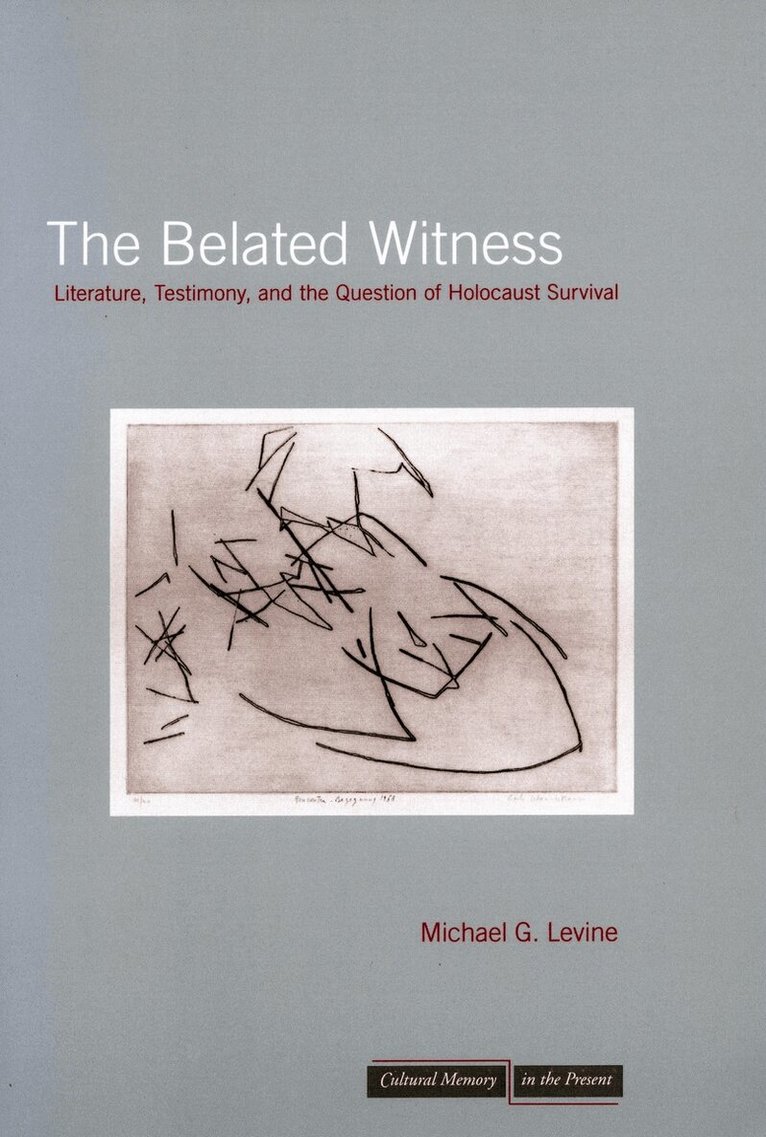
Inbunden, Engelska, 2006
1 416 kr
Skickas inom 10-15 vardagar
The Belated Witness stakes out an original place within the field of recent work on the theory and practice of literary writing after the Holocaust. Drawing in productive and unsettling ways from converging work in history, philosophy, psychoanalysis, and literature, the book asks how the events of the Holocaust force us to alter traditional conceptions about human experience, as well as the way we can now talk and write about such experiences. Rather than providing a mere account of an outside or inside reality, literature after the Holocaust sets itself a more radical task: it testifies to unspeakable experiences in a specific mode of address, a call or summons to another in whose sole power resides the possibility of a future response to such testimonies of world-historical trauma.
Häftad, Engelska, 2006
339 kr
Skickas inom 5-8 vardagar
The Belated Witness stakes out an original place within the field of recent work on the theory and practice of literary writing after the Holocaust. Drawing in productive and unsettling ways from converging work in history, philosophy, psychoanalysis, and literature, the book asks how the events of the Holocaust force us to alter traditional conceptions about human experience, as well as the way we can now talk and write about such experiences. Rather than providing a mere account of an outside or inside reality, literature after the Holocaust sets itself a more radical task: it testifies to unspeakable experiences in a specific mode of address, a call or summons to another in whose sole power resides the possibility of a future response to such testimonies of world-historical trauma.
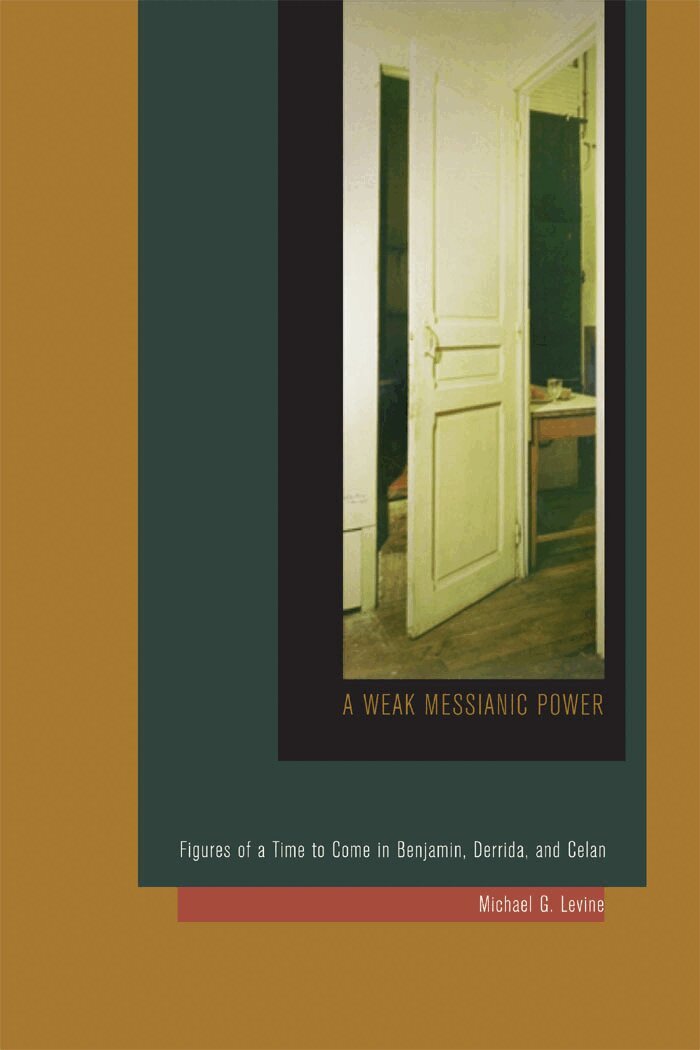
Inbunden, Engelska, 2013
1 342 kr
Skickas inom 10-15 vardagar
In his famous theses on the philosophy of history, Benjamin writes: "We have been endowed with a weak messianic power to which the past has a claim." This claim addresses us not just from the past but from what will have belonged to it only as a missed possibility and unrealized potential. For Benajmin, as for Celan and Derrida, what has never been actualized remains with us, not as a lingering echo but as a secretly insistent appeal. Because such appeals do not pass through normal channels of communication, they require a special attunement, perhaps even a mode of unconscious receptivity. Levine examines the ways in which this attunement is cultivated in Benjamin's philosophical, autobiographical, and photohistorical writings; Celan's poetry and poetological addresses; and Derrida's writings on Celan.
Häftad, Engelska, 2013
396 kr
Skickas inom 10-15 vardagar
In his famous theses on the philosophy of history, Benjamin writes: "We have been endowed with a weak messianic power to which the past has a claim." This claim addresses us not just from the past but from what will have belonged to it only as a missed possibility and unrealized potential. For Benajmin, as for Celan and Derrida, what has never been actualized remains with us, not as a lingering echo but as a secretly insistent appeal. Because such appeals do not pass through normal channels of communication, they require a special attunement, perhaps even a mode of unconscious receptivity. Levine examines the ways in which this attunement is cultivated in Benjamin's philosophical, autobiographical, and photohistorical writings; Celan's poetry and poetological addresses; and Derrida's writings on Celan.
274 kr
Skickas inom 3-6 vardagar
E-bok
Spanska, 202496 kr
Läs direkt efter köp
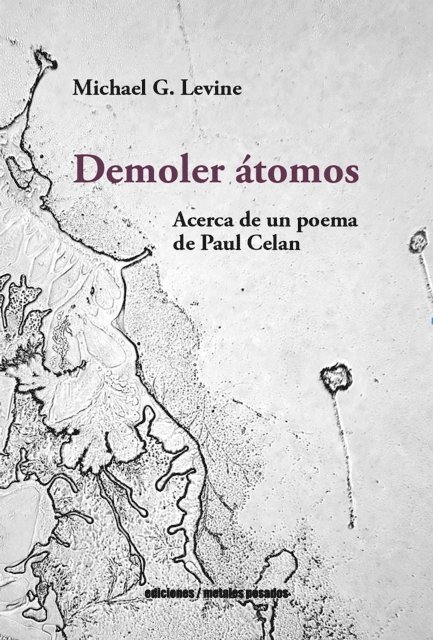
Así como la flor es quizá la unidad poética más privilegiada en la poesía dePaul Celan para hablar sobre el comportamiento de la lengua, la donación delnombrar a un otro, el designar e inclusive el desplazar y el desfigurar, Demolerátomos se concentra en las unidades gramatológicas más singulares paraacusar las relaciones lingüísticas inauditas que rodean el quiebre semántico dela palabra. Haciendo suya la imagen con la que Walter Benjamin entiende supropio método a la hora de liberar las fuerzas colosales de la historia quesubyacen en lo más irreductible, Michael G. Levine propone una lectura de «Lasílaba dolor» de Celan para instalar la pregunta no tanto por cómo el dolorhabría de expresarse, sino sobre todo por cómo habita la lengua e incide en ladescomposición de los elementos lingüísticos: la separación de las palabras,las líneas e incluso de las letras mismas. ¿Habría algo así como un dolorpropio del desgarro lingüístico? Levine expone a lo largo de estas páginas quela puesta en libertad de las fuerzas poéticas por medio del método dedemolición muestra un dolor mudo que marca la diferencia de sí y en esemarcar posibilita una topología y una temporalidad inauditas de la flor/sintiempo