Michael Giersig - Böcker
Visar alla böcker från författaren Michael Giersig. Handla med fri frakt och snabb leverans.
4 produkter
4 produkter
536 kr
Skickas inom 10-15 vardagar
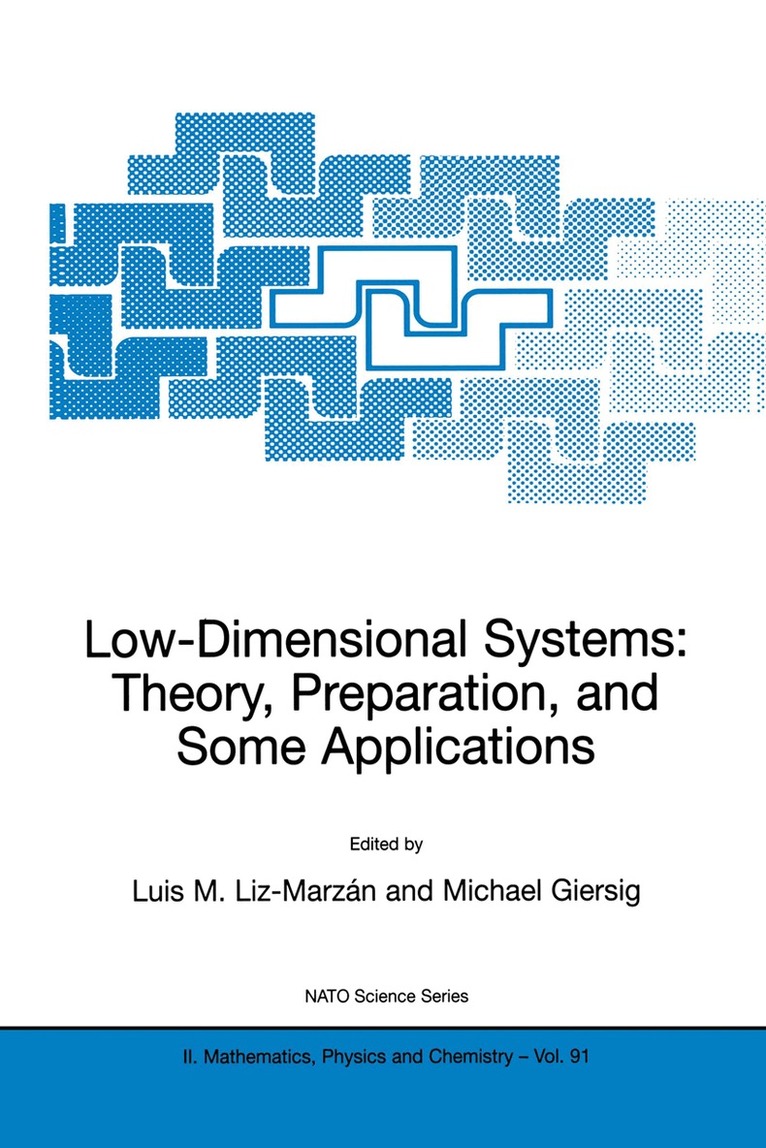
The term low-dimensional systems, which is used in the title of this volume, refers to those systems which contain at least one dimension that is intermediate between those characteristic of atoms/molecules and those of the bulk material. Depending on how many dimensions lay within this range, one generally speaks of quantum wells, quantum wires, and quantum dots. As such an intermediate state, some properties of low-dimensional systems are very different from those of their molecular and bulk counterparts. These properties generally include optical, electronic, and magnetic properties, and all these are partially covered in this book. The book's main thrust is a discussion of the actual state of the art in the broad area of nanotechnology. The initial focus is on the innovative synthesis of nanomaterials and their properties, such as quantum size effects, superparamagnetism, or field emission. These topics lead into the various field-based interactions, including plasmon-magnetic-spin- and exciton coupling. The newer, more sophisticated methods for characterizing nanomaterials are discussed, as well as the methods for possible industrial applications.In general, chemists and physicists, as well as experts on both theory and experiments on nanosized regime structures meet here to discuss the general phenomena underlying their fields of interest from different points of view.
Del 91 - NATO Science Series II: Mathematics, Physics and Chemistry
Low-Dimensional Systems: Theory, Preparation, and Some Applications
Häftad, Engelska, 2003
536 kr
Skickas inom 10-15 vardagar
The term low-dimensional systems, which is used in the title of this volume, refers to those systems which contain at least one dimension that is intermediate between those characteristic of atoms/molecules and those of the bulk material. Depending on how many dimensions lay within this range, one generally speaks of quantum wells, quantum wires, and quantum dots. As such an intermediate state, some properties of low-dimensional systems are very different from those of their molecular and bulk counterparts. These properties generally include optical, electronic, and magnetic properties, and all these are partially covered in this book. The book's main thrust is a discussion of the actual state of the art in the broad area of nanotechnology. The initial focus is on the innovative synthesis of nanomaterials and their properties, such as quantum size effects, superparamagnetism, or field emission. These topics lead into the various field-based interactions, including plasmon-magnetic-spin- and exciton coupling. The newer, more sophisticated methods for characterizing nanomaterials are discussed, as well as the methods for possible industrial applications.In general, chemists and physicists, as well as experts on both theory and experiments on nanosized regime structures meet here to discuss the general phenomena underlying their fields of interest from different points of view.
2 121 kr
Skickas inom 10-15 vardagar
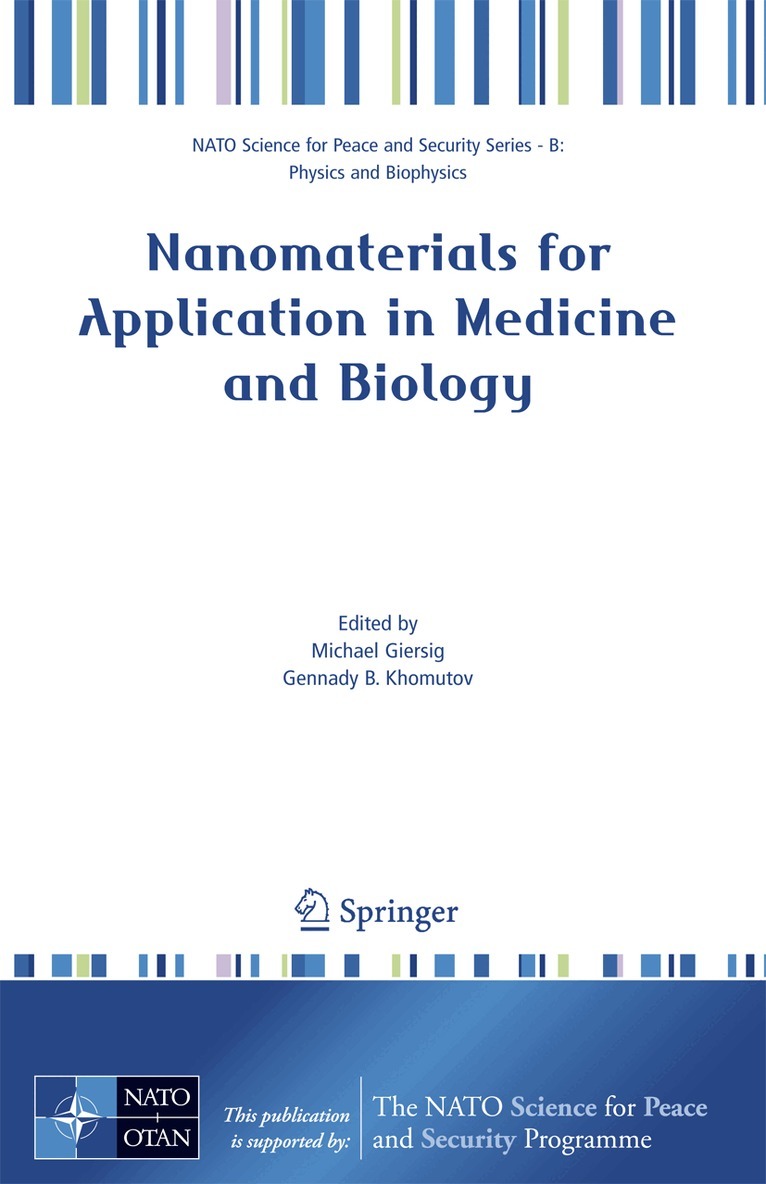
This volume contains research reports presented during the NATO Advanced Research Workshop (ARW) “Materials for Application in Medicine and Biology” held in Bonn, Germany, from October 4 to 6, 2006 at the center of advanced european studies and research (caesar). The application of nanomaterials in medicine and biology can be understood as the gathering and use of our current knowledge on nanoscale features of b- logical systems in order to learn how to design nanodevices for biomedical uses. The success of this approach, known as nano-engineering, will allow scientists to devise strategies for the design and construction of nanodevices to be used in clinical trials (diagnosis and therapeutic monitoring), as well as to develop products with potential applications in regenerative medicine. One goal of this conference was to bring together researchers from Eastern and Western countries, offering them a platform to meet and discuss results of their research work. Thus, the aim of this conference was not only to present the advancements in research achieved during the past years, but it had also been conceived as a concerted European effort where expertise, technologies, and ideas were broadly shared to accelerate this progress. The conference provided an interactive forum with more than 100 participants from 15 countries.
2 121 kr
Skickas inom 10-15 vardagar
This volume contains research reports presented during the NATO Advanced Research Workshop (ARW) “Materials for Application in Medicine and Biology” held in Bonn, Germany, from October 4 to 6, 2006 at the center of advanced european studies and research (caesar). The application of nanomaterials in medicine and biology can be understood as the gathering and use of our current knowledge on nanoscale features of b- logical systems in order to learn how to design nanodevices for biomedical uses. The success of this approach, known as nano-engineering, will allow scientists to devise strategies for the design and construction of nanodevices to be used in clinical trials (diagnosis and therapeutic monitoring), as well as to develop products with potential applications in regenerative medicine. One goal of this conference was to bring together researchers from Eastern and Western countries, offering them a platform to meet and discuss results of their research work. Thus, the aim of this conference was not only to present the advancements in research achieved during the past years, but it had also been conceived as a concerted European effort where expertise, technologies, and ideas were broadly shared to accelerate this progress. The conference provided an interactive forum with more than 100 participants from 15 countries.